The DLR Institute of Air Transport researches pathways to climate-compatible and high-performing aviation, contributing to the sustainable transformation of the air transport system. Based on analyses, models, and evaluations, we develop effective measures for operations, technology, and policy.
Systemic perspective: From measure to impact
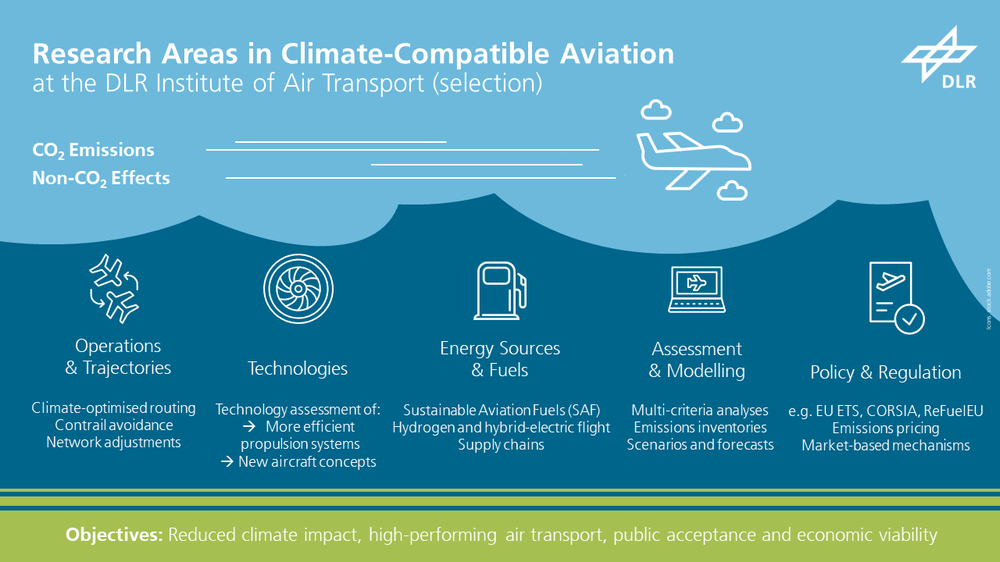
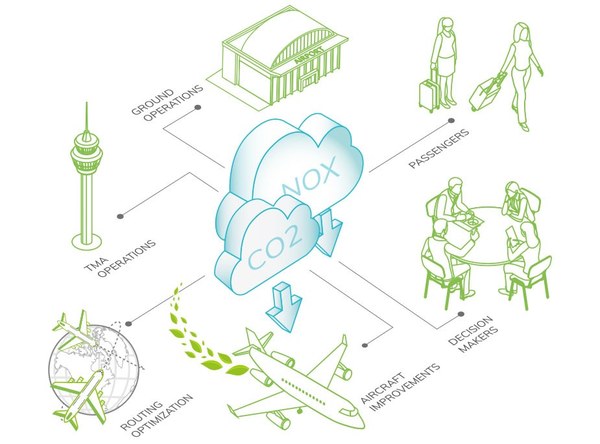
Our research integrates transport economics, operational concepts, environmental impacts, and emerging technological developments. Through multi-criteria assessments, we consider climate impact, cost-effectiveness, safety, public acceptance, and feasibility. This produces holistic recommendations for policymakers, industry, and operators.
Targeted reduction of non-CO2 effects
A significant portion of aviation’s climate impact arises from non-CO2 effects, such as the formation of contrail cirrus and ozone. The institute develops methods to systematically account for and mitigate these effects – for example, through climate-optimised flight trajectories, time-shifting of flights, or the introduction of climate-related airspace. This can achieve substantial reductions in climate impact with moderate operational effort.
Air transport faces the challenge of reconciling growing mobility demands with climate protection goals. The DLR Institute of Air Transport analyses the developmental pathways of the air transport system from local to global levels. We design, model, and evaluate policy, operational, and technological measures, providing robust decision-making foundations for climate-compatible and high-performing aviation.
Alternative energy sources and fuels
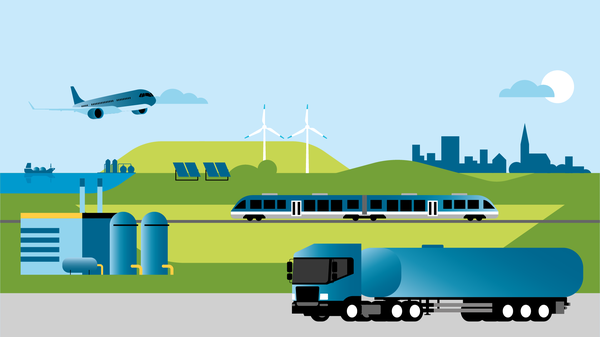
Another focus lies on sustainable aviation fuels (SAF), hybrid-electric propulsion, and hydrogen. We analyse deployment strategies, infrastructure requirements, and supply chains, as well as their ecological and economic effects. The aim is to enable effective and efficient use of alternative energy sources in air transport – from the airport to the global system.
Technology assessment and innovation pathways
Using holistic impact assessment tools such as the Technology Evaluator within European research programmes, the institute examines whether new aircraft and system technologies meet climate targets while remaining technically feasible, economically viable, and socially accepted. This supports the strategic direction of aviation research and industry.
Research areas for climate-compatible flying at the DLR Institute of Air Transport
The institute analyses the impact of national, European, and international climate regulations on aviation – for example, the EU Emissions Trading System, CORSIA, or ReFuelEU Aviation. We assess their effects on emissions, competitiveness, and networks, and develop proposals for effective, balanced policy design.
Operational concepts for climate-compatible flying
We develop and evaluate innovative operational procedures for individual flight missions and entire networks. These include, among others, climate-optimised routing and new operational concepts such as formation flying, which are modelled and tested under realistic conditions. The aim is to identify requirements for future technologies and procedures at an early stage.
International collaboration and knowledge transfer
Our research is internationally networked and practice-oriented. Through workshops, studies, and joint projects with authorities, industry, and international organisations, we support knowledge transfer and promote the implementation of climate-compatible solutions in global aviation.