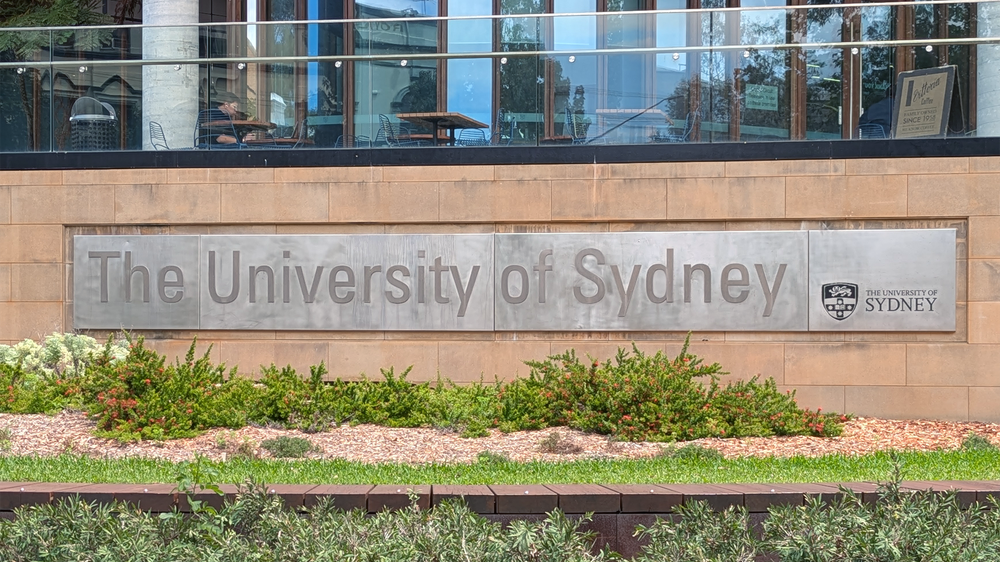
University of Sydney: Building on the campus of the University of Sydney, Australia – home to the Institute of Transport and Logistics Studies (ITLS).
Dr. Florian Wozny from the DLR Institute of Air Transport spent a research stay at the ITLS of the University of Sydney. There, together with Prof. Dr. Rico Merkert, he studied displacement effects of national air transport taxes and their impact on aviation emissions. The ITLS is one of the world’s leading institutions in the field of transport economics and logistics. The findings from this research stay are intended to contribute to the development of climate-focused policy instruments in national, European and international air transport.
Analysis of environmental-economic effects of air transport taxes
Academic collaboration providing impetus for policy and practice
Research into the Displacement Effect of Air Transport Taxes
As part of a multi-month research stay, Dr. Florian Wozny from the Department of Air Transport Economics at the DLR Institute of Air Transport worked at the Institute of Transport and Logistics Studies (ITLS) at The University of Sydney Business School. At ITLS, environmental-economic research into aviation is a major focus. Due to the vast distances both within and beyond its borders, Australia is heavily reliant on air travel. At the same time, public awareness of climate protection is growing – a field of tension that is clearly reflected in the research at ITLS.
Together with Prof. Dr. Rico Merkert, Deputy Director of ITLS at The University of Sydney Business School and an internationally renowned expert in aviation economics, Dr. Florian Wozny addressed a current issue: How do national air transport taxes affect international air traffic flows – and what potentially unintended consequences might arise?
Feedback Effects of National Tax Instruments
The study focused on possible side effects of national air travel levies, which are primarily intended to support climate action. One example: in some countries, departing passengers are subject to an air transport tax, while transit passengers are often exempt. This can lead to shifts in international passenger flows – with effects on ticket prices, market competition, and ultimately, the actual environmental impact of the measure.
“In certain cases, the exemption from the tax results in lower ticket prices for connecting passengers from abroad – which can lead to increased demand and ultimately influence the environmental effectiveness of the tax,” explains Dr. Florian Wozny. These effects were analysed using case studies from various European countries.
Impulses for Research and Policy Advice
The findings gained during the stay offer important insights for the design of climate policy instruments in national, European and international aviation – particularly with regard to their effectiveness and precision. The results are set to be published in academic journals and will feed into both national and European policy discussions. Moreover, the collaboration with ITLS is expected to continue – extending beyond the current topic. The international perspective helps to place national policy measures in a broader global context.
Promoting International Research and Networking
Targeted research stays help deepen subject expertise, enhance methodological skills and foster international networks. DLR provides the necessary framework for this – especially for researchers in the early stages of their careers. “The experience has shown that scientific approaches are comparable worldwide – you find your way quickly and can work productively,” says Dr. Florian Wozny.