Horizon Europe research project BeCoM (Better Contrail Mitigation)
At the heart of BeCoM is the question of how persistent contrails can be better predicted and avoided in the future. To this end, new insights into ice-supersaturated regions (ISSRs), improved measurement methods, weather models, climate-optimised flight trajectories and regulatory approaches to flight planning are brought together. The aim is to connect scientific, operational and regulatory perspectives in order to develop practical solutions for reducing the non-CO2 effects of aviation.
Credit:
REC and ROLL – stock.adobe.com
Aviation contributes to approximately 3.5% of total anthropogenic climate change. Almost two thirds of the climate impact of aviation is caused by non-CO2 climate effects, which include physical processes (cloud formation) and chemical reactions (including ozone production).
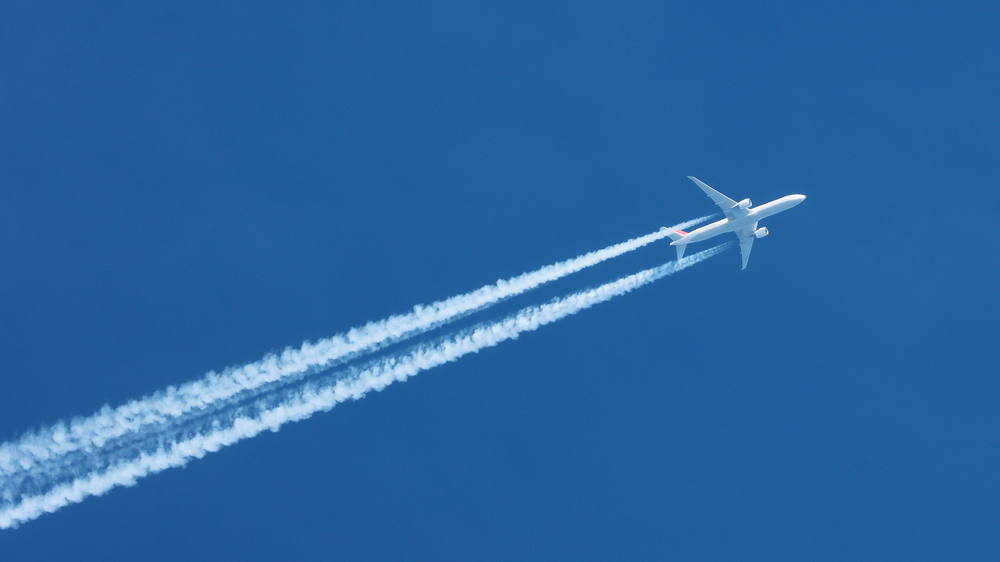
One of the most obvious and significant non-CO2 effects is the formation of visible contrails, which can grow into persistent contrail cirrus clouds within ice-saturated regions. The existing meteorological environmental conditions (particularly temperature and humidity) largely determine the atmospheric lifespan of contrails. Depending on the radiation conditions (position of the sun, brightness of the surface and other clouds), contrails can have a warming or cooling effect, as they both scatter solar radiation back into space and thus cool it, and also keep radiation emitted from the earth's surface in the atmosphere. Depending on the aircraft type, flight region, altitude, time of day and current weather, the climate impact of a contrail can vary greatly. However, when averaged over the globe and day and night, contrail cirrus waves lead to a significant warming of the atmosphere.
The strong weather-related variability in the climate impact of individual contrails makes it difficult to formulate political measures to reduce them. The EU-funded BeCoM (Better Contrail Mitigation) project therefore aims to reduce the uncertainties in predicting long-lasting contrails and their weather-dependent climate impact. The task of the DLR Institute for Air Transport is to test efficient measures to reduce the climate impact of contrails and to develop concepts on how these can be translated into political measures.
BeCom
Duration: 1 June 2022 to 31 May 2026
Lead: Technische Universiteit Delft
Project type: European Union's Horizon Europa Research and innovation program