2019 theme: Economic and efficient regional aircraft for rural areas
HyBird – the winning concept of the Stuttgart team
HyBird aircraft concept from the University of Stuttgart
Image: 1/2, Credit:
University of Stuttgart
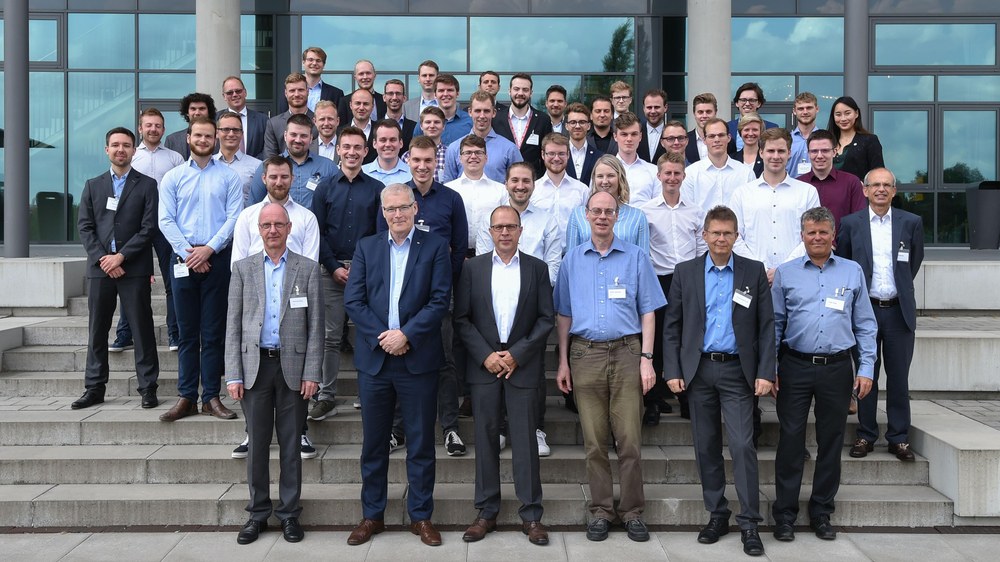
The DLR jury together with student teams during the DLR Design Challenge 2019
On 1 August 2019, the closing event of the third NASA/DLR Design Challenge and the award ceremony of the winning German team took place at the Center for Applied Aeronautical Research (ZAL) in Hamburg.
The NASA/DLR Design Challenge 2019 tasked students with devising concepts for small, versatile and environmentally compatible aircraft.
Thirty-nine students from five teams took part in the competition.
The team from the University of Stuttgart impressed the judging panel with their 'HyBird' design, taking first place.
As part of the 2019 NASA/DLR Design Challenge 2019, entrants were asked to design a regional aircraft that could efficiently connect remote regions. This aircraft had to be suitable for carrying both passengers and freight.
The aircraft had to transport at least nine passengers or, alternatively, cargo, and the ability to quickly switch between these two configurations was a must. Further requirements included short take-off and landing paths, low noise emissions and an eco-efficient propulsion system.
Profitability played a key role, too. Besides operation and maintenance, development and lifecycle costs also had to be factored in.
Five teams present their designs in 2019
Fresh ideas and concepts for small, eco-efficient aircraft are in demand. "This is the objective we are pursuing with the Design Challenge together with our fellow aeronautics colleagues at NASA. We want to encourage engineering students to think 'outside the box', to innovate and to challenge conventional wisdom. They shouldn't just develop concepts that already exist, but carve out entirely new paths in aircraft design," said jury chair Rolf Henke, who at that time was DLR Executive Board Member for Aeronautics. "Design in aviation has once again become very important. New elements such as electrification and automation are extremely challenging and call for unprecedented concepts."
The German Aerospace Center (DLR) and the US space agency NASA challenged students from technical universities across Germany and the USA to submit their ideas. The closing event for the teams in Germany was organised by the Center of Applied Aviation Research (ZAL) in Hamburg. The winning team from the University of Stuttgart also travelled to the US to showcase their work at NASA's Langley Research Center.
Aircraft design entries: an overview
First place: 'HyBird' by the University of Stuttgart
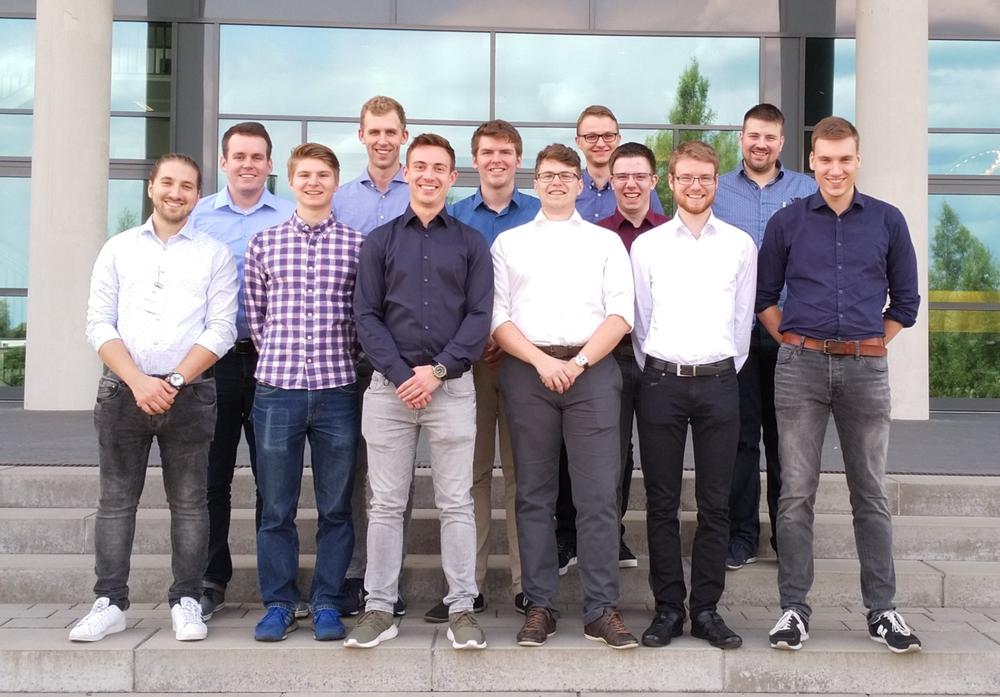
University of Stuttgart team
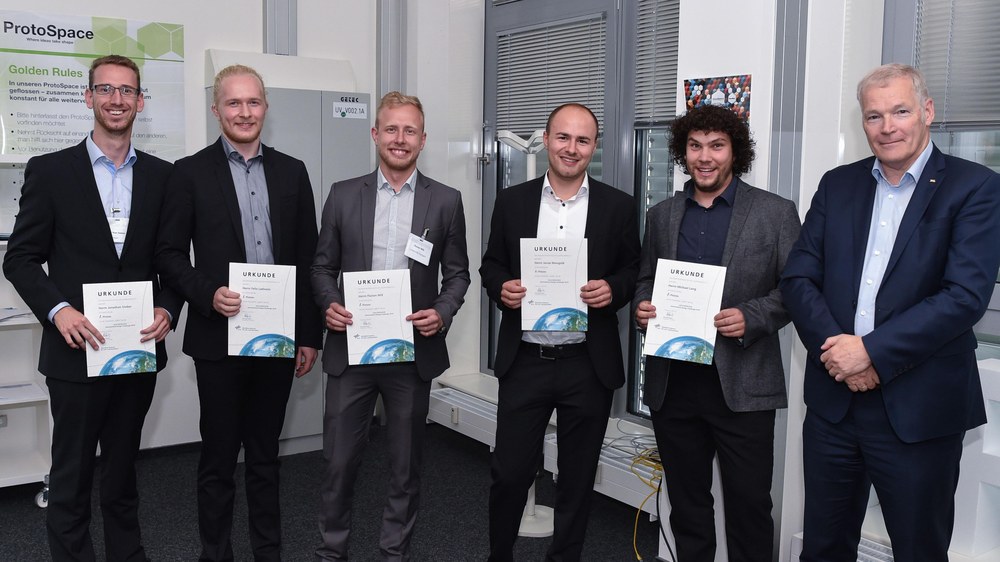
From left: Jonathan Stober, Felix Ladwein, Florian Will, Jonas Mangold, Michael Lang and jury chairman Rolf Henke, Member of the DLR Executive Board responsible for aeronautics.
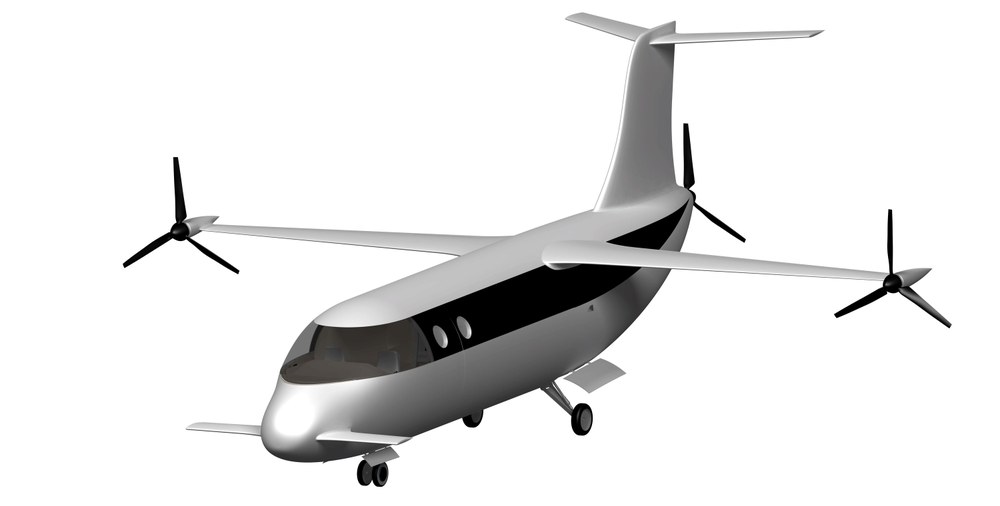
The HyBird design features a high-wing configuration with a Coanda flap system, V-tail and conventional fuselage. The HyBird propulsion system comprises two turbines for power generation and the option to turn off one of the generator systems when cruising – an innovative approach for boosting energy efficiency that opens up opportunities to lower consumption, particularly at cruising speeds. A battery boost of up to 180 kilowatts allows for a completely electrical take-off. The design also reduces noise emissions through the positioning and size of the engines. Innovative ideas make it easy to convert the aircraft from commuter to freight configuration.
The University of Stuttgart presents their winning hybrid aircraft concept, HyBird.
Video: The 'HyBird' concept designed by the University of Stuttgart
Your consent to the storage of data ('cookies') is required for the playback of this video on Quickchannel.com. You can view and change your current data storage settings at any time under privacy.
Video: The 'HyBird' concept designed by the University of Stuttgart
The University of Stuttgart presents their winning hybrid aircraft concept, HyBird.
Credit:
University of Stuttgart
Second place: 'aDEPt' by RWTH Aachen University
The aDEPT concept by RWTH Aachen University
Credit:
RWTH Aachen/aDEPt
aDEPt is an aircraft concept featuring hybrid-electric propulsion and distributed electric propulsion that uses multiple small high-thrust propellers to improve take-off performance and allow for smaller wings. Propellers are also featured on the wing tips that reduce induced resistance and thus increase aerodynamic efficiency. The aircraft has a flexible cabin/loading configuration that enables both passengers and freight to be transported. The hybrid-electric propulsion system also makes it possible to carry out all-electric short-haul flights, to reduce energy consumption and emissions. What’s more, the system is designed to allow autonomous operations in future.
RWTH Aachen University team
From left: Arthur Graf, Jan Spittel, Colin Klein, Fabian Breer, Nicolas Schneiders, Joshuah Belflower, Kevin Poch, Steffen Tarner, Marco Föry, Maximilian Bayer, Lukas Hennies, Moritz vom Schemm.
Credit:
RWTH Aachen/aDEPt
Third place (joint): 'MIRUS' by the Technical University of Berlin
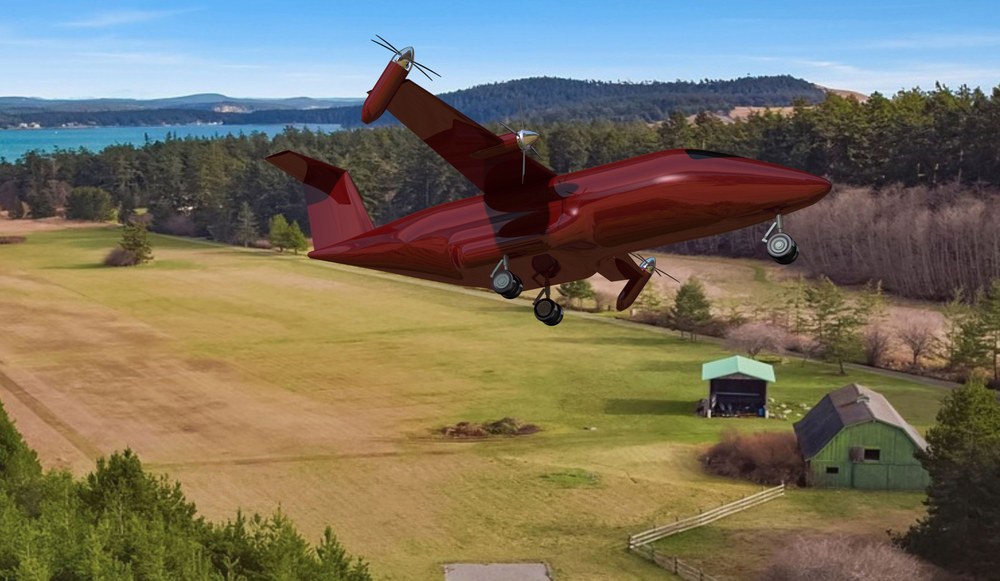
The MIRIUS concept by the Technical University of Berlin
Credit:
TU Berlin/MIRIUS
MIRUS features three lifting surfaces to increase aerodynamic efficiency and allow for a greater range of payload configurations in the cabin. It is powered by a serial plug-in hybrid-electric propulsion system that comprises a gas turbine generator in the rear fuselage and three electrically powered propellers. The tail propeller is only used for take-off and is stowed in a folded position for the rest of the flight. Take-off performance is improved by active wing circulation control.
Technical University of Berlin team
From left to right: Kristof Miertsch, Felix Fritzsche, Kevin Lehnhardt, Ramón Beck, Ai Quynh Vo, Roman Uzun, Stephanie Roscher, Yannic Cabac, Jiri Dehmel, Lennart Kracke.
Credit:
TU Berlin/MIRUS
Third place (joint): 'Xargo' by Dresden University of Technology
The 'Xargo' concept by Dresden University of Technology
Credit:
TU Dresden/Xargo
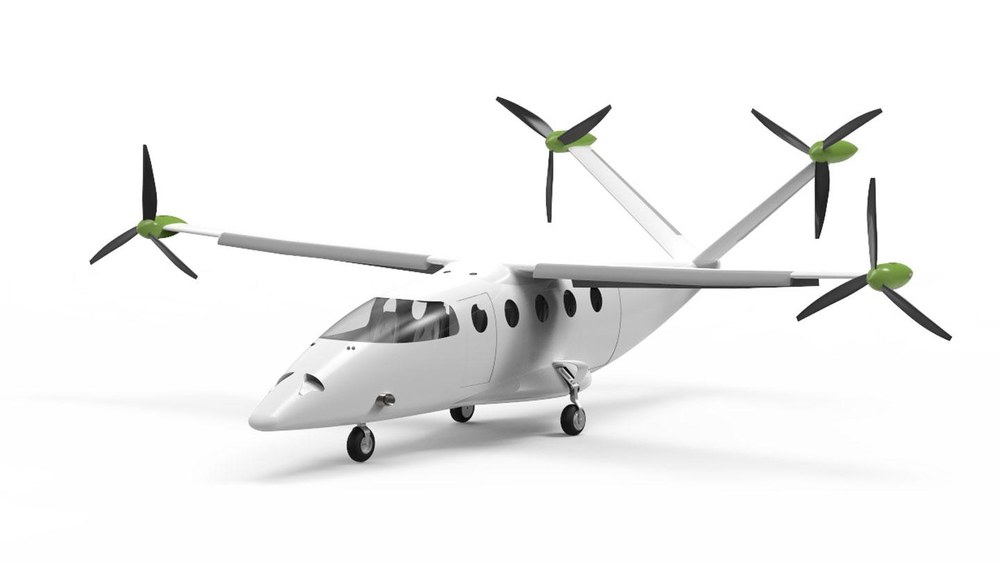
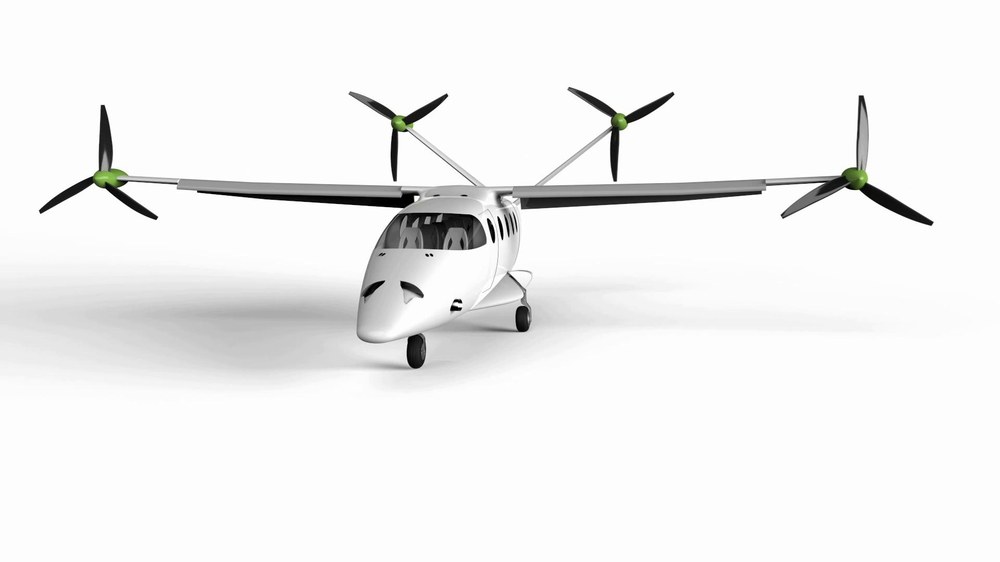
Xargo features a shoulder wing and is equipped with two electrically powered propellers for cruising and two additional slewable rotors that allow for short take-off and landing (STOL) and a high rate of climb. The energy required is provided by a hydrogen fuel cell that powers all four electric motors. Thanks to a modular cockpit and payload space concept, the aircraft can be quickly modified to suit either passenger operations or uncrewed freight operations.
TU Dresden team
From the left: Daniel Roßner, Johannes Oppe, Anne Gebhardt, Mustafa Yasar Cürebal, Bengisu Çetinoğlu, Arnold Gatto.
Credit:
TU Dresden/Xargo
Third place (joint): 'rAPID' by Hamburg University of Technology
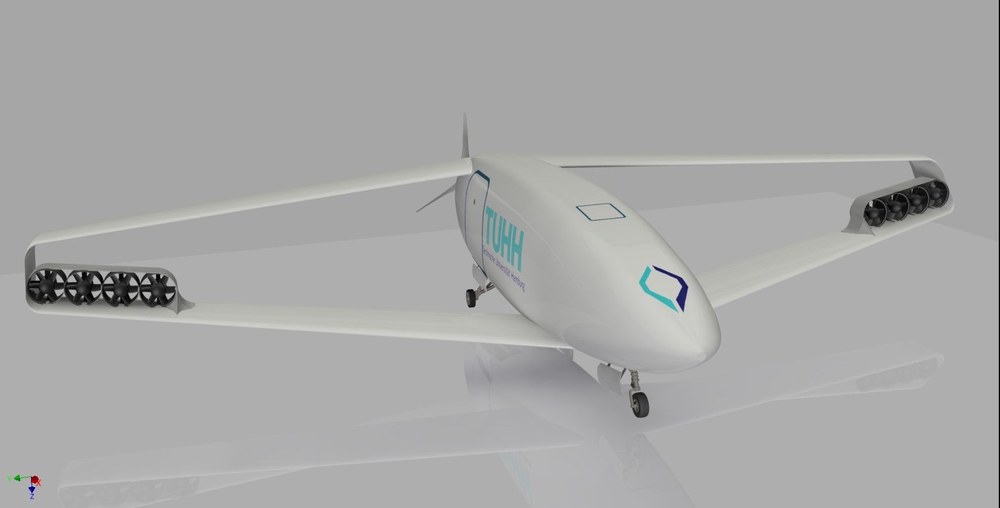
The 'rAPID' concept by Hamburg University of Technology
Credit:
TU Hamburg/rAPID
rAPID is made entirely from carbon-fibre-reinforced plastic (CFRP) and replaces windows with screens to reduce mass. To operate on small airfields, rAPID features a box-wing configuration to reduce drag and a compact design with a wingspan of just 15 metres. Impellers are fitted onto the lower wings to generate thrust for take-off and provide yaw control. A pusher propeller on the tail is used for cruising. Energy for the engines and systems is provided by a turbine during cruising and by a battery during ground and near-ground operations to ensure the aircraft runs quietly.
TU Hamburg team
From the left: Lars-Hendrik Lemke, Markus Berschik, Nils Külper, Thomas Weber, Esther Schaupeter, Julian Stuwe.