2021 theme: Hydrogen-powered short- to medium-haul aircraft of the future
First place in the NASA/DLR Design Challenge 2021: RWTH Aachen’s HyZero
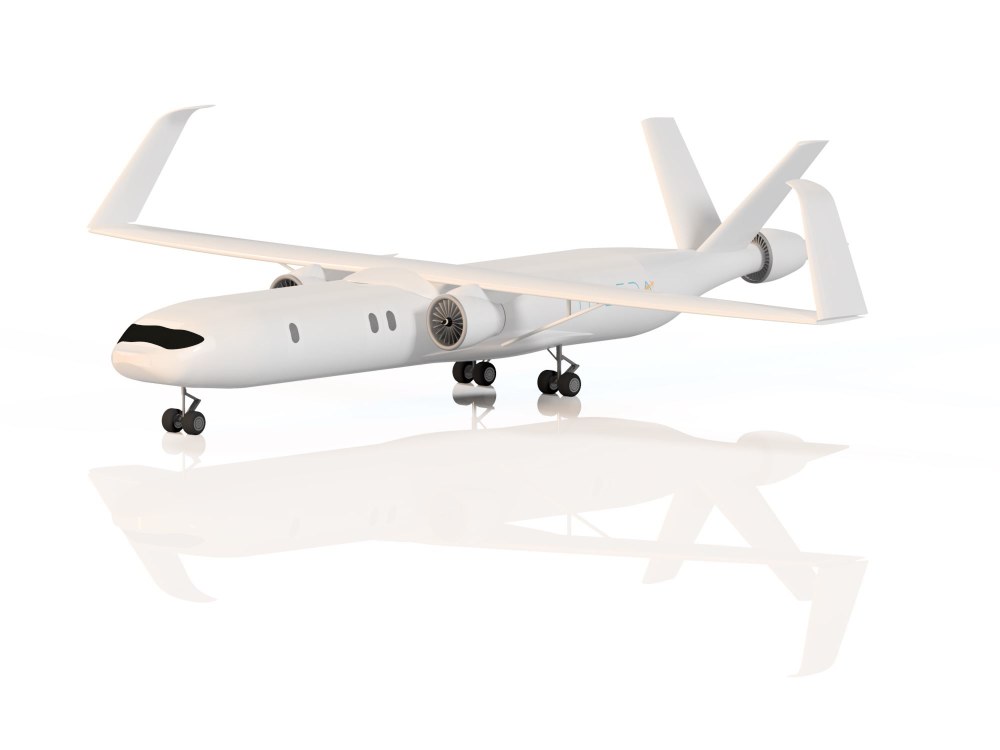
HyZero aircraft concept from RWTH Aachen.
Image: 1/1, Credit:
RWTH Aachen/HyZero
The task of the NASA/DLR Design Challenge 2021 was to develop a hydrogen-powered short- to medium-haul aircraft for 150 passengers.
Thirty students from five teams competed.
The team from the RWTH Aachen impressed the judging panel with their 'HyZero' design, taking first place.
As part of the 2021 NASA/DLR Design Challenge, students were tasked with developing a hydrogen-powered short- to medium-haul aircraft. The objective was to design concepts that combine low climate impact with high economic efficiency.
The aircraft had to transport at least 150 passengers and suit various mission profiles. Particular focus was placed on energy efficiency, range and innovative propulsion concepts.
Five teams presented their designs in 2021
"This year's IPCC report on the state of climate change highlights just how important it is to take action," said Anke Kaysser-Pyzalla, Chair of the Executive Board for the German Aerospace Center (DLR). "The students in this competition have offered up fantastic ideas of what climate-neutral aviation of tomorrow could look like and how widely, say, hydrogen could be used for this purpose."
The team from RWTH Aachen University claimed victory in the German section of the 2021 NASA/DLR Design Challenge with their 'HyZero' design. The winning team, together with the winners of the 2020 Design Challenge, presented their work at NASA’s Langley Research Center in the USA in 2022.
Aircraft design entries: an overview
First place: 'HyZero' by RWTH Aachen University
The HyZero design combines a lift-generating fuselage with an elliptical cross-section and deformable, extremely smooth laminar wings. A hybrid propulsion system allows for the direct combustion of hydrogen and power generation via fuel cells. The sustainably produced fuel is stored in liquid form in a hydrogen tank at the rear. An additional engine in the tail sucks in boundary layer air from the fuselage to boost the efficiency of the propulsion system. Overall, this aircraft is expected to require approximately 40 percent less energy in 2035 than a comparable conventionally powered reference aircraft.
Students at RWTH Aachen University have designed the HyZero aircraft concept, which runs exclusively on liquid hydrogen.
Your consent to the storage of data ('cookies') is required for the playback of this video on Youtube.com. You can view and change your current data storage settings at any time under privacy.
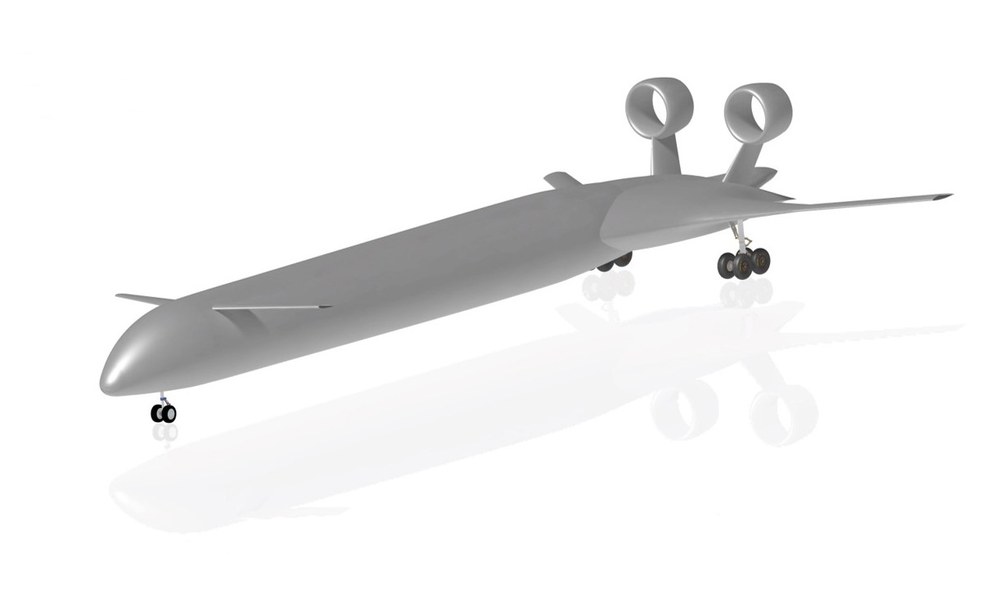
Second place (joint): 'HeRA' by Dresden University of Technology
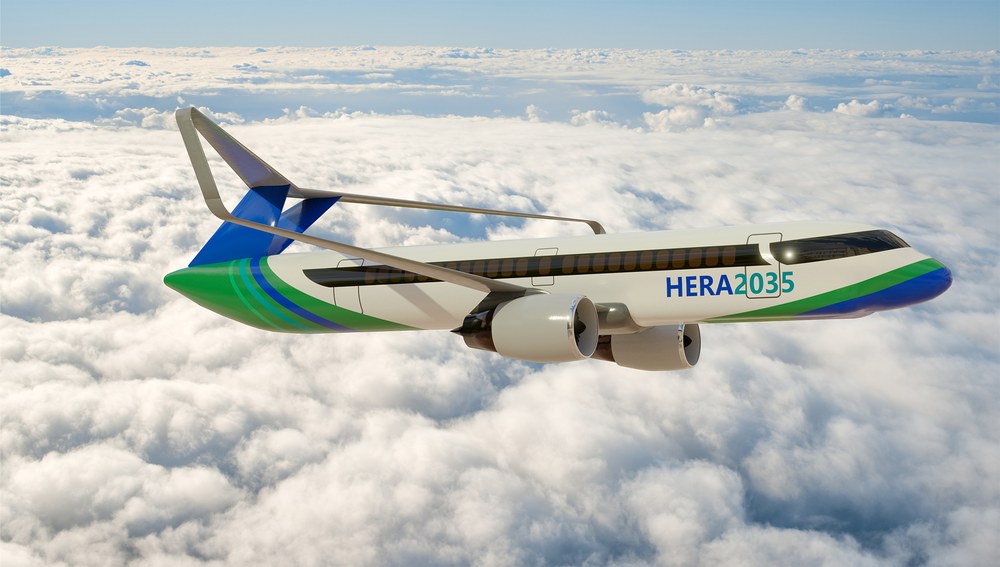
The HeRAT concept by Dresden University of Technology
Credit:
TU Dresden/HeRA
HeRA uses a box wing to boost flight efficiency and allow for the use of hydrogen in civil aviation. To increase efficiency and range, HeRA combines fuel cells and batteries to provide the required electrical energy for propulsion. Care was taken to ensure this concept maintains interoperability with current airport infrastructure.
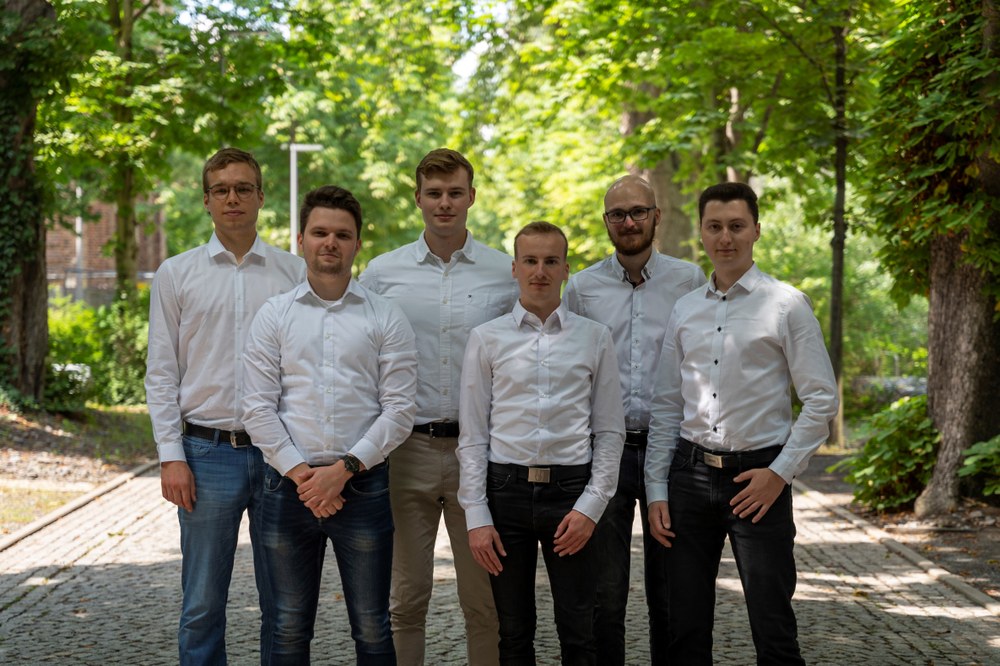
TU Dresden team
From the left: Jonathan Bölk, Daniel Helmert, Marc Rodekamp. Markus Lötzsch, Thomas Hanl and Luckas Bach.
Credit:
TU Dresden/HeRa
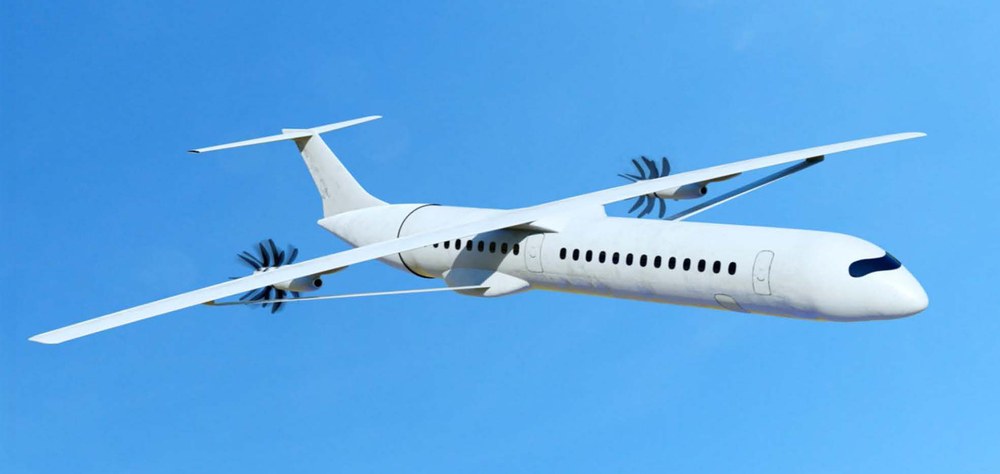
Second place (joint): 'CHANGE' by the Technical University of Berlin
The CHANGE concept by Technical University of Berlin
Credit:
TU Berlin/CHANGE
CHANGE features a strut-braced wing and two counter-rotating electric propulsion units. The power for these is provided by fuel cells, eliminating NOx emissions. Fuel cells and a liquid hydrogen tank are located in the rear of the fuselage. At the same time, the cooling system draws air off the boundary layer around the rear fuselage to reduce drag.
TU Berlin team
From the left: Jan Frederik Nittka, Kotayba Al Rashwany, Kristof Miertsch, Lennart Kracke, Florian Feldhahn and Ramón Beck.
Credit:
TU Berlin/CHANGE
Second place (joint): 'Hy2Sky' by the University of Stuttgart
The Hy2Sky concept by University of Stuttgart
Credit:
Uni Stuttgart/Hy2Sky
Hy2Sky features a rear-mounted wing that seamlessly transitions into the fuselage, allowing the sizeable hydrogen tanks to be placed in the wing root and behind passengers. A canard has also been installed to ensure manoeuvrability. The aircraft is powered by two ultra-high bypass turbo engines. The liquid hydrogen tanks for a 600-kilometre range are permanently installed in the aircraft. For a range of 2000 kilometres, additional tanks can be added. The fuselage is similar to those of existing aircraft to keep down manufacturing costs.
University of Stuttgart team
From the left: Arian Mojaabi, Bianca Weber, Codrin Ciul, Maximilian Jansen, Samarth Srivastava and Shashank Sharma.
Credit:
Universität Stuttgart /Hy2Sky
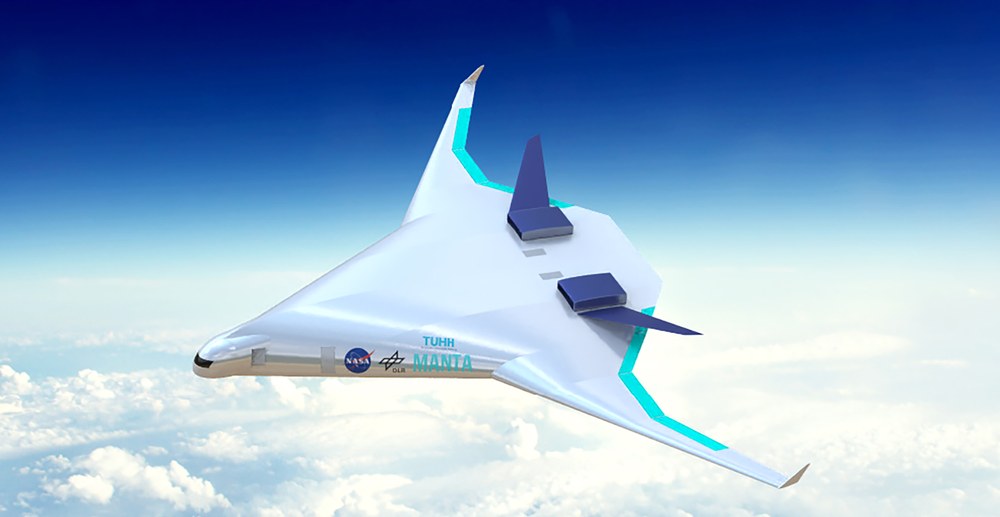
Third place: 'MANTA' by Hamburg University of Technology
The MANTA concept by Hamburg University of Technology
Credit:
TU Hamburg/MANTA
MANTA is a blended-wing body design focused on offering passengers a safe and comfortable interior. Propulsion is provided by electrically driven turbofan engines on the topside that are powered by a fuel cell system. The hydrogen is stored in liquid form in four insulated tanks.
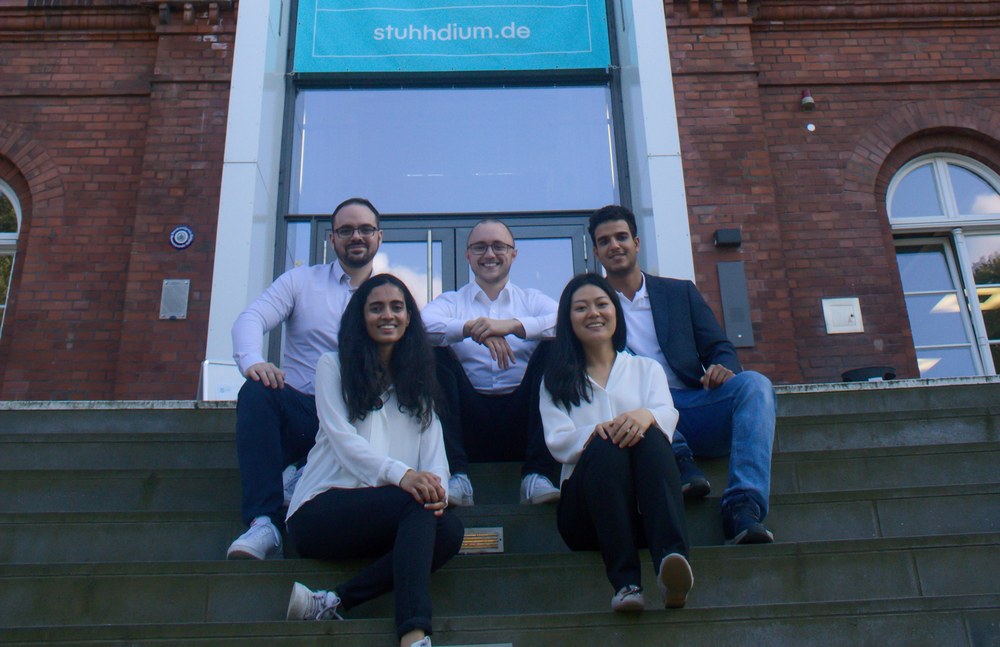
TU Hamburg team
From the left: Eduardo Zegarra Berodt, Rhea Shah, Philip Salman, Xiaowei Zhu and Ghassen Hajiri (not shown Ahmet Akyüz).