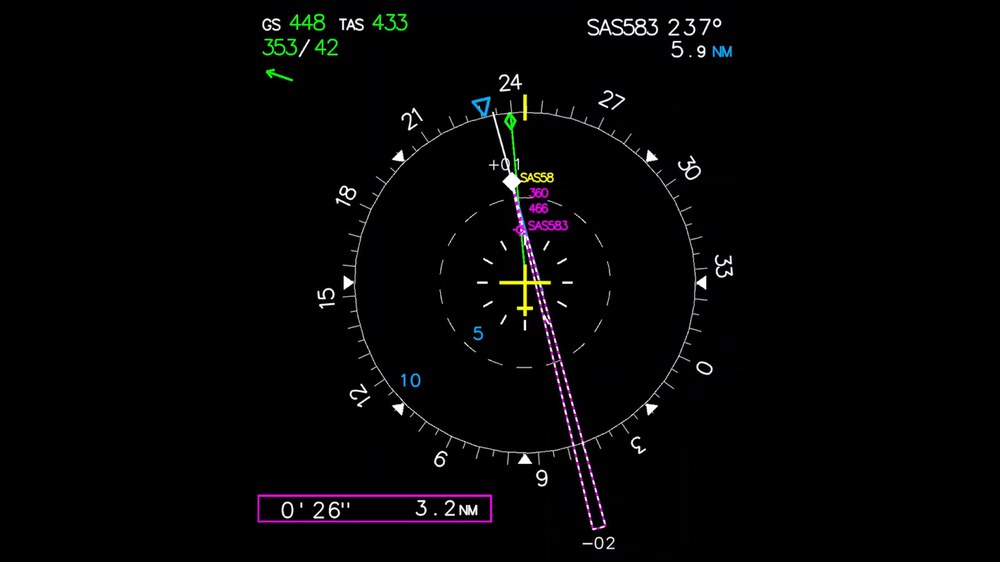
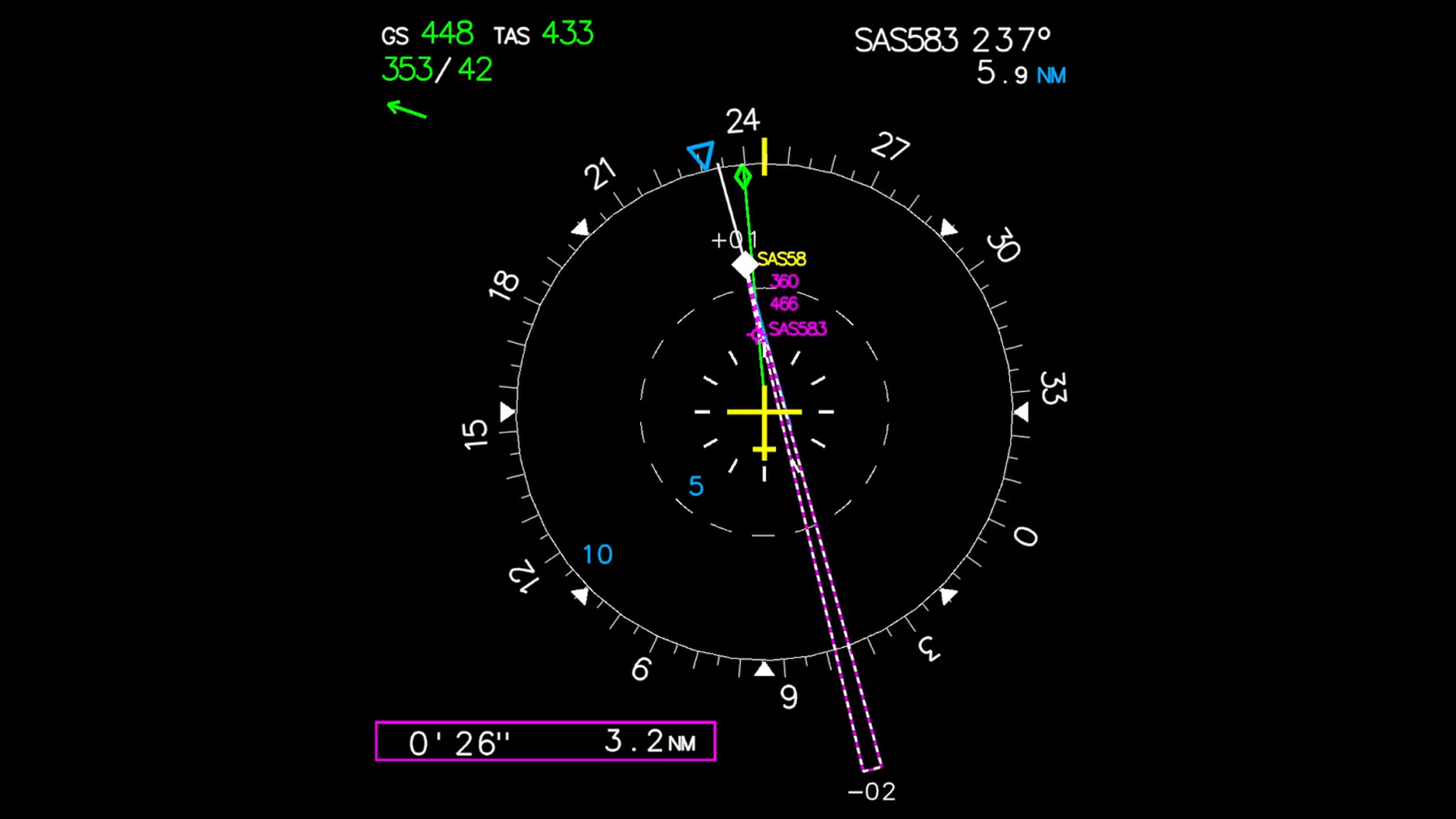
In the cockpit of ISTAR, an experimental navigation display shows information on wake vortices and potential conflicts with the aircraft's own flight path.
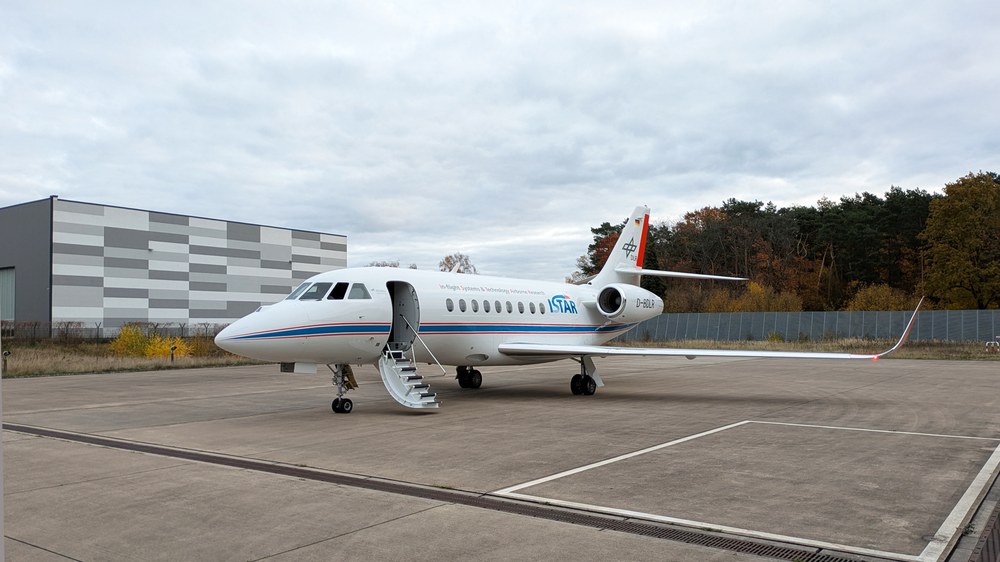
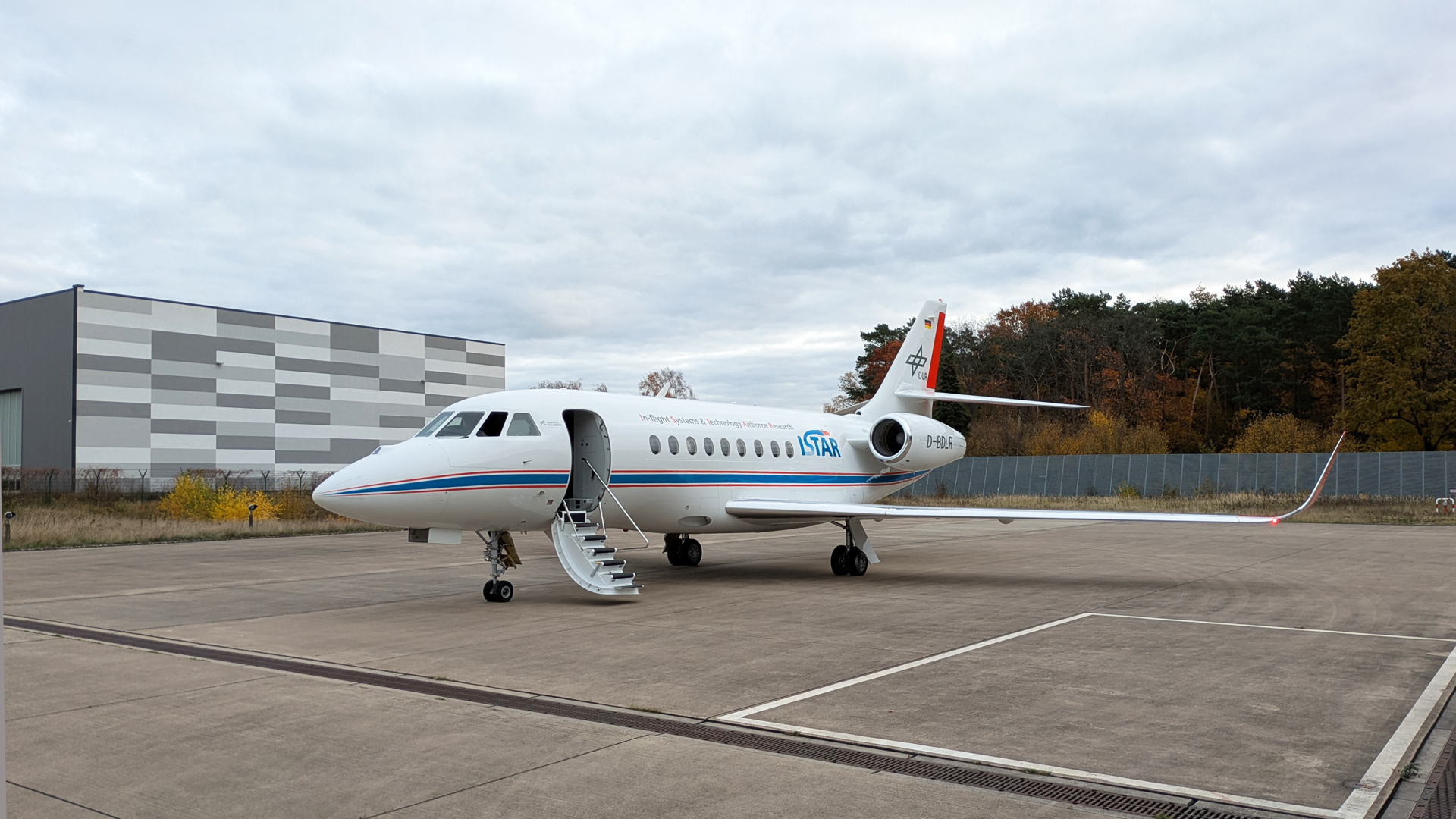
ISTAR Falcon 2000LX research aircraft at Braunschweig-Wolfsburg airport
ISTAR (In-Flight Systems and Technologies Airborne Research) enables the operation of experimental software and cockpit displays under realistic flight conditions. The experiments are supervised on board by researchers, and the extensive recorded data is then scientifically analysed.
DLR is testing the accuracy of a warning and avoidance system for wake vortices using live data from commercial air traffic.
To do this, researchers deliberately fly into wake vortices to evaluate wake vortex predictions under cruise flight conditions.
Specialists across multiple disciplines are working together to make these complex tests possible.
Focus: Aviation, flight systems technology
Wake vortices, or wake turbulence – the trailing vortices that occur behind aircraft when lift is generated – can have adverse effects on aircraft following behind. Warnings about potentially hazardous encounters with wake vortices must therefore be sufficiently accurate. The German Aerospace Center (Deutsches Zentrum für Luft- und Raumfahrt; DLR) has, for the first time, conducted flight tests to assess a wake vortex warning system developed by DLR using live data from commercial air traffic. The system's basic functionality had already been successfully shown in earlier flight tests.
Strong air turbulence
Wake vortices typically form as two counter-rotating vortices that slowly descend behind an aircraft. Vortices generated by larger aircraft can carry considerable energy. Typically, these vortices are not visible, unless temperatures are low and humidity is high. "Flying into a wake vortex can trigger a sudden, severe reaction in an aircraft that encounters it," explains André Koloschin from the DLR Institute of Flight Systems: "This is largely avoided through procedures and safety distances. However, previous studies have shown that an additional warning system could further enhance pilots' situational awareness."
Wake prediction and warning
Under the Institute of Flight Systems' leadership, researchers are developing a warning and avoidance system for wake vortices: WEAA (Wake Encounter Avoidance and Advisory). The DLR Institute of Atmospheric Physics provides a model for predicting vortex behaviour, which includes data on vortex transport and intensity. "The challenge is to generate sufficiently accurate vortex predictions based on available meteorological data from various sources," explains atmospheric physicist Frank Holzäpfel. Additional data from the aircraft itself and surrounding air traffic enables the system to anticipate potential conflicts and display avoidance options.
Vortex flights for the sake of research
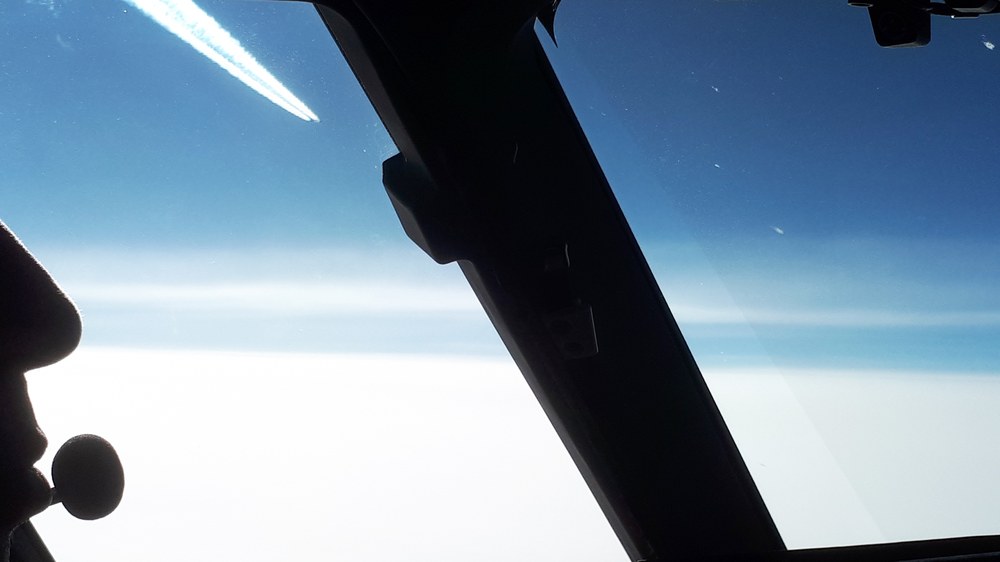
Evaluating the accuracy of vortex predictions requires knowledge of the vortices' actual position. To determine this with precision, particularly under cruise conditions in upper airspace, DLR flew its ISTAR (In-Flight Systems and Technologies Airborne Research) aircraft directly into the vortices, recording all aircraft data during the flight. Deliberately flying into vortices is only feasible when they are visible, which happens under certain atmospheric conditions – when contrails form and are drawn into the vortices. The test flights were therefore conducted under atmospheric conditions that favour the formation of contrails.
A complex test scenario
"This type of flight test requires extensive coordination among all parties involved," explains André. Air traffic control was briefed well in advance and, during the flights, precise radio communication was maintained between DLR's ISTAR research aircraft, air traffic control and the relevant commercial aircraft. "Across five test flights, 120 vortex encounters were accomplished, yielding a comprehensive dataset for further development work," he summarises. "Using the current version of our prediction model, we were able to carry out an initial assessment in real time during the flights. Qualitatively, all predictions met expectations. The next step is to systematically analyse the data quantitatively, which will allow the technology to be further developed towards practical application."