Only flying for real is better
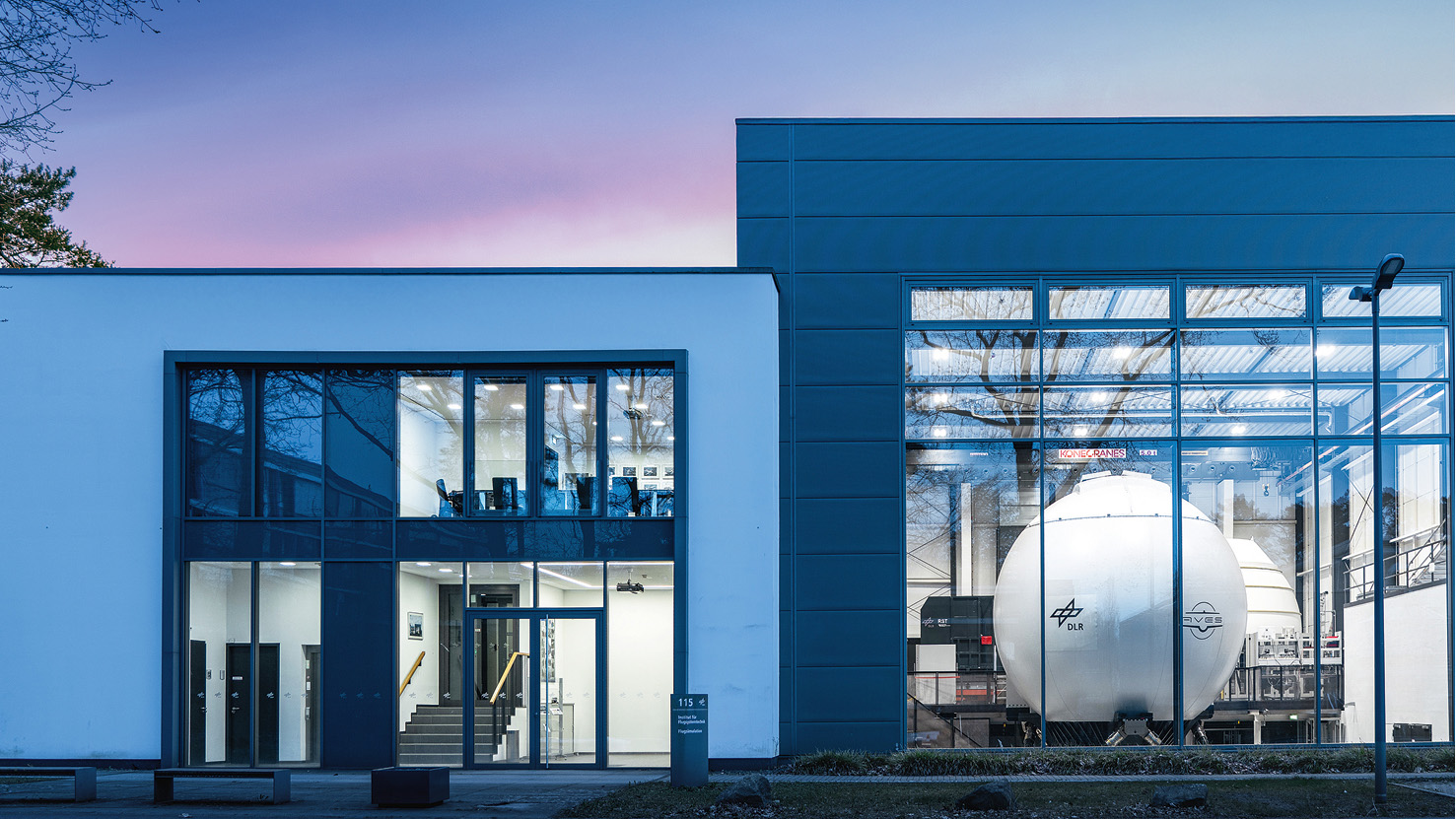

Through the large glass front of the otherwise dark grey, cubic building, you see a brightly lit hall, at the centre of which stands a sphere, several storeys high. Even from the outside, the Air Vehicle Simulator (AVES) facility at the DLR Institute of Flight Systems in Braunschweig sparks curiosity. Upon entering, the interplay of geometric shapes, radiant light and stark contrasts continues. The atmosphere feels almost clinical, like a cleanroom. The white-grey modules surrounding the space are striking in size, yet their purpose is not immediately apparent. It is only on closer inspection that aircraft-like inscriptions and components become visible.
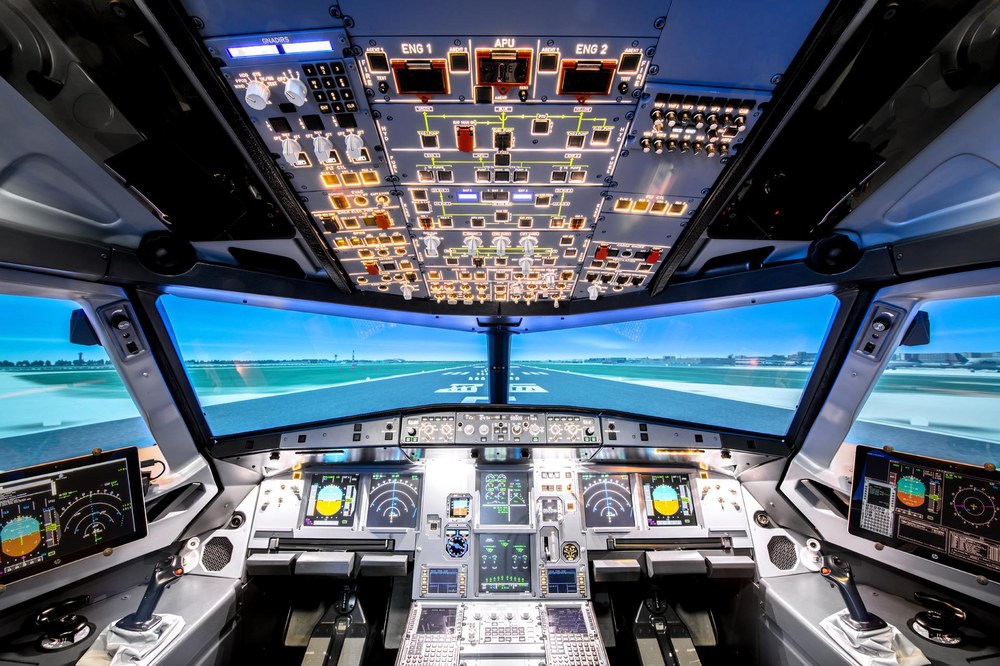
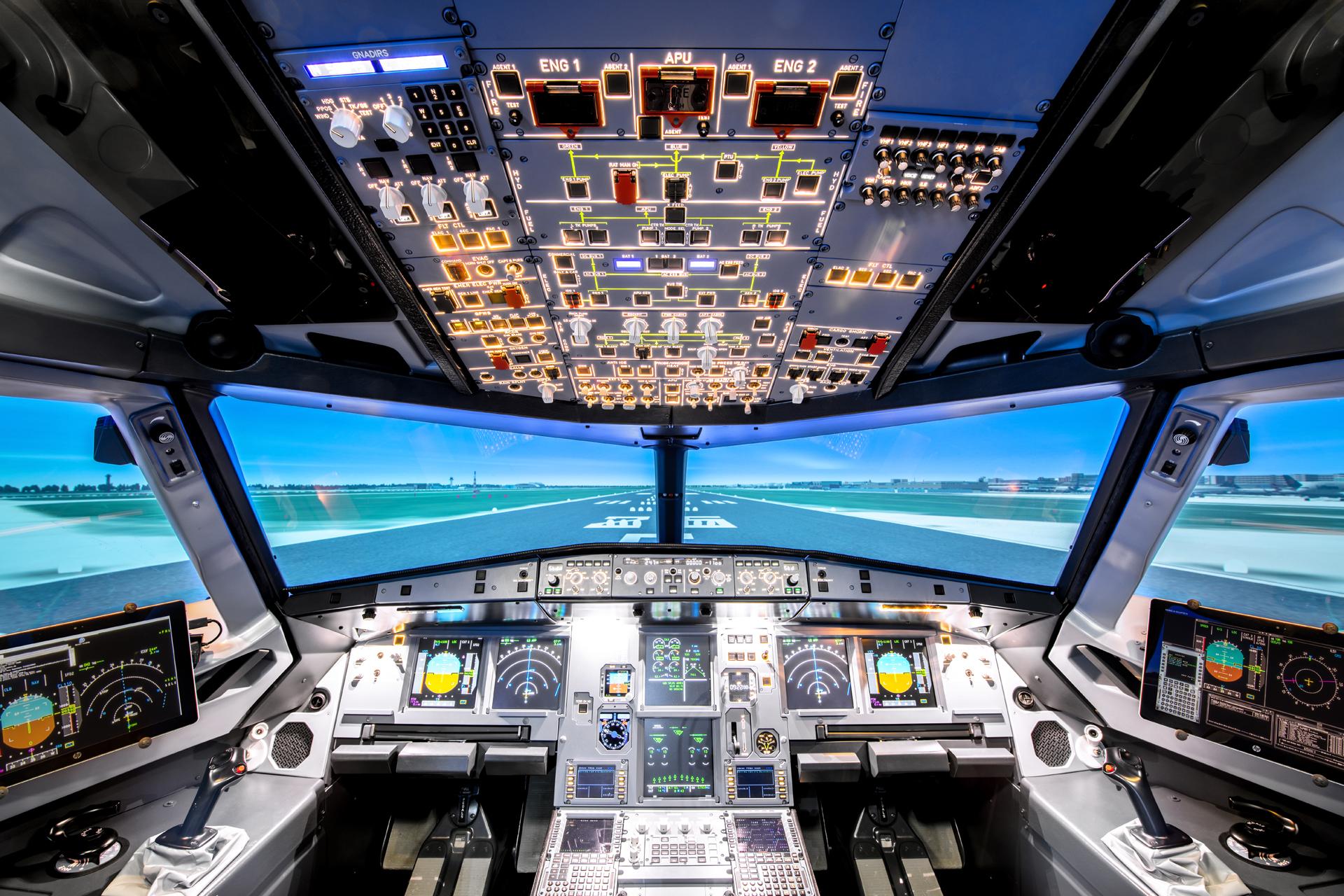
Stepping into the modules, you are instantly immersed in a different environment: darker, more confined and densely packed with coloured switches and displays. Taking a seat in a fully functional cockpit, you feel immediately transported into an aircraft ready for take-off. This immersion is no side effect but a central goal of the facility. Holger Duda from the DLR Institute of Flight Systems, who is responsible for AVES, puts it this way: "The goal is for you to forget you're sitting in a simulator."
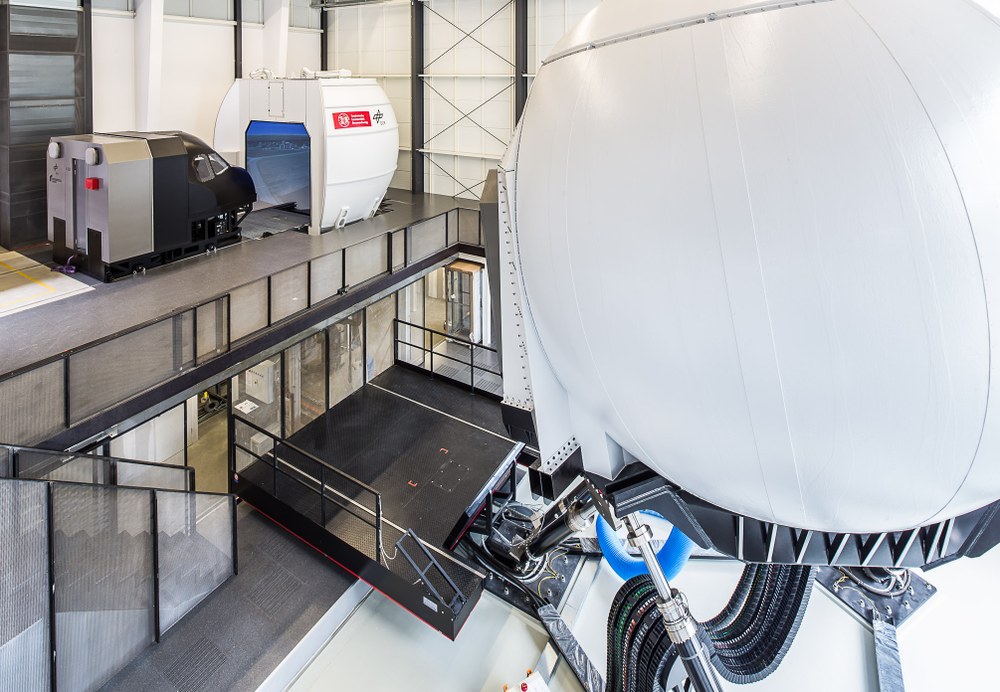
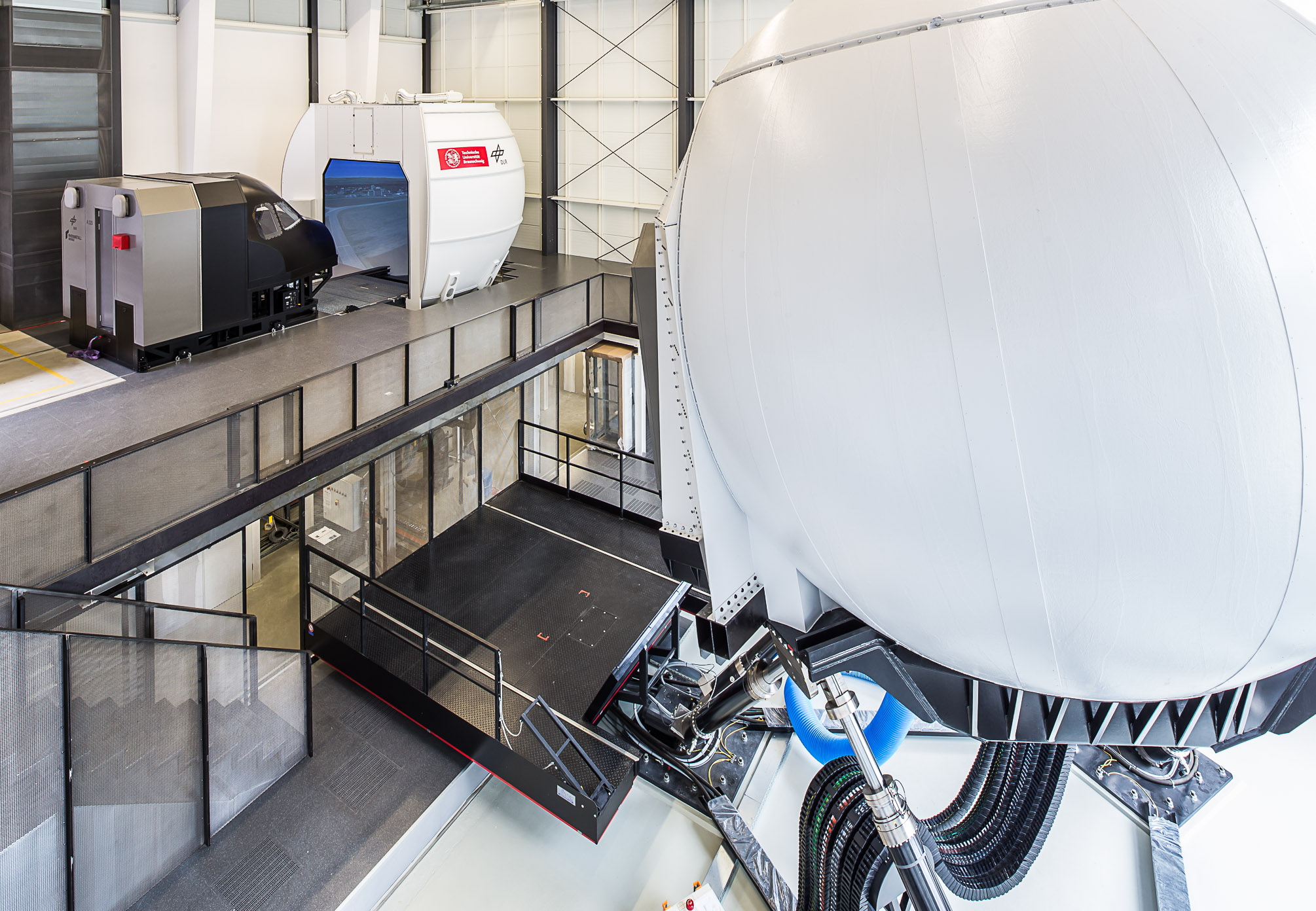
AVES is unique worldwide due to its versatility, networking capability and scientific and technical focus. The facility delivers highly realistic simulations of a wide range of aircraft and mission profiles – as well as new concepts for flight controls, approach procedures and assistance systems. Various cockpits and workstations are available to researchers, flight crews and development and engineering teams. Some are stationary in the hall, but most can be integrated into the spherical, movable simulator platform at its centre. Their applications are diverse, but they all share a high degree of flexibility for both software and hardware, exceptional simulation quality and a focus on human factors.
From simulation to reality – and back
The Low Noise Augmentation System (LNAS) demonstrates just how closely simulation and real-world flight testing are intertwined. In this project, assistance systems help pilots perform quieter approach procedures – for example by delaying the deployment of the landing flaps and landing gear as long as possible.
Development began in the authentic Airbus A320 cockpit module at AVES. Simulation results were supplemented with noise maps produced by DLR in collaboration with stakeholders at selected airports. Displays, controls and the interaction between the flight model and individual behaviour of the cockpit crew were refined until the procedure could be seamlessly integrated into real flight operations. "We can develop the technology for LNAS almost entirely within AVES," says Duda. The approaches were then tested at Frankfurt and Zurich airports using DLR's Airbus A320 ATRA research aircraft and were subsequently adopted by Lufthansa for scheduled operations.
The simulator also serves as a key development environment for DLR's ISTAR research aircraft, a modified Dassault Falcon 2000LX. The aircraft is intended to test automated cockpit systems, assistance functions and optimised flight procedures. However, before any major modifications or software adjustments are made, teams from various DLR departments develop and test the relevant concepts in the simulator. The realistic replication of the cockpit and flight characteristics creates a familiar environment for the crew. Standard procedures are carried out routinely from muscle memory, while new systems can be specifically observed and evaluated.
One key objective is to retrofit the traditionally hydromechanically controlled research aircraft with an additional digital fly-by-wire control system. Data protocols, interfaces and reliability can thus be tested in advance in the simulator – efficiently and without any risk to people or equipment. The developments made on the ground are then verified in real flight tests. Furthermore, the simulator can be used to model completely different types of aircraft: from continuously variable landing flaps and particularly sleek wings to entirely new aircraft concepts. "We can, for example, simulate a conceptual modern blended wing body airliner," explains Duda.
But the exchange works both ways, as measurement data from real research flights also flows back into the simulation software, continuously improving the models. In some areas, these models now achieve a level of accuracy comparable to, or even surpassing, those of manufacturers or training simulators. Industrial companies, such as suppliers of software, avionics or control systems, also draw on this long-standing transfer expertise to extensively test and optimise new products with DLR before they are launched on the market.
Enhanced perception during operation
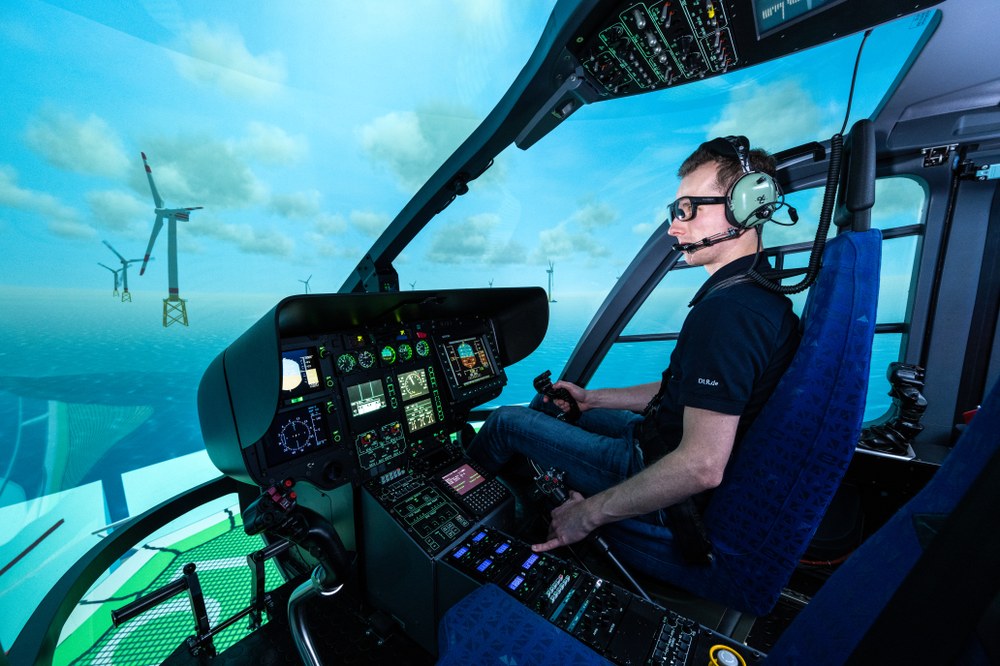
In the module representing the cockpit in DLR's EC135 research helicopter, the focus is not only on new control technology but also on the integration of new assistance systems. One example is the use of augmented reality technologies via a 'HoloLens' – a pair of transparent glasses that project additional information directly into the pilot's field of vision. During certain flight manoeuvres, helicopters fly at low altitudes through complex environments in close proximity to power lines, buildings and vegetation, or through low-lying fog – at significant risk. But digitally overlaid flight paths and obstacle warnings from lidar sensors assist with navigation and enhance safety even in poor visibility.
Helicopters require particularly precise simulation, as they can enter highly sensitive flight states such as hovering. In previous projects, DLR experts replaced conventional control systems with 'fly-by-light' technology, where control commands are transmitted via fibre-optic cables rather than copper cables or even mechanical linkages. Here too, development began in the AVES simulator before being transferred to the real Flying Helicopter Simulator – DLR's EC135.
Workload and passenger comfort
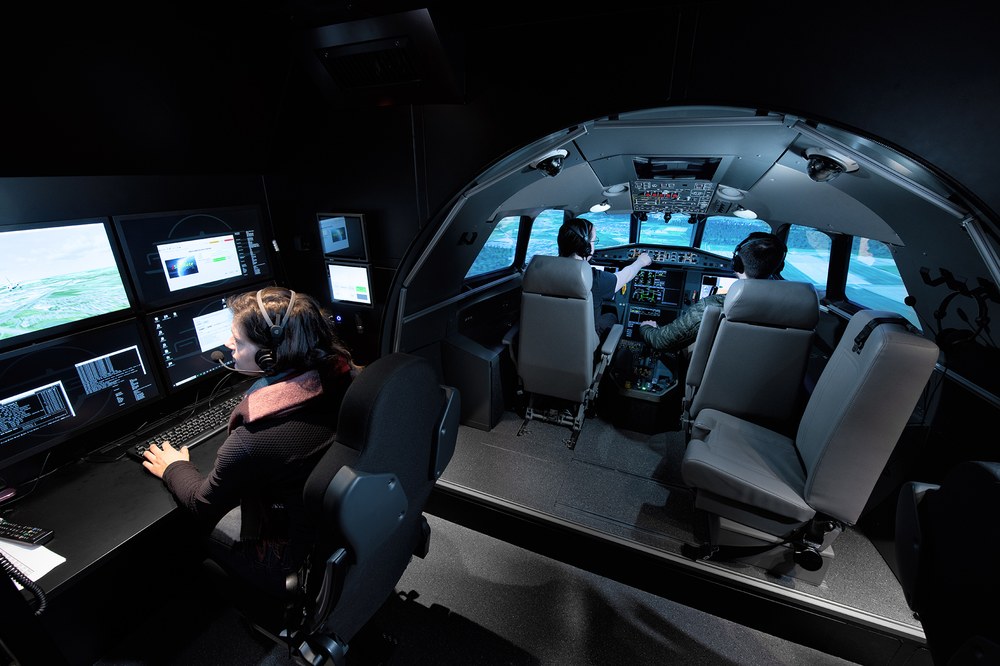
AVES's latest simulator replicates the cockpit of a Deutsche Aircraft D328. Apart from the basic physical controls, the cockpit is dominated by large-format displays. These are increasingly becoming standard in modern aircraft and allow for a high degree of flexibility in displaying functions and information. Among other things, the module is used to research single-pilot operations in civil aviation. In addition to safety-related issues, the workload on individual crew members plays a central role; fatigue, monotonous phases or additional tasks must be managed effectively. DLR is developing assistance systems that, for example, use artificial intelligence to reduce workload, increase alertness through visual or auditory signals, and improve situational awareness in the cockpit. Organisational, physical and psychological aspects such as shift and rest periods, monotony and stimulation are also considered in the studies.
The sphere mentioned at the outset plays a special role: More than 60 computers and 15 projectors create a 240-degree field of view and set the module – and its occupants – in motion. In many experiments, this 'motion simulator' uses rolling and side-to-side movements to convey a realistic sense of flight attitudes or turbulence. However, its full potential is realised when the cabin module is integrated.
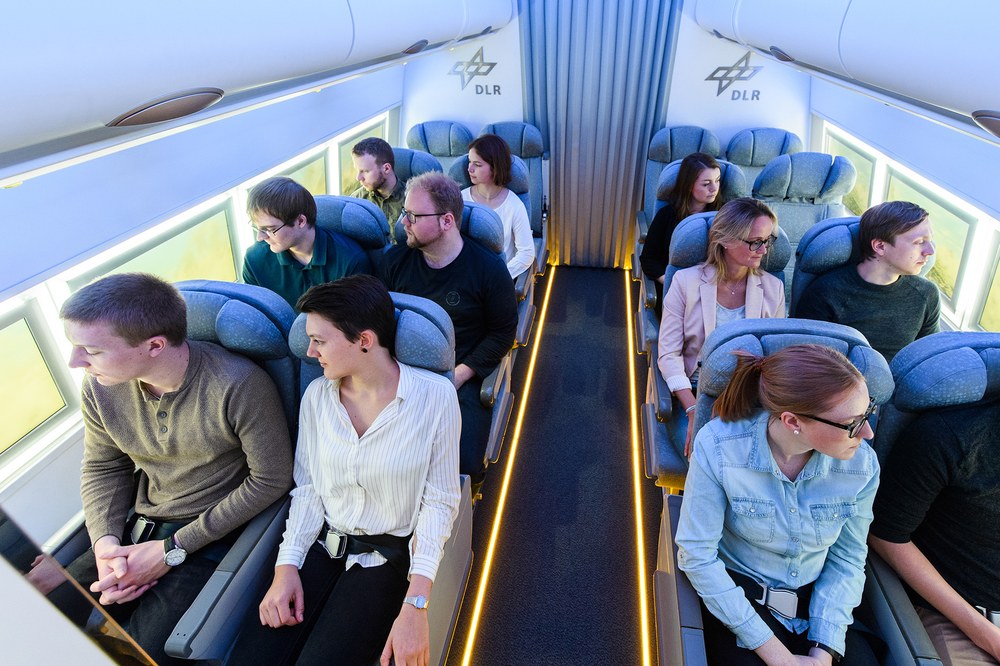
Up to 16 participants can take part in studies within this movable passenger cabin. Research here focuses on passenger comfort, such as the perception of turbulence or the acceptance of virtual exterior views.
In place of traditional windows, the cabin has monitors that display the outside world based on live camera feeds. Virtual reality headsets are also used, which can visualise completely different environments or even the view 'through' the aircraft. It is here that the real world merges most vividly with virtual and augmented reality.
With its intense immersion, modular architecture, high degree of realism and the close integration of simulation and real flight operations, AVES offers an exceptional research environment for studying the interface between humans and machines. Nowhere else can the future of aviation be experienced more realistically.
An article by Daniel Beckmann from the DLRmagazine 180.