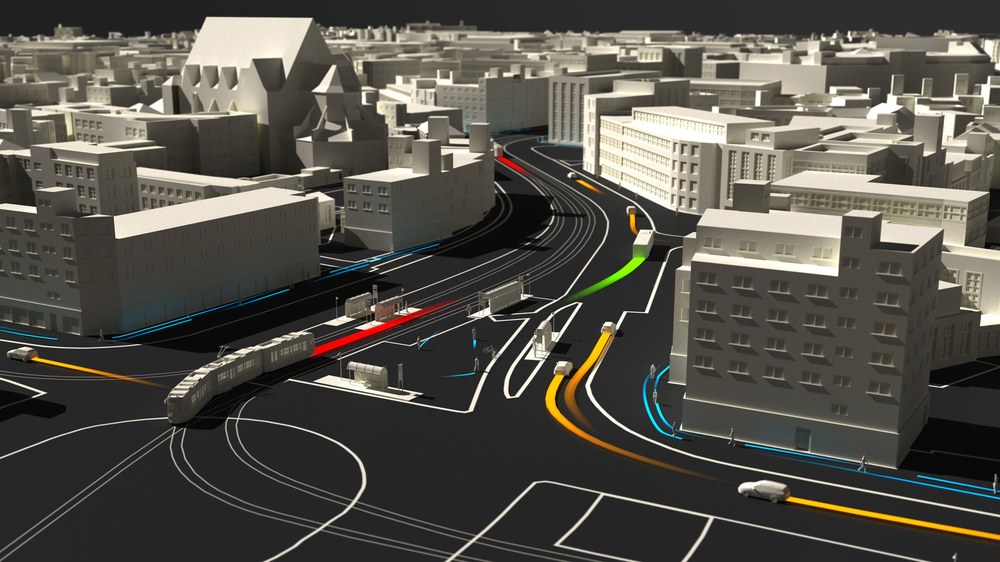
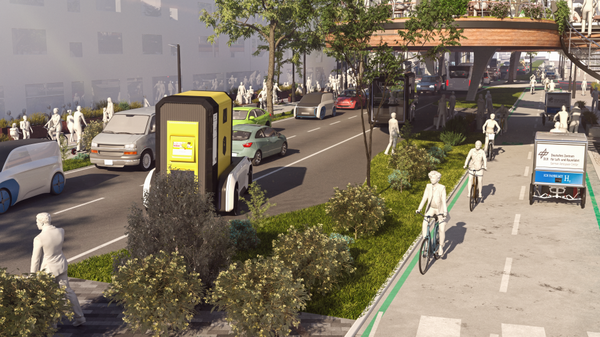
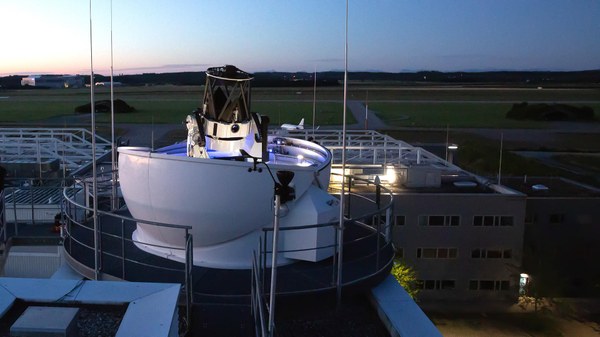
The DLR DiVe project focuses on innovative mobility and planning services and their integration into networked data spaces. These services are designed to be usable in specific situations and for specific target groups, as well as across different actors, and are based on real-life applications. In this way, they can accelerate, digitally transform and improve transport planning and operational processes.
The transport system offers enormous potential for digitalisation, yet many opportunities remain untapped. For example, data generated by transport companies, public authorities and mobility providers is often collected and stored separately but rarely evaluated jointly. However, the integration of this data could significantly improve both the planning and operation of mobility services and infrastructure.
This is where the DiVe project (Digital organisiertes Verkehrssystem: 'Digitally organised transport system') comes in: seven DLR institutes are pooling their research expertise to lay the foundations for a well-connected digital transport system. The aim is to develop digital tools that can merge mobility data from different sources and then process and analyse it technically. This integration of data and services provides local authorities, public bodies and mobility service providers with a solid basis for informed decision-making. Planning and operational processes can be made significantly faster, more digitally and more efficiently, enabling new mobility solutions to be developed.
A central element is the creation of data and service spaces. These secure, decentralised platforms are used to exchange data and provide digital tools. Users of the data platform can set the terms by which they offer or access data or services. At the same time, they benefit from a shared, standardised infrastructure that provides technical and legal security for the exchange of data.
For example, the platform can be used to combine openly available data with restricted-access data from mobility operators and local authorities to analyse and visualise the relationships between a region's transport services, population and key facilities such as schools, medical centres or supermarkets.
Digital solutions for transforming the transport system
To achieve this goal, DiVe is working in particular on four key areas: data and service spaces in the transport sector, cross-stakeholder tools, monitoring services and innovative modelling.
In the area of data and service spaces in the transport sector, interoperable data platforms are being developed, tested and optimised to ensure better data storage and secure data exchange. This involves combining artificial intelligence methods with traditional techniques.
Cross-stakeholder tools developed in the project enable individual, barrier-free and connected mobility. For example, these tools support travellers with personalised information for planning and executing journeys with transfers, and support operators with the efficient management of their services.
In the area of innovative modelling approaches, data-based models are provided for simulating and evaluating various measures. This enables administrations to compare different options in the shortest possible time before implementing individual measures and selecting the most suitable, to speed up planning processes and improve results.
DiVe will provide data-based services with monitoring functions that local authorities and planning offices can use to observe the impact of individual measures. The services visualise key metrics clearly and intuitively, enabling a rapid assessment of how much the desired effects have been achieved.
Within the project, digital tools and services are developed and operated independently of the data and service spaces. However, the integration of services into a data space means they remain up to date, secure and available centrally for the various target groups.
Collaborative research with stakeholders
The data spaces and integrated services developed in the DiVe project are consistently geared towards practical use. In collaboration with stakeholders – including those in the model region of Potsdam – the project is investigating real-world use cases. In the process, requirements for the data spaces are identified and their usability tested.
Using automated processes and targeted data preparation, complex transport data is made available as easily understandable, centralised information. The project's key stakeholders include local authorities, government agencies, planning offices and mobility service providers, as well as transport, IT and industrial companies.