Home
>
Research & Transfer>
Projects & Missions>
LORe – situational awareness for the remote operation of vehicles
LORe – situational awareness for the remote operation of vehicles

LORe – situational awareness for the remote operation of vehicles
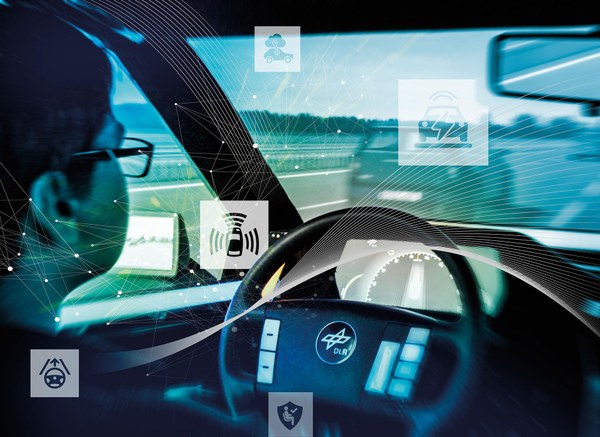
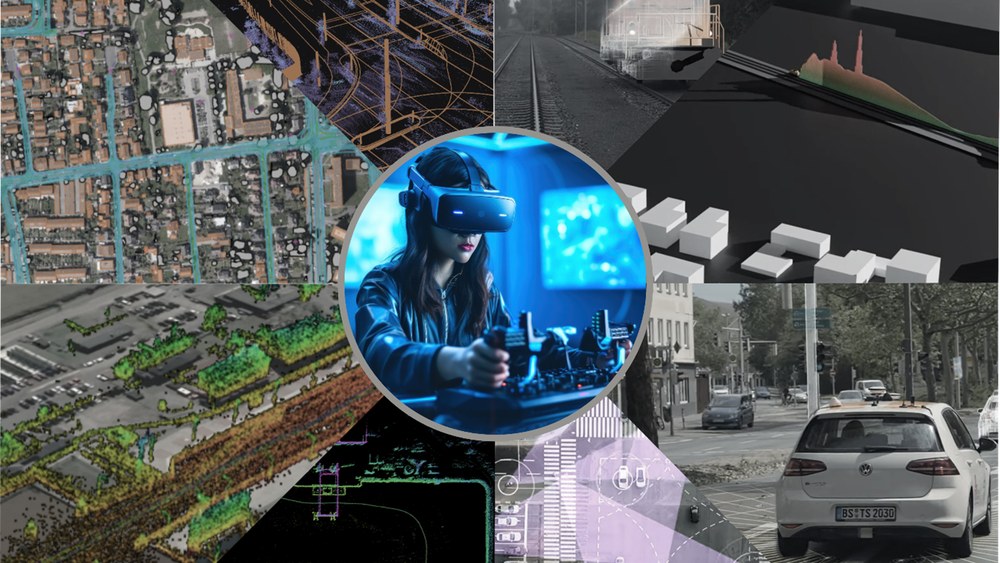
Many different types of data feed into a situational picture for the remote operation of vehicles.
Credit:
DLR/Adobe Stock
Autonomous vehicles require clear operating conditions: recognisable road markings, digital maps or predictable traffic situations. But when these conditions are suddenly no longer met – for example due to extreme weather conditions or outdated map data – there is no longer an automated solution available. A human must then take over control, either a driver or a remote operator working from a control centre. Our LORe project addresses exactly this challenge, developing situational pictures as the basis for remotely operating vehicles.
High-precision situational awareness for road, rail and shipping
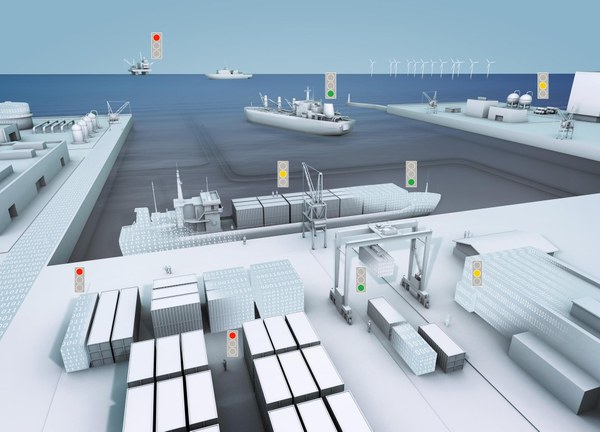
In this project, our researchers are working on remote operation situational overviews for three transport sectors at once: road traffic, rail traffic and shipping. The focus is on providing a resilient system that supplies the relevant information for different use cases. These situational awareness overviews draw on real-time data from a range of sources – including public geoinformation as well as sensor data from vehicles and infrastructure. These are supplemented by static and semi-static data from aerial and satellite imagery.
By using artificial intelligence, the researchers are also able to create highly precise digital models – for example of mast locations, or by identifying infrastructure components. Remote operators can intuitively use the situational overviews generated by the project for virtual visualisations such as augmented reality (AR) or virtual reality (VR). The solutions developed within LORe help them act quickly and safely, even in complex or high-risk situations.
Standardised products for research, industry and the public sector
To ensure the research findings work in practice, the project team works closely with international standardisation bodies. These include the Open Geospatial Consortium (OGC) which standardises digital geodata such as CityGML, RailML.org for rail data, ASAM OpenDRIVE for digital road models, as well as the International Maritime Organization (IMO) and the Committee on Earth Observation Satellites (CEOS) for maritime and satellite-based applications. Only through such shared standards can different systems be seamlessly linked together to produce complex situational overviews.
The aim of our project is not only to research technological solutions, but also to create synergies between the public sector, research and industry. The researchers therefore engage with local authorities, government bodies, universities and companies from the automotive, rail and maritime transport sectors.
Only through close collaboration can the challenges involved in creating situational overviews be overcome – from standardisation through to practical implementation. The project participants aim to demonstrate these approaches through a series of demonstrations. Initially, they will present a VR/AR-based visualisation of all three transport sectors, to show how a central, real-time situational picture works.
Towards the end of the project, three specific use cases will take centre stage:
- At the Braunschweig harbour railway, the focus is on the remote monitoring of infrastructure condition – for example, detecting and reporting damage to tracks or signalling systems.
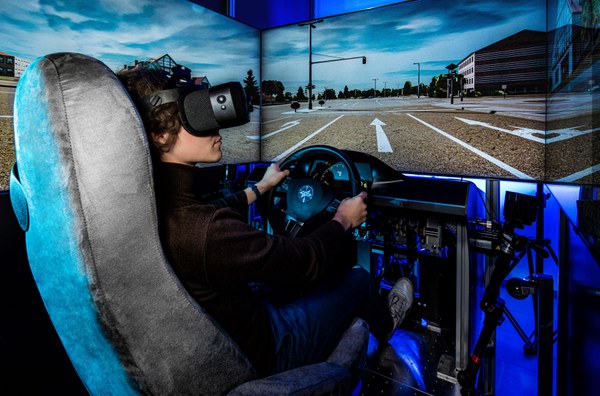
- At Schwarzer Berg in Braunschweig, the focus is on road traffic: here, the researchers will simulate how a remote operator takes over control when an autonomous vehicle is suddenly no longer able to act independently – for example due to sensor failure.
- The maritime demonstration in the port of Emden shows how ships can be safely manoeuvred, or moored and cast off, by remote control – for example in tight harbour basins or under difficult weather conditions.
LORe project – situational awareness for the remote operation of vehicles
- Duration: January 2026 to December 2028
- Lead institute: DLR Institute of Transportation Systems
- Project type: core funding
- Funding body: DLR Programme Directorate for Transport