Reappraising DLR's predecessor organisations from 1907 to 1945
A contribution to collective memory
Reappraising DLR's predecessor organisations from 1907 to 1945
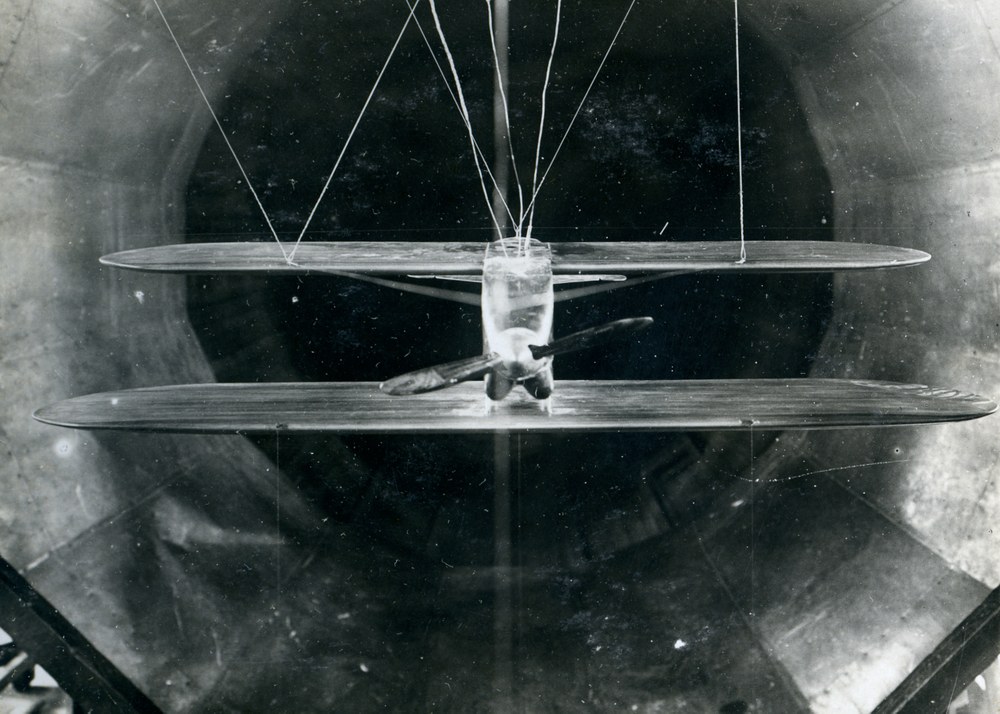
Model of a biplane in the Göttingen wind tunnel
Model of a Heinkel HD 33 biplane in the wind tunnel of the Aerodynamics Research Institute (Aerodynamische Versuchsanstalt; AVA) in Göttingen. The photograph was taken in the first half of 1920.
The history of the German Aerospace Center (Deutsches Zentrum für Luft- und Raumfahrt; DLR) spans more than a century. Central to this history are its predecessor organisations, whose development from 1907 to 1945 was closely bound up with the scientific, technical and political conditions of their time. Reappraising this period offers a comprehensive understanding of both the major advances in aviation research and the contexts in which they emerged.
At the same time, during the Nazi era, DLR's predecessor organisations were embedded in the structures and mechanisms of an era marked by war and cruelty.
They operated not only as centres of scientific innovation, but also as part of the war economy in both the First and Second World Wars – which included the use of forced labour and participation in inhumane practices. These entanglements require a nuanced, critical and transparent examination of DLR's own past.
As DLR, we are committed to our responsibility not only to document our past, but also to learn from it. Our goal is to work through this history – for ourselves and for the public – and in so doing to make it transparent. In this way, we aim to foster an awareness of the challenges facing science and technology across different eras.
Academic study of DLR's predecessor organisations
Against this backdrop, in 2022 DLR commissioned an independent three-year academic study (project period 2023–2026), which examines the history of its predecessor organisations through a number of sub-projects. Renowned historians and an interdisciplinary advisory board ensure the quality, independence and transparency of the research. The aim is to assume historical responsibility, preserve the memory of the victims and encourage ethically informed research in the present and future.
Members of the independent advisory board
Margit Szöllösi-Janze, Chair of Modern and Contemporary History, LMU München, up to and including the winter semester 2022/2023
Bernd-Rüdiger Ahlbrecht, Chair of the Society for the Preservation of Historical German Aviation Sites (Gesellschaft zur Bewahrung von Stätten deutscher Luftfahrtgeschichte e. V.; GBSL)
Bernd Lukasch,former Director of the Otto Lilienthal Museum in Anklam
Heiko Stoff,Institute for Ethics, History and Philosophy of Medicine, Hannover Medical School
Heiko Triesch, Bundeswehr Museum of Military History, Dresden
Ralf Raths, Scientific Director of the German Tank Museum in Munster (Deutsches Panzermuseum Munster; DPM) from 2023 to 2024
The period under review begins in 1907 with the founding of the Institute of Model Testing of the Motorised Airship Study Society (Modellversuchsanstalt der Motorluftschiff-Studiengesellschaft; MVA) in Göttingen.
The eight sub-projects of the historical reappraisal
Across a total of eight sub-projects, researchers are examining both specific time periods and the history of DLR's predecessor organisations during the First World War, the Weimar Republic and the Nazi era.
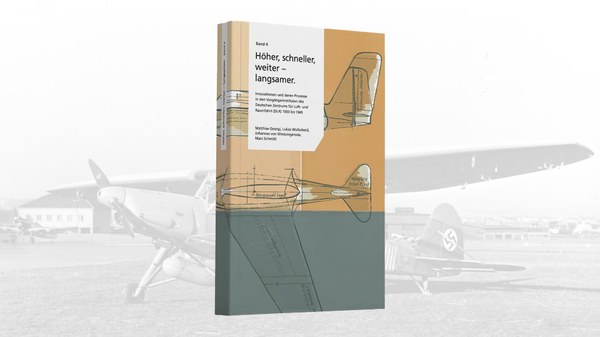
The sub-projects, which will be completed by the end of 2026, have produced six monographs and two illustrated volumes. The aim is to provide as comprehensive a portrayal as possible of each period, presenting both the scientific and technical achievements as well as the organisations' involvement in the systematic cruelty of the Nazi regime.
The findings of one sub-project will also be presented in an exhibition and accompanying catalogue. From summer 2026, the monographs will be available (in German) through Cuvillier Verlag and from 2027 available here as an open-access download.
Project title
Final product
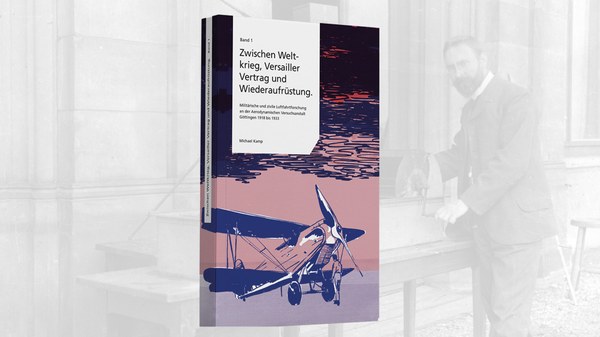
Project 1: The history of the Aerodynamics Research Institute (AVA) from 1918 to 1933: the aftermath of the Treaty of Versailles
Historical monograph, Volume 1
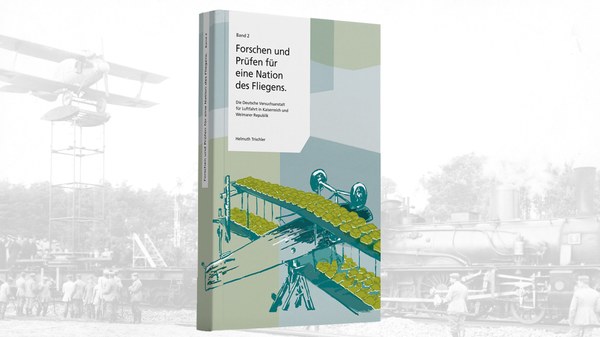
Project 2: The history of the German Aviation Research Institute from 1918 to 1933: the aftermath of the Treaty of Versailles
Historical monograph, Volume 2
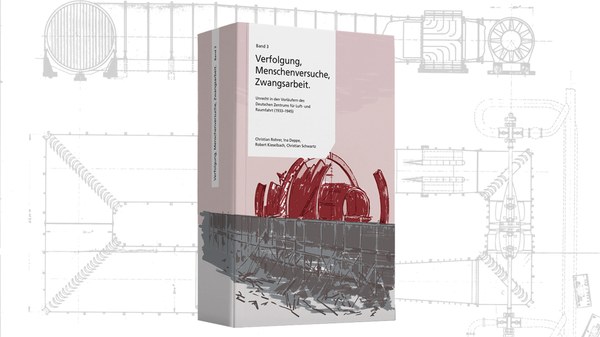
Project 3: Forced labour, human experimentation and the treatment of Jewish employees and politically persecuted individuals in DLR's predecessor organisations, 1933 to 1945
Historical monograph, Volume 3
Project 4: The collaboration between DLR's predecessor organisations and universities,1933 to 1945
Exhibition and catalogue
Project 5: Innovations, missteps and dead ends in research at the predecessor organisations of DLR,1933 to 1945
Historical monograph, Volume 4
Project 6: The history of the Gräfelfing Wireless Telegraphic and Air Electricity Test Station (DVG) from 1908 to 1945, and the development of the Oberpfaffenhofen Aeronautical Radio Research Institute (FFO) from 1937 to 1945
Illustrated volume
Project 7: Key players, test facilities and equipment in the predecessor organisations of DLR, 1933 to 1945
Illustrated volume
Project 8: The relationship between state, military and research as exemplified by DLR's predecessor organisations, and the collaboration between these predecessor organisations, 1933 to 1945
Jessika Wichner, Head of the DLR Central Archive, oversees the historical reappraisal project alongside Jens Wucherpfennig and Daniel Beckmann from DLR Communications.