DLR's LOKI research project is developing the foundations for safe and trustworthy collaboration between humans and AI systems in aviation.
New AI demonstrators for air traffic control and cockpit technology show how artificial intelligence could support professionals in making complex decisions.
Recommendations from the project contribute to the safe introduction of AI systems in European aviation.
Focus: Aviation
How will artificial intelligence (AI) support air traffic controllers and pilots in the future? Over the past four years, the German Aerospace Center (Deutsches Zentrum für Luft- und Raumfahrt; DLR) has been investigating this question as part of the LOKI project (Kollaboration von Luftfahrt-OperateurInnen und KI-Systemen, or 'Collaboration between Aviation Operators and AI Systems' in English). In collaboration with national and international companies and research institutions from the air traffic control sector, as well as public authorities, the project also developed relevant recommendations for introducing AI into aviation.
AI as a future team partner in aviation
The aviation industry is currently working intensively on introducing AI systems. Unlike conventional assistance systems, these can process large volumes of data, be trained on the basis of this data and so adapt flexibly to new situations. AI systems offer the potential to increase the efficiency of air traffic and relieve the workload on highly qualified specialists, while at the same time ensuring safety, transparency and human control at all times.
"In the DLR LOKI project, we investigated how humans and AI systems can cooperate successfully in aviation. Our aim was to make this collaboration trustworthy, transparent and user-centred," says the project’s scientific lead, Carmen Bruder from the DLR Institute of Aerospace Medicine.
The researchers developed a digital air traffic controller as an AI-supported team member for air traffic control and an intelligent assistance system for pilots, and made recommendations for the safe introduction of trustworthy AI into aviation.
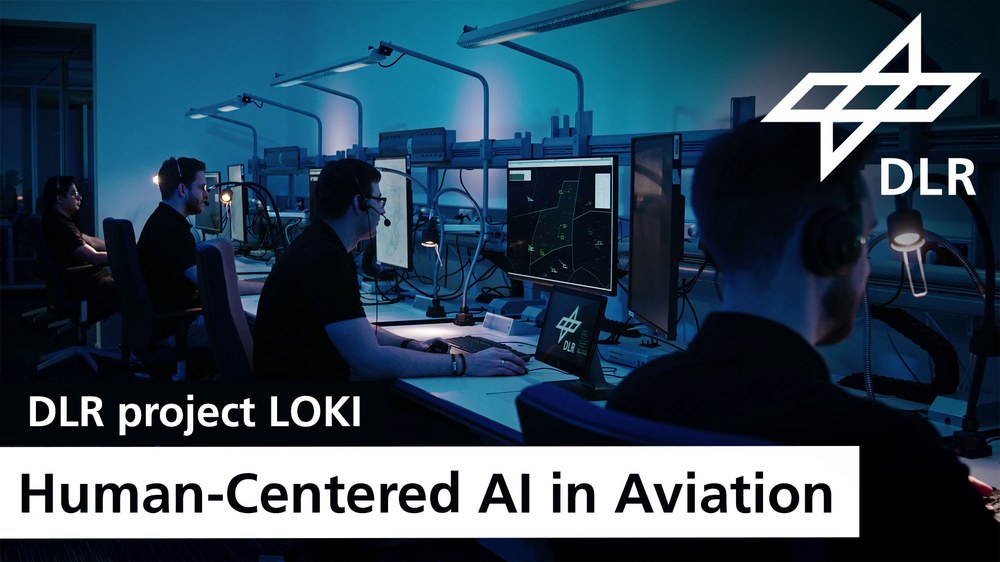
Trustworthy collaboration between humans and AI systems is of central importance for the integration of AI systems into aviation. The DLR LOKI project aims to promote trust-based collaboration between humans and AI in aviation. Together with industry and research collaborators, the LOKI team has investigated how human operators – such as pilots and air traffic controllers – and AI can work together safely, effectively and with trust, on complex aviation tasks.
Trust-based human-AI collaboration in aviation – the DLR LOKI project
Your consent to the storage of data ('cookies') is required for the playback of this video on Youtube.com. You can view and change your current data storage settings at any time under privacy.
Trust-based human-AI collaboration in aviation – the DLR LOKI project
Trustworthy collaboration between humans and AI systems is of central importance for the integration of AI systems into aviation. The DLR LOKI project aims to promote trust-based collaboration between humans and AI in aviation. Together with industry and research collaborators, the LOKI team has investigated how human operators – such as pilots and air traffic controllers – and AI can work together safely, effectively and with trust, on complex aviation tasks.
The digital air traffic controller as a future team member in the control centre
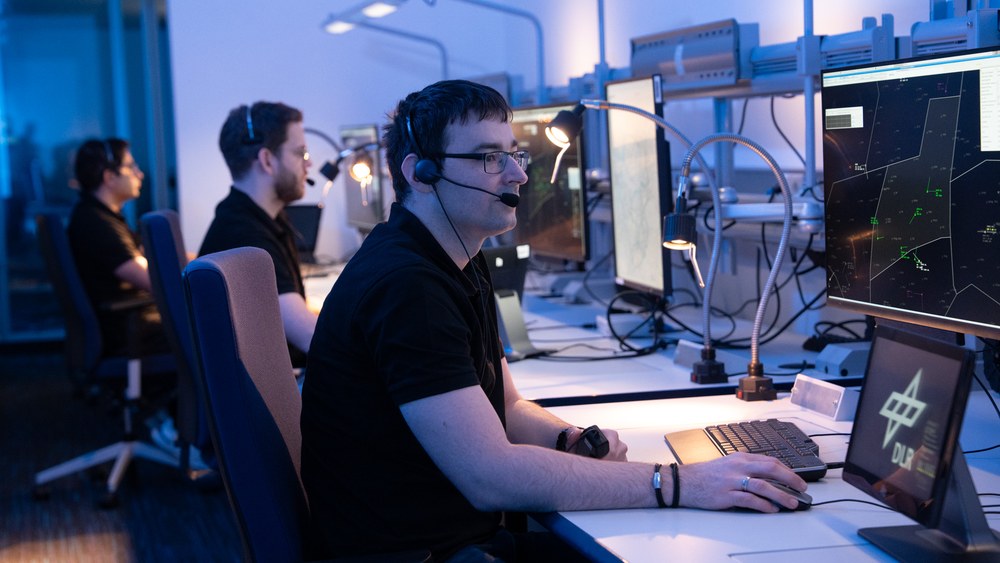
One focus of the research was the development of the digital air traffic controller DIRC (Digital Interactive Reliable Controller). Unlike traditional assistance systems, the DIRC not only supports human controllers with information or recommendations but can also take on certain tasks independently. This allows for dynamic coordination with human air traffic controllers regarding which tasks are to be undertaken.
Simulations showed that human and digital air traffic controllers can divide their tasks efficiently. Together, they managed up to 25 percent more than the current maximum traffic volume specified for an airspace sector. The research thus addresses a key challenge facing European air traffic: rising traffic volumes coupled with the increasing challenge of maintaining staffing levels in air traffic control.
Supporting pilots: AI helps decisions when time is critical
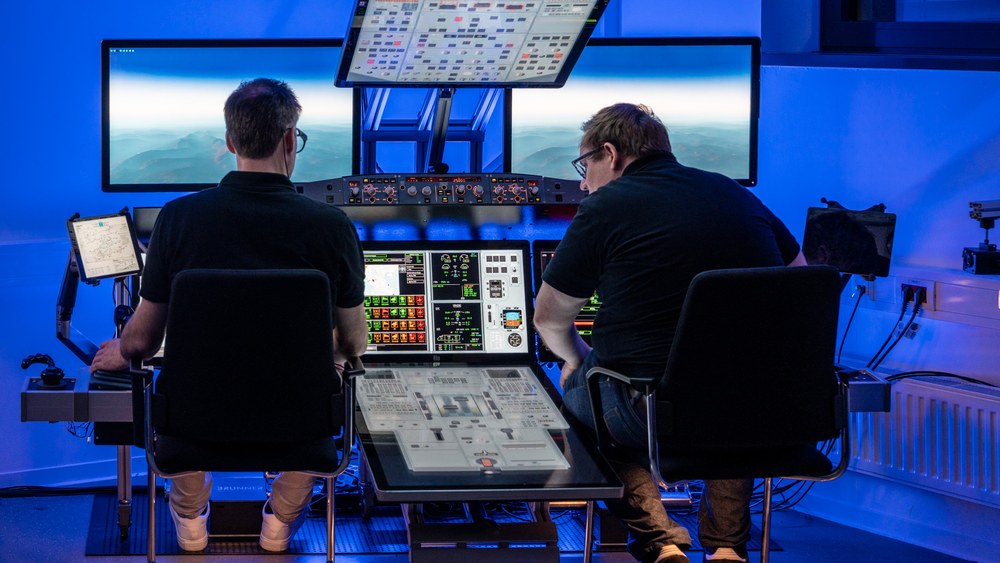
In addition to air traffic control, the researchers developed the Intelligent Pilot Assistance System (IPAS), a demonstrator designed to support pilots in the cockpit.
The system is designed to support crews particularly in time-critical situations, for example when selecting alternative flight routes or suitable alternate airports. The AI analyses large amounts of relevant information and processes it to aid decision-making. At the same time, the team investigated what information pilots need in order to understand and reliably assess the recommendations of an AI system.
Building trust in AI systems
In addition to technical developments, the project investigated the conditions necessary for trustworthy collaboration between humans and AI systems. The researchers analysed the expectations and requirements of aviation personnel and assessed how collaboration between humans and AI in aviation should be structured.
A key finding is that trust is not built solely on a system’s performance. Crucial factors include transparent information about the AI's capabilities and limitations, suitable training opportunities and the gradual introduction of new functions. Based on the project findings, important recommendations were formulated; taking these into account will help ensure the successful development and introduction of AI systems in aviation.
Next steps towards practical application
The findings form a basis for the further development of AI systems in aviation and will feed into the European debate on the safe introduction of such systems.
"Systems such as DIRC and IPAS can make air transport more flexible, reliable and efficient in the future – while maintaining consistently high safety standards and keeping people in control," says Bruder.
Participants included the DLR Institutes of Aerospace Medicine, Flight Guidance, Data Science, and Air Transport, as well as the DLR Institutes for AI Safety and Security, and Software Technology.
The project was carried out in close collaboration with companies and research institutions in the sector, as well as public authorities. These include the German and Austrian national air traffic control service providers – DFS and Austro Control – the European Union Aviation Safety Agency (EASA), the German Aviation Association (Bundesverband der Deutschen Luftverkehrswirtschaft; BDL), the International Federation of Air Traffic Controllers’ Associations (IFATCA) and the University of Lübeck.
Contact
Jana Hoidis
Corporate Communications Bremen, Bremerhaven, Hamburg, Oldenburg, Geesthacht, Kiel