Artemis II launches to the Moon – with German and European tech on board
April 1, 2026 | Destination Moon for the European Service Module, DLR radiation detectors and a German small satellite
Artemis II launches to the Moon – with German and European tech on board
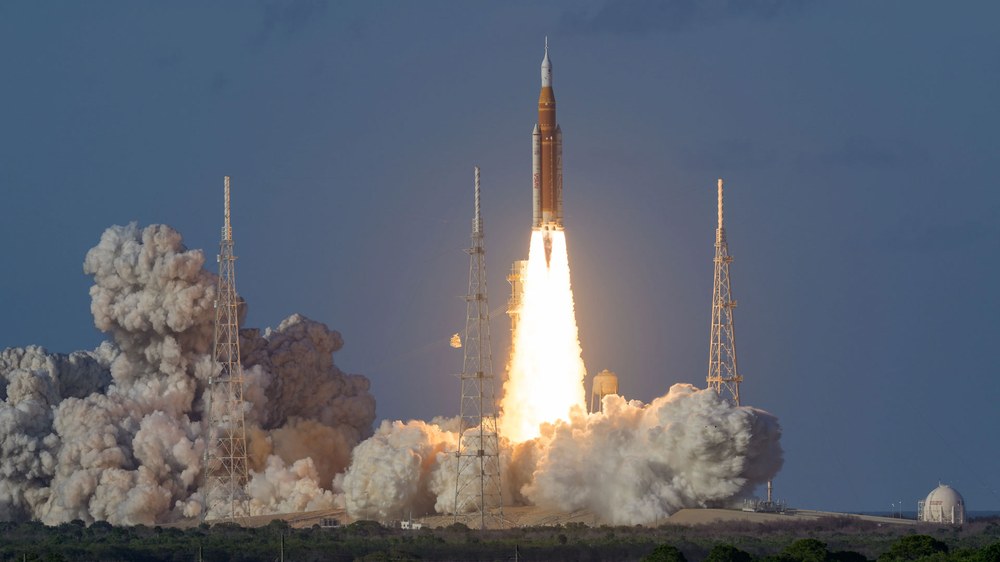
Artemis II launches from Launch Complex 39B at the Kennedy Space Center
Artemis II successfully lifted off at 23:35 BST (18:35 local time) on 1 April 2026 from Launch Complex 39B at NASA’s Kennedy Space Center in Florida. The Artemis II test flight will carry Commander Reid Wiseman, Pilot Victor Glover and Mission Specialists Christina Koch (all NASA, USA) and Jeremy Hansen (CSA, Canada) on a ten-day mission around the Moon and back to Earth.
Image: 1/12, Credit:
NASA / Bill Ingalls
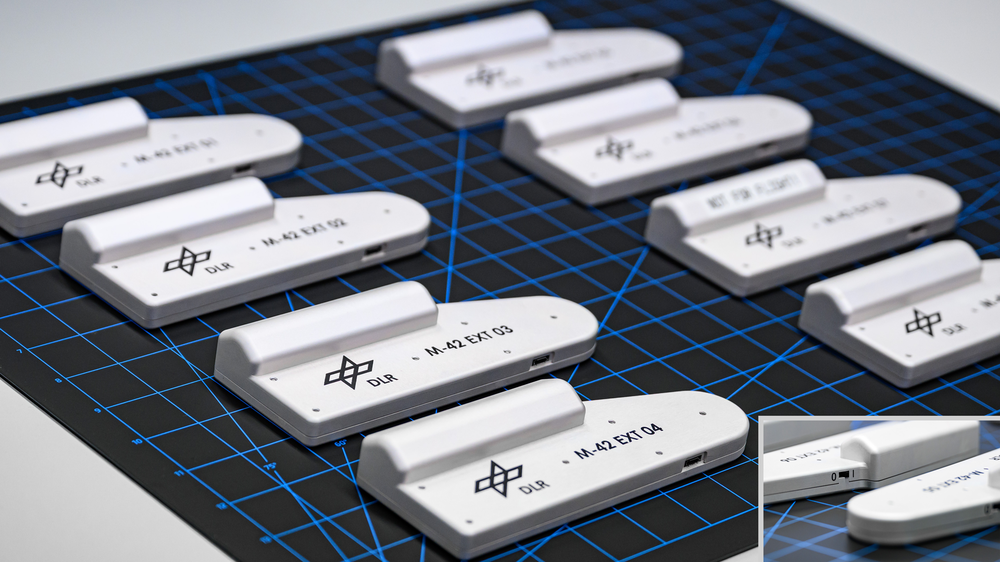
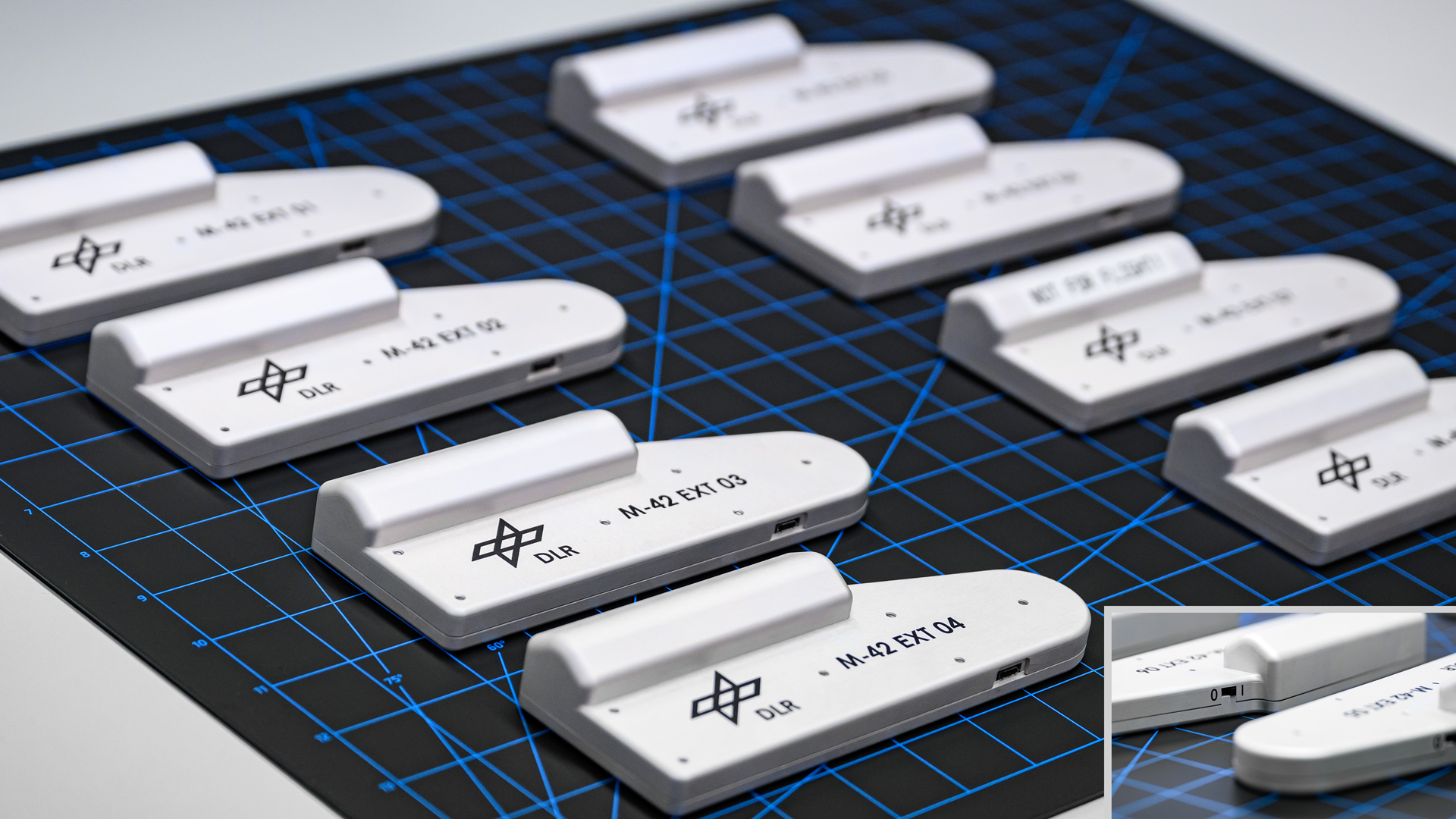
DLR M-42 EXT radiation detector – four flight units and four backups
The radiation biology team at the DLR Institute of Aerospace Medicine has further developed the M-42 radiation detector, particularly with regard to its measurement electronics. The latest addition to the detector family, the M-42 EXT (extended), can measure space radiation more accurately during Orion’s lunar orbit on the Artemis II mission than the previous version used on Artemis I. In addition, the new devices feature an on/off switch (see inset, lower right). The Orion crew will switch on the four identical dosimeters after launch and attach them with Velcro fasteners at four locations within the spacecraft, each shielded to various degrees from space radiation. In total, the DLR team designed, built, calibrated and tested a set of eight identical detectors: four flight units and four backup devices.
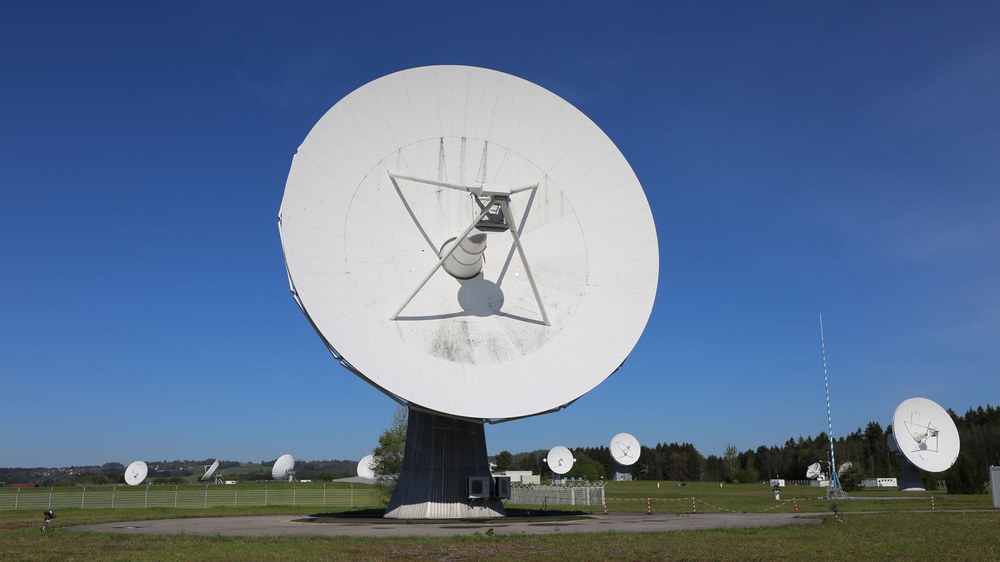
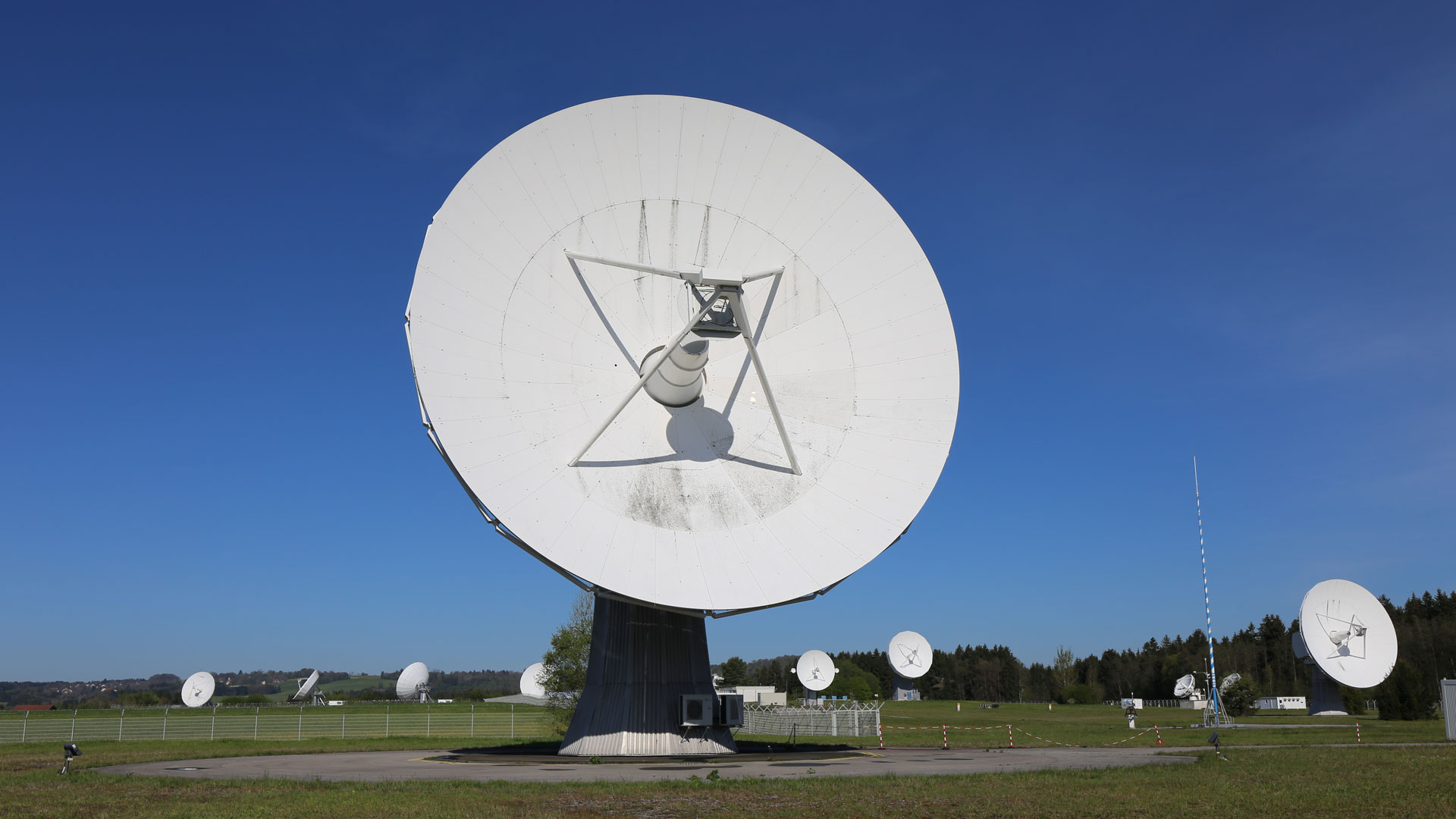
15-metre S-band antenna at the DLR site in Weilheim
DLR's German Space Operations Center (GSOC) will support the Artemis II mission using the ground station in Weilheim. It will receive signals from Orion and track the spacecraft’s flight around the Moon from Earth.
Artemis II is scheduled to launch today, 1 April at 23:24 BST (2 April 00:24 CEST).
Inside the Orion spacecraft, four DLR radiation sensors will be installed and activated by the crew after launch.
The European Service Module (ESM) with the Orion capsule will, for the first time, support humans in space.
Also on board is the German CubeSat TACHELES, developed by the Berlin-based start-up NEUROSPACE.
Focus: Spaceflight, Moon, radiation biology, small satellites, long-duration human space missions
+++ Update – 11 April 2026 +++
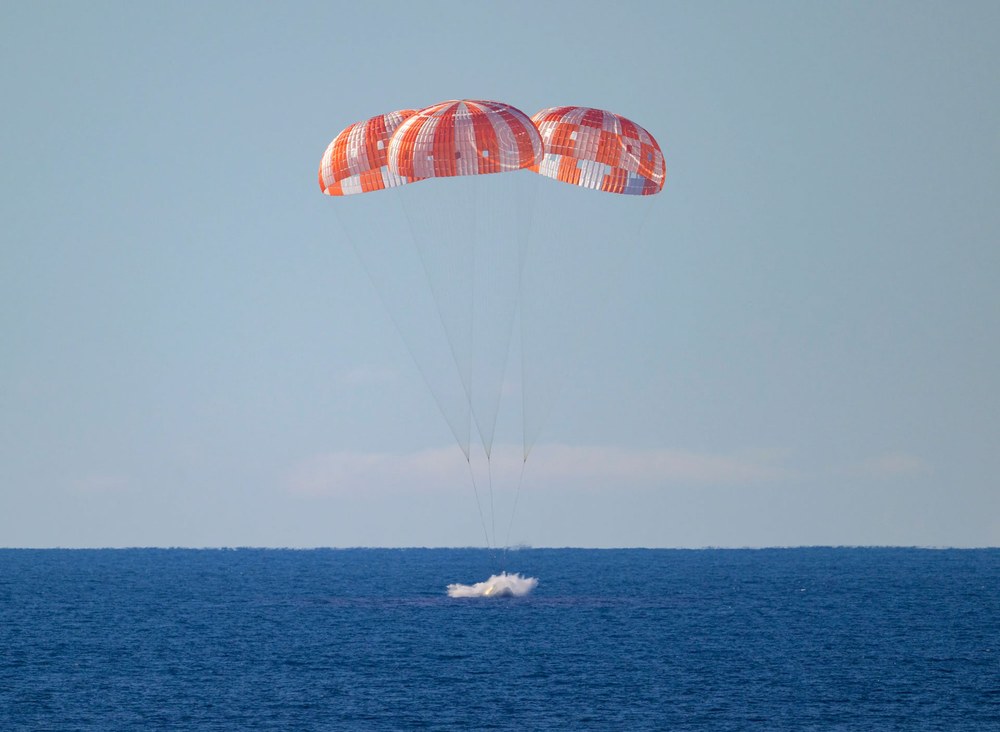
Back on Earth
Credit:
NASA / Bill Ingalls
Splashdown! The Artemis II Orion crew is back on Earth. They touched down in the Pacific Ocean off the coast of San Diego, California, at 01:07 BST (02:07 CEST) this morning, using the parachute system. This marks the successful conclusion of their nearly 10-day journey around the Moon.
+++ Update – 2 April 2026 +++
Artemis II has successfully launched. The SLS launch vehicle, carrying the Orion spacecraft, lifted off from Launch Complex 39B at the Kennedy Space Center in Florida at 23:35 BST (18:35 local time) on 1 April 2026. The boosters, stages and protective systems were jettisoned as planned. After 24 minutes, the solar panels of the European Service Module (ESM) deployed, initiating power supply to Orion. The spacecraft will first perform initial manoeuvres and flight tests in Earth orbit before setting course for its lunar trajectory.
With NASA's Artemis II mission, humans are heading towards the Moon for the first time in over 50 years. The launch date is currently scheduled for 1 April 2026 at 23:24 BST (18:24 local time at the Kennedy Space Center). This will be the first crewed flight of the Orion spacecraft which will carry a four-person crew. The mission plan foresees the crew flying by the Moon and returning to Earth after ten days. Germany and Europe are contributing several components and technologies to the mission. Four M-42 EXT (extended) radiation detectors from the German Aerospace Center (Deutsches Zentrum für Luft- und Raumfahrt; DLR) will once again measure space radiation between Earth and the Moon – this time with significantly higher resolution than during the Artemis I flight at the end of 2022. Orion with its European Service Module (ESM) will, on this mission, transport humans into space and to the Moon for the first time. In addition, the German small satellite demonstrator TACHELES will travel to the Moon, where it will be released into lunar orbit. The CubeSat was selected by the German Space Agency at DLR.
"Following the successful flight of the MARE radiation experiment on Artemis I, I am delighted that we can now further expand the unique dataset on space radiation between Earth and the Moon with this new mission," says Anke Kaysser-Pyzalla, Chair of the DLR Executive Board. "With further developed dosimeters – the M-42 EXT sensor – we will obtain even more detailed measurement data. In this way, we are continuing experiments that began more than 20 years ago on the ISS. To prepare for the future of robotic and human exploration, we are currently establishing the Human Exploration Control Center (HECC) at our Oberpfaffenhofen site. Through consistent knowledge exchange, we have built up expertise that makes us a recognised international partner while also strengthening Germany's technological sovereignty."
View of the Moon
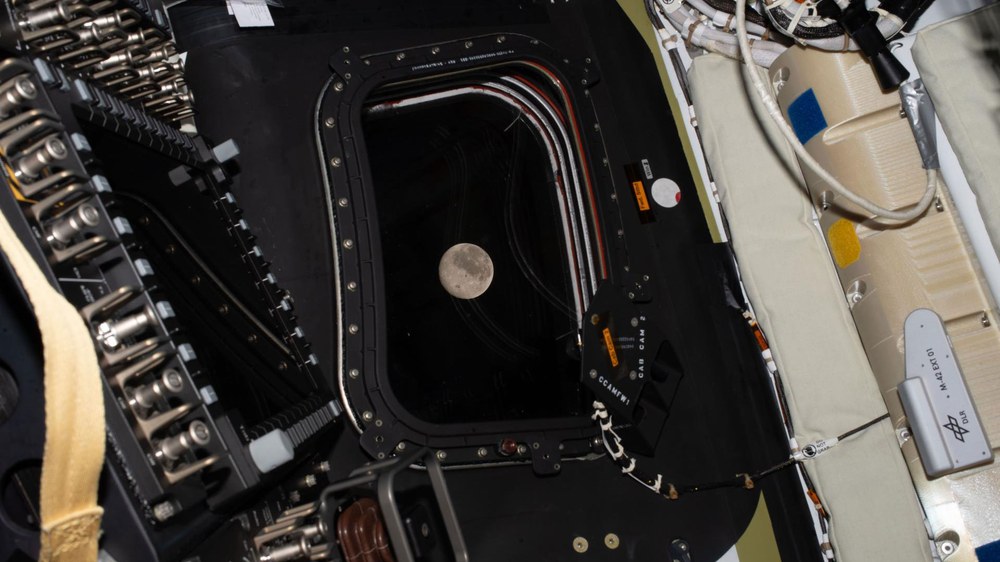
The Orion crew captured this photo on the fifth day of their mission, shortly before entering the Moon's sphere of influence on Monday 6 April 2026. At this point, the Moon's gravitational pull on the spacecraft was stronger than Earth's, and the spacecraft began its lunar flyby. Clearly visible on the right edge of the image is one of four DLR M-42 EXT radiation detectors on board Orion. These detectors are measuring cosmic radiation throughout the entire lunar journey – for the second time after the Artemis I flight; this time with even higher resolution.
Credit:
NASA
"Germany is at the forefront of humanity's return to the Moon,” adds Walther Pelzer, DLR Executive Board Member and Director General of the German Space Agency at DLR. “We are particularly pleased that the European Service Module, built in Bremen, will for the first time in the history of spaceflight be an internationally provided element to join with the United States in transporting astronauts to the Moon. In addition, a small satellite from a German start-up is flying on the mission, intended to open up technologies for cost-effective access to lunar surface utilisation and to test the effects of space radiation on spacecraft. This will sustainably strengthen Germany as a space location in both technology and science."
Flight to the Moon – living and working in nine cubic metres, how does that work? Volker Schmid, former DLR mission manager for Blue Dot, Horizons and Cosmic Kiss, provides the answer.
Your consent to the storage of data ('cookies') is required for the playback of this video on Youtube.com. You can view and change your current data storage settings at any time under privacy.
Flight to the Moon – living and working in nine cubic metres, how does that work? Volker Schmid, former DLR mission manager for Blue Dot, Horizons and Cosmic Kiss, provides the answer.
NASA Administrator Jared Isaacman adds: "Artemis II marks a key step in humanity's return to deep space, and NASA is proud to be supported by our international partners on this mission. The German and ESA contributions – including the European Service Module, the M-42 EXT radiation detectors and the TACHELES CubeSat – reflect several international elements supporting Artemis II. Together, these efforts contribute to the data and experience needed for sustainable human exploration of the Moon and for future missions to Mars."
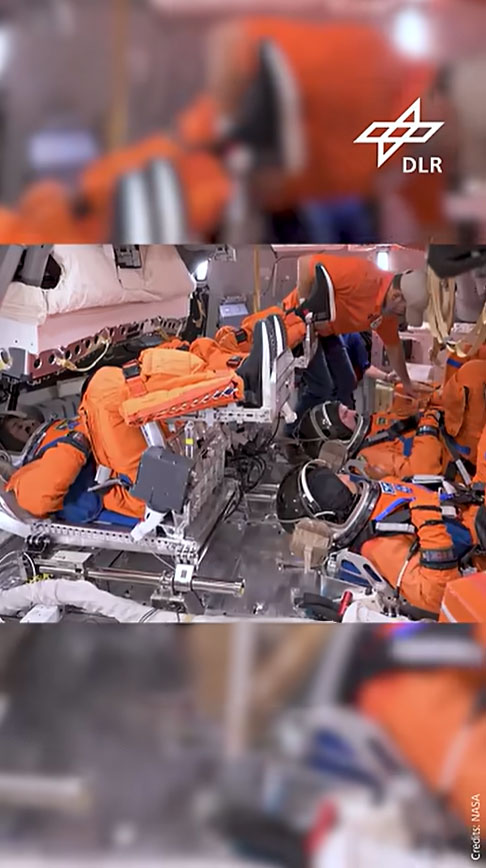
The Orion crew consists of Reid Wiseman, Victor Glover and Christina Koch from the United States, and Jeremy Hansen from Canada. For NASA, the focus of the second test flight of the Artemis programme, launching from the Kennedy Space Center in Florida, includes validating all life-support systems in deep space, paving the way for the Artemis III demonstration mission in mid-2027. Should the launch of Artemis II be delayed, further launch opportunities are available.
ESM – the European Service Module carries humans towards the Moon for the first time
When humanity sets off for the Moon again after more than five decades, a crew will for the first time be carried on this journey by a system not fully developed in the United States. For its Artemis missions, NASA is relying for the first time on international partners for a critical component of human spaceflight. The propulsion and supply unit of the spacecraft – the European Service Module (ESM) – was developed under the industrial leadership of Airbus in Bremen, where it is also assembled. Components from eleven European countries and the United States are delivered to Bremen and integrated there into a unique spacecraft. NASA’s reliance on a European system represents a major vote of confidence in the capabilities of European spaceflight. Germany is an important partner in the ESM programme, along with other ESA member states. Germany’s share of the programme amounts to around 50 percent and is managed by the German Space Agency at DLR.
The Artemis crew spacecraft Orion consists of two parts: the US crew capsule and the cylindrical ESM-2 service module beneath it – the successor to ESM-1, which transported an uncrewed Orion spacecraft around the Moon at the end of 2022. The main engine for the translunar injection is located here. Four solar arrays supply power to the spacecraft, while the ESM’s thermal control systems ensure optimal temperature regulation for crew and payload. Fuel as well as oxygen and water supplies for the crew are also stored in the ESM. Fully loaded, the ESM weighs more than 15 tonnes at launch. After the Orion spacecraft separates from the upper stage of the Space Launch System (SLS) in Earth orbit, the ESM's main engine ignites to accelerate the spacecraft towards the Moon. At the end of the mission, the Orion crew capsule separates from the ESM shortly before arrival at Earth. While the crew spacecraft re-enters Earth’s atmosphere and lands safely under parachutes in the Pacific Ocean, the ESM burns up in Earth’s atmosphere.
DLR dosimeter M-42 EXT – measuring space radiation with greater precision
A dosimeter measures radiation exposure from heavy ions, which are considered particularly dangerous for the human body and represent one of the greatest challenges for long-duration human space missions. Following its deployment on Artemis I, the M-42 radiation detector was further developed by the radiation biology team at the DLR Institute of Aerospace Medicine, particularly with regard to measurement electronics. The new M-42 EXT device also features an on/off switch, and its battery has been further optimised for power supply. In total, the DLR team designed, built, calibrated and tested a set of eight identical dosimeters: four flight units and four backups, should technical issues arise with one or more flight units prior to launch. At the end of January, the institute team travelled to Florida to the Kennedy Space Center, conducted final tests and handed over the set to NASA on 2 February 2026 for installation in the Orion spacecraft.
A special feature of this Artemis lunar flight is that the sensors are stored on board in a cargo transfer bag during launch. Only after launch are they switched on by the crew and attached at measurement positions using Velcro fasteners. Four locations within the spacecraft were selected in advance, each offering different levels of radiation shielding. This enables a spatial picture of the radiation environment inside the capsule to be obtained during flight.
Thomas Berger, Head of Radiation Biology at the DLR Institute of Aerospace Medicine and project leader for the radiation experiments on Artemis I and II, explains: "The success of our MARE project on Artemis I showed that the concept of a small, versatile detector system works very well. With the new M-42 EXT sensor, we can once again measure space radiation between Earth and the Moon – now with a significantly larger measurement range and much greater precision. We expect a dataset covering an energy measurement range increased by a factor of six. This will complement our MARE data with valuable additional results. For all colleagues involved in our scientific contribution to Artemis II, an intensive and eventful period is coming to an end. We are very pleased to be flying on Orion again and eagerly await the new data."
Background info: the evolution of space radiation research at DLR
Radiation exposure in space and the associated increased cancer risk, as well as the danger of acute radiation sickness caused by solar particle events, are among the greatest challenges for long-duration human missions beyond low Earth orbit. Radiation measurement has therefore been an integral part of space missions since the dawn of the space age. Both passive detector systems and active instruments are used, with silicon-based detectors currently predominating in space applications.
The DLR Institute of Aerospace Medicine in Cologne has been conducting research in this field for many years. The M-42 EXT is the latest version of the M-42 detector family. Previously, the silicon detector telescope RAMIS (Radiation Measurements In Space) has been operating in space since December 2018 on board the DLR mission Eu:CROPIS. For more than 2,500 days, RAMIS has been successfully collecting data on the complex radiation environment in the satellite’s polar orbit at an altitude of approximately 600 kilometres.
With the M-42 system family, the DLR radiation biology team has developed a flexible, versatile, small and lightweight instrument with very low power consumption. Since its first generation, the system has undergone several updates. On MAPHEUS® sounding rockets, DLR detectors reached space for the first time during test flights, albeit only for minutes. At the end of 2022, they achieved their first scientific deployment during the Artemis I lunar mission as part of the Matroshka AstroRad Radiation Experiment (MARE). During the 25.5-day lunar flight, 16 M-42 instruments collected, for the first time, a homogeneous dataset of the radiation environment beyond the orbit of the International Space Station (ISS). Initial findings from Artemis I have already been analysed and published. Results on differences in radiation dose between the two DLR measurement phantoms Helga and Zohar, as well as on the effect of the AstroRad protective vest, will be published shortly. Further studies will follow.
TACHELES – a German small satellite travels to the Moon
Also on board Artemis II is a German small satellite selected and financially supported by the German Space Agency at DLR. The TACHELES CubeSat, developed by NEUROSPACE in Berlin, was handed over to NASA on 16 September 2025 and shortly thereafter integrated into the Orion Stage Adapter of the Orion spacecraft. The small satellite will be released at the Moon and inserted into its own orbit before Orion continues on its lunar fly-around trajectory. TACHELES is expected to remain in orbit for approximately two years, transmitting data back to Earth to support further development of the start-up’s rover system.
TACHELES will test the electrical components of a future lunar vehicle during its journey to the Moon. In particular, the influence of space radiation when passing through Earth's two radiation belts – the Van Allen belts – is considered especially critical for such systems. The Artemis II flight offers a unique opportunity to collect data on the radiation belts and their effects on CubeSat electronics. These data will also be made available for scientific research. For example, the SELDOM (Single Event Latchup Detection On Moon) experiment from Ernst-Abbe University of Applied Sciences Jena is also on board, testing a technology designed to protect spacecraft electronics from sudden disruptions caused by space radiation.
DLR antennas to track Orion flight from Earth
Ahead of the Artemis II lunar mission, NASA selected participants around the world to track the Orion spacecraft from Earth as it flies around the Moon. In total, 34 international partners and volunteers have been named, each contributing their own antennas to help monitor the trajectory and strengthen global participation in this historic mission. DLR's German Space Operations Center (GSOC) is supporting the initiative with its ground station in Weilheim; the 15-metre antenna there will receive signals from the spacecraft, contributing to precise tracking of the flight path and promoting international collaboration in space communications systems.