First orbital flight of the SPECTRUM commercial launch vehicle from Germany
September 6, 2026 | Europe's independent access to space
First orbital flight of the SPECTRUM commercial launch vehicle from Germany
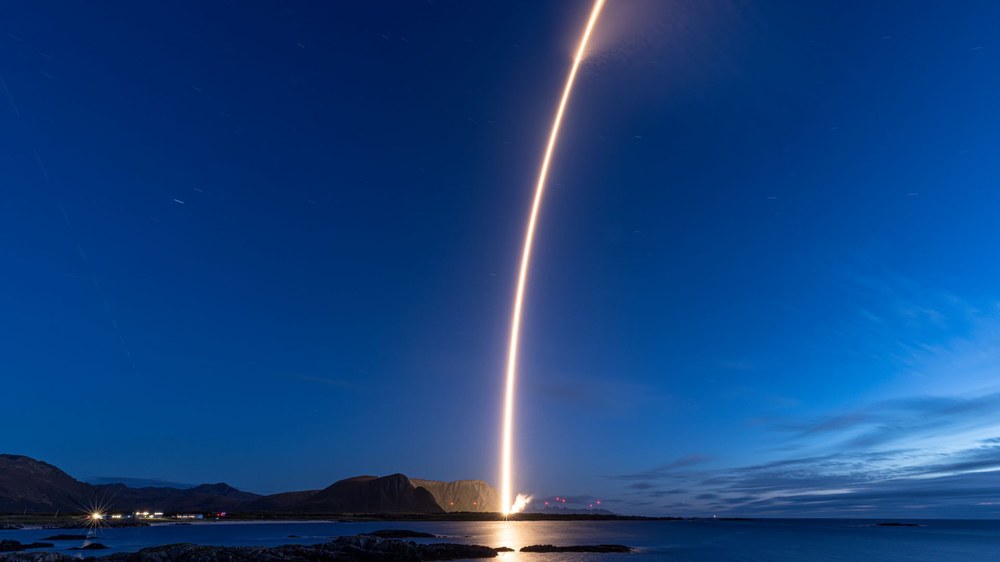
Launch of the SPECTRUM commercial launch vehicle from Germany
The SPECTRUM launch vehicle, developed by Isar Aerospace SE, lifted off from Andøya, Norway, at 10:12 pm on 5 September 2026 on its maiden space flight. It successfully delivered its payload, consisting of five small satellites and an experiment, to their respective target orbits. The German Space Agency at DLR supports the private-sector development of launch systems in Germany.
Image: 1/2, Credit:
Isar Aerospace SE
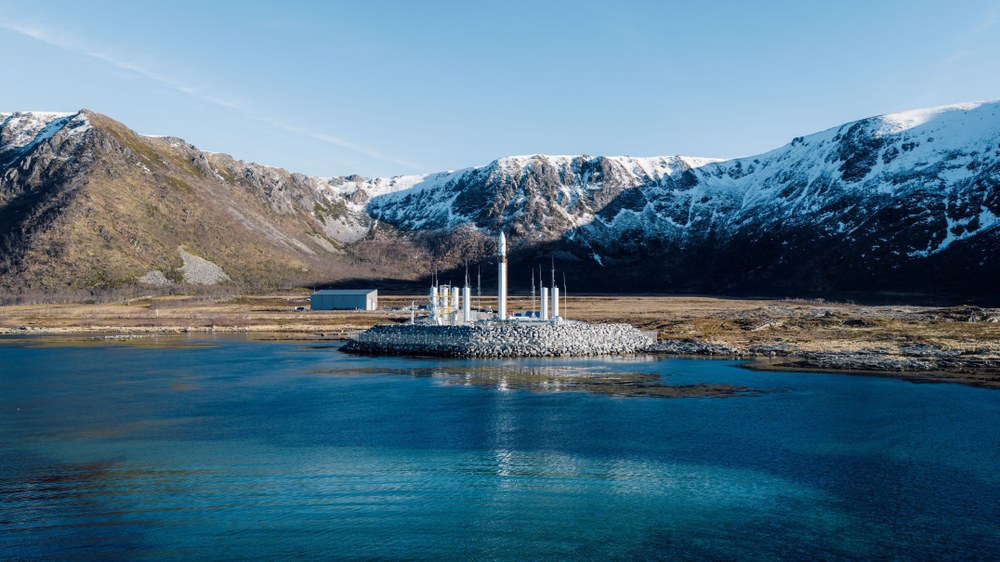
The SPECTRUM launch vehicle on the launch pad at Andøya, Norway
The rocket is just 28 metres long and two metres in diameter. It was developed by the private sector and is therefore very cost-effective to operate. The German government and the German Aerospace Centre (DLR) support the private-sector development of launch systems in Germany.
Image: 2/2, Credit:
Isar Aerospace
On 5 September 2026 at 10:12 pm, the Spectrum launch vehicle, developed by Isar Aerospace, lifted off from Andøya, Norway, on its first flight to space.
The rocket was carrying five small satellites and one experiment.
Privately developed launch vehicles are designed for cost-effective operation and are a key component of Europe's independent access to space.
The German Federal Government and the German Space Agency at DLR support the private-sector development of launch vehicles.
Focus: Spaceflight, access to space, New Space
On 5 September 2026 at 10:12 pm, the Spectrum launch vehicle, developed by Isar Aerospace, made its first flight to space from Andøya, Norway. The rocket is just 28 metres long and two metres in diameter. It was developed by the private sector and is therefore very cost-effective to operate. The German Federal Government and the German Space Agency at DLR (Deutsches Zentrum für Luft- und Raumfahrt; German Aerospace Center) are actively supporting the private-sector development of launch systems in Germany.
The payloads – consisting of five small satellites and one experiment – were successfully deployed into their respective target orbits. Originating from Germany, Norway, Austria, Slovenia and Bulgaria, they are testing innovative technologies and components for satellite technology.
In regular operation, Spectrum is expected to be capable of delivering up to 1000 kilograms to low Earth orbit. This capacity makes the rocket particularly well-suited for launching small satellites, which play a vital role in a wide range of applications. For example, they are already key tools in global broadband communications and Earth observation.
"We are absolutely delighted with the successful qualification flight of the Spectrum rocket and congratulate the entire Isar Aerospace team on this outstanding achievement," said Walther Pelzer, Member of the DLR Executive Board and Director General of the German Space Agency at DLR. "They have not only achieved a technological milestone, but have also redefined the path to independent European access to space – a clear sign of the innovative strength of a young, ambitious company. With our micro-launcher competition, we have paved the way for companies such as Isar Aerospace to fundamentally transform European access to space. The Spectrum rocket was not developed under a government contract; it was developed to serve a global market. The German Space Agency at DLR has procured a launch service for the Spectrum rocket on behalf of the Federal Government. This step is more than just a contract – it is a clear signal: We trust the start-ups, and we trust that the products they develop will work. This trust is crucial for attracting vital capital from private investors. The Spectrum rocket thus represents not only technical excellence, but also a new model of space development in Europe – a model based on innovation, market viability and public-private partnerships. That is the future of spaceflight."
Resilient and cost-effective access to space supported by Germany
At the European Space Agency (ESA) Ministerial Council meeting in November 2025, the European Launcher Challenge (ELC) was established with the aim of ensuring reliable and cost-effective European access to space in the medium term. Germany played a significant role in this initiative.
The programme's core objective is – unlike the current situation – to ensure that access is based on multiple different systems, thereby making it resilient to the failure of any single provider. To achieve this, ESA will support companies in Germany and Europe in the development of launch vehicles and will co-finance up to 60 percent of this development. ESA will also systematically consider new launch providers when procuring launch services, to bolster the confidence of investors and commercial customers worldwide.
ESA will play a key role as a customer for launch services, specifying the institutional needs and requirements for rocket launches. However, no specifications will be imposed regarding the technical design of the launch systems or their development philosophy. This will enable companies to work quickly and cost-effectively. In the long term, the ELC is intended to support the development of European launch systems that no longer require financial support from the government.
Europe's independent access to space
Space has become an integral part of modern life. Whether it's navigation, stock trading or broadband communication, large parts of our daily lives would scarcely function without assistance from space. Europe's independent access to space is therefore essential – particularly given current geopolitical uncertainty. Commercially developed launch vehicles will be a key enabler of Europe's cost-effective and reliable access to space. The importance of this was demonstrated not least by Federal Chancellor Friedrich Merz’s visit to the Norwegian Space Centre in Andøya on 13 March 2026, during which a German-Norwegian working group on space travel was also established.