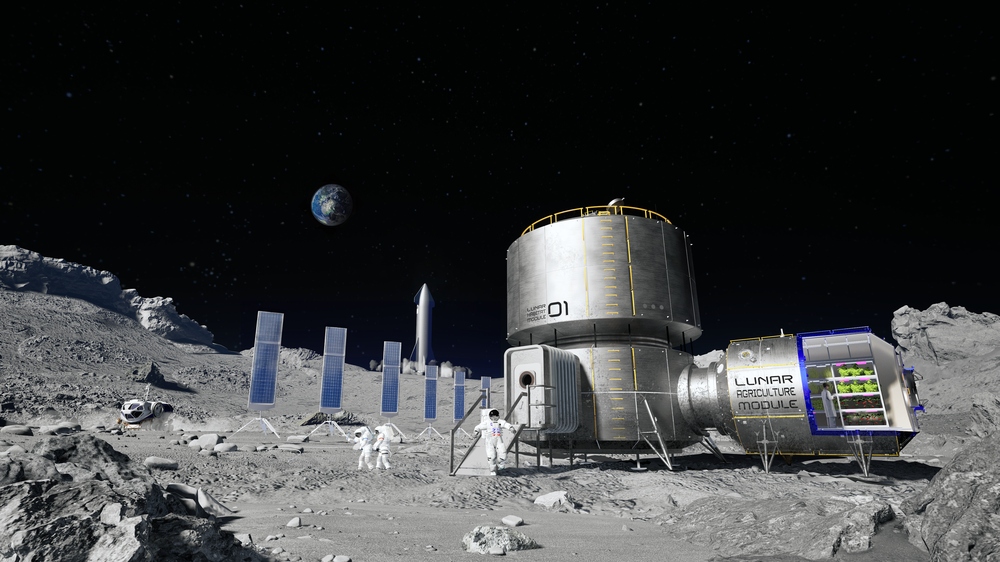
Artist's impression: Lunar Agriculture Module – Ground Test Demonstrator
If people are to live and work in a permanent Moon base, an agriculture module based on the Lunar Agriculture Module – Ground Test Demonstrator (LAM-GTD) concept could supplement their diet with nutritious fresh vegetables and salads.
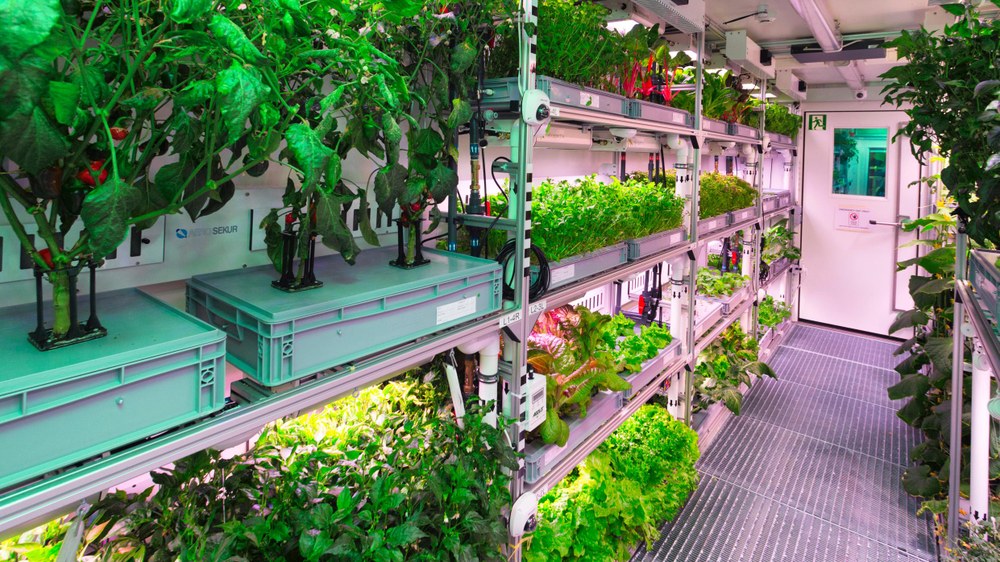
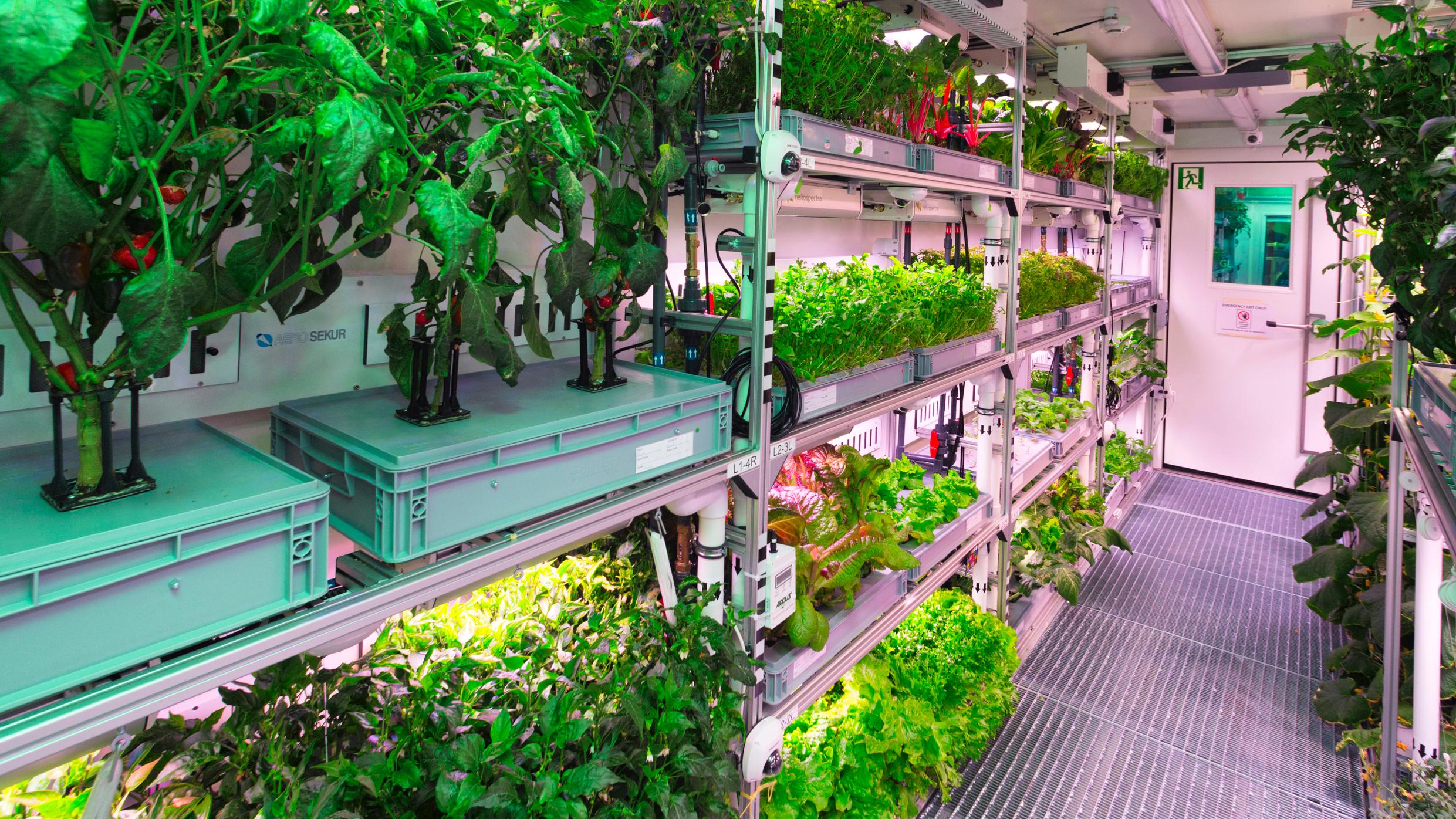
A varied harvest in DLR’s Antarctic greenhouse unit, EDEN ISS
From 2018, the EDEN ISS team spent five years in the remote and inhospitable Antarctic, collecting extensive data using the DLR greenhouse – on the system’s performance and resilience, plant production, its environment and microbiology, food safety, nutrition and the psychology of the crew, as well as on working hours needed and resources required, such as electricity and water.
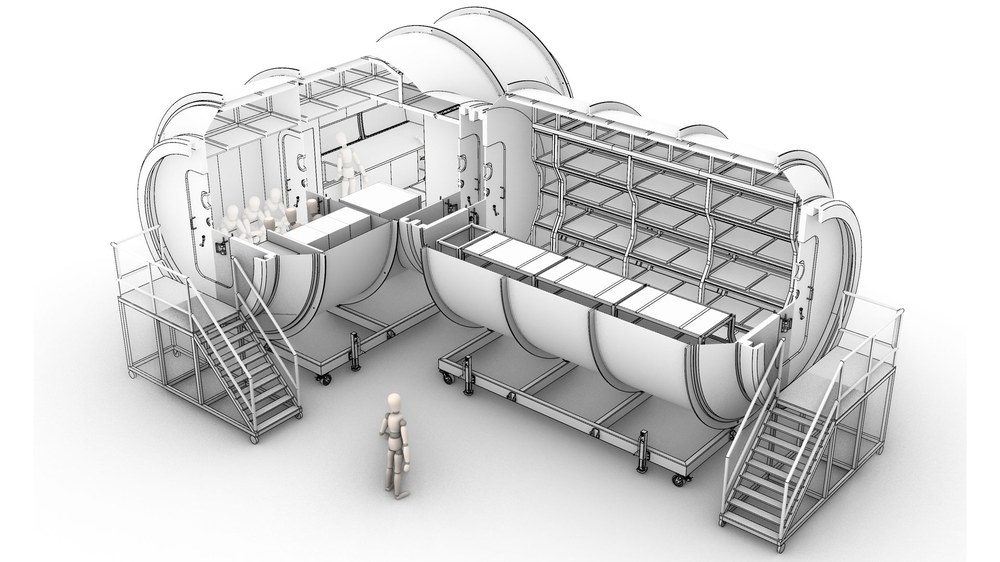
The concept behind the ground-based demonstrator combines a habitat simulator with an agricultural module. This could be built by 2032.
Image: 3/3, Credit:
LIQUIFER Space Systems GmbH / René Waclavicek
'Space plants' are intended to supplement the complete nutrition of crews at a future lunar station and provide greater variety in their diet.
The Lunar Agriculture Module – Ground Test Demonstrator (LAM-GTD) concept envisages a habitat module that will be connected to a ground-based greenhouse demonstrator.
Focus: Space, space systems, long-duration astronaut missions, Moon Base
In August 2026, the US space agency NASA (National Aeronautics and Space Administration), the Canadian Space Agency (CSA) and the German Aerospace Center (Deutsches Zentrum für Luft- und Raumfahrt; DLR) signed a memorandum of understanding to jointly commence preparatory work on a demonstrator for a plant cultivation system for future lunar habitats. With the Lunar Agriculture Module – Ground Test Demonstrator (LAM-GTD) they aim to investigate how crops can be grown on the Moon – a capability that will be crucial for supporting future long-term space exploration missions in habitats on the Moon or later on Mars.
LAM-GTD aims to develop technologies for growing ‘space plants’ and to investigate how these behave under reduced-pressure atmospheric as well as in controlled environments, similar to those expected during missions in a lunar base. As part of the Moon Base project, NASA and its collaborators plan to build infrastructure on the Moon to enable a permanent human presence near the South Pole. The goal is to advance science and technology while simultaneously preparing for future crewed missions to Mars. The preparatory work for the plant-growing module demonstrator, which has now been agreed upon, is the first step. Subsequently, the parties involved will decide whether and how the construction of the demonstrator will be carried out in practice, by 2032 at the latest.
Infobox: Lunar Agriculture Module – Ground Test Demonstrator (LAM-GTD)
The LAM-GTD infrastructure currently being planned is to consist of three key components: a Ground Agriculture Module (GAM) for growing crops at high density, an Airlock Module (ALM) for regulating pressure and gas composition, and a habitat module, which, however, will not be physically built as part of the HabSim simulator. The aim is to investigate both the operating conditions of future lunar infrastructures and the exchange of resources such as oxygen, carbon dioxide and water between the greenhouse and the habitat. Teams from several DLR institutes, NASA, CSA and the Canadian National Research Council (NRC) are currently involved in this project.
Space-grown plants will supplement the complete nutrition of crews in space and provide more variety in their diet alongside the usual astronaut food, such as non-perishable packaged rations. This also promotes mental well-being. And there’s more: the plants also absorb carbon dioxide (CO₂), produce oxygen and recycle water. These capabilities are likely to become increasingly important the further space missions venture from Earth.
But it is not only for the spaceflight that a plant-growing demonstrator could provide valuable insights for the future. There are also potential benefits here on Earth: for example, specialised greenhouse designs can be developed for use in dry and inhospitable desert regions where water is rare. Last but not least, innovative technologies for the efficient and controlled production of food can help to reduce the use of pesticides – and thereby also improve food quality.