Laboratory study using Mercury analogue material paves the way for BepiColombo measurements
November 24, 2026 | Mission to Mercury
Laboratory study using Mercury analogue material paves the way for BepiColombo measurements
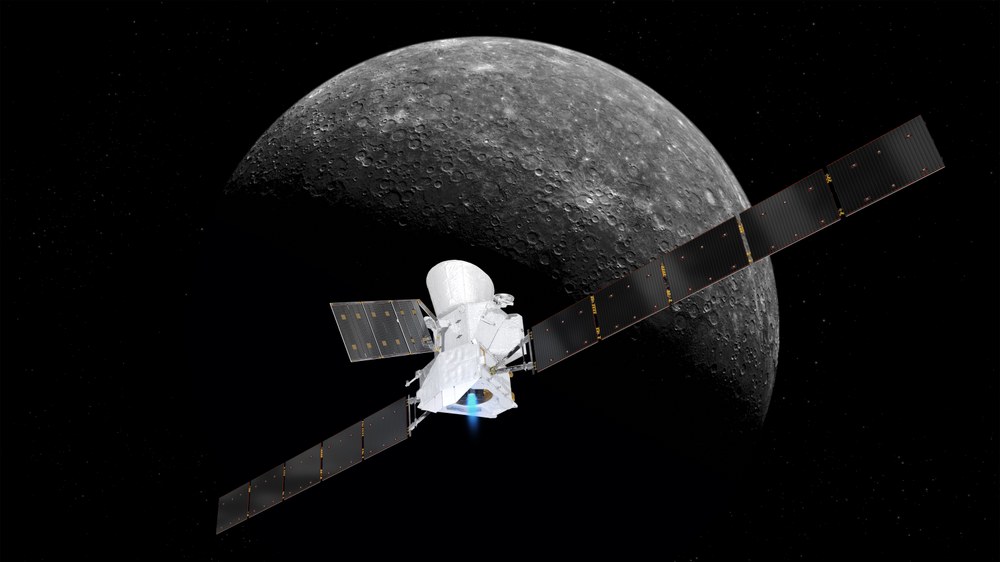
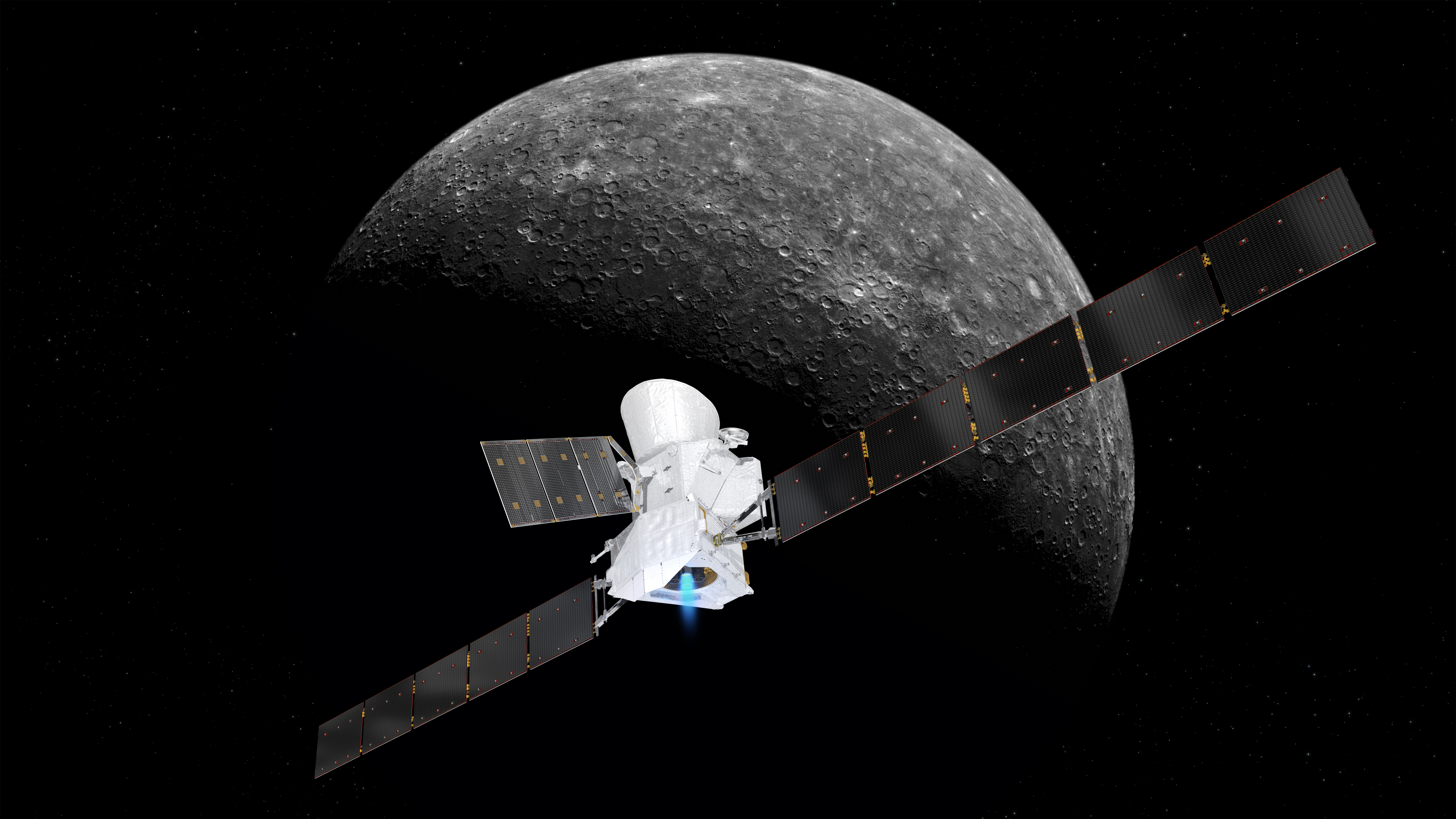
Artist's impression of BepiColombo at Mercury
Artist's impression of BepiColombo at Mercury
On 20 October 2018, the BepiColombo mission launched from Europe's Spaceport in Kourou, French Guiana. The journey to Mercury, the planet closest to the Sun, has taken almost eight years. DLR makes a key contribution to BepiColombo's scientific payload with two instruments: MERTIS (Mercury Radiometer and Thermal Infrared Spectrometer) and BELA (BepiColombo Laser Altimeter). Both instruments were built by the DLR Institute of Space Research in Berlin.
The mission is now close to its final destination. After the separation of the Mercury Transfer Module in September 2026, the spacecraft entered orbit around the planet on 21 November 2026. BepiColombo consists of two science orbiters, which are expected to separate on 9 December 2026: the European Space Agency (ESA)'s Mercury Planetary Orbiter (MPO) and the Japan Aerospace Exploration Agency (JAXA)'s Mercury Magnetospheric Orbiter (MMO, or Mio). The science phase of the mission is expected to begin in April 2027.
The subject of the blind study was Mercury Y, an analogue material developed by the DLR Institute of Space Research in collaboration with the University of Münster. It was distributed to laboratories worldwide for analysis, without the researchers knowing what its composition. This makes the study a dress rehearsal for the BepiColombo mission to Mercury – when the instruments on board the spacecraft begin taking measurements from orbit in 2027, the planet's surface composition will be unknown as well.
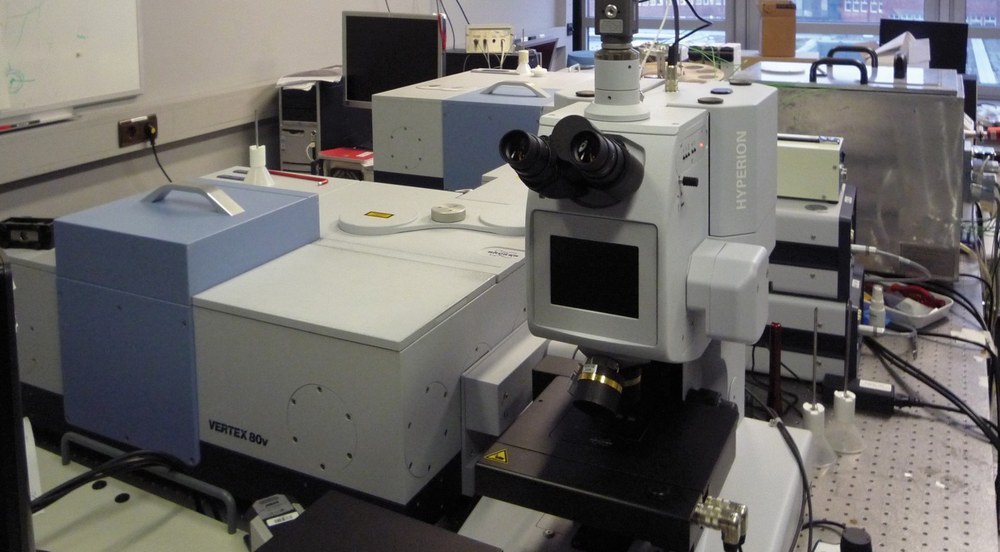
The Planetary Spectroscopy Laboratory (PSL) at the DLR Institute of Space Research is the world's only facility that can measure the spectra of solid and powdered materials in air or under vacuum, at temperature ranging from as low as minus 200 to as high as 1000 degrees Celsius, over an extended spectral range of 0.3 to over 100 micrometres. The laboratory operates three Fourier transform infrared (FTIR) spectrometers with internal and external chambers, allowing emissivity, bi-conical and hemispherical reflectance and transmittance to be measured simultaneously using the same set-up. Microspectroscopy is also available. The PSL also carries out measurements for industry on optical components and materials for industrial applications.
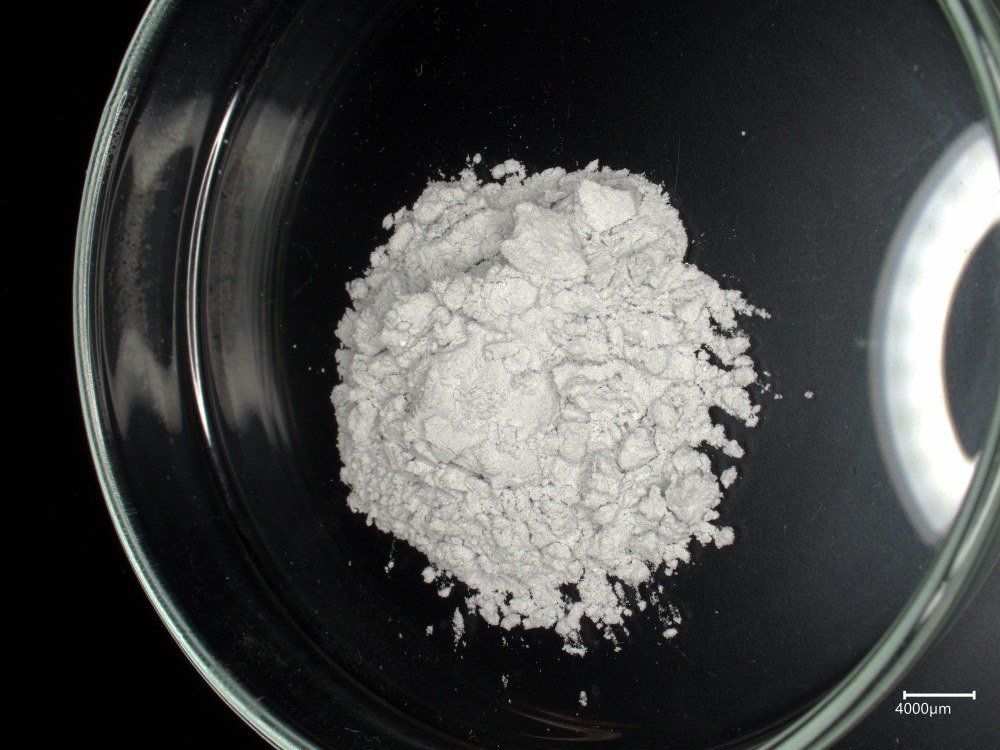
DLR and the University of Münster have developed Mercury Y, an analogue material for the surface of the planet Mercury, which has been examined in an international blind study.
The study demonstrates how future data from BepiColombo's instruments MERTIS, MIXS and SIMBIO-SYS can be jointly analysed.
DLR plays a central role in the ESA–JAXA BepiColombo mission with its MERTIS and BELA instruments.
Focus: Space, exploration
The German Aerospace Center (Deutsches Zentrum für Luft- und Raumfahrt; DLR), together with international collaborators, has carried out a laboratory study on an analogue material for the surface of Mercury. This study paves the way for the scientific analysis of future measurement data from BepiColombo, a joint mission by the European Space Agency (ESA) and the Japan Aerospace Exploration Agency (JAXA) to the planet closest to the Sun. The study focuses on Mercury Y – a fine powder that replicates the known composition of Mercury's surface as realistically as possible.
The sample was developed at the DLR Institute of Space Research in Berlin together with the University of Münster. It was then distributed to laboratories worldwide as part of a 'blind study', in which researchers did not know the composition of Mercury Y. This is precisely what made the study a dress rehearsal for the mission. BepiColombo will study Mercury from orbit, without having an actual sample of the surface material.
Mercury poses a particular challenge for planetary research. Its surface differs significantly from that of Earth, the Moon or Mars. It contains unusually little iron, yet high proportions of volatile elements. In addition, the planet's surface was formed under conditions that are difficult to replicate in a laboratory on Earth. Mercury Y was therefore produced from natural and synthetic mineral components, finely ground and sieved to grain sizes of less than 25 micrometres – comparable to very fine regolith found on a planetary surface.
The project originated at the first 'Mercury Laboratory Workshop' held at the DLR site in Berlin in September 2024, where researchers from various BepiColombo instrument teams and laboratories came together at the initiative of the team behind the MErcury Radiometer and Thermal Infrared Spectrometer (MERTIS). A key outcome was the decision to carry out a coordinated international blind analysis using measurement methods corresponding to those of the MIXS (Mercury Imaging X-ray Spectrometer), SIMBIO-SYS (Spectrometer and Imagers for MPO BepiColombo Integrated Observatory System) and MERTIS instruments. MIXS determines the elemental composition using X-ray fluorescence. SIMBIO-SYS observes the surface in the visible and near-infrared ranges. MERTIS, developed under the leadership of the DLR Institute of Space Research in collaboration with the University of Münster, analyses the surface of Mercury in the mid- and thermal infrared ranges.
The result – joining forces to study Mercury
No single instrument can provide complete answers. The X-ray measurements reconstructed the elemental composition well and confirmed the very low iron content of the sample. Measurements in the visible and near-infrared ranges showed only weak mineralogical signatures – an important indication of just how challenging it will be to interpret low-iron, fine-grained materials such as those expected on the surface of Mercury.
The mid-infrared measurements relevant to MERTIS provided stronger mineralogical information and helped to determine the composition of the analogue material more accurately. Taken together, the various datasets will significantly improve the interpretation of future BepiColombo measurements.
Close to the destination after eight years in flight
BepiColombo was launched in October 2018 and is now close to its final destination. Following the separation of the Mercury Transfer Module in September 2026, the probe entered orbit around the planet on 21 November 2026. BepiColombo consists of two science orbiters, which will soon be separated: ESA's Mercury Planetary Orbiter (MPO) and JAXA's Mercury Magnetospheric Orbiter (MMO, or Mio). The science phase is scheduled to begin in April 2027. It will then become clear how well the analysis methods tested on Mercury Y in the laboratory can be applied to the actual surface of Mercury.
Overall management of the BepiColombo mission lies with ESA, which was also responsible for the development and construction of the MPO orbiter. Mio was contributed by JAXA. The German contribution to BepiColombo is coordinated and largely funded by the German Space Agency at DLR using federal funds. The two instruments BELA (BepiColombo Laser Altimeter) and MERTIS, which were mainly developed at the DLR Institute of Space Research (until May 2025: the DLR Institute of Planetary Research and the DLR Institute of Optical Sensor Systems) in Berlin-Adlershof, were substantially funded by DLR research and technology funds.
Further contributions to the BepiColombo mission were made by the Max Planck Institute for Solar System Research (MPS) in Göttingen to the SERENA particle detector, the University of Münster to the MERTIS spectrometer, and Technische Universität Braunschweig to the MERMAG magnetometer. These contributions were also funded by the German Space Agency at DLR using federal funds. The probe was built by a European industrial consortium led by Airbus Defence and Space.