Prometheus® test marks significant milestone for reusable rocket engines
November 6, 2026 | For the first time, DLR demonstrates multiple engine ignitions within a single test day on the P5 test stand
Prometheus® test marks significant milestone for reusable rocket engines
Your consent to the storage of data ('cookies') is required for the playback of this video on Quickchannel.com. You can view and change your current data storage settings at any time under privacy.
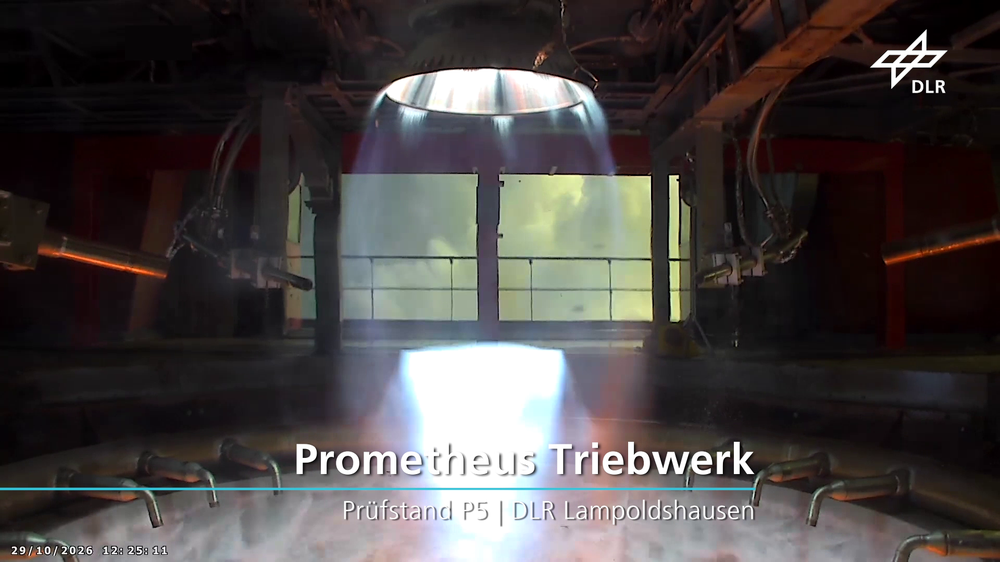
Video: Prometheus® engine in hot-fire test at the P5 test stand in Lampoldshausen
Prometheus® in action – at the modernised P5 test stand in Lampoldshausen, DLR is testing the methane-fuelled engine under various operating conditions. The expanded test infrastructure enables complex test sequences, making an important contribution to the development of high-thrust, reusable rocket engines.
The modernised P5 test stand expands the testing capabilities for Prometheus®
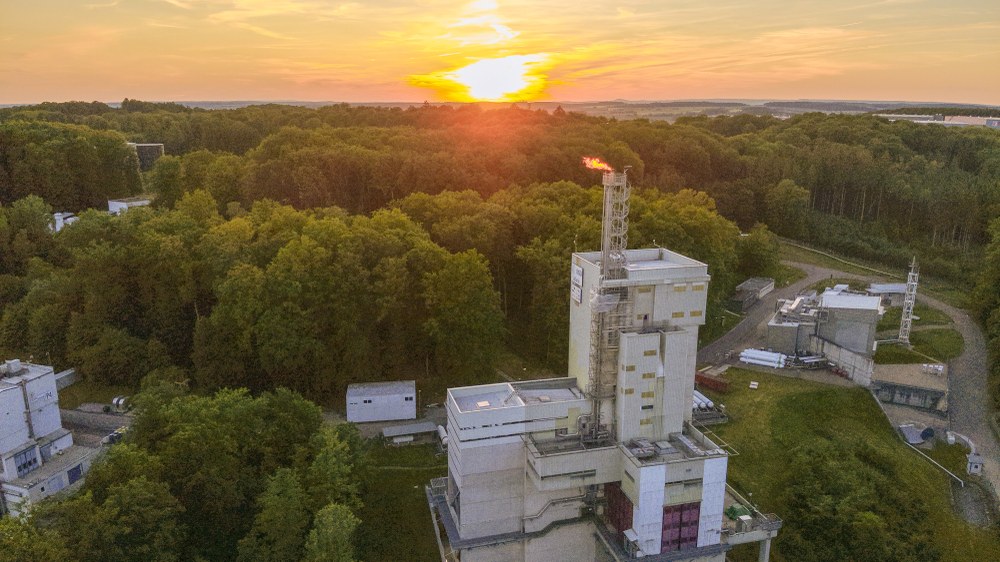
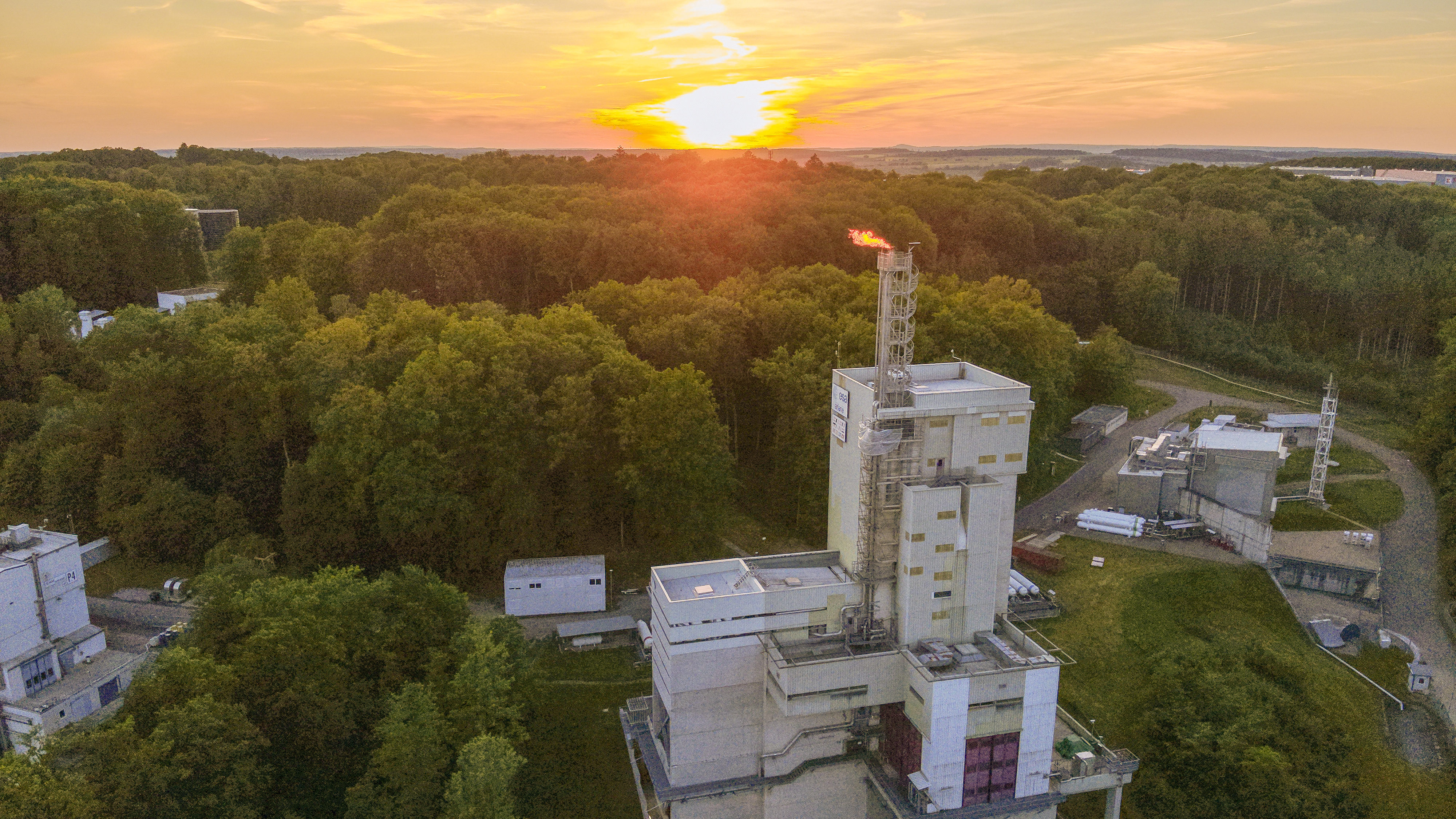
The P5 test stand in Lampoldshausen is part of the European Space Agency's (ESA) test infrastructure and is operated by DLR. Following its modernisation, the test stand can now also be used to test rocket engines running on liquid methane, and repeated ignitions can be carried out. This gives the test stand the capability for complex test sequences for reusable rocket engines.
At the modernised P5 test stand, DLR has for the first time successfully run a methane-oxygen engine several times in a single test day, holding stable operating points each time.
The expanded test infrastructure makes it possible to investigate complex operating sequences – from longer hot-fire tests and variable thrust levels to repeated ignitions.
The results provide important findings for the further advancement of the Prometheus® engine, developed by ArianeGroup, and future reusable European rocket propulsion systems.
Focus: Spaceflight, space transport, access to space
The German Aerospace Center (Deutsches Zentrum für Luft- und Raumfahrt; DLR) has successfully tested the Prometheus® engine on the modernised P5 test stand in Lampoldshausen, Baden-Württemberg, Germany. For the first time in the test stand's history, the engine – which runs on liquid methane and liquid oxygen – was ignited several times in a single test day and run at stable operating points within one continuous test sequence. The tests provide important findings for the development of reusable rocket propulsion systems.
The test campaign with the engine, developed by ArianeGroup, builds on previous trials at the company's French site in Vernon. At the same time, it demonstrates the expanded capabilities of the P5 test stand, which is part of the European Space Agency's (ESA) test infrastructure and is operated by DLR. Thanks to the comprehensive modernisation for operation with liquid methane, complex operating sequences of methane-fuelled rocket engines can now also be investigated.
P5 modernisation expands test capabilities
The P5 test stand has been upgraded for operation with liquid methane and multiple consecutive engine ignitions, among other things. This flexibility makes it possible to investigate operating sequences of the kind that can occur during the flight of a reusable rocket stage.
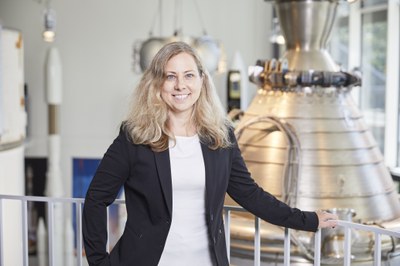
With the modernised P5, we can test high-thrust methane-fuelled rocket engines reliably and comprehensively. In doing so, we investigate not only individual operating states but also the interplay of different phases, from longer hot-fire tests through large changes in thrust to the re-ignition of the engine. This means we have created an important prerequisite for the development of future reusable rocket propulsion systems.
During the trials, the test stand supplies the engine with the required propellants and gases and ensures the necessary pressure and temperature conditions. Extensive measurement systems record such variables as thrust, propellant flow, pressure ratios and temperatures. The measurement data obtained makes it possible to analyse in detail both the behaviour of the engine and the processes at the test stand.
Multiple ignitions place high demands on engine and test stand
Reusable rocket engines must be capable of being ignited multiple times during a mission. For example, it may be necessary to shut down the engine after launch and then re-ignite it for a return or landing manoeuvre. Reliable re-ignition places high demands on the engine and the test infrastructure. The current test campaign demonstrates that even complex sequences comprising repeated ignitions and stable operating phases can be successfully tested on the modernised P5. Such repeated ignitions also place significant demands on the test stand. After each hot run, the engine and the supply systems must be safely shut down and prepared for the next start. This procedure includes, among other things, draining and purging the supply systems and re-establishing the required pressure and temperature conditions. "Up to five ignitions in a single test day place high demands on the coordination of the test stand systems. The fact that we can carry out these procedures automatically, safely and in a reproducible manner is an important step towards testing reusable propulsion systems," says Frank.
Variable thrust for launch, return and landing
In addition to multiple ignitions, reusable rocket engines require targeted thrust control. While high thrust is required during launch, the engine's performance must be precisely adjusted during later phases of flight – particularly during the return and landing of a reusable stage.
The upgraded P5 test stand makes it possible to investigate different thrust levels and the transitions between them under controlled conditions. This capability allows researchers to determine the engine's stability at various power levels, how it reacts to rapid changes in thrust and the thermal and mechanical stresses it experiences in the process. The results will inform the further development and testing of the Prometheus engine.
Prometheus® as a technology for Europe's future launch systems
ArianeGroup is developing Prometheus® on behalf of ESA. The 100-tonne thrust-class engine uses the propellant combination of liquid methane and liquid oxygen. Using liquid methane as propellant is a key innovation of the Prometheus concept. Compared with liquid hydrogen, it has a considerably higher density and can be stored at higher temperatures. This simplifies the design and handling of the tanks and supply systems.
ArianeGroup is developing Prometheus® on behalf of ESA. The 100-tonne thrust-class engine uses the propellant combination of liquid methane and liquid oxygen. Using liquid methane as propellant is a key innovation of the Prometheus concept. Compared with liquid hydrogen, it has a considerably higher density and can be stored at higher temperatures. This simplifies the design and handling of the tanks and supply systems.
The development of the Prometheus engine is funded as part of ESA's Future Launchers Preparatory Programme (FLPP), which advances new technologies for future European launch vehicles. Germany contributes approximately 80 million euros to this programme from the Federal Ministry of Research, Technology and Space (Bundesministerium für Forschung, Technologie und Raumfahrt; BMFTR). The funds are coordinated by the German Space Agency at DLR.