Satellite operations challenge – a tight formation dance amid the aurora
June 22, 2026
Satellite operations challenge – a tight formation dance amid the aurora
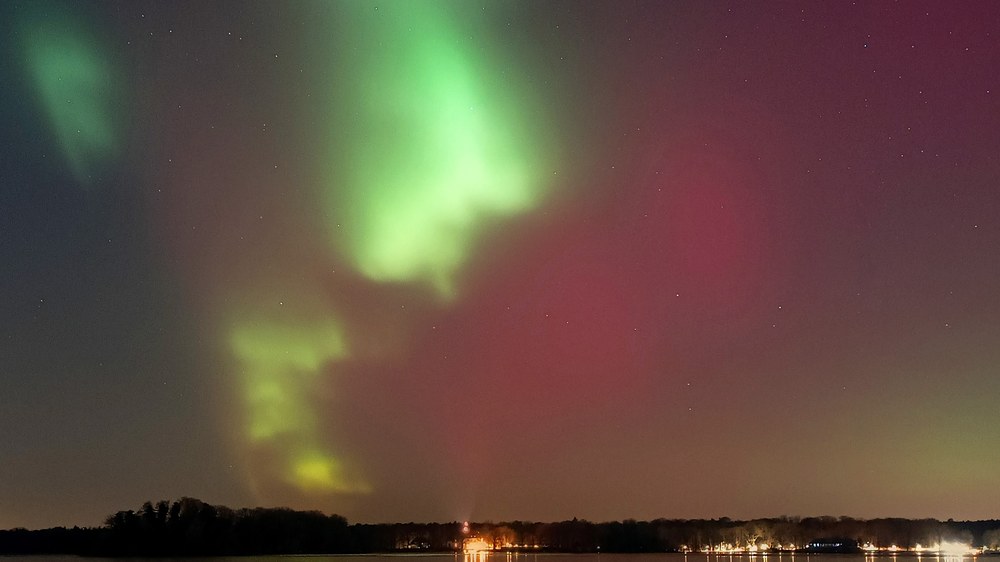
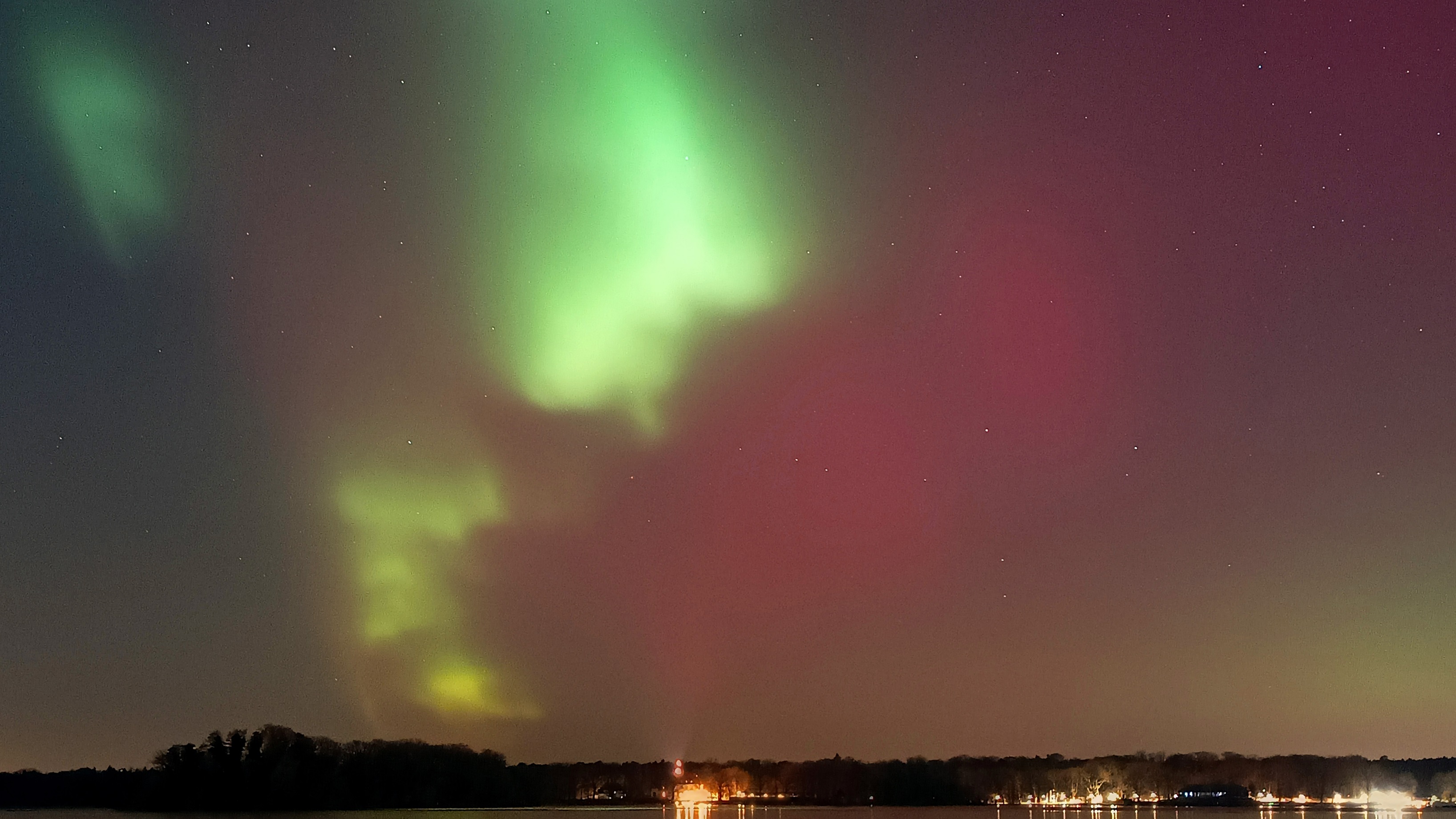
Aurora over Berlin
Auroras are evidence of geomagnetic storms, which, when sufficiently strong, can also affect the movement of satellites. For the German Space Operations Center at DLR, the flight dynamics team has developed a procedure to ensure satellites can continue operating without disruption even during extreme geomagnetic storms. The image shows the glowing traces of a severe magnetic storm, captured in January 2026 over Berlin.
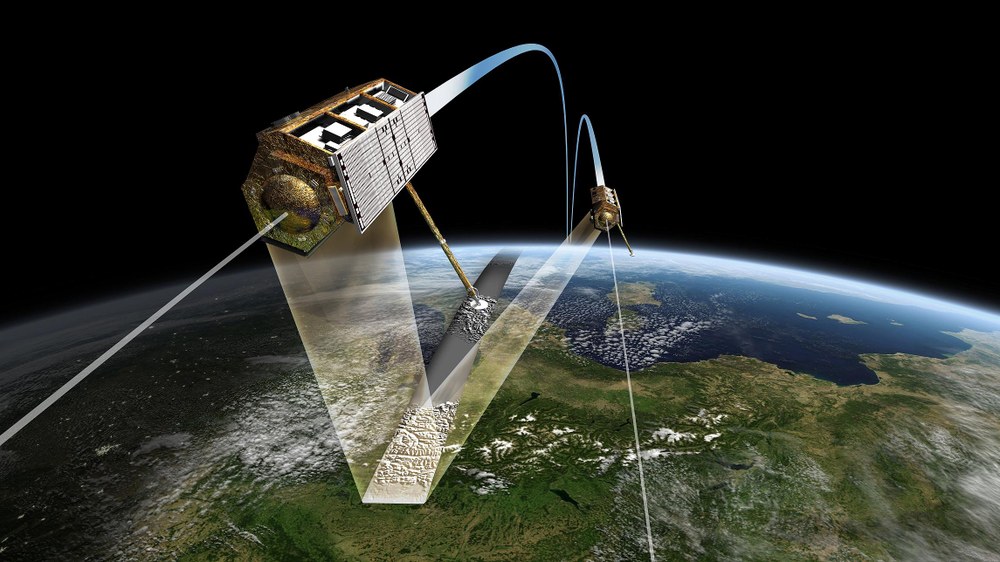
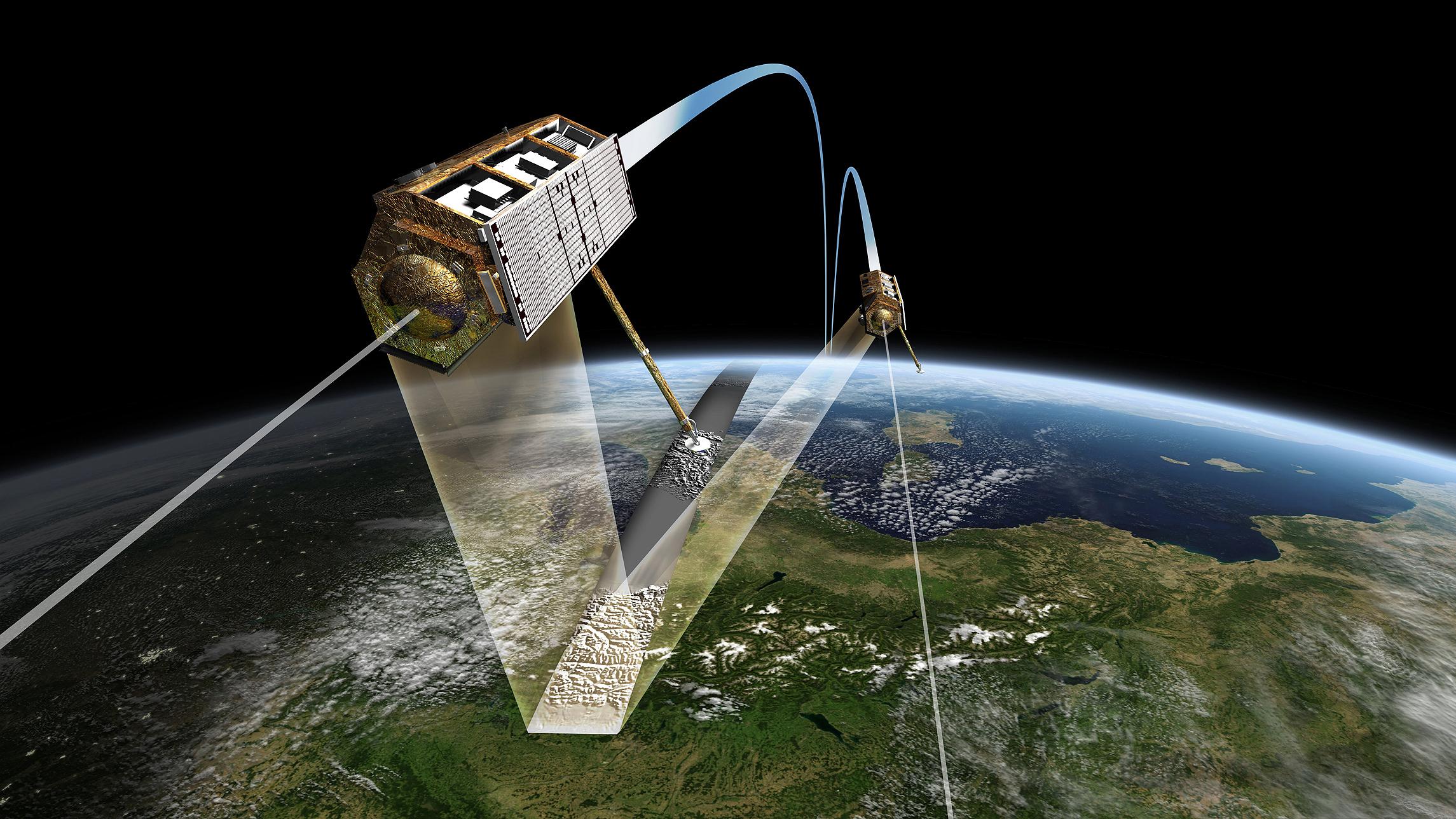
Since June 2010, the German radar satellites TerraSAR-X and TanDEM-X have been orbiting Earth together. During the close formation flight phase, the twin satellites orbit each other in a helical orbit, keeping a minimum distance of 200 metres. Using their radar instruments, they scan Earth's surface from different viewing angles.
Severe geomagnetic storms can affect the flight of satellites. For the operation of the TanDEM-X mission, this presents a particular challenge due to the close formation flight of the twin satellites.
DLR's Space Operations and Astronaut Training facility has developed and successfully implemented a new procedure that ensures satellite operations continue even during extreme magnetic storms.
The new findings attracted considerable interest at the International Symposium on Space Flight Dynamics (ISSFD) 2026.
Focus: Space
Auroras are the visible traces of geomagnetic storms, occurring when strong solar winds are deflected by Earth's magnetic field and collide with the atmosphere. However, severe magnetic storms do not just create spectacular light displays in the sky – they can also affect the flight paths of satellites. This became evident in 2024 during the operation of the German radar satellites TerraSAR-X and TanDEM-X. In response, the German Aerospace Center (Deutsches Zentrum für Luft- und Raumfahrt; DLR) subsequently developed a procedure to ensure smooth satellite operations even during extreme geomagnetic storms. DLR's Space Operations and Astronaut Training facility recently presented its findings and successful implementation at the International Symposium on Space Flight Dynamics (ISSFD) 2026 in Toulouse.
Severe to extreme geomagnetic storms in March and May 2024 led, for the first time, to operational disruptions for the TerraSAR-X and TanDEM-X satellites. The twin satellites moved outside their synchronous flight radius. While the formation flight and the satellites themselves were never at risk, the orbital deviations caused the instruments' synchronisation to fail, preventing them from capturing images of Earth's surface. The German Space Operations Center immediately initiated the necessary orbital corrections, and the flight dynamics team began a systematic investigation of the incidents. It quickly became clear that more accurate space weather forecasts – particularly for geomagnetic storms – were needed to enable more precise orbital predictions for satellite operations planning.
Impact on satellite flight
TerraSAR-X and TanDEM-X orbit Earth in a Sun-synchronous orbit at an altitude of 505 kilometres. The density of the upper atmosphere at this altitude is extremely low, at approximately one gram of mass per cubic kilometre. During a geomagnetic storm, this density can increase tenfold, reaching up to ten grams of mass per cubic kilometre. This increase affects atmospheric drag – similar to the headwind experienced when driving a car – which causes the satellites to lose altitude and is regularly factored into orbital planning.
During the period of intense solar activity in 2024 – which led to exceptional aurora sightings at unusually low latitudes, from southern Europe to Mexico, Japan and northern India – the tried-and-tested calculation models reached their limits for the first time. Geomagnetic storms typically occur at the peak of a solar cycle, which lasts around eleven years. However, it is difficult to predict exactly when a geomagnetic storm will occur, how long it will last and how intense it will be.
The fluctuations in atmospheric density particularly affect the operation of the twin satellites, as TerraSAR-X and TanDEM-X are flown in a tight helix formation. As they orbit, the two satellites come as close as 200 metres to each other. For joint radar imaging, they must also be aligned in a specific way relative to one another. The synchronisation of the two satellites – and consequently, the radar images – was disrupted by the geomagnetic storms at the time.
Update for reliable operation
To find a long-term solution, the flight dynamics team at DLR’s Space Operations and Astronaut Training facility analysed geomagnetic storms from recent years and their impact on satellite movements, and compared these outcomes with various atmospheric model simulations. They also considered various space weather forecasts and data from the TanDEM-X mission. For orbital planning of the twin satellites, a combination of three forecast models – covering space weather and atmospheric density – eventually emerged as the preferred approach.
The researchers used this to develop methods for determining, predicting and controlling the satellites’ orbits, as well as for monitoring and controlling synchronised formation flight. In April 2025, the entire flight dynamics processing chain for TanDEM-X was converted to this system. Since then, the upgrade has ensured mission operations even in the face of challenging space weather: the impacts of the severe geomagnetic storms in November 2025 and, most recently, in January and February 2026, were correctly predicted for the mission. The radar satellites were able to continue operating without restriction and produced their images as planned.
The mission team can now look forward to the aurora with greater peace of mind. However, satellite operations remain a constant challenge, so the flight dynamics specialists will continue their research into space weather. The findings are also valuable for the operation of other satellites in similar orbits. At ISSFD 2026, the new findings from DLR's Space Operations and Astronaut Training facility attracted considerable international interest.