Successful flight of DLR sounding rocket MAPHEUS®-17
October 1, 2026 | Developing technology in microgravity for research, industry and early-career researchers
Successful flight of DLR sounding rocket MAPHEUS®-17
Launch of the DLR high-altitude research rocket MAPHEUS®-17
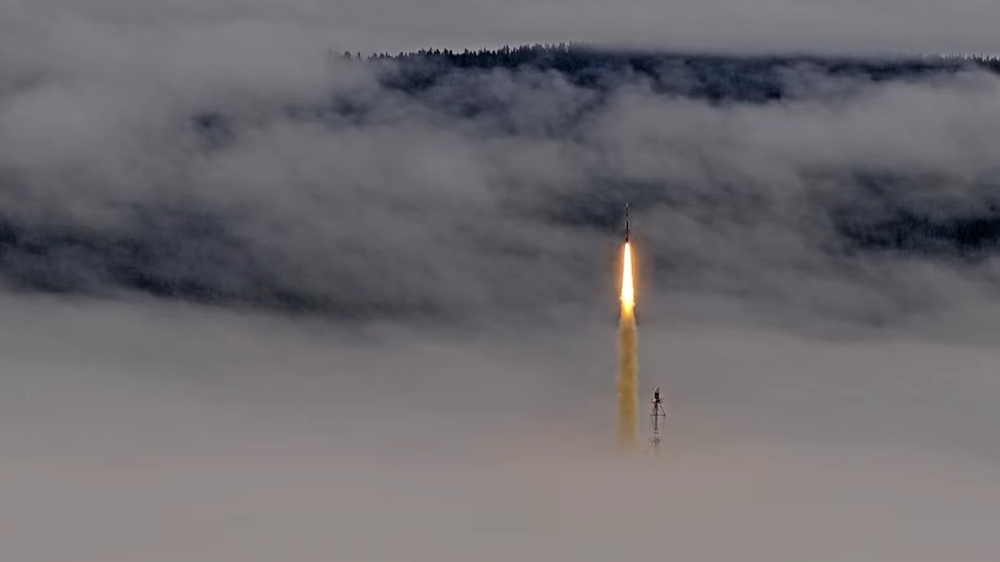
On 1 October 2026, the DLR rocket launched from the Swedish Esrange Space Center. It carried a wide range of experiments into microgravity conditions for almost seven minutes.
Image: 1/7, Credit:
SSC Space
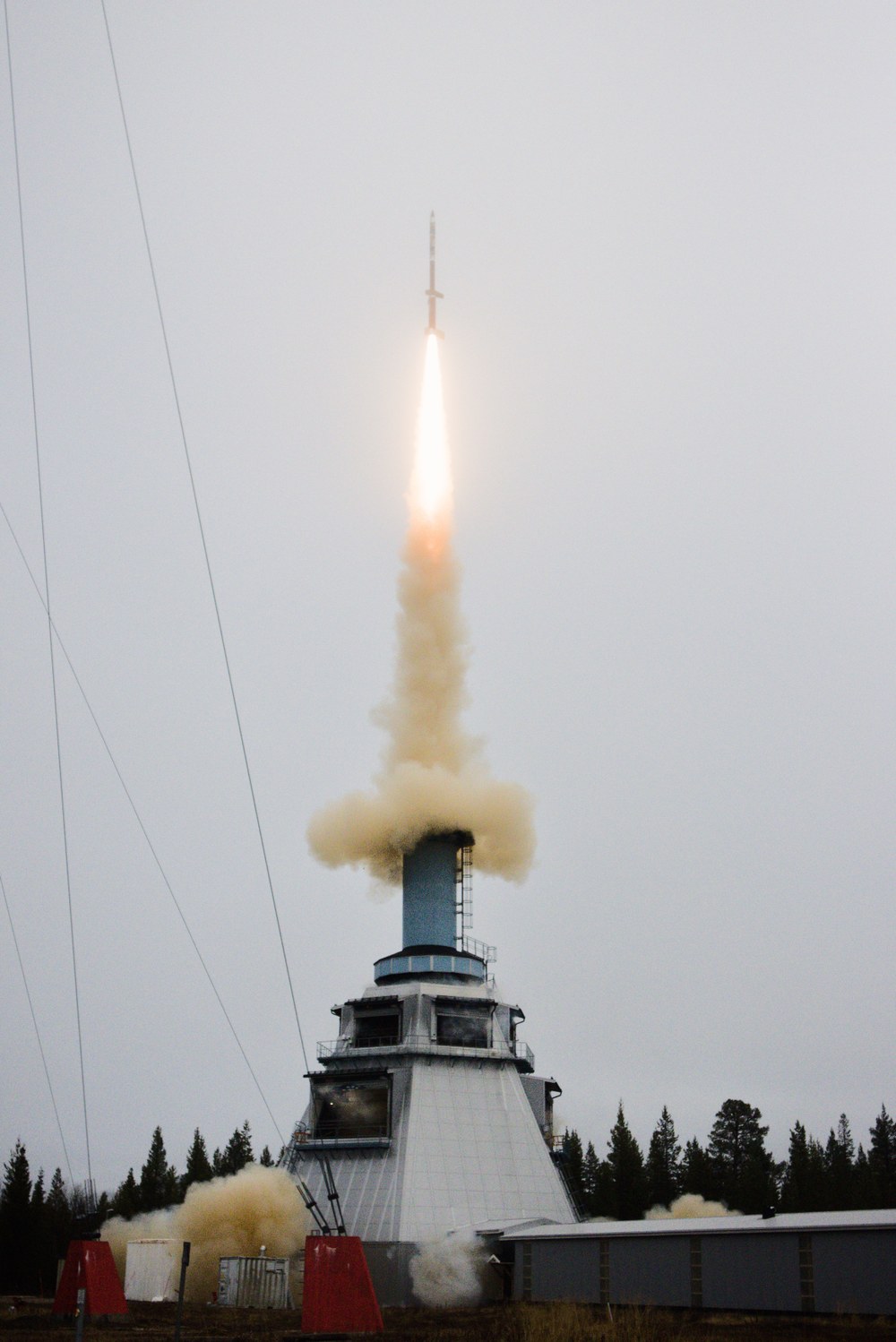
DLR sounding rocket MAPHEUS®-17 leaves the launch tower
To propel the rocket to an altitude of almost 300 kilometres, two rocket motors were used: a Red Kite as the lower stage and an Improved Malemute as the upper stage.
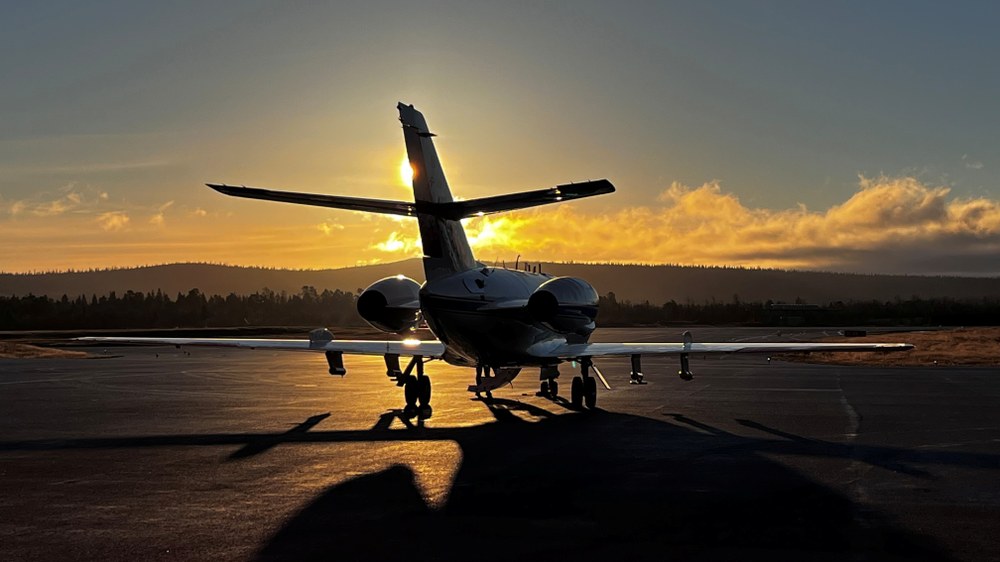
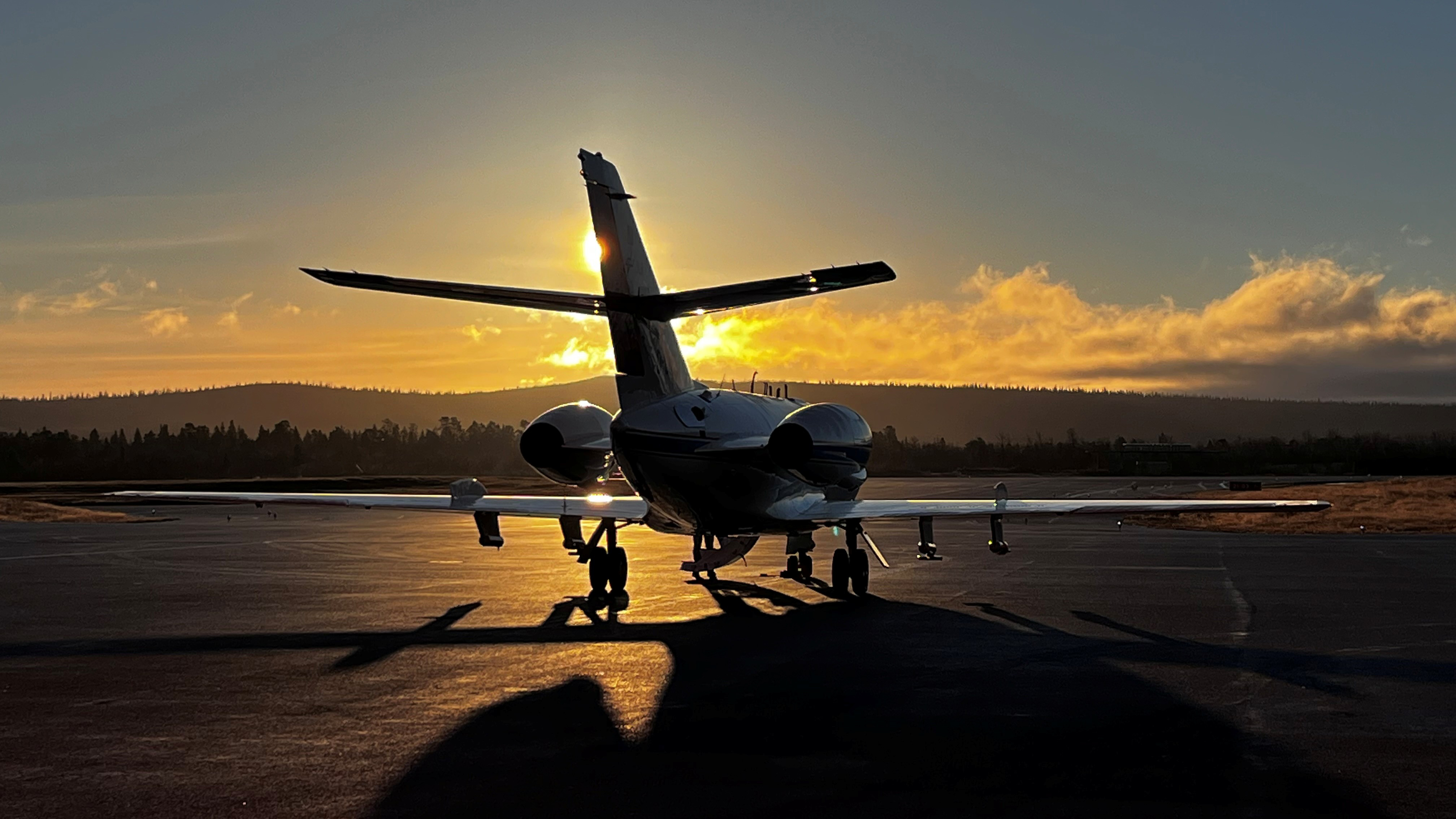
Double the DLR power in the far north: during the MAPHEUS®-17 mission, the Falcon 20E was also on site. It tested methods for measuring the exhaust gases of rocket propulsion systems.
DLR's MAPHEUS®-17 sounding rocket lifted off from the Swedish Esrange Space Center on 1 October 2026. It carried a payload of more than 360 kilograms to an altitude of just under 300 kilometres, providing approximately seven minutes of research in microgravity.
Regular flights within the MAPHEUS® programme allow experiments to be flown multiple times and refined in a targeted way.
Standardised experiment modules offer simple, cost-effective access to microgravity research.
During the rocket flight, DLR also used its Falcon 20E research aircraft to test, for the first time, methods for specifically detecting and analysing rocket emissions in the atmosphere.
Focus: Space, high-altitude research rockets
On 1 October 2026 at 08:51 CEST, the German Aerospace Center (Deutsches Zentrum für Luft- und Raumfahrt; DLR) sounding rocket MAPHEUS®-17 was launched from the Swedish Space Corporation's (SSC Space) Esrange Space Center. The almost 12-metre-long rocket, with a launch mass of 2.3 tonnes, flew for approximately 16 minutes over the tundra of northern Sweden. It carried more than 360 kilograms of payload and reached a maximum altitude of just under 300 kilometres.
Two rocket motors provided the propulsion: the Red Kite, developed jointly by DLR and Bayern-Chemie, as the lower stage, and an Improved Malemute as the upper stage. After the propulsion stages had separated, the payload at the tip of the rocket continued its flight on a parabolic trajectory. During this free fall back to Earth, the numerous scientific and technological experiments onboard experienced microgravity conditions for approximately seven minutes.
A parachute system slowed the payload during the final phase of its descent, and it landed safely in the designated area and was then recovered by helicopter.
Regular flights – from snapshot to test series
A key feature of the MAPHEUS® programme is its regularity. Since 2009, flights have generally taken place every year. This means researchers can do more than test their experiments once in microgravity for a few minutes – they can develop them further and fly them again. The results obtained in this way can then be compared with one another. "This is the only way to systematically answer research questions and to advance technologies in rapid development cycles. With the MAPHEUS® high-altitude research programme, DLR offers regular and easy access to research in microgravity," says Thomas Voigtmann, project lead at the DLR Institute for Frontier Materials on Earth and in Space.
One of the experiments on board MAPHEUS®-17 was the DLR ARTEC (AeRogel TEchnology for Cast alloys) experiment, which flew once again. ARTEC investigates how metal alloys solidify in microgravity. To do this, shortly before launch, the material samples are melted and kept in a liquid state under vacuum conditions in five miniaturised special furnaces. As soon as microgravity sets in during the flight, the samples cool down and solidify. Without the influence of gravity, the fundamental processes that take place as the material solidifies can be observed more precisely. These processes have a decisive influence on the material's internal structure and therefore on its mechanical properties.
For industry and early-career researchers – standardised modules make research in microgravity easier
Another advantage of the MAPHEUS® programme is that the rockets can carry up to 16 small, compact experiments. DLR developed the two MOSAIC modules (Micro-Experiments On Sounding Rockets As Insert Cubes) for this purpose. These modules feature standardised mechanical, electrical and digital interfaces, allowing experiments to be integrated into the rocket's payload relatively quickly. As with small satellites, the basic format is a cube with an edge length of ten centimetres. For slightly larger experiments, several of these cubes can also be combined.
The MAPHEUS® sounding rockets are more than flying laboratories – the programme is developing into a flexible test platform for technologies that can later be used on satellites or orbital research stations. At the same time, we are opening up the MAPHEUS® programme more widely to industry. This gives companies fast, established and comparatively cost-effective access to experiments in microgravity.
A total of ten of these small, standardised experiments were carried on board MAPHEUS®-17 in the MOSAIC 1 and MOSAIC 2 modules. The DLR experiments included VESICOLOS, a miniaturised microscope that can be used to study cells, biofilms or membrane structures under space conditions. The flight on the MAPHEUS® rocket is an important step towards further developing the experiment, specifically for use on an orbital space station.
Another DLR experiment was TEGonaut, which investigates the extent to which thermoelectric generators (TEGs) can be used to supply electricity to sensors and payloads. Several miniaturised TEG modules were on board the research rocket for this purpose. Put simply, these generators convert available heat into electrical energy. This can be particularly advantageous for space applications, as TEGs have no moving parts and can provide small amounts of electrical energy even under extreme conditions.
Four further compact experiments came from teams of young researchers. Participants in the 'Jugend hackt' initiative, as well as school pupils working with the DLR_School_Labs at DLR sites in Cologne and Oberpfaffenhofen, developed their own experiments and sent them into microgravity for a few minutes. The young participants investigated, for example, how liquids behave in microgravity, and developed their own measurement platforms based on microcomputers and numerous sensors. With the support of many sponsors, a group of pupils from the Otto-Hahn-Gymnasium in Bensberg near Cologne was able to follow the launch preparations on site in northern Sweden.
DLR also used the rocket flight to test new methods for transmitting large volumes of data and processing GPS signals, as well as new flight computers – including systems from the Scottish start-up Aurora Avionics.
Test flight trials methods for measuring rocket emissions
As part of the MAPHEUS®-17 flight, DLR also tested for the first time whether and how rocket exhaust gases can be scientifically recorded and measured. A few minutes after the high-altitude research rocket lifted off, the DLR Falcon 20E research aircraft flew into the airspace, which air traffic control had reopened for this purpose. The specialised aircraft was equipped with extensive measurement and sensor technology and circled for approximately one hour at altitudes between two and six kilometres. The particular challenge was flying the research aircraft as precisely as possible into the research rocket's exhaust plume, which spreads and thins over time. Before and during the flight, the pilots were therefore in close contact with the MAPHEUS®-17, SSC Space and air traffic control teams.
"Our aim was to show that such measurements are possible and how best to conduct them. Given the rapidly increasing number of rocket launches – particularly for deploying 'megaconstellations' of several hundred to tens of thousands of small satellites – the potential impact of these launches on the atmosphere is increasingly coming into focus," says Pagels-Kerp. "At DLR, we have unique capabilities for collecting reliable empirical data to investigate potential effects on the atmosphere at an early stage and develop technological solutions – for example in the field of environmentally and climate-compatible rocket propellants."
MAPHEUS® – research and development under one roof
MAPHEUS® stands for 'Materialphysikalische Experimente unter Schwerelosigkeit' (materials physics experiments under microgravity). On the scientific side, the programme is managed by the DLR Institute for Frontier Materials on Earth and in Space and the DLR Institute of Aerospace Medicine. The Mobile Rocket Base (Mobile Raketenbasis; MORABA), part of DLR’s Space Operations and Astronaut Training institute, develops and operates the rocket systems and conducts the flight campaigns. Launches take place from the Swedish Space Corporation's (SSC Space) Esrange Space Center in northern Sweden.