
Boosting efficiency under pressure

Boosting efficiency under pressure
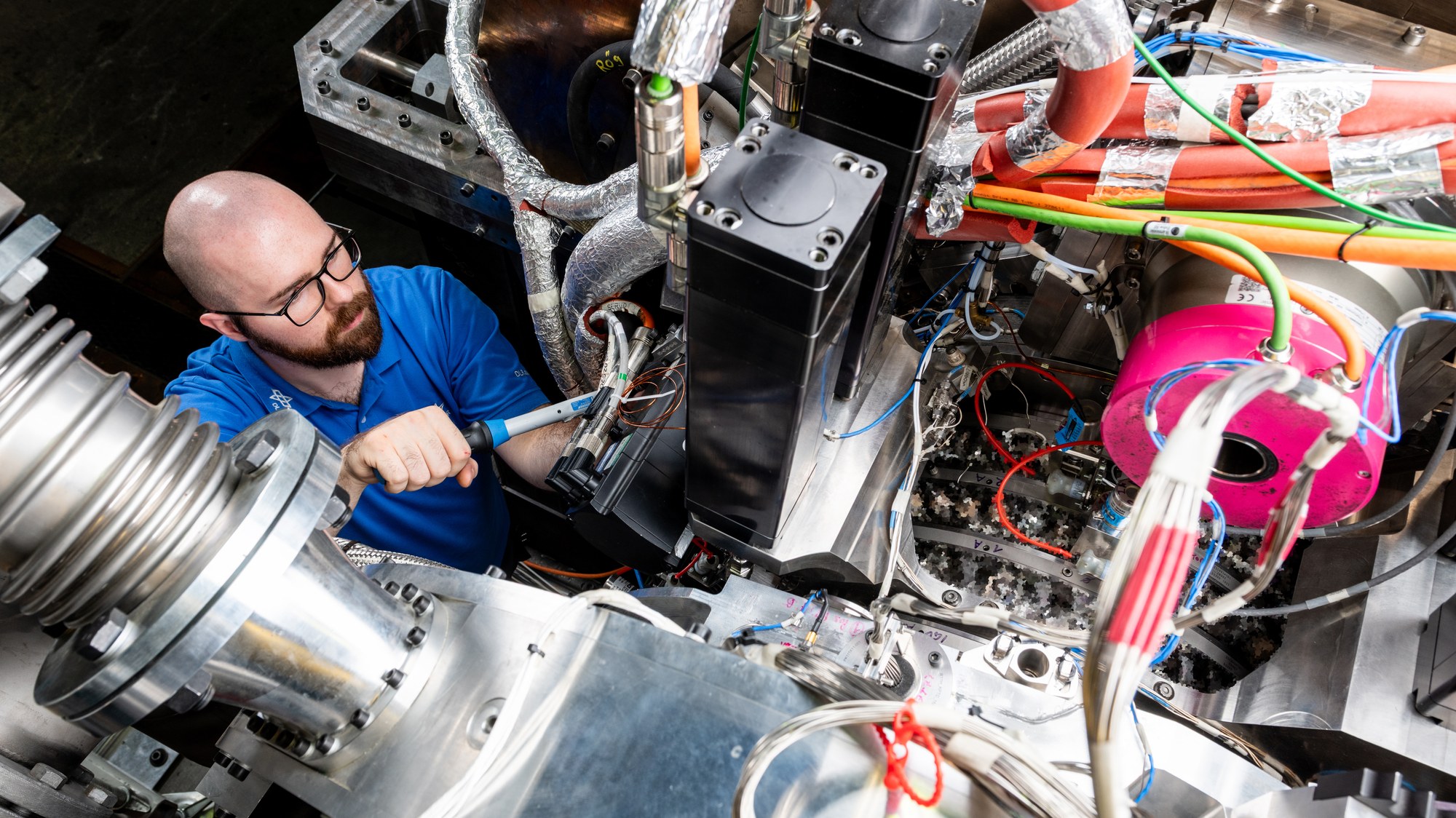
Research into improving aircraft engines has been ongoing for decades, with one key aim being to reduce the climate impact of aviation. One central strategy is to increase efficiency – delivering the same performance while lowering fuel consumption. The next generation of gas turbine engines is expected to make a significant contribution through improved compressor technologies, including designs optimised for the use of sustainable aviation fuels (SAF). Aircraft compressors increase the pressure of incoming air, which is then mixed with kerosene in the combustion chamber and ignited to produce hot, high-pressure gases that generate thrust. Together with MTU Aero Engines and GKN Aerospace Sweden, DLR has been working on the validation of new compressor technologies as part of the European Clean Sky 2 research programme. The goal was to reduce carbon dioxide (CO2) and nitrogen oxide (NOX) emissions in aviation by 20 to 30 percent compared with 2014 levels. Up until November 2025, tests were carried out on the multi-stage two-shaft compressor test rig at the DLR Institute of Propulsion Technology in Cologne. The test campaign focused in particular on improving the interaction between low-pressure and high-pressure components, as well as the transition duct between the two compressors. The extensive findings confirm the ambitious design targets of the tested concept, marking an important step towards achieving the Clean Sky 2 objectives.
Credit: © DLR. All rights reserved