
DEPA 2070 – the future of flight

DLR Procet DEPA 2070
In DLR's DEPA 2070 project (DEvelopment Pathways for Aviation up to 2070), researchers investigated how global aviation could evolve over the coming decades – and how climate protection and growth can be reconciled in the process.
Credit:
Shutterstock/dragunov
Two scenarios, one goal: climate-compatible flying
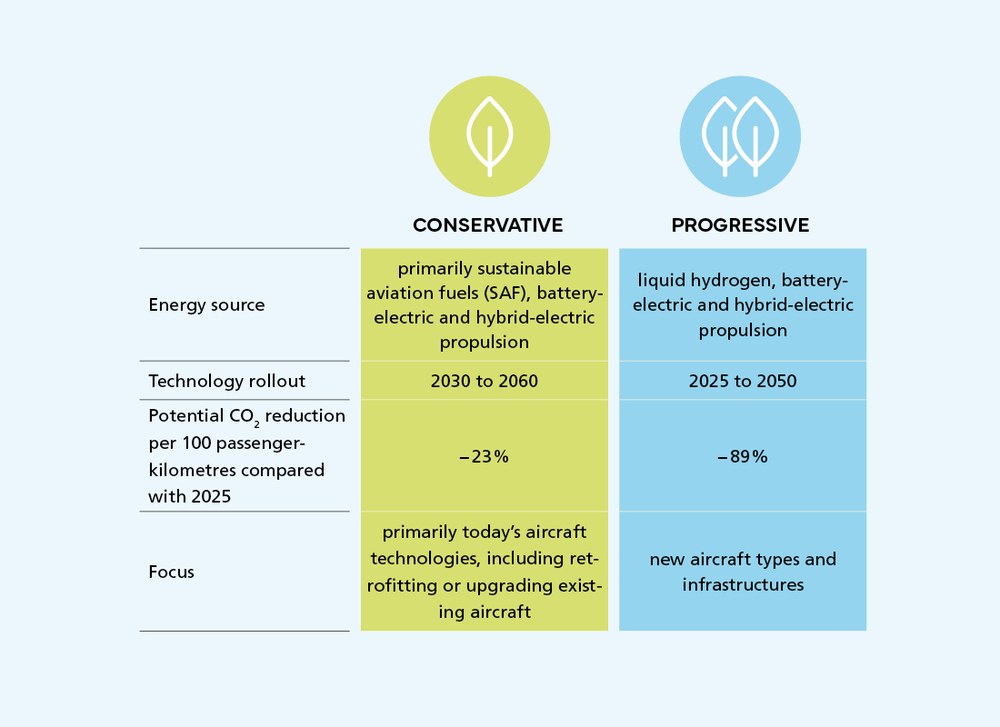
The study presents two potential pathways into the future – one conservative scenario and one progressive. Both make clear that, in the long term, aviation can only become climate-compatible through new propulsion systems and energy carriers. The conservative scenario focuses primarily on more efficient aircraft and increased use of sustainable aviation fuels (SAF). The progressive scenario takes a more ambitious approach, factoring in the early adoption of hydrogen-based and battery-electric propulsion systems.
Credit:
Aircraft roadmap by fuel
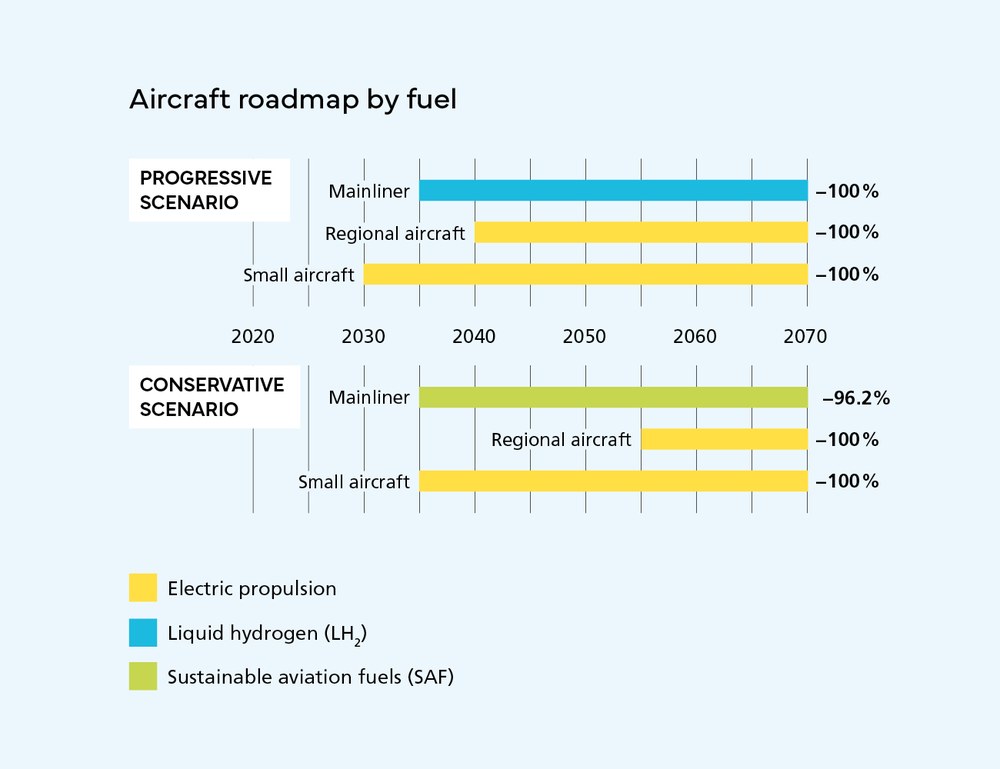
Despite an expected doubling of air traffic volume by 2070, CO2 emissions per 100 kilometres travelled by one person could be almost entirely reduced compared with 2025 - provided new technologies are rolled out consistently. The modelling shows how alternative propulsion systems, sustainable fuels and more efficient aircraft can together deliver major emissions reductions across all aircraft types, from mainliner to small aircraft.
Credit:
A wind of change for the economy and society
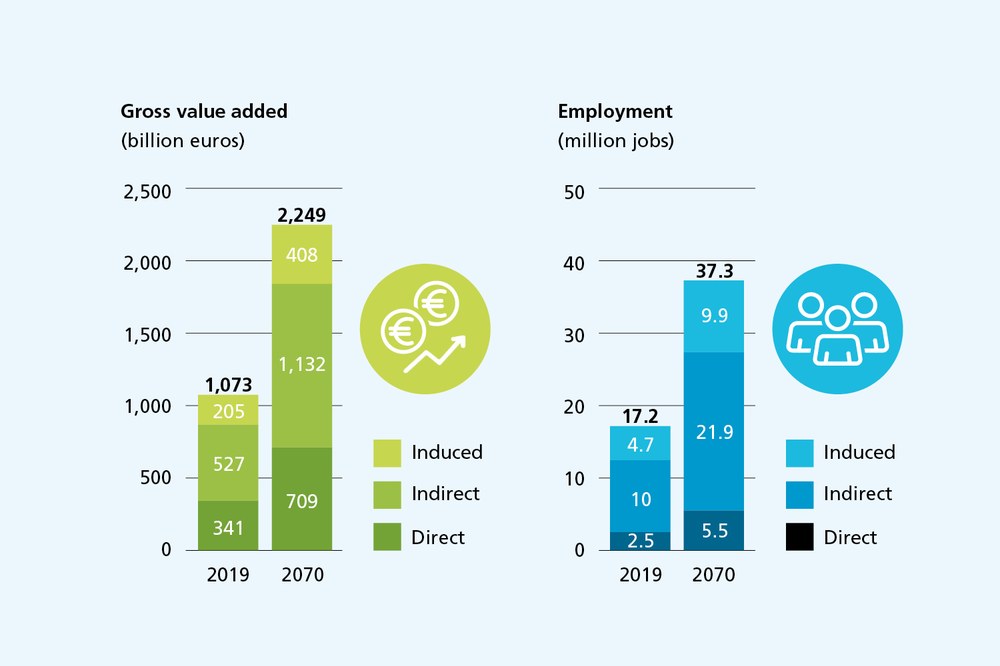
The transition to climate-compatible flight is also an economic opportunity. According to DEPA 2070, the global value created by aviation could double between 2019 and 2070, reaching approximately 2.2 trillion euros. At the same time, worldwide employment would grow from 17 million to more than 37 million people. New technologies and propulsion systems generate innovation, jobs and momentum for the entire sector. Mobility solutions are changing travel as we know it: hybridelectric aircraft, improved airport access and supersonic connections could make flying more flexible, fast and sustainable in the future.
Credit:
Outlook: DEPA – ext. |
|---|
In the follow-up project DEPA – ext. (extended), DLR is analysing how uncertainties – such as energy availability, infrastructure or geopolitical developments – could influence aviation from now until 2070. The aim is to develop realistic yet alternative future scenarios for the next 45 years and derive robust strategies from them. |