Cover story from the DLRmagazine 179: The successful launch of the ATHEAt flight experiment marked an important milestone in the development of reusable space transport systems
Mach 9.2 over the Norwegian Sea
Successful launch of the ATHEAt flight experiment
ATHEAt stands for 'Advanced Technologies for High Energetic Atmospheric Flight of Launcher Stages'.
The launch of a rocket into space is a magical moment. Its return to Earth, by contrast, is far less poetic: the atmospheric re-entry of a spacecraft is like a ride through purgatory. After a tough mission, both people and materials find themselves once again pushed to their limits. At speeds of up to 28,000 kilometres per hour (25 times the speed of sound, or Mach 25), conditions are extreme. From Mach 5 onwards – the hypersonic regime – additional phenomena occur: the air behind the shockwave and in front of the vehicle is heavily compressed. Depending on the speed, this raises gas temperatures to several thousand degrees Celsius. This tremendous heat puts immense stress on spaceflight structures and triggers chemical reactions on their surfaces. Aerodynamic forces are just as extreme at these speeds and technologically challenging to manage.
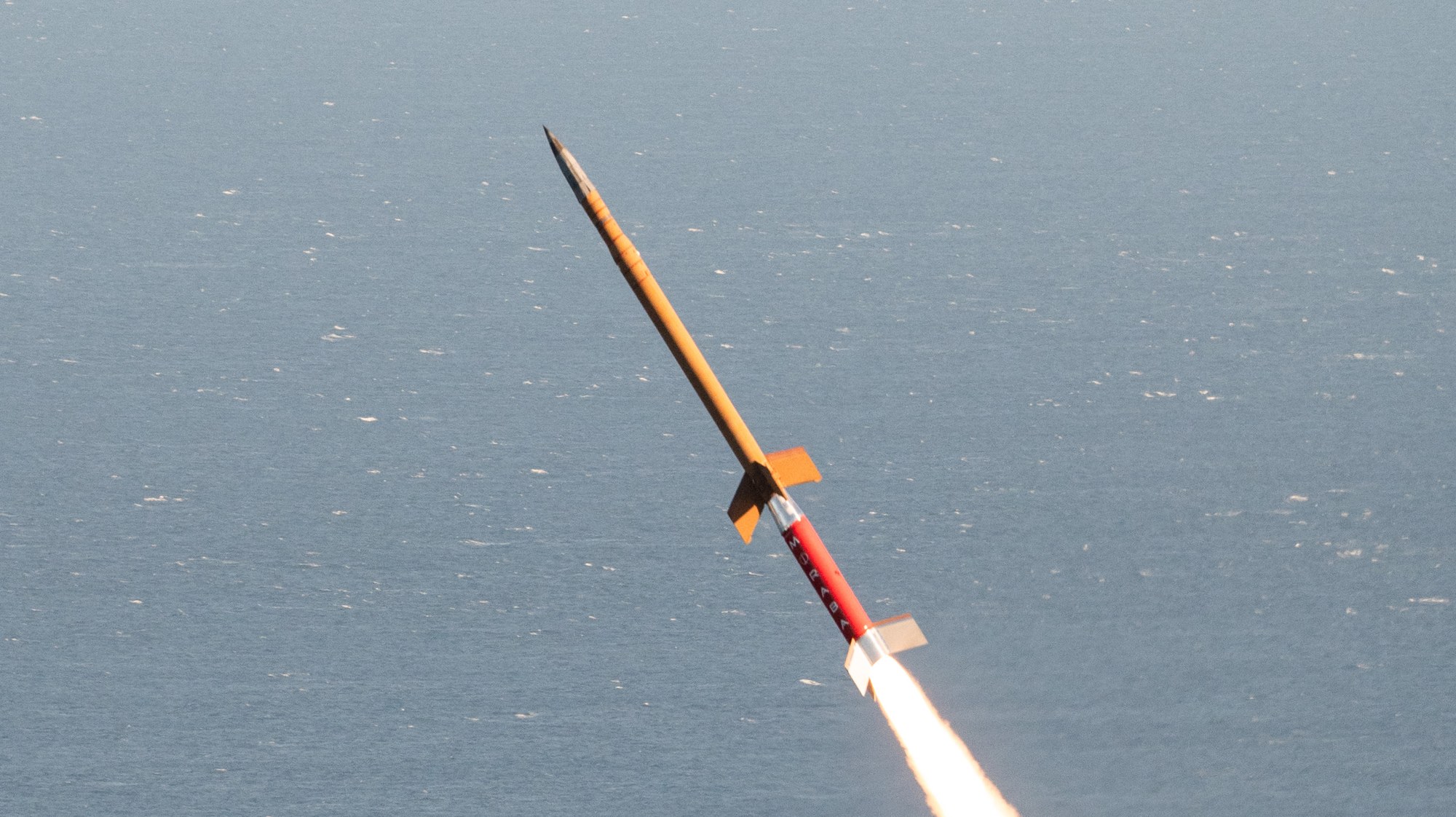
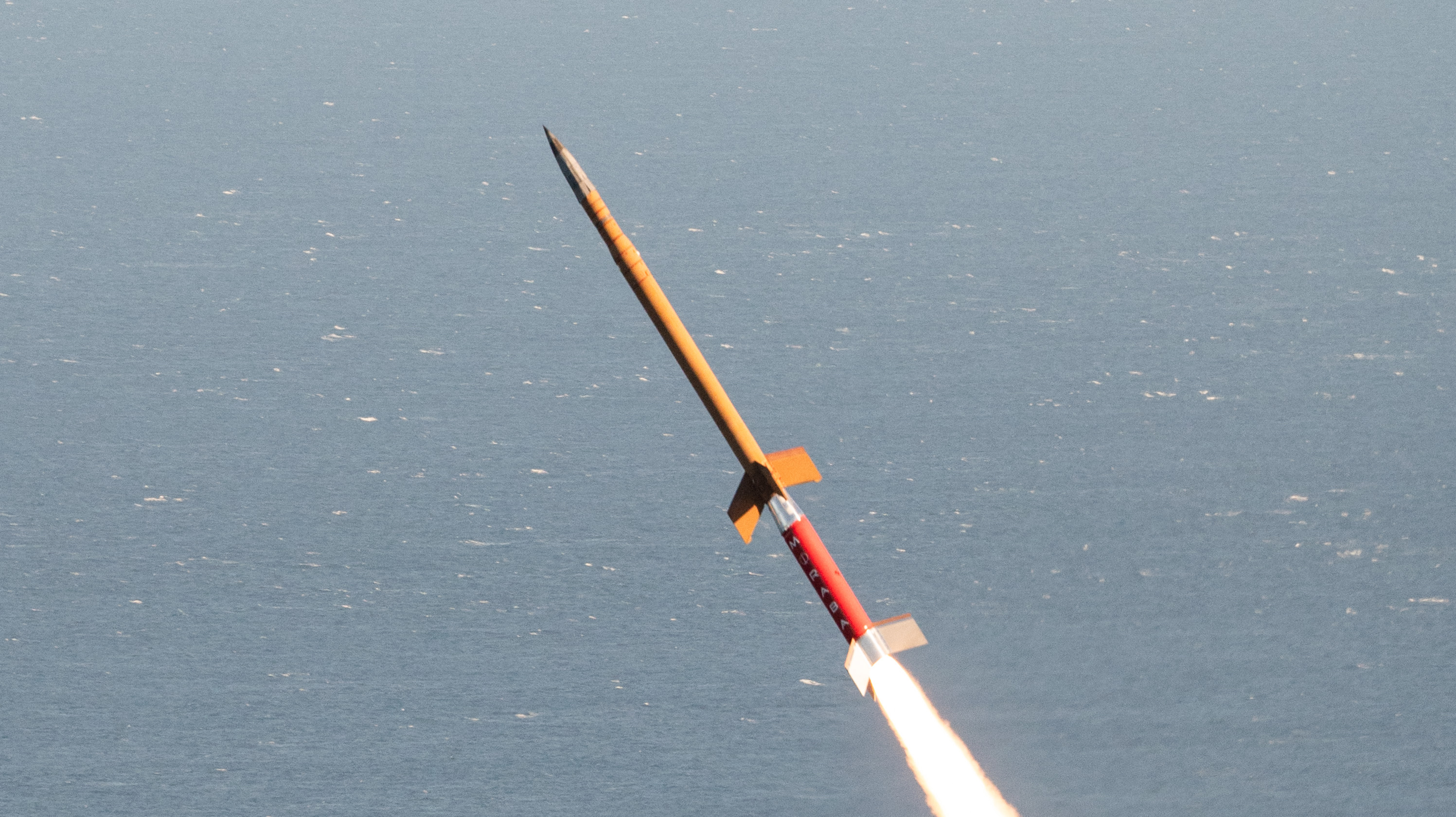
With the successful launch of the ATHEAt flight experiment from the Norwegian island of Andøya, DLR has reached an important milestone in developing technologies for reusable space transport systems. On board a sounding rocket, the flight experiment raced across the sea in northern Norway in a flat curve for several minutes, simulating the particularly challenging conditions of re-entry into the Earth's atmosphere – namely temperatures of 2,000 degrees Celsius and above and a top speed of Mach 9.2. In the video, DLR researchers explain the objectives of ATHEAt. They also provide insights into the development and construction of the flight experiment and show how they mastered the extreme aerothermal and aerodynamic loads during the flight and how they obtained unique data.
Reusable space transport – DLR flight experiment ATHEAt put to the test
Your consent to the storage of data ('cookies') is required for the playback of this video on Youtube.com. You can view and change your current data storage settings at any time under privacy.
Reusable space transport – DLR flight experiment ATHEAt put to the test
With the successful launch of the ATHEAt flight experiment from the Norwegian island of Andøya, DLR has reached an important milestone in developing technologies for reusable space transport systems. On board a sounding rocket, the flight experiment raced across the sea in northern Norway in a flat curve for several minutes, simulating the particularly challenging conditions of re-entry into the Earth's atmosphere – namely temperatures of 2,000 degrees Celsius and above and a top speed of Mach 9.2. In the video, DLR researchers explain the objectives of ATHEAt. They also provide insights into the development and construction of the flight experiment and show how they mastered the extreme aerothermal and aerodynamic loads during the flight and how they obtained unique data.
Space transport systems that can be used multiple times have the potential to make spaceflight more cost-effective, sustainable and fast. DLR is developing and testing the technologies required to achieve this, one example being the ongoing ATHEAt project (Advanced Technologies for High Energetic Atmospheric Flight of Launcher Stages). Like its predecessors, ATHEAt builds on a combination of sophisticated simulations, computer-based design, component testing on the ground and flight experiments aboard sounding rockets.
With each project, DLR researchers push the boundaries of what is technically feasible a little further. Their goal this time is to fly for longer than before at very high speeds between Mach 8 and 10. "The requirements we recreate in the ATHEAt flight experiment are conditions that the thermal protection systems of future reusable space transport vehicles must reliably withstand multiple times during atmospheric re-entry," explains project lead Ali Gülhan. "Re-entry at extremely high speeds is a sticking point in the development process – including for space companies. With projects like ATHEAt, we are working specifically to close this remaining technology gap. That's why stakeholders from research and industry around the world are closely watching our progress."
Nature, Northern Lights and space technology
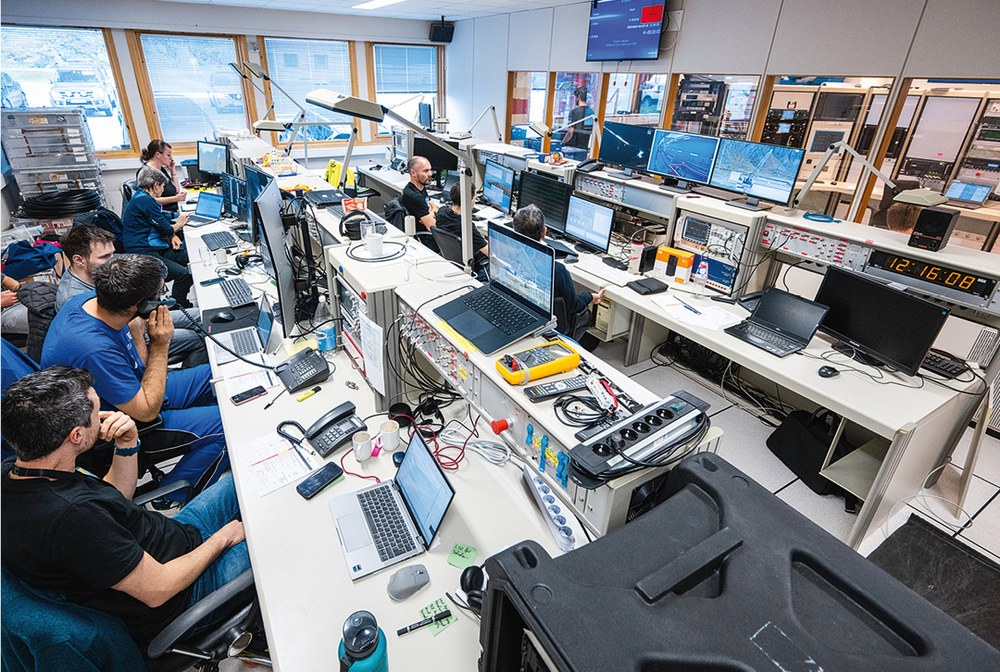
The DLR and Andøya Space team in the scientific control room
Before launch, teams from DLR and Andøya Space go through every step together, supported by a checklist tailored for each scenario – the 'countdown procedure'.
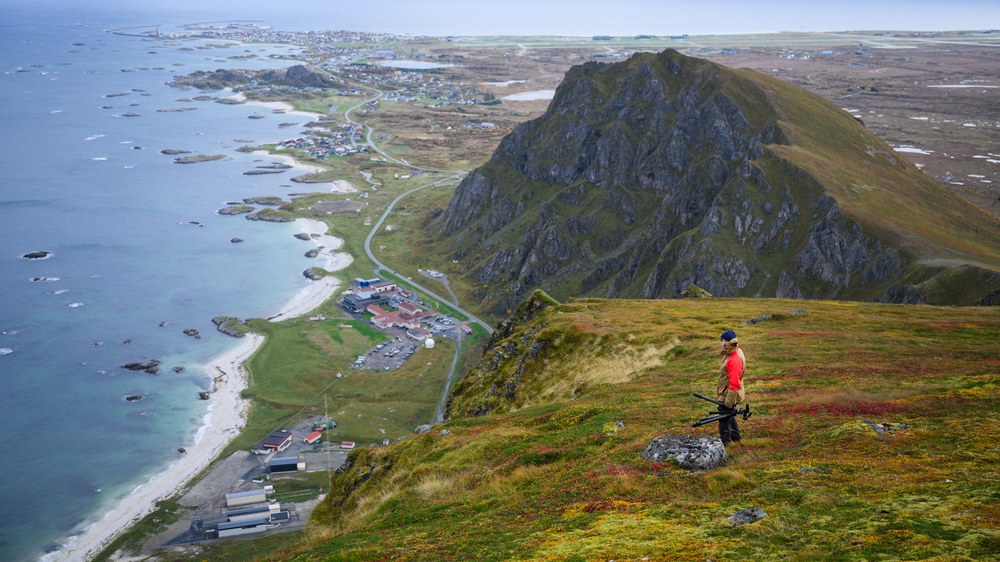
Understandably, anticipation and tensions were high in mid-September 2025 as the ATHEAt team, after years of development work, made their way to the far north of Norway with the completed flight experiment. The small island of Andøya normally attracts visitors drawn by the rugged nature, keen to spot sea birds and whales or to revel under the Northern Lights. Yet just a few kilometres from the main town of Andenes, home to 2500 residents, lies a rocket launch site known only to spaceflight insiders. Located directly by the sea with a mountain range behind it, Andøya Space offers ideal conditions thanks to its location and flight corridor over the Norwegian Sea. The location is also well suited to launch DLR research rockets – particularly when their payload is not recovered post-flight.
High-tech ceramics at the tip
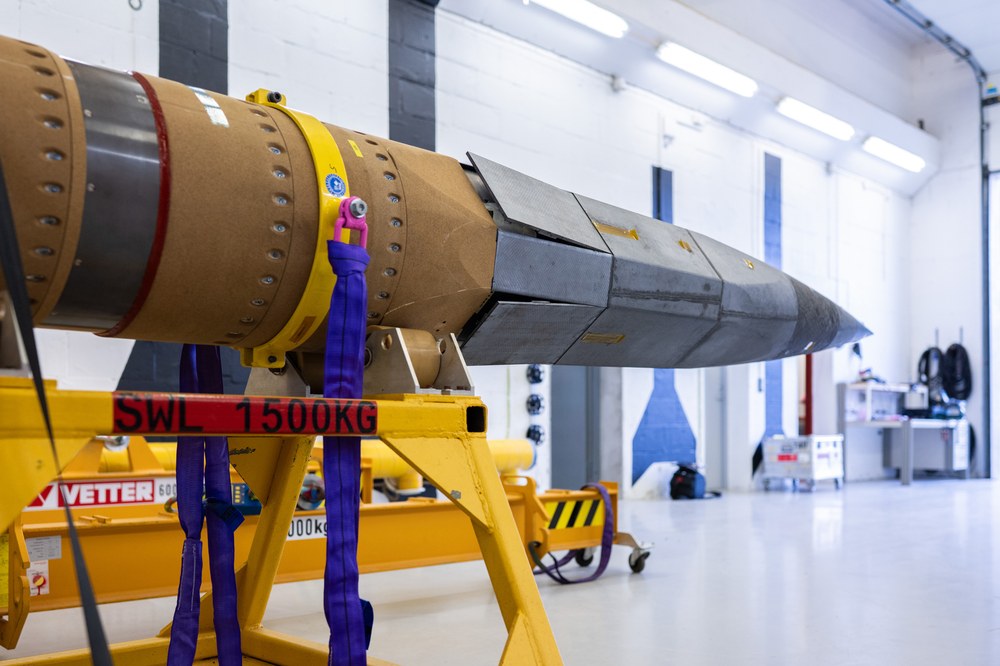
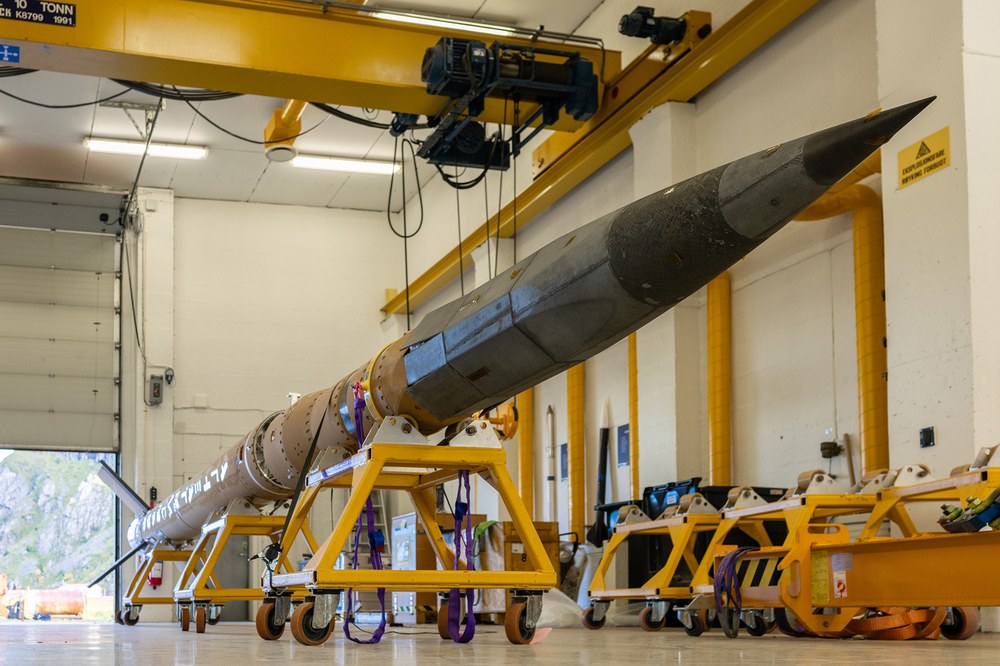
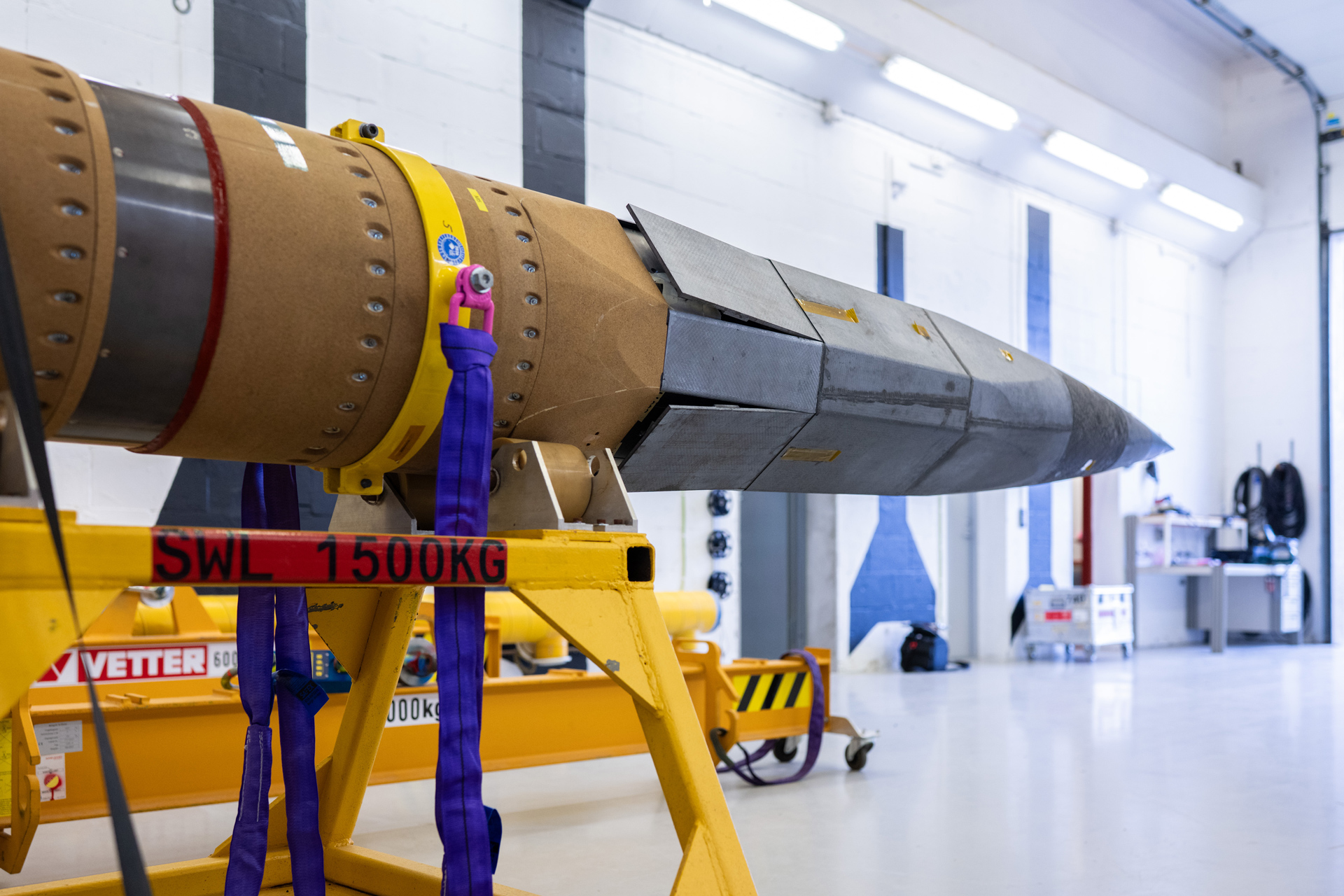
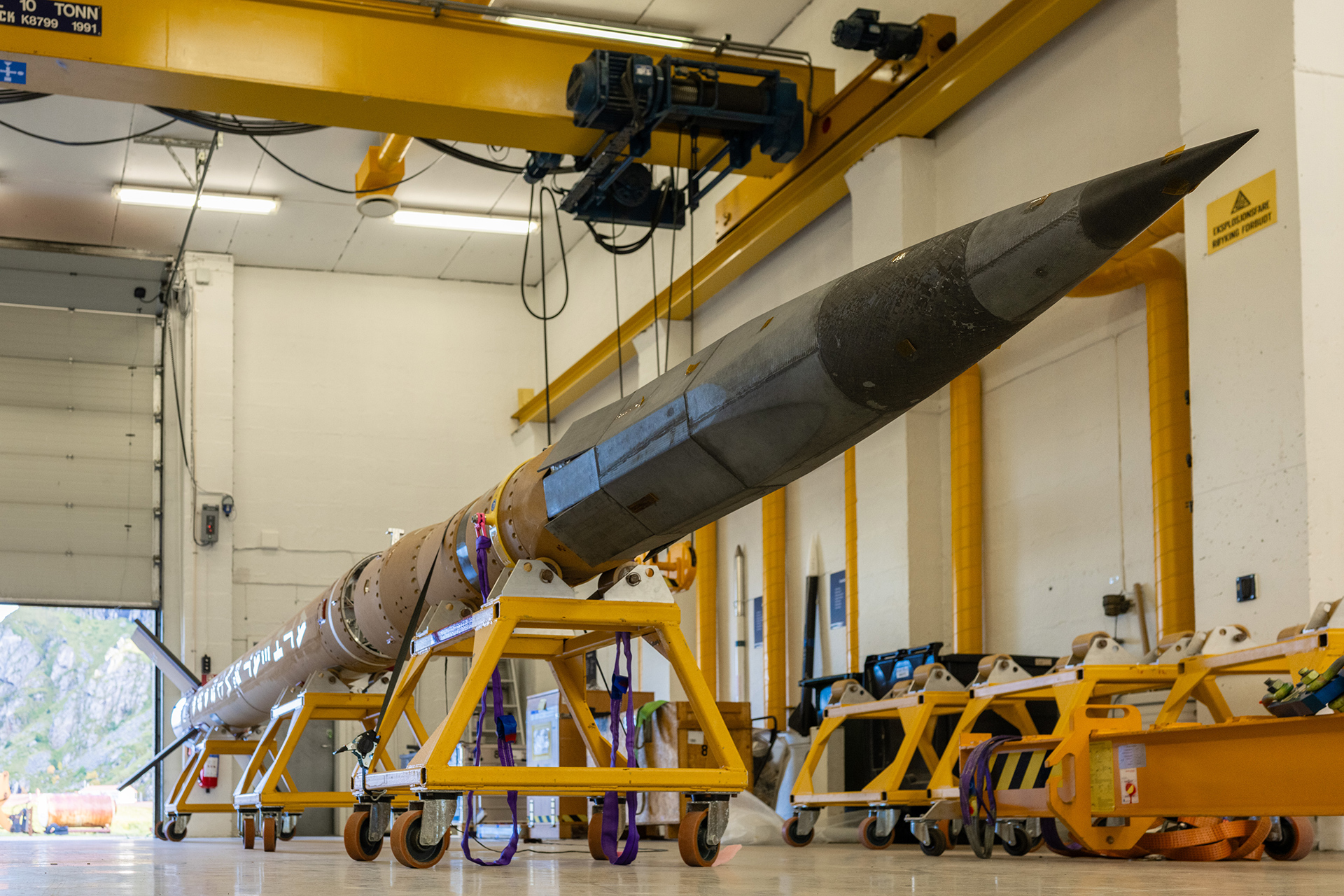
The payload accounts for the first 3.5 metres of the 13.5-metre-long research rocket. It contains scientific experiments as well as the service module for measurements, power supply and data transmission during flight. The front part of the payload, known as the forebody, is shiny grey. Its surface is made from a special fibre-reinforced ceramic. Manufactured entirely at DLR, it is extremely effective; as a high-performance material, it can withstand temperatures in excess of 2000 degrees Celsius, is mechanically very stable and yet comparatively lightweight.
View of Andøya Space
More than 700 sounding rockets have been launched since 1962.
"One challenge when working with fibre-ceramic materials is manufacturing them in the geometries and extremely precise dimensions required for spaceflight," explains DLR engineer Thomas Reimer who, working in a small team, designed, manufactured and assembled the forebody structure. Thin-walled, curved shells like those used on the forebody of ATHEAt are particularly difficult to manufacture, because during production the components are, for example, heated in a furnace and shrink in the process. This must be carefully factored into calculations in advance so that everything fits together at the end. "The know-how we gain from projects like ATHEAt is also important if we want to manufacture such components in large numbers in the future," Thomas adds.
The forebody not only represents a great deal of development work – it has a dual function during flight, serving as both thermal protection and as a research experiment. With it, two different active cooling methods are being tested to reduce surface temperatures in certain areas across the forebody. In one method, nitrogen is forced through specifically created pores in a ceramic sample to produce a cooling film on the exterior. In the other, a cooling gas flows at high speed along the inside of one of the fibre-ceramic structures
Flaps on the front section of the research rocket
One new feature is the flaps on the forebody – in the future, such flaps could be used to steer rockets.
For the first time, four unique, slightly protruding rectangular flaps – equipped with sensors and designed to change their deflection angle in flight – are mounted on the flight experiment's payload section. Also made of fibre-reinforced ceramic, they are designed to fold out in flight. In the future, such flaps could be used to steer rockets. Due to their exposed position, however, they too get extremely hot.
Hundreds of sensors collect unique data
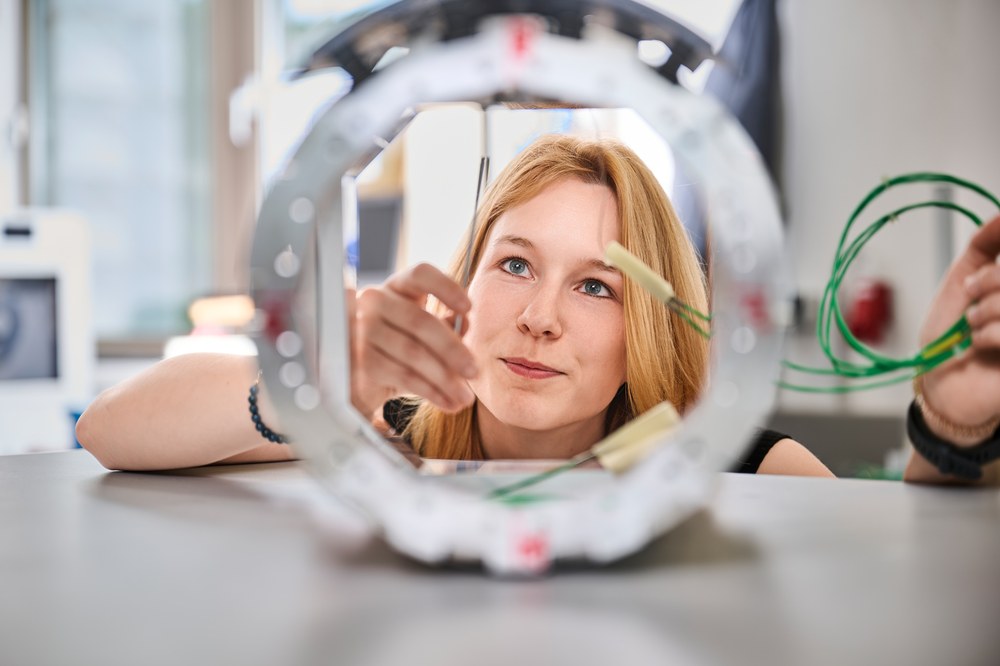
Inside the payload, space is extremely limited. A multitude of cables and wires crisscross each other as more than 300 sensors are on board – including all the necessary infrastructure to control them, supply them with power and transmit data by radio. Among these are some very special measurement techniques – the first of their kind. They include laser distance measurement systems and a laser line scanner. Beneath the flaps, two infrared cameras and radiation thermometers are also installed.
ATHEAt flight experiment in the engine hall
Upon arrival, it's time to unpack and get to work: the DLR crew and a Norwegian team assemble the individual components into a rocket and carry out final functional tests.
ATHEAt's instrumentation incorporates DLR's specialised expertise and many years of experience. At the same time, it is designed to generate reliable and comprehensive datasets, which form the foundation for all further technological developments. During flight, all data is collected and transmitted by radio to receiving stations near the launch site, where they are stored. Since the payload is not retrieved after the flight, the team has precisely one chance to get their hands on this unique treasure trove of data. Accordingly, extensive functional tests are carried out on the sensors, including during a virtual flight simulation. Meanwhile, another part of the ATHEAt team prepares the two motor stages.
Integration and final checks
ATHEAt flight experiment
The DLR crew and the Norwegian team assemble the individual components into a rocket and carry out final functional tests.
To transfer research from the laboratory onto a rocket and then into the air or space, DLR operates its own facility: the Mobile Rocket Base (MORABA). It plans, oversees and launches suborbital sounding rockets – and has done for almost 60 years, from locations almost everywhere on Earth.
"For the ATHEAt flight experiment, we don’t need great altitudes; instead, we fly along a relatively flat trajectory to reach the necessary high thermal loads for as long as possible," explains Dorian Hargarten from the MORABA team. The trajectory is calculated in detail in advance since the research rocket cannot be actively steered after launch – making such experimental flights particularly cost-effective. "The payload mass, aerodynamics, motors used and the direction and angle of the launch rail all play an important role in these calculations. Factors such as wind speeds at different altitudes are also vital variables – yet cannot be controlled and so always involve assumptions.
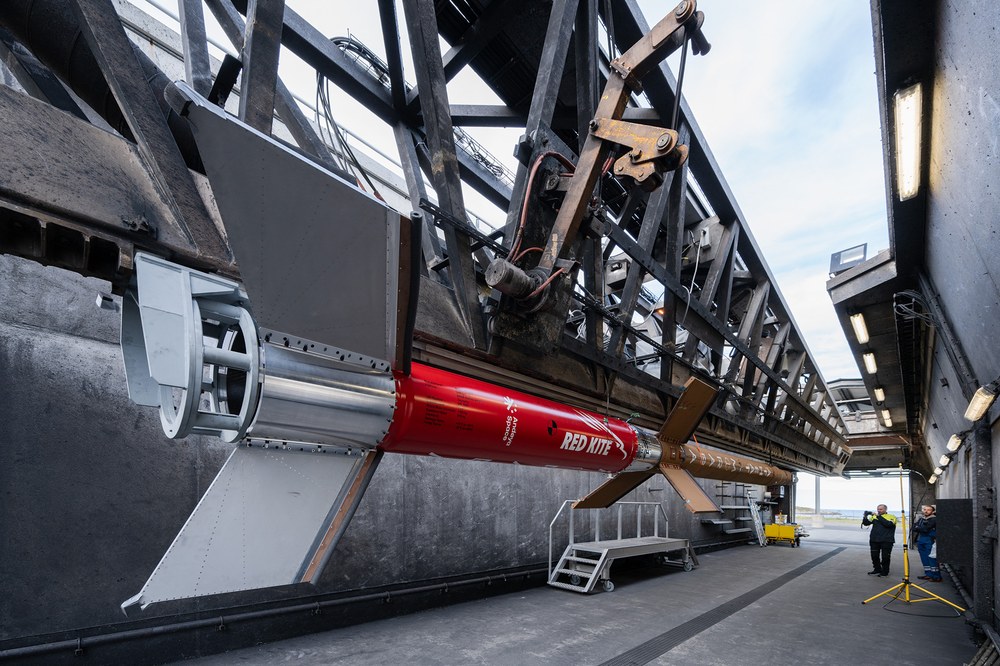
Rocket with RED KITE motor
Developed entirely in Germany by DLR and Bayern-Chemie, the RED KITE motor lifts the rocket off the ground.
To achieve the planned trajectory and high speeds, the team relies on a custom-configured two-stage propulsion system. The first, lower propulsion stage – RED KITE – was jointly developed by DLR and Bayern-Chemie. Hidden beneath its casing is a particularly powerful solid rocket motor, produced entirely in Germany. The second, upper stage uses a Canadian 'Black Brant' rocket motor.
While the payload is already combined with the upper stage and waiting to be transported to the launch pad, technicians connect the lower motor stage to the launch rail. All work is carried out under strict safety protocols, as explosive materials and a whole lot of fuel are used for every rocket launch.
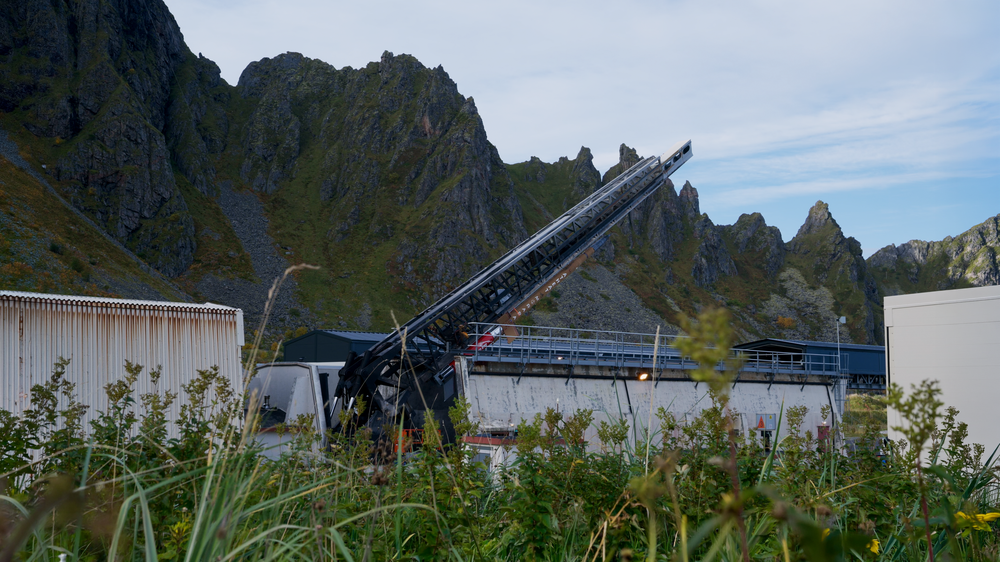
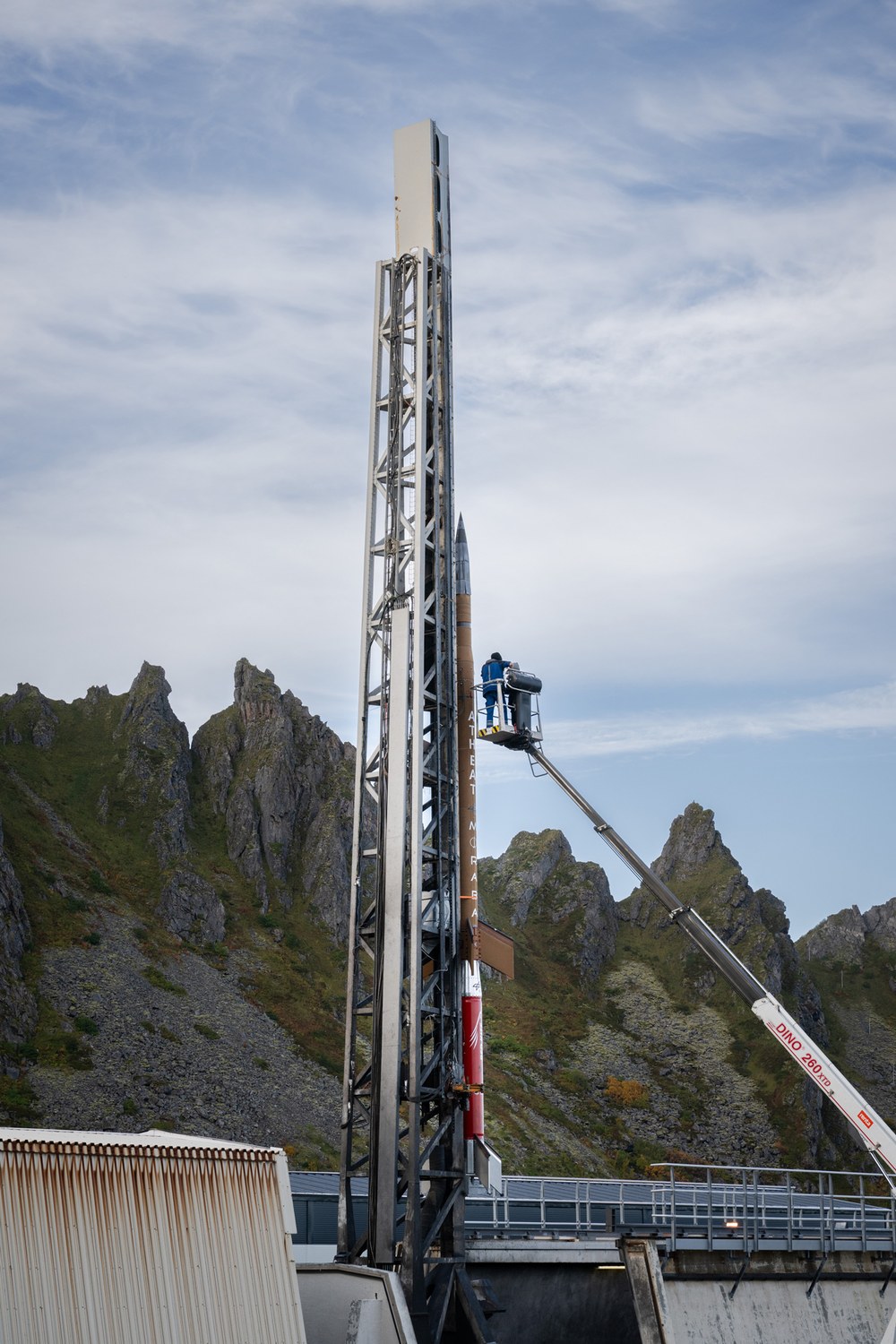
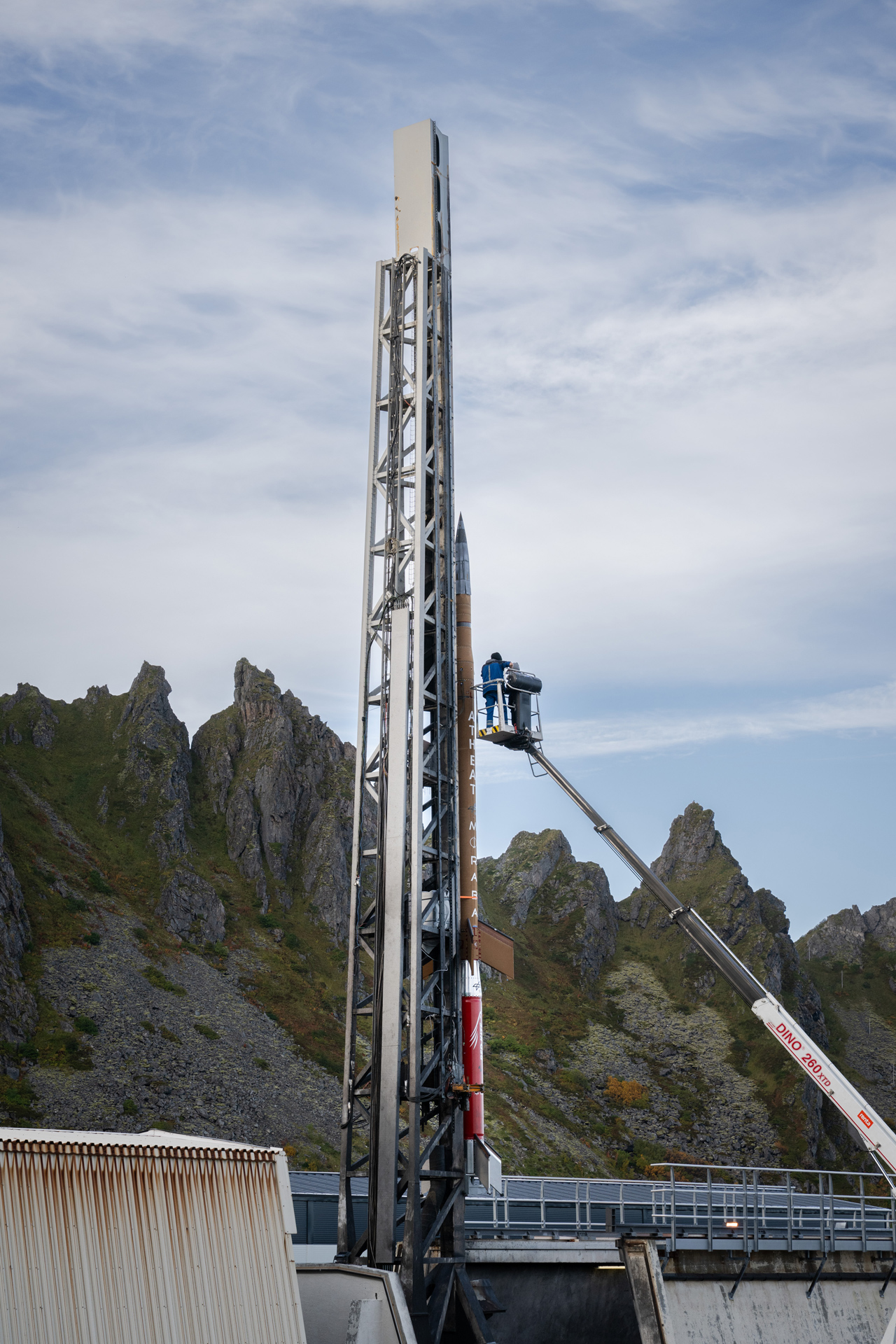
Finally, DLR and Andøya Space carefully roll the payload with the upper stage to the launch site and begin the final integration steps. Although the launch is angled upward, the fully assembled rocket is first erected vertically. Once the final preparations are complete, the launch rail is lowered back down and locked. To protect against moisture, the upper part of the research rocket is covered with a Styrofoam casing.
Dress rehearsal for launch
When it comes to rocket launches, nothing is left to chance. A crucial component of launch preparation is therefore the test countdown, conducted one or two days before the launch window opens. This provides reassurance to everyone involved as excitement builds – and reveals whether the carefully planned sequence also works in practice. At this stage, all threads come together: phones are in constant use, heads huddle together and turn back to the phalanx of monitors in front of them. The countdown is halted multiple times. These 'holds' are used, for example, to allow more time for important steps, restart subsystems or wait for better weather. By late afternoon, the test countdown is complete. A day off follows to relax and clear one's head – with a run, trip to the sauna or on a hunt for the island's best cinnamon roll.
Everything ready – except the wind
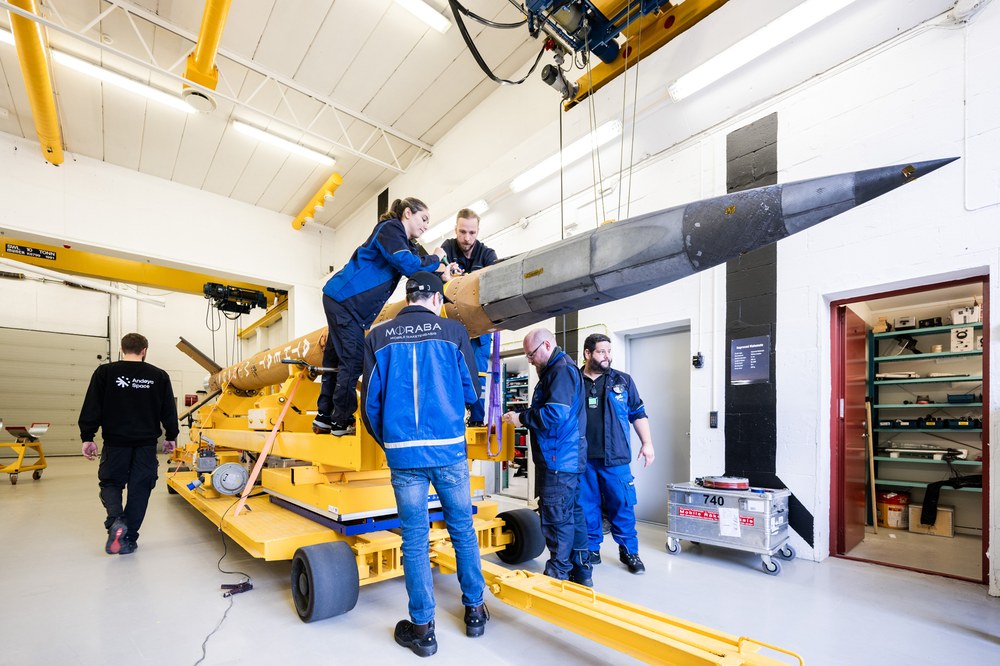
Research rocket on the lifting platform
On a lifting platform, two colleagues with a head for heights tighten the final connections between the rocket components and check everything one last time.
Just in time for the opening of the launch window on 3 October, the weather takes an unfortunate turn for the worse. Persistent cloud cover and strong winds in the middle and upper atmosphere are particularly critical. The campaign plan allows nine days to launch the ATHEAt flight experiment. After this, the next projects are already lined up. Now begins a period of waiting and weighing up options: should the team hope for better conditions in the next days? Would that risk time pressure if the weather gets worse?
Here, as with many other launch scenarios, routine, experience and preparation prove invaluable. On the first three days, teams from DLR and Andøya Space meet each morning to discuss the weather conditions, and despite the odds they begin preparations. They work through the countdown up to 40 minutes before launch, then wait in standby position. Should the clouds dissipate and winds ease, they can respond quickly and seize any good opportunity. On the first day, everyone waits in hope until late afternoon. On the following two days, the countdown is aborted earlier.
The fourth day finally brings the change in weather they hoped for. After the morning meeting and review of the latest meteorological data, spirits lift and fresh momentum is injected into the countdown. Even 40 minutes before the scheduled launch, the weather continues to play ball and the clock ticks away. The lid above the launch rail opens and the rocket raises into position. At 20 minutes before launch, the final weather balloons rise into the sky and confirm: conditions are good to go. The Norwegian safety officer reports that the area around the launch pad is clear, the road is closed and the airspace over the sea secured. Radar and telemetry stations are ready to receive and begin recording. Three minutes before launch, a loud siren sounds and all participants are fully focused. Ninety seconds to go – all stations report their "go" loud and clear. A computer voice counts down the final seconds, and the Andøya Space mission director pushes the button to initiate ignition. Flames and a cloud of smoke appear, followed by a jet of fire along the launch rail. It takes just under a second for the bang to reach those team members not sitting in the control room but observing the liftoff from outside the safety zone or from the mountain ridge. By then, the rocket has already left the launch rail. Seconds later, it is barely recognisable in the clear blue sky above the sea.
The structure of the fore body is prepared
The forebody structure is prepared to mount the thinwalled, shell-shaped components made of fibre-reinforced ceramic.
Even with the successful launch at 10:45 a.m. on 6 October, the mission is far from over. Tension in the control room remains palpable. Just seconds after launch, the first propulsion stage burns out and separates. The second stage then ignites, accelerating the ATHEAt flight experiment so quickly that it flies for a total of four minutes – including two minutes in the hypersonic range above Mach 5, reaching a top speed of Mach 9.2. Roughly speaking, that's just under three kilometres per second. At the end of the flight, the burnt-out motor stages and payload splash down in the designated and secured area. Joy and relief spread through the control room – especially when it is confirmed that the telemetry stations have received and secured comprehensive measurement data.
A treasure trove of data for further development
"In total, we received several gigabytes of measurement data from the sensors. For a mission in which all data was transmitted by radio during flight under extremely challenging conditions, that is an excellent result," sums up project lead Ali Gülhan. Preliminary data show that the flaps deployed as planned. The in-depth assessment of this successfully collected wealth of data will take time: first, the individual data series from the more than 300 sensors must be pre-sorted and their plausibility and reliability reviewed. Only then can researchers make robust statements about temperatures, pressures and aerodynamic and aerothermal effects. This new knowledge will then be compared with models, simulations and wind-tunnel tests – with the goal being to launch a more advanced flight experiment in the next project.
An article by Denise Nüssle from the DLRmagazine 179.Denise Nüssle is a press editor at DLR. She reports on research in energy and transport, but also regularly ventures into the world of spaceflight. For DLRmagazine, she accompanied the campaign on site.