Loading

ARCHES: Autonomous Robot Network
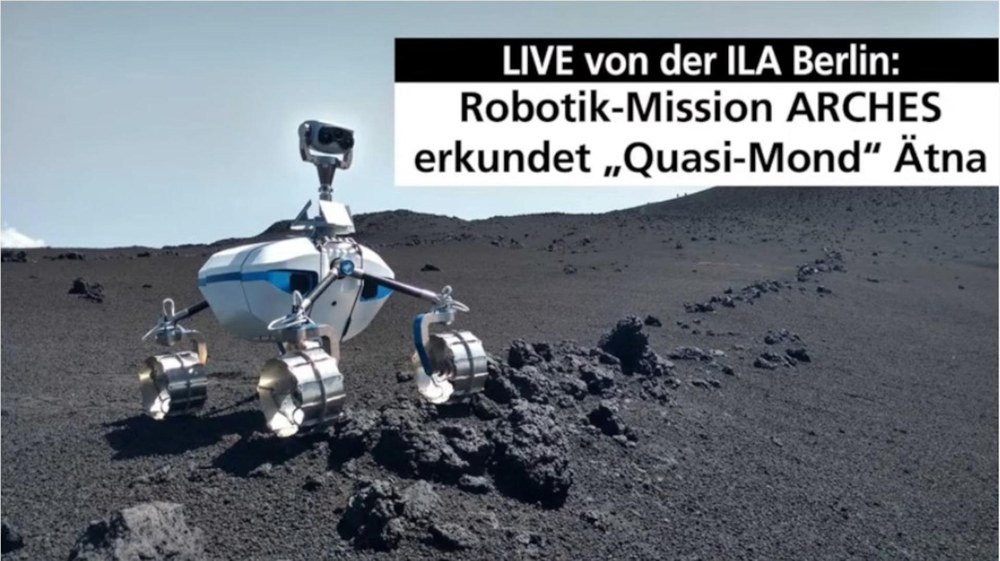
Re-Live from ILA 2022: ARCHES robotics mission explores 'quasi-moon' Etna (in German)
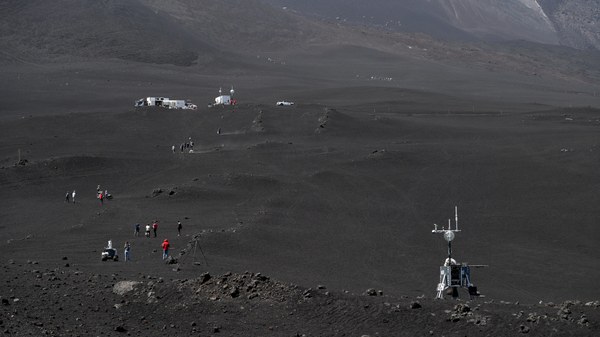
Stream from the DLR stand at the International Aerospace Exhibition (ILA) in Berlin to Mount Etna in Sicily. A complex robotic exploration demonstration mission took place near the summit: 'Autonomous Robotic Networks to Help Modern Societies' (ARCHES). Researchers were using the inhospitable environment of Mount Etna as a 'lunar analogue'. A lander, two rovers and a drone worked autonomously together, exploring their surroundings, mapping them and performing other tasks. In order to test mission scenarios for robotic exploration on Earth before setting off for the Moon or Mars, scientists are looking for locations that are as close as possible to the conditions on a distant celestial body. From 13 June to 9 July 2022, Mount Etna on the Italian island of Sicily became a ‘quasi-Moon', because the volcanic landscape with its granular surface, earthquakes and solidified lava layers resembles the geological composition of the Earth's satellite.
Image: 1/6, Credit:
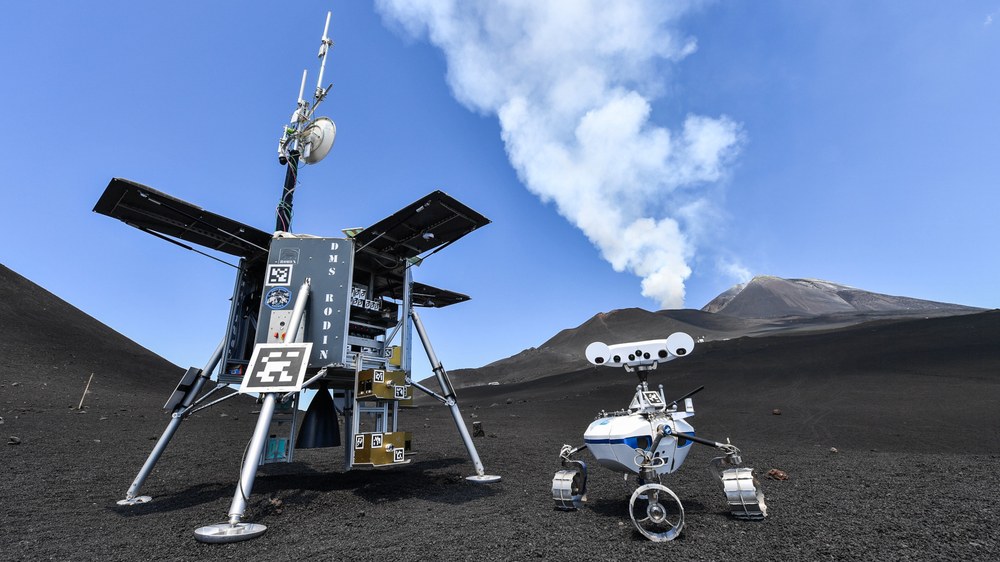

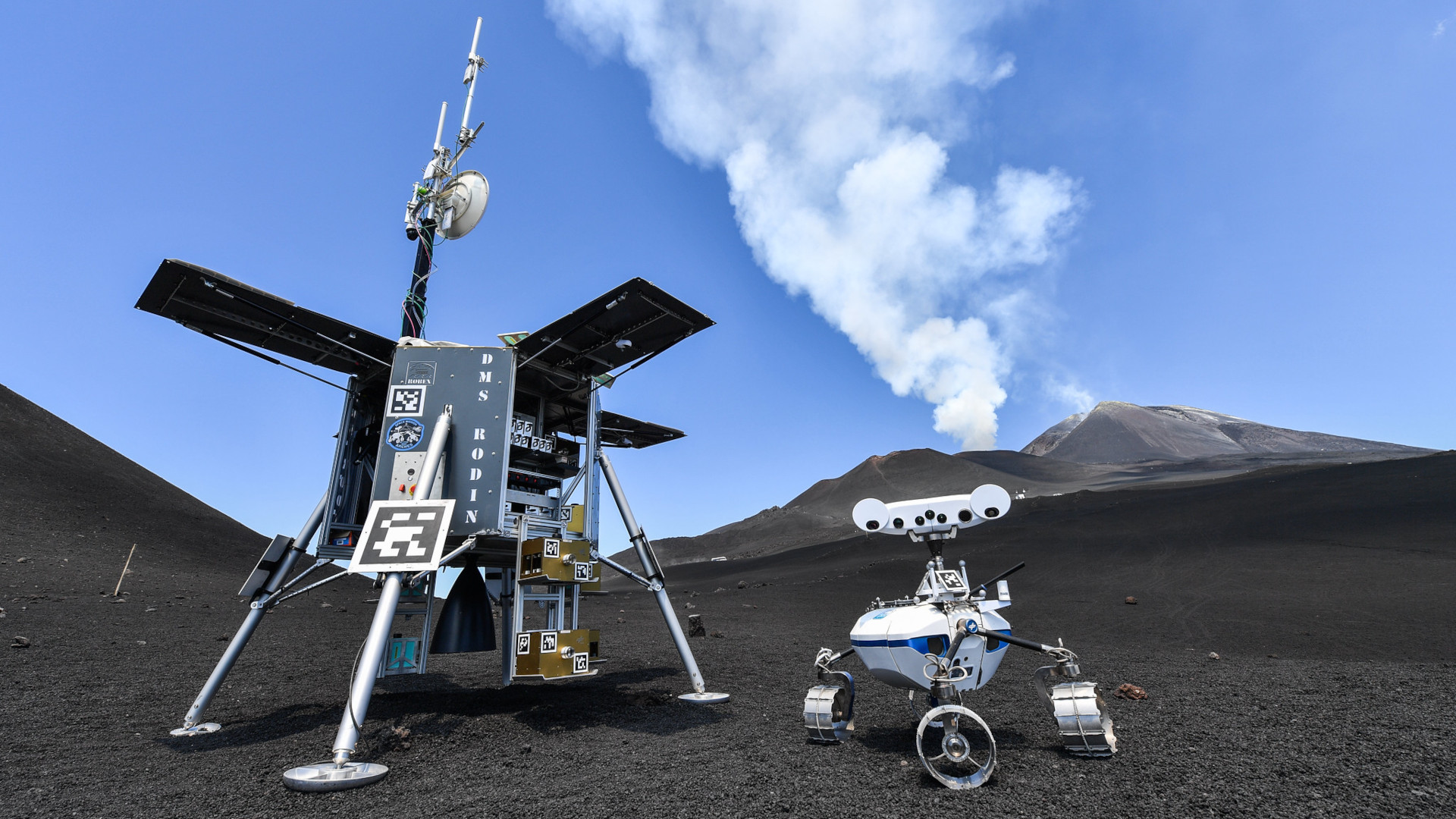
RODIN lander and LRU1 robot on Mount Etna
LRU1 (Lightweight Rover Unit) and the lander RODIN during the ARCHES space-analogue demonstration mission on Mount Etna. In order to test mission scenarios for robotic exploration on Earth before going to the Moon or Mars, scientists are looking for places on Earth that come close to the conditions on another celestial body. From 13 June to 9 July 2022, Mount Etna on the Italian island of Sicily became a 'quasi-Moon', as the volcanic landscape with its granular surface and solidified lava layers resembles the geological composition of the Moon.
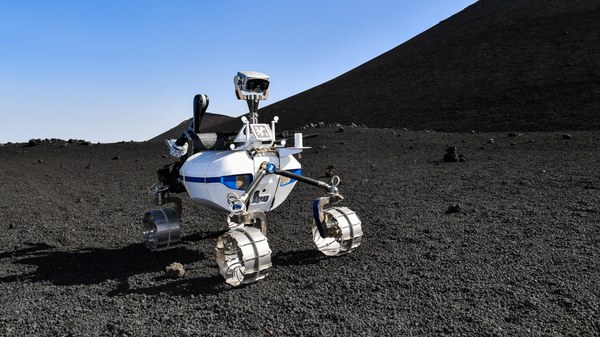
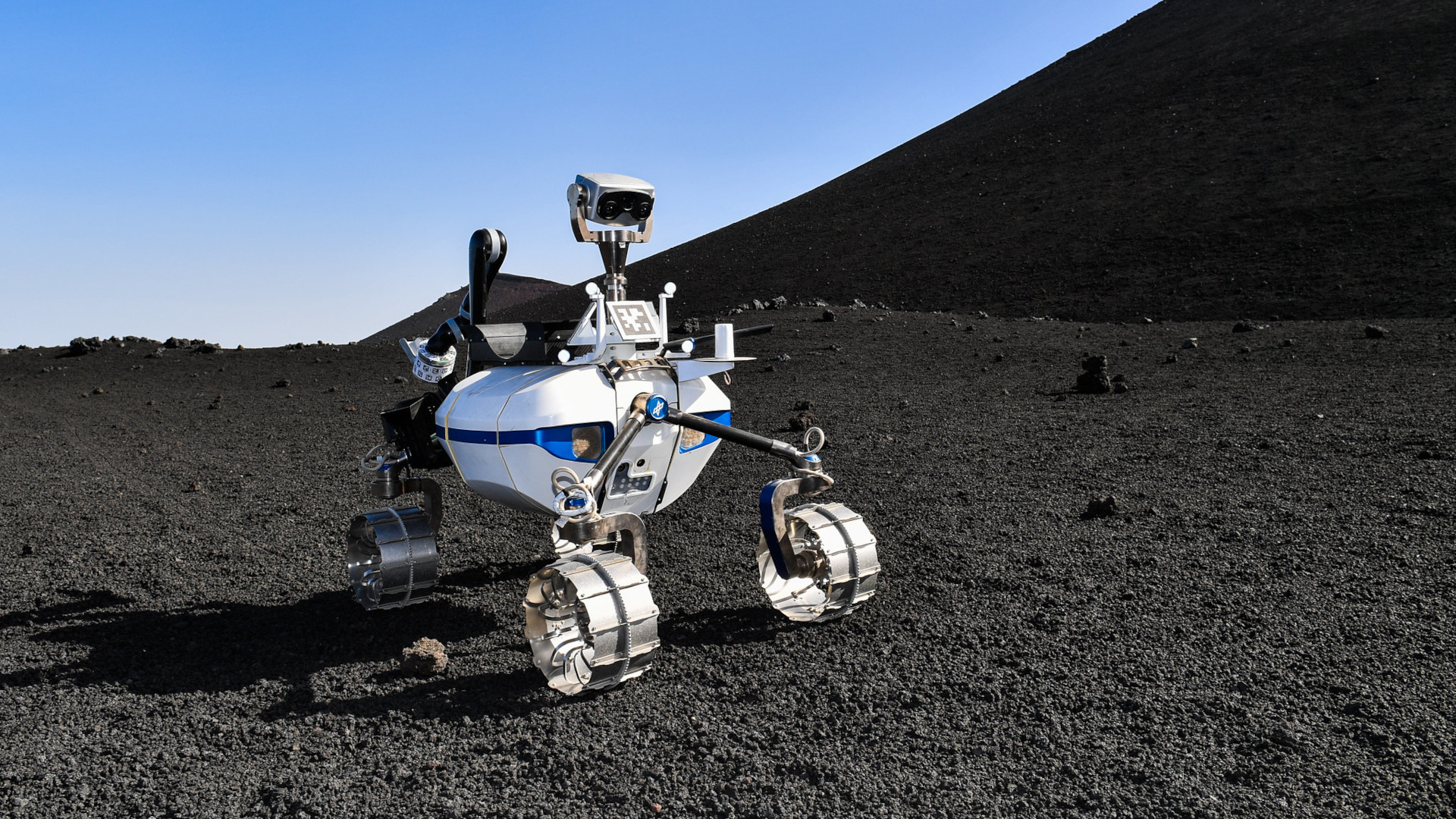
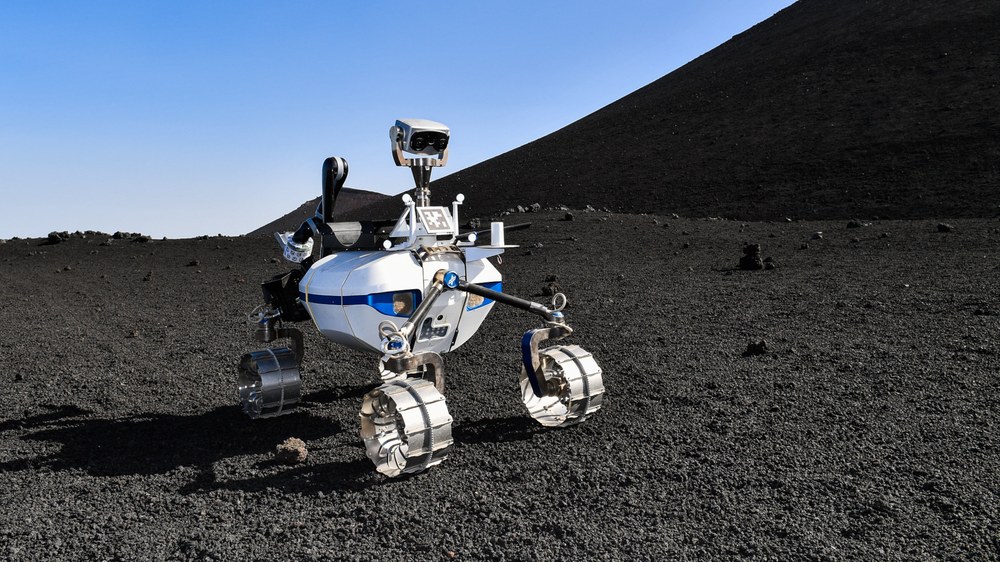
DLR's LRU2 robot during the ARCHES space simulation on Mount Etna
The Lightweight Rover Unit 2 (LRU) during a very unusual outdoor test on Mount Etna. In order to test mission scenarios for robotic exploration on Earth before going to the Moon or Mars, scientists were looking for places on Earth that come close to the conditions on another celestial body. From 13 June to 9 July 2022, Mount Etna on the Italian island of Sicily became a 'quasi-Moon', as the volcanic landscape with its granular surface and solidified lava layers resembles the geological composition of the Moon. ARCHES stands for 'Autonomous Robotic Networks to Help Modern Societies'. Researchers used Etna's harsh environment as a 'lunar analogue'. Several rovers, a lander and a drone worked together, exploring their surroundings and performing several tasks.