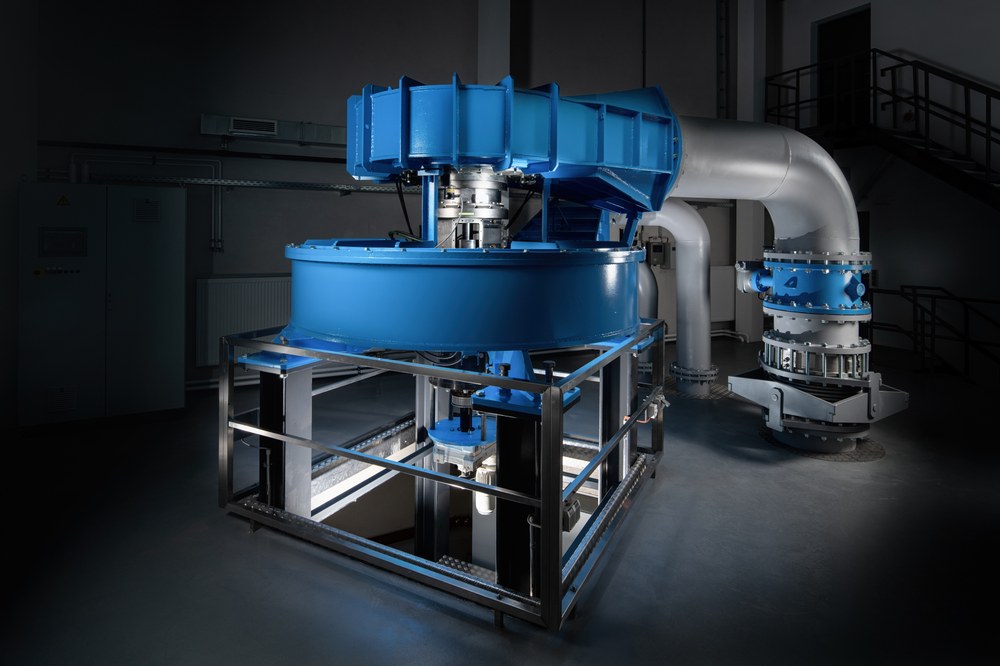
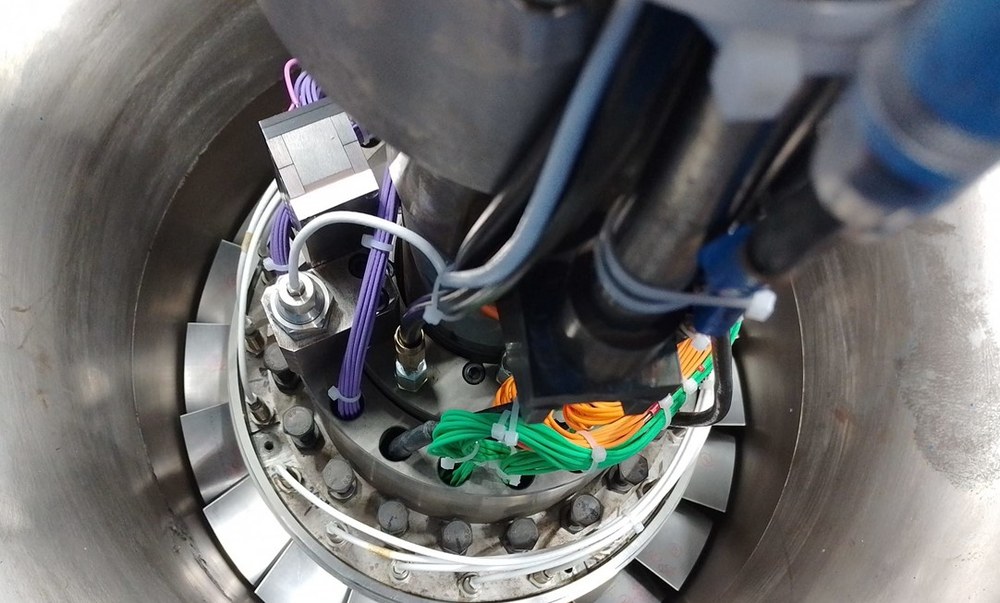
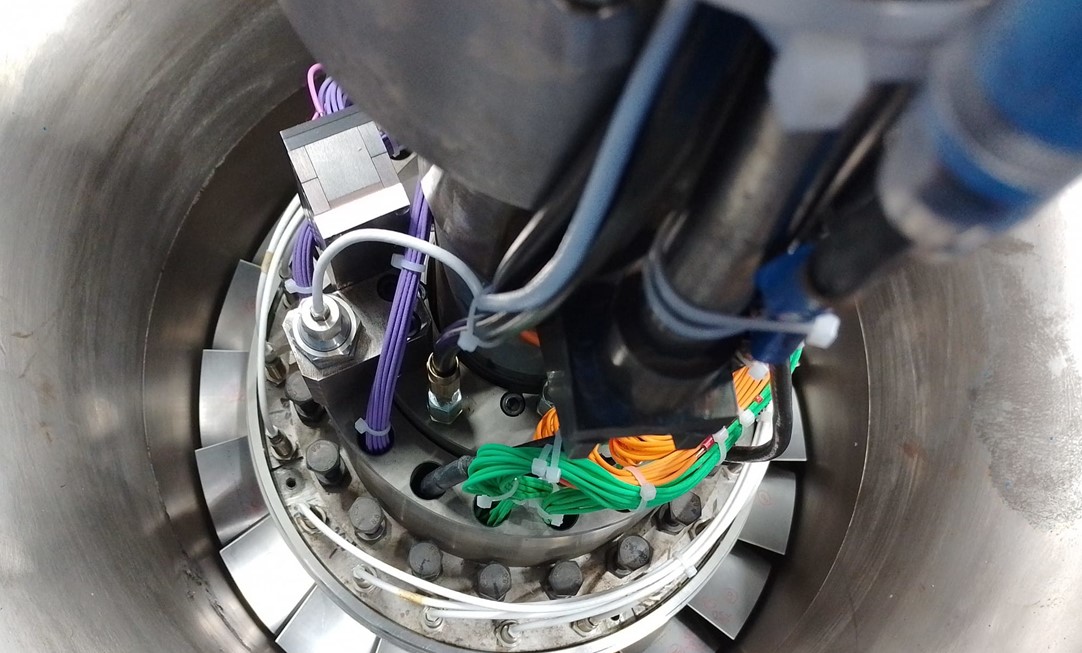
The RPG was developed to study the aeroelasticity of turbomachinery blades and offers a unique platform for investigating the complex interaction mechanisms between time-dependent aerodynamics and structural dynamics.
The development and optimisation of new blade profiles for more efficient aircraft engines and power generation turbines requires the comprehensive investigation of aeroelastic phenomena such as flutter and aerodynamically induced blade vibrations. In addition to simulation-based methods, experimental investigations are crucial to deepening our understanding of these phenomena and validating the corresponding theoretical and numerical methods.
With ever-increasing aerodynamic loads on blades, aeroelastic issues are becoming increasingly challenging. Today, these problems affect not only fans and compressors in aircraft engines but also turbines in stationary gas and steam power plants.
With the Non-Rotating Annular Test Facility (Ringgitterprüfstand Göttingen; RPG), the German Aerospace Center (Deutsches Zentrum für Luft- und Raumfahrt; DLR) has a new measurement facility at its disposal for testing the aeroelastic properties of blade profiles and investigating important features of steady flow – such as shock positions – and their influence on aeroelastic behaviour. The facility can also be used to measure configurations that are essential as validation data for the development of numerical methods. Thanks to its excellent accessibility, the test rig also enables the development and qualification of novel measurement techniques, such as optical methods.
A unique feature – easy to instrument and close to reality
There are generally two approaches to aerodynamic and aeroelastic testing of blade profiles. 'Rolled-up' linear cascades are easy to equip with instruments and observe during tests, but don't fully recreate the repeating airflow between individual blade channels in real engines. Ring-shaped rotating grids and measuring systems simulate more realistic flow conditions, but their complex design makes it difficult to install sensors and obtain accurate measurements on the blades.
The RPG is unique in combining the advantages of both traditional test setups. Its non-rotating ring-shaped design makes it possible to use many sensors and instruments without the complications normally associated with rotating systems. Realistic airflow is created in the axial measuring section by a pre-swirl, generated in the radial nozzle by guide vanes at the inlet of the test bench. Controlled vibrations in the blades can also be generated within the test facility and the resulting unsteady pressure distributions can be measured. These measurements provide information about the aerodynamic stability and flutter characteristics of the blades.
Contact
Virginie Chenaux
Team leader Aeroelasticity of Turbomachinery
German Aerospace Center (DLR)
Institute of Aeroelasticity
Aeroelastic Experiments
Bunsenstraße 10, 37073 Göttingen
Volker Speelmann
Head of Research Infrastructures
German Aerospace Center (DLR)
Executive Board department for Innovation, Transfer and Research Infrastructure