China leads in offshore wind energy – Germany and the EU fall behind
December 16, 2025 | DLR reveals global dynamics using AI and satellite data
China leads in offshore wind energy – Germany and the EU fall behind
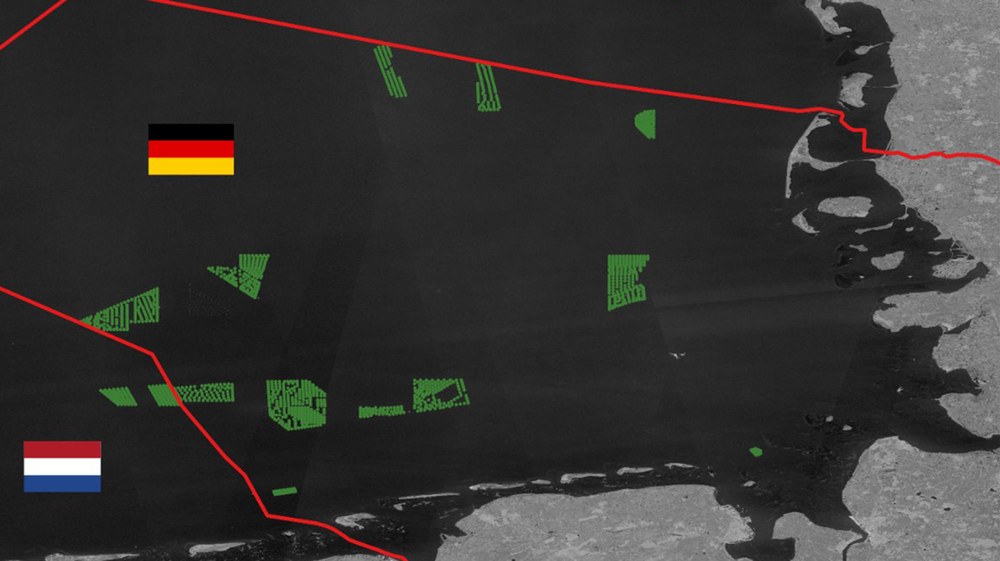
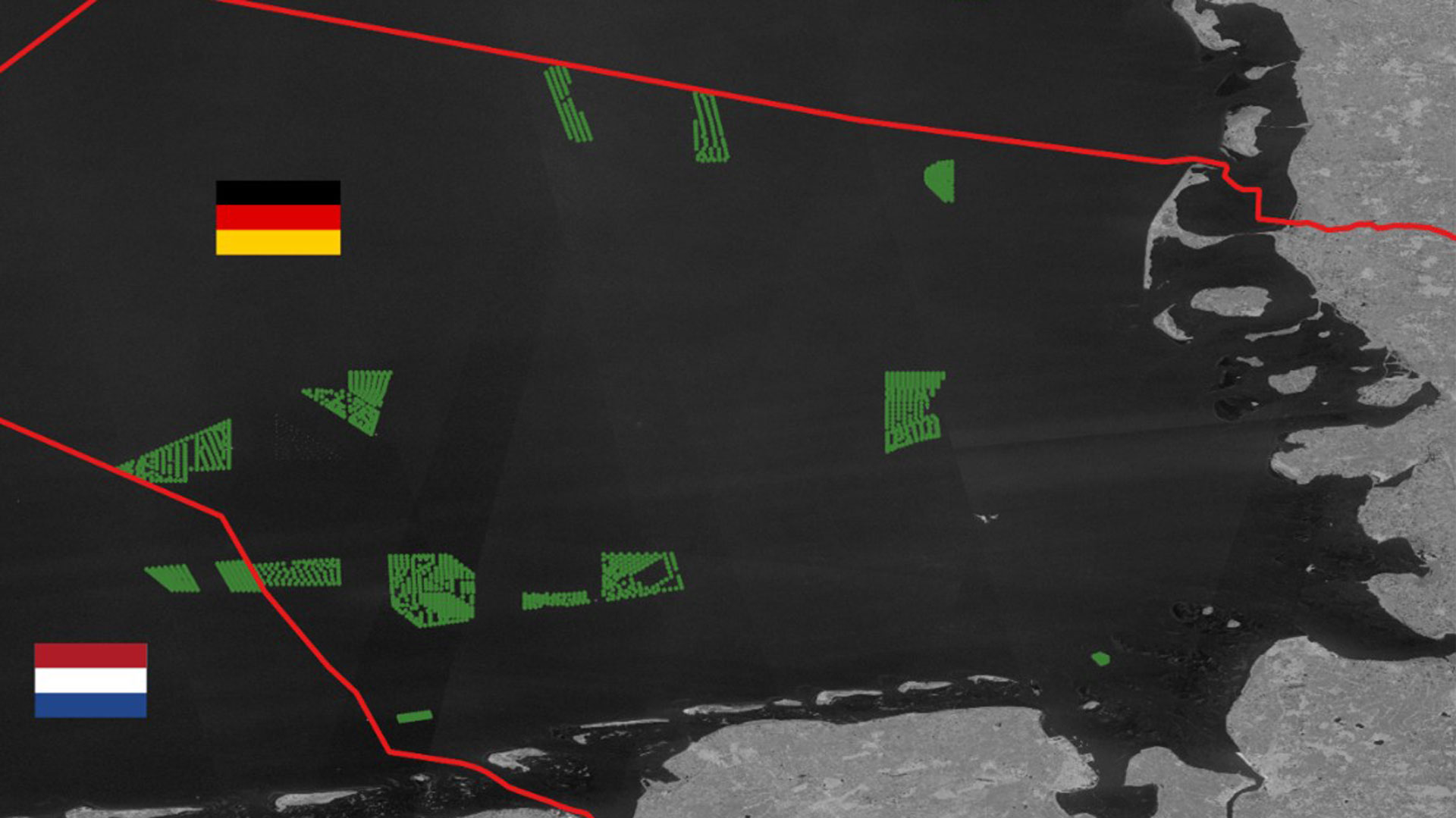
Offshore wind energy in the North Sea
In the German Bight off the coasts of Schleswig-Holstein (right), Lower Saxony (bottom) and the Netherlands (bottom left), offshore wind farms are clearly visible in their groupings. National borders with Denmark (top) and the Netherlands (left) are marked in red.
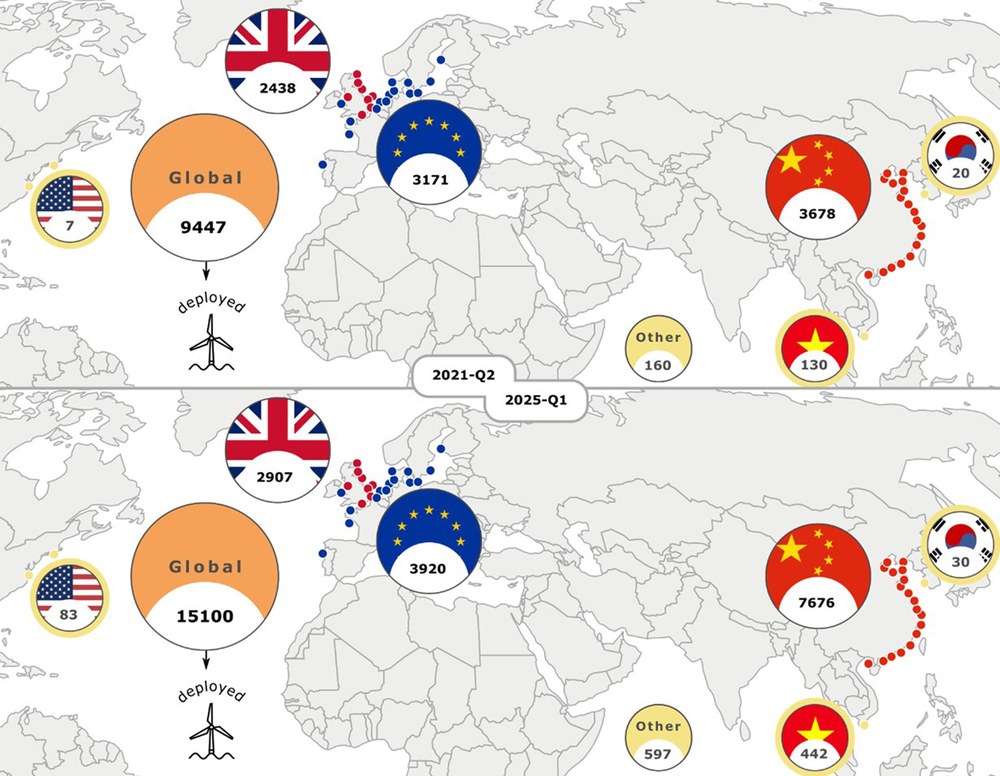
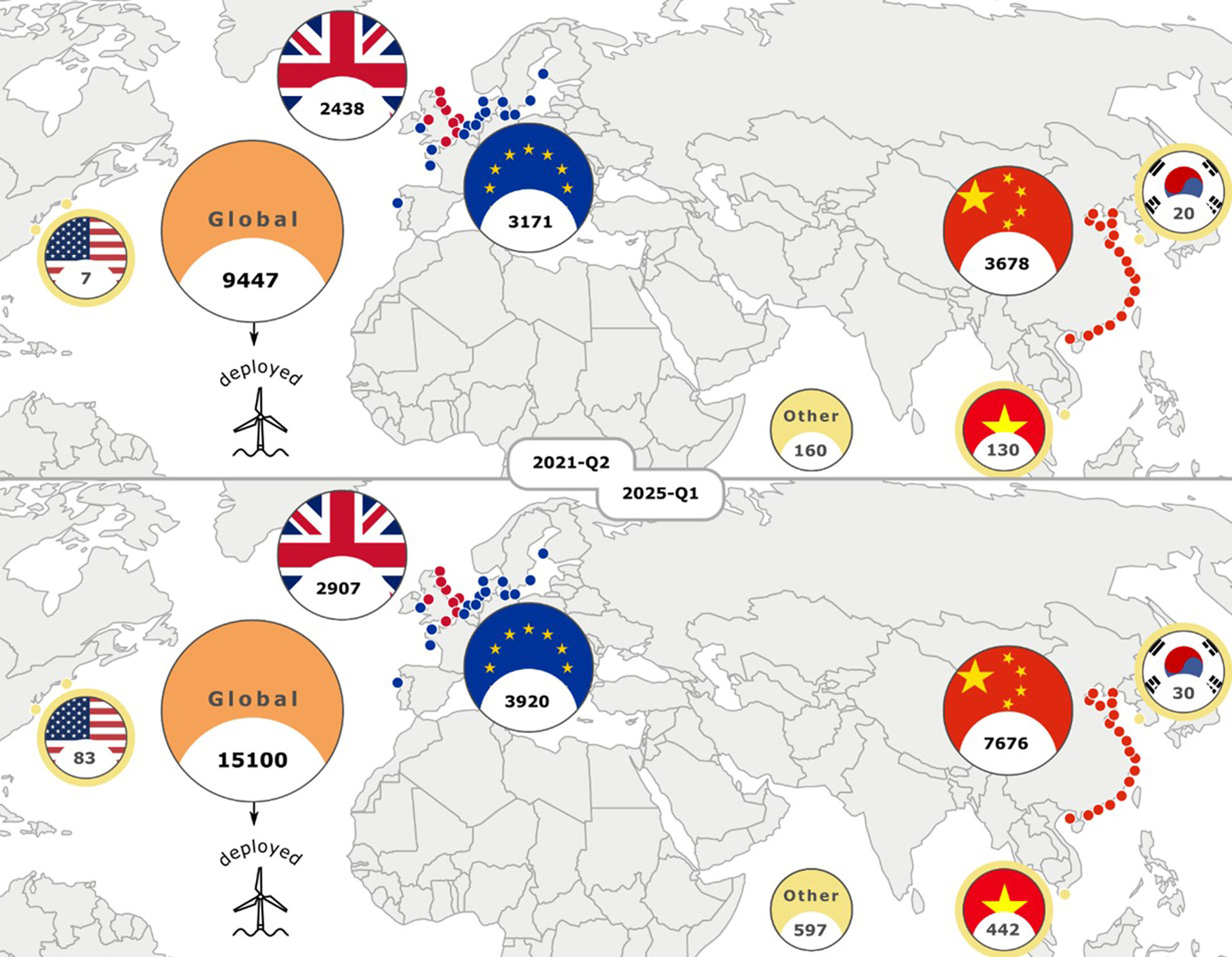
Comparison between 2021 and 2025 – number of offshore wind turbines
The image shows the significant global increase in the number of completed offshore wind turbines between 2021 and 2025. In China, the number has more than doubled. Researchers determined the number of turbines for the US, the UK, the EU and China, as well as for countries such as South Korea (right) and Vietnam (bottom right).
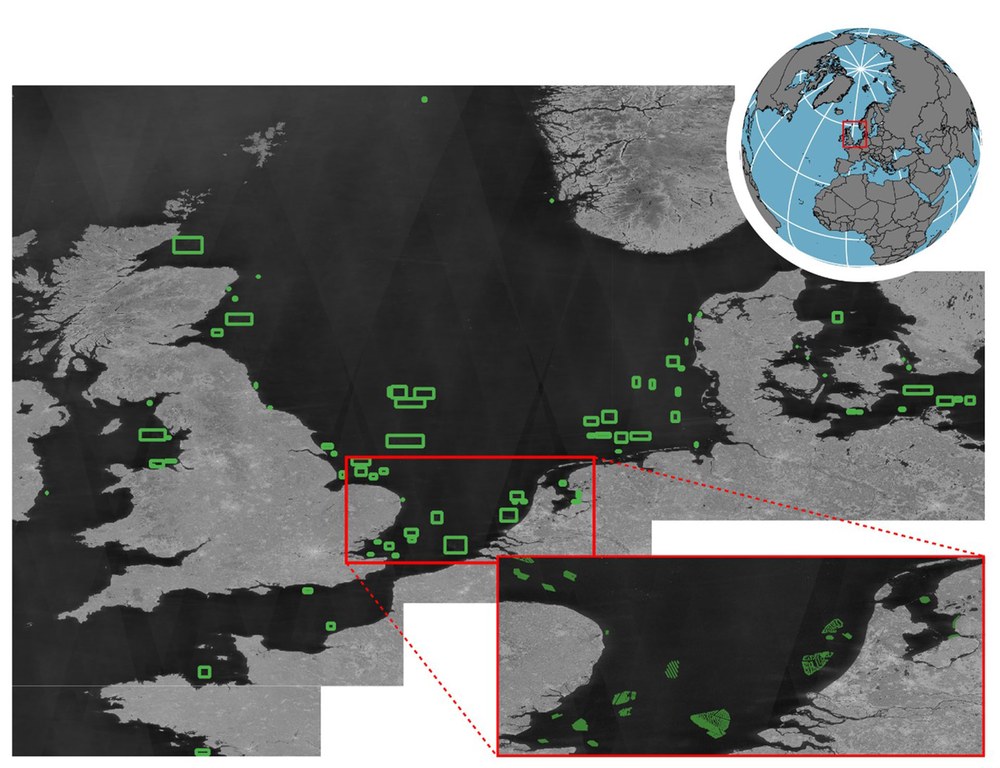
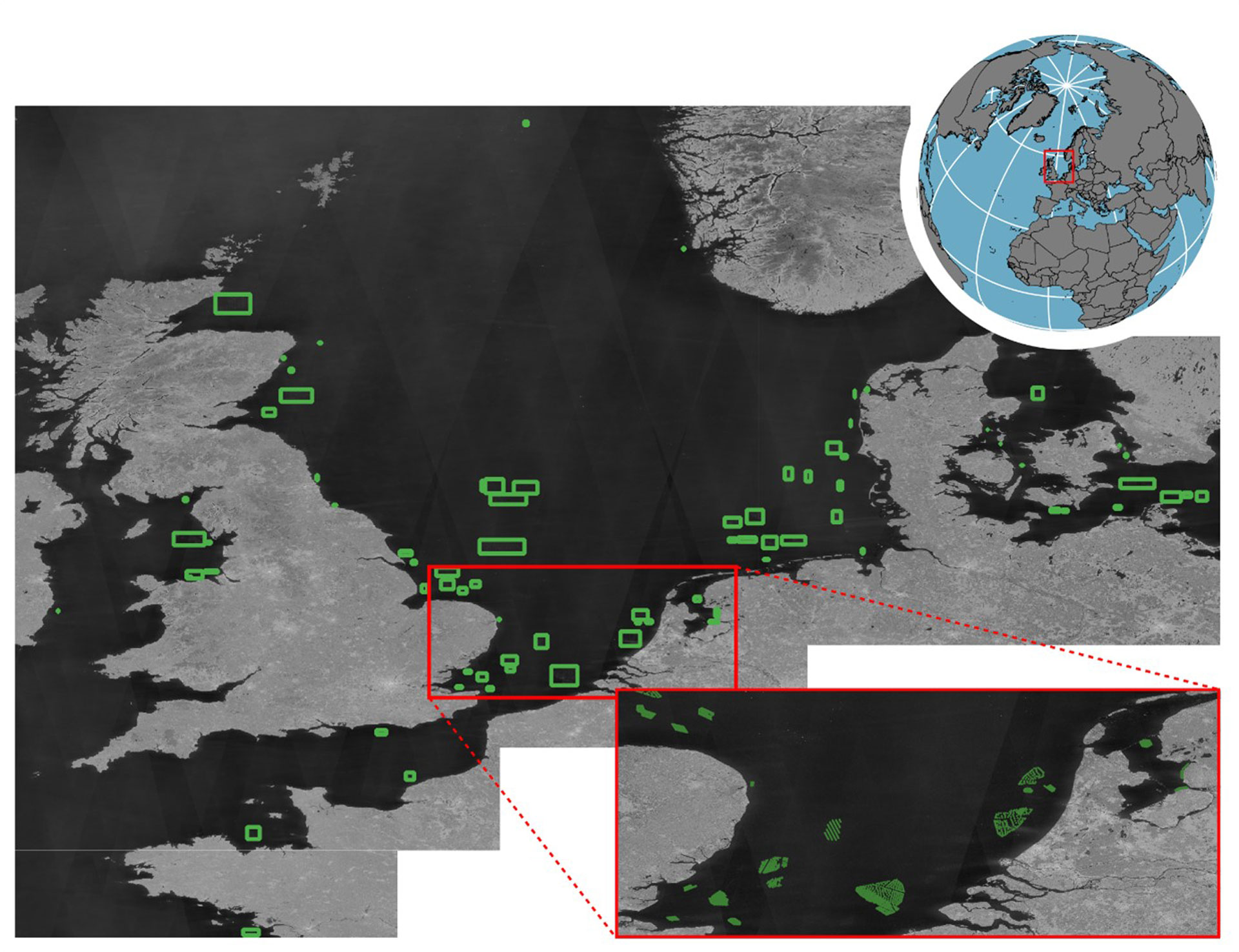
Offshore wind turbines in the North Sea and surrounding areas
Researchers use neural networks to identify infrastructure and locate turbines worldwide. This image shows offshore turbines in the North Sea in particular detail. Researchers can also calculate tower heights and model power input.
More than 15,100 offshore wind turbines are in operation worldwide – with China operating more than half of them.
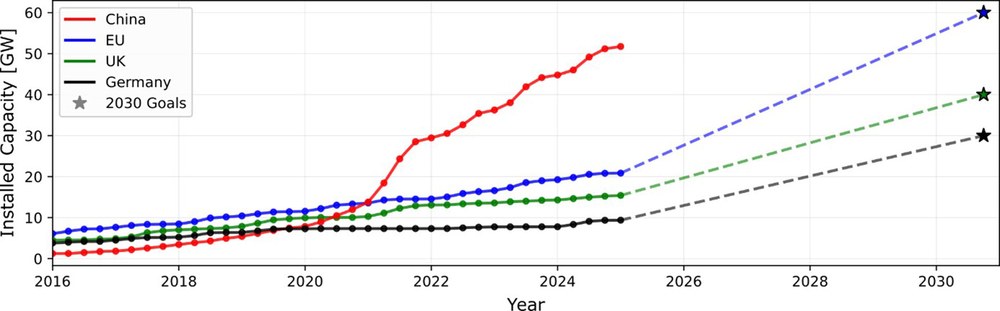
China has seen rapid growth in offshore wind capacity in recent years, with installed capacity almost tripling since 2021.
Globally, offshore wind capacity has more than doubled since 2021; in the EU, there has been a 50 percent increase.
Focus: Space, energy, Earth observation, artificial intelligence, wind energy
China has significantly advanced the expansion of offshore wind energy. In spring 2025, 15,100 offshore wind turbines were in operation worldwide, with 51 percent located in China, 26 percent in the European Union and 19 percent in the United Kingdom. This expansion is evidenced by satellite data analysed by the German Aerospace Center (Deutsches Zentrum für Luft- und Raumfahrt; DLR). According to these findings, China now accounts for more than half of all global offshore wind turbines, significantly outperforming the EU and the UK.
For comparison, in spring 2021 DLR counted 9447 offshore wind turbines worldwide. At the time, 39 percent were located in China, 34 percent in the EU and 26 percent in the UK. "The offshore wind energy sector has grown rapidly over the last five years. 2021 in particular marked a turning point: of the more than 3400 new wind turbines installed worldwide – more than in any previous single year – 77 percent were in China, 10 percent in the UK and 5 percent in the EU," explains Thorsten Höser from DLR's Earth Observation Center (EOC), who analysed the data collected over many years by European Earth observation satellites.
Independent monitoring using satellites and AI
To accurately track the global expansion of offshore wind energy, the EOC has developed a satellite-based monitoring method based on radar data from the Sentinel-1 satellites of the EU's Copernicus programme, developed and operated by the European Space Agency, and artificial intelligence. DLR researchers use the entire Sentinel-1 image archive to identify individual offshore wind turbines worldwide and determine their stage of development on a quarterly basis. This satellite-based monitoring also provides a database for accompanying research into environmental impacts, efficiency improvements and sustainable planning.
How researchers identify wind turbines
The Sentinel-1 radar satellites continuously deliver data on land and sea surfaces, regardless of weather or light conditions. Using neural networks, researchers identify infrastructure and locate turbines worldwide. A neural network is an artificial intelligence model trained to recognise complex patterns in data. Changes in radar signatures even allow researchers to determine when a foundation was installed and when a turbine was erected. From the characteristics of the radar signal, experts can also calculate the height of the turbine towers and use this information to model power output in megawatts.
Capacity figures and global comparability
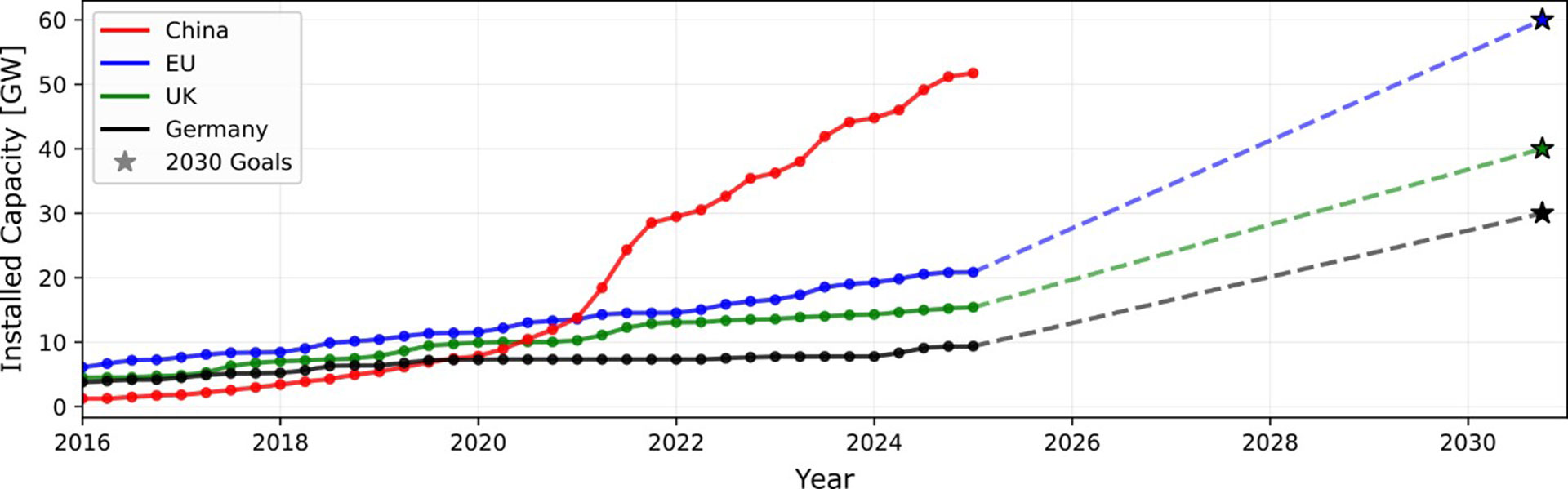
The extensive dataset enables detailed comparisons and analyses. Germany has set a target of 30 gigawatts (GW) of installed offshore wind capacity by 2030. In the first quarter of 2025, offshore wind turbine capacity amounted to approximately 92 GW, of which 52 GW were in China, 21 GW in the EU and 15 GW in the UK. Germany's installed capacity stood at approximately 9.4 GW. Global offshore wind capacity has therefore more than doubled since 2021. At that time, it totalled 45 GW – with 18 GW in China, 14 GW in the EU and 11 GW in the UK. In 2021, Germany's offshore wind energy capacity stood at 7.3 GW.
Installed capacity since 2016 and declared expansion targets through 2030
DLR researchers have analysed a comprehensive dataset dating back to 2016. Overall, there has been an increase in installed capacity, which is particularly evident in China. The image also shows the declared expansion targets for the EU, the UK and Germany.
A key element of China's offshore wind expansion is its port infrastructure along the Chinese coast – used to store turbine components such as towers and rotor blades, which can be clearly seen in the satellite data. These ports serve as transhipment and preparation sites from which transport and assembly are carried out directly in the offshore area.
Dataset enables further research
The current dataset covers all 15,100 turbine locations worldwide and is accessible via the European portal for scientific data. Making the dataset freely available is intended to accelerate international research on the development of maritime mega-infrastructure – such as offshore wind farms – and enable new scientific research.
In this way, the DLR dataset provides both a tool for documenting the global expansion of offshore wind energy and a scientific data basis for the energy transition at sea. Through intensive knowledge exchange, DLR is increasing the societal benefits of its technologies.