
Schematic of the atomic beam diffraction experiment on solids
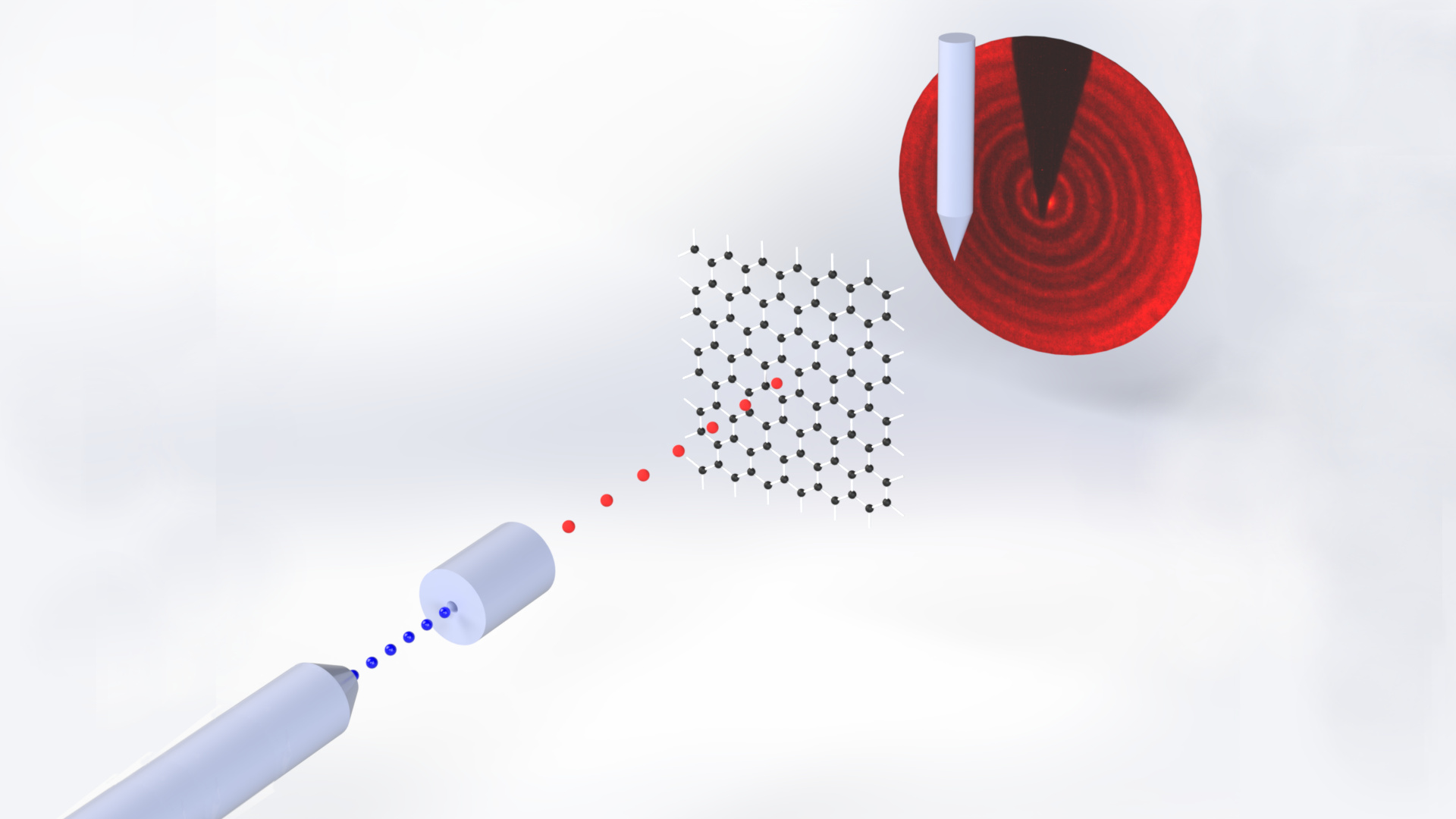

Schematic of the atomic beam diffraction experiment on solids
In a vacuum chamber, an ion source generates a beam of hydrogen or helium ions (blue dots). These are electrically neutralised and then, as atoms (red dots), strike a thin membrane of material – in this case graphene (the black grid). The membrane consists of a single layer of hexagonally-arranged carbon atoms. The matter waves of the atom beam diffracted by the graphene produce a characteristic interference pattern (red) on the detector screen. The pin in front of the detector blocks the direct atomic beam so only the deflected matter waves from the diffraction pattern remain visible.