
ALISA project presents concept for Europe's night train of the future
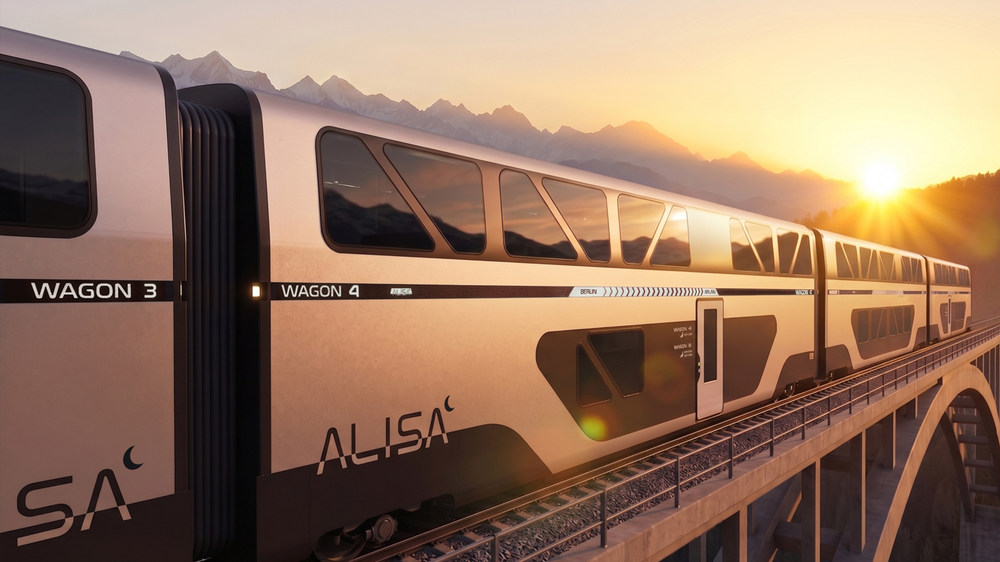

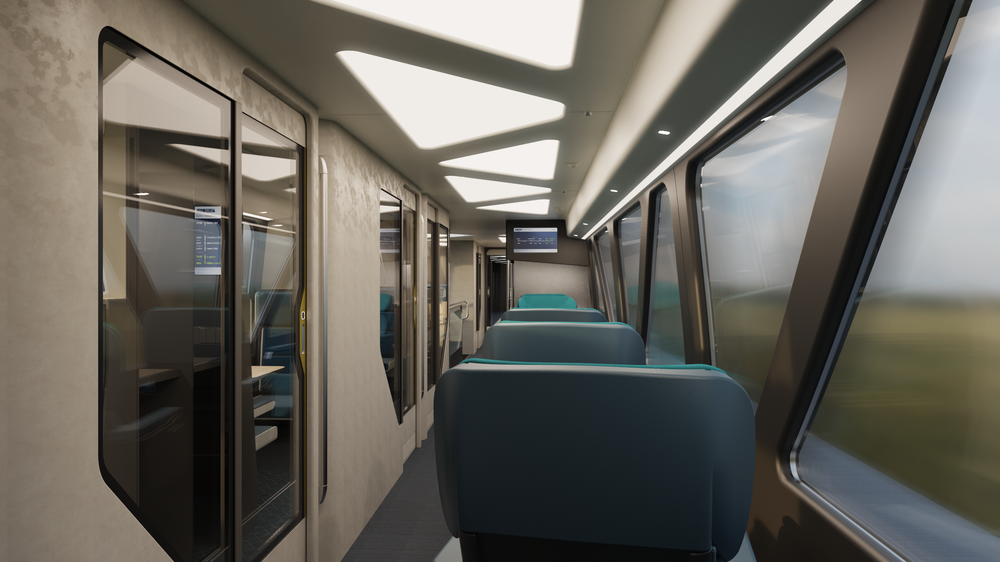
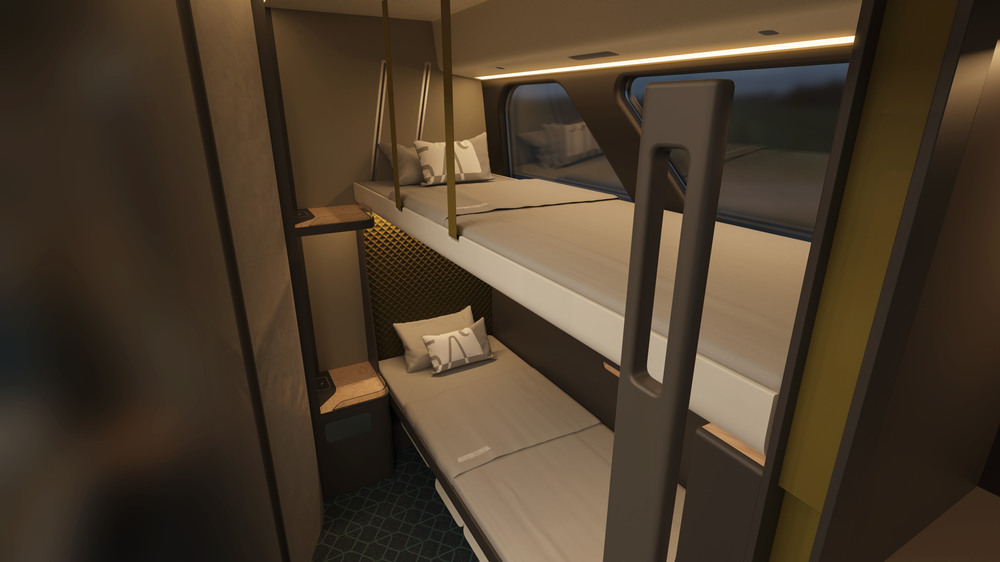
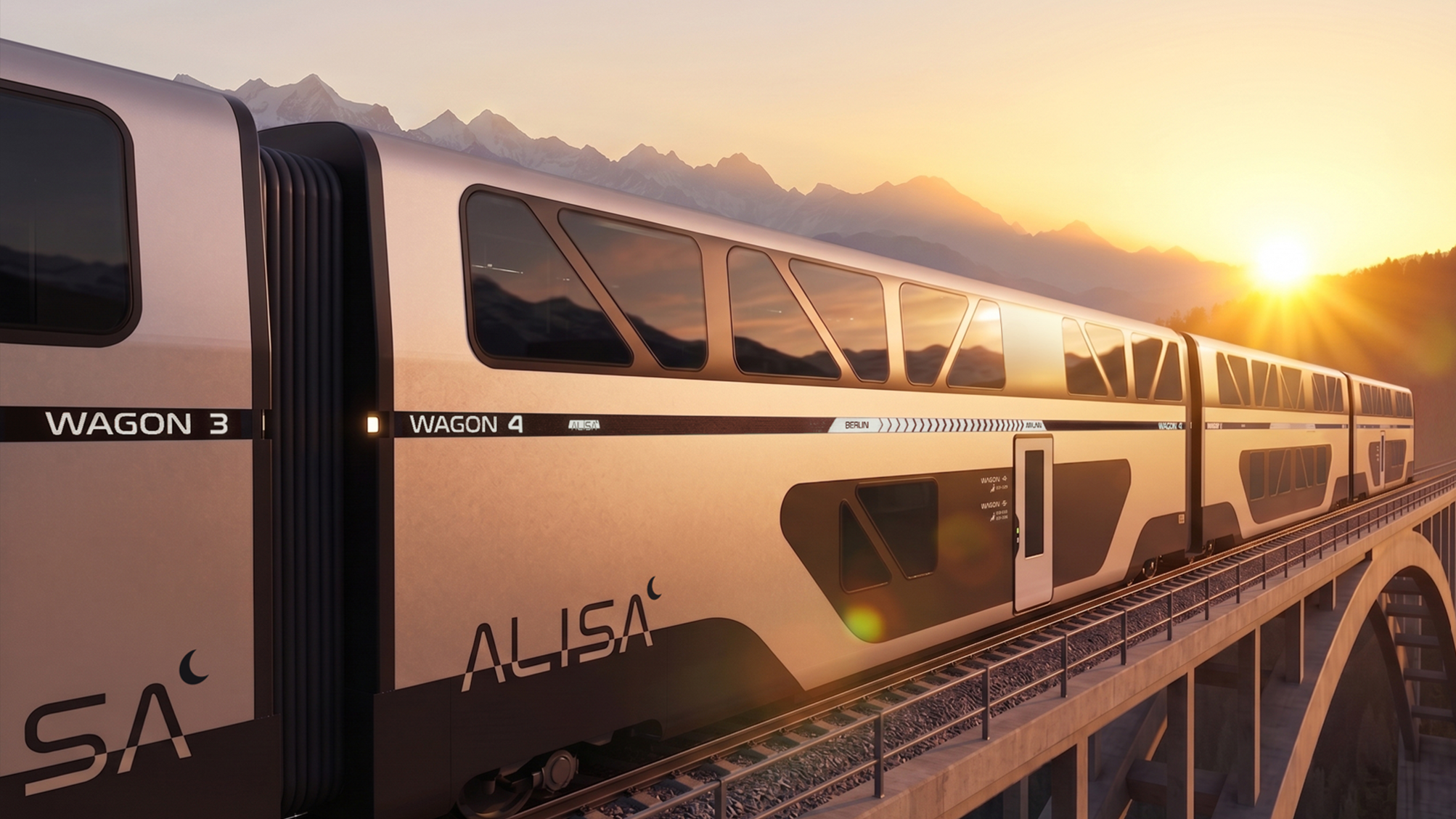

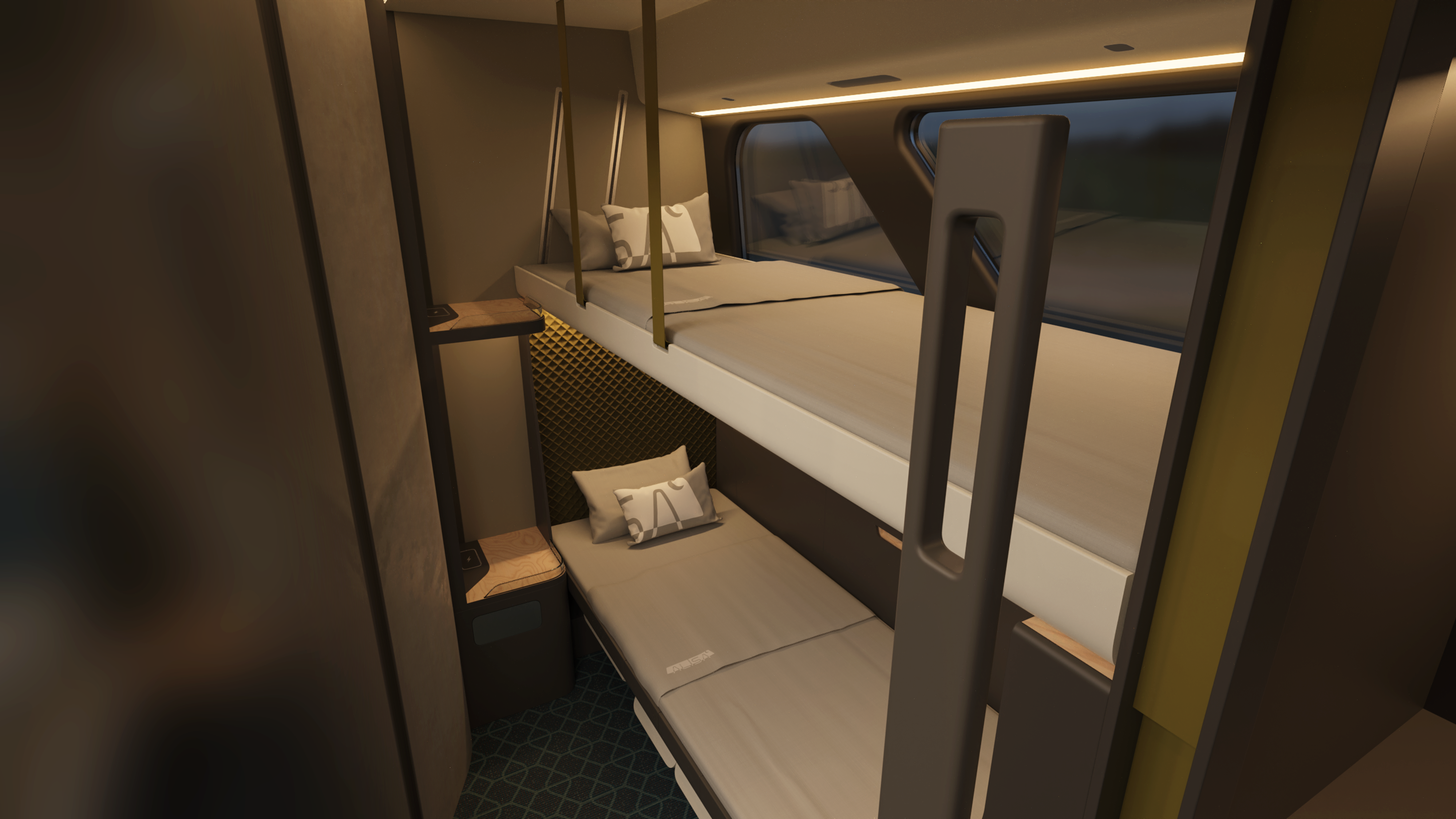
- As part of the ALISA project, DLR has worked with several companies from the rail industry to develop a new concept for European night train travel.
- DLR's focus was primarily on developing an especially lightweight vehicle structure for a double-decker carriage body.
- The ALISA concept combines comfort and privacy for passengers, allowing for high capacity, flexible use and cost-effective operation.
- Focus: Transport, mobility of the future, rail transport
On 22 September, at InnoTrans 2026 – the international transport technology trade fair in Berlin – the German Aerospace Center (Deutsches Zentrum für Luft- und Raumfahrt; DLR) presented a new concept for European night train travel, together with project collaborators. As part of the ALISA research project, the DLR Institute of Vehicle Concepts and the companies TRICON, GETA, satek and k+v have comprehensively rethought the night train. ALISA stands for Angebotsdifferenziertes, leichtes und innovatives Schlafwagenkonzept – or in English, 'Service-differentiated, lightweight and innovative sleeping car concept'. Their goal was to develop a vehicle that combines high comfort and privacy for passengers with high capacity, flexible use and economical operation. The centrepiece is a lightweight, optimised unit made up of three 'fixed-coupled' double-decker carriages, with a total length of approximately 46 metres. The project was funded by the Federal Ministry for Economic Affairs and Energy (BMWE).
Night trains – more demand and greater expectations
Night trains are enjoying a renaissance in European long-distance rail travel, with rising demand driven by concerns about the climate and the environment – and because time spent on the train can be more comfortable and used more productively than on the road or in the air. At the same time, expectations are high, particularly around the design of the carriage interior: passengers want plenty of space, comfort and privacy. To ensure cost-effective operation, the rolling stock must carry as many passengers as possible and services must run frequently. Until now, traditional sleeper and couchette carriages were primarily designed for use at night, while standing idle during the day.
"To meet all these requirements, we at ALISA have viewed the night train as a complete system. Using lightweight construction and digital development methods, we have designed and optimised the vehicle structure accordingly. In doing so, we have laid the technical foundations for a night train that is both attractive to passengers and efficient to operate," summarises Nicolai Schmauder, who led the project on behalf of DLR.
Modular approach for greater flexibility
The basic ALISA unit consists of three fixed-coupled double-decker carriages. Both levels are fully walk-through. This gain in space, and the associated improvement in accessibility, is made possible by the mechatronic single-wheel rail running gear, which was developed and tested at DLR. Several of these basic units can be coupled together, allowing the length of the train to be adapted depending on the route, demand and season. Within the carriages, too, ALISA follows a modular principle: standardised segments enable different interior configurations, without the need to develop a new carriage body for every variant.
The interior design concept covers a range of different needs and price segments, ranging from classic seats and reclining sleeper chairs, through to private single and double cabins, and larger compartments for families and for passengers with reduced mobility.
DLR's lightweight-construction expertise for double-decker design
The double-decker design, together with the aim of carrying as many passengers as possible and high expectations for the interior space and comfort, can all cause the weight of a train carriage to rise sharply. One focus of DLR's work in the ALISA project was therefore to develop a vehicle concept that would be as lightweight as possible. DLR researchers optimised the carriage body so that the vehicle structure distributes and absorbs the loads and forces acting on it as efficiently as possible. Areas of the carriage body that need to withstand particularly high forces were specifically reinforced, while less heavily loaded areas were made lighter. As part of this focus on 'functional integration', they investigated, for example, how cable ducts or interior fittings could be integrated directly into the load-bearing structure. This avoids additional weight without restricting usable interior space.
Further weight savings were achieved with multi-material construction methods. Techniques investigated included sandwich materials, which combine an outer layer of aluminium with a wooden or aluminium honeycomb core, making them both lightweight and stable. "With our consistent lightweight-construction approach, we can increase passenger capacity by 40 percent with no increase in axle load, while passengers don't have to compromise on comfort or privacy. Our reference was the latest generation of the 'Nightjet' night train, operated by Austrian Federal Railways (ÖBB)," explains Schmauder.
From concept to tangible interior
For the interior, too, the ALISA project follows the modular approach. The TRICON design agency developed an interior concept that considers different travel needs and comfort levels. Folding and conversion mechanisms make it possible to use sleeper cabins as seating areas during the day. This means the same train could be used for both overnight and daytime services. As early as the concept development stage, the ALISA team explored and refined different spatial layouts using virtual reality and full-scale models. GETA and satek, specialists respectively in rail interiors and sanitary facilities, contributed their expertise while DLR worked with k+v Ingenieurgesellschaft to develop and optimise the load-bearing vehicle structure. "This close collaboration and the expertise of everyone involved in the rail sector were a key factor for the success of the ALISA project. This allowed us to coordinate the interior, carriage body, materials and technical equipment from the outset, and bring them together into a concept for a complete vehicle," says Schmauder.
Up to and including 25 September 2026, the project team will be at InnoTrans presenting the ALISA concept and its structural development, with a 1:10 scale model of the complete three-carriage train, as well as full-scale walk-through sections of selected compartments. A VR application also allows visitors a virtual look inside the interior and carriage body.