Construction begins on DLR's seagoing technology platform
February 16, 2026 | First steel plate cut
Construction begins on DLR's seagoing technology platform
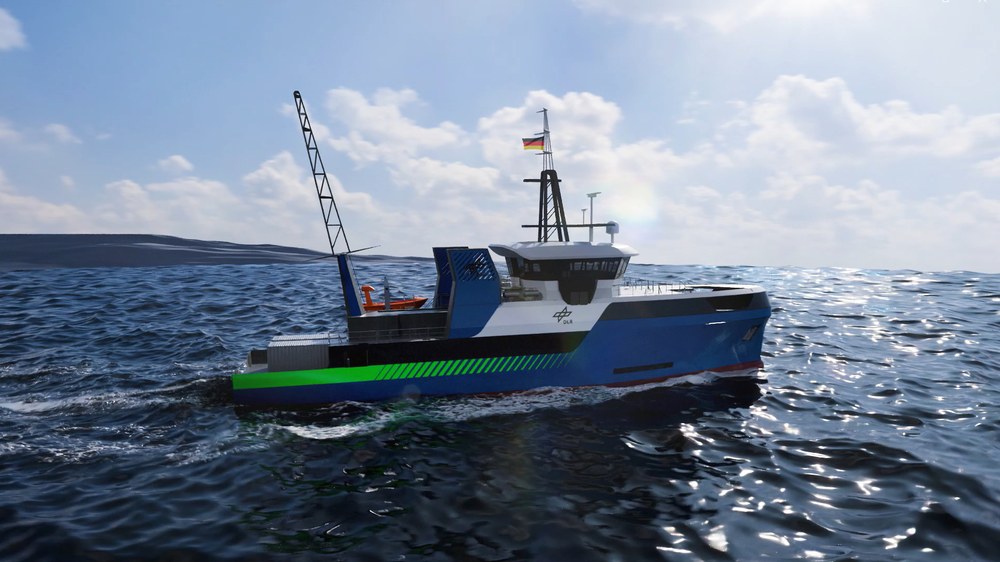
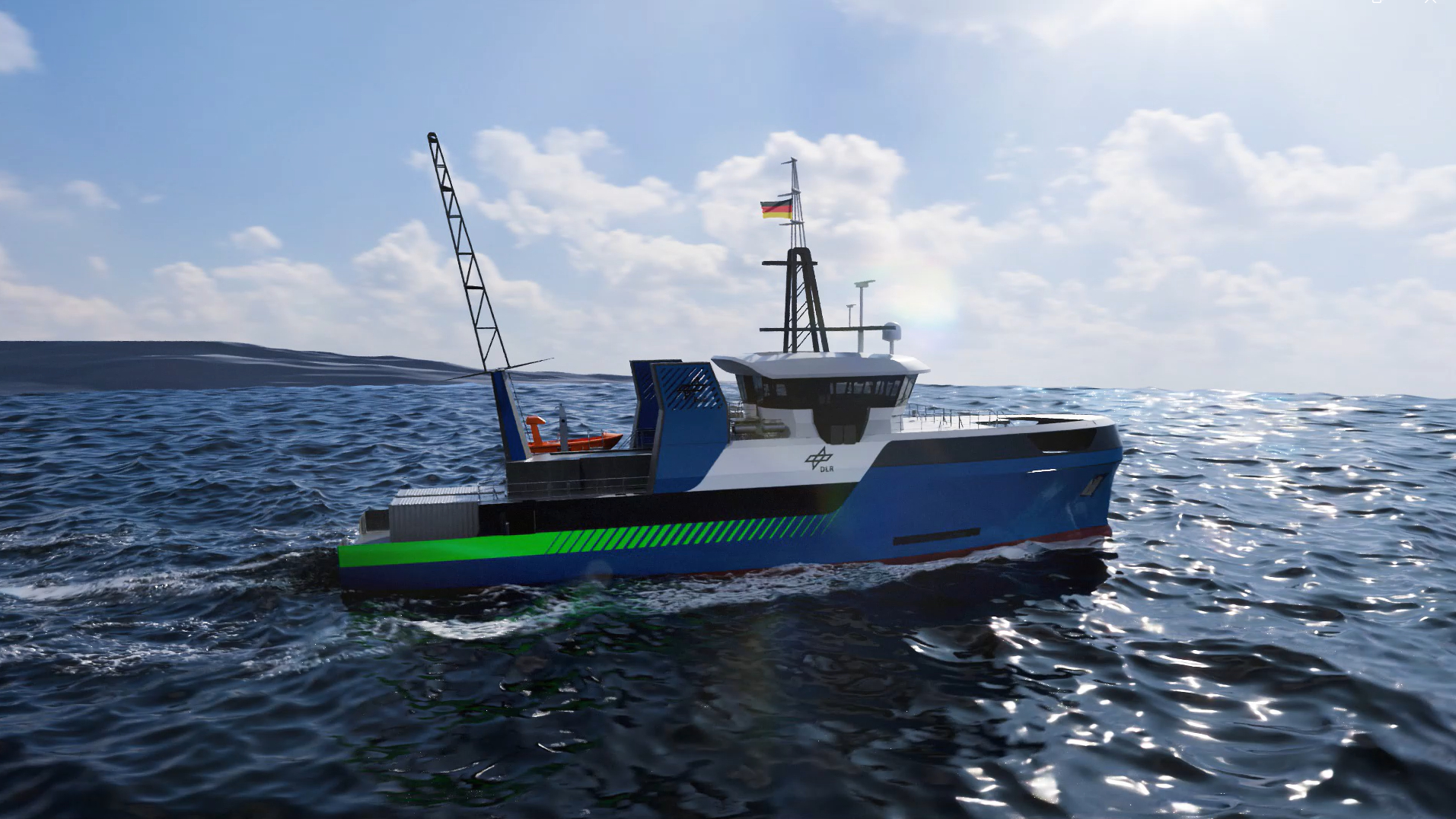
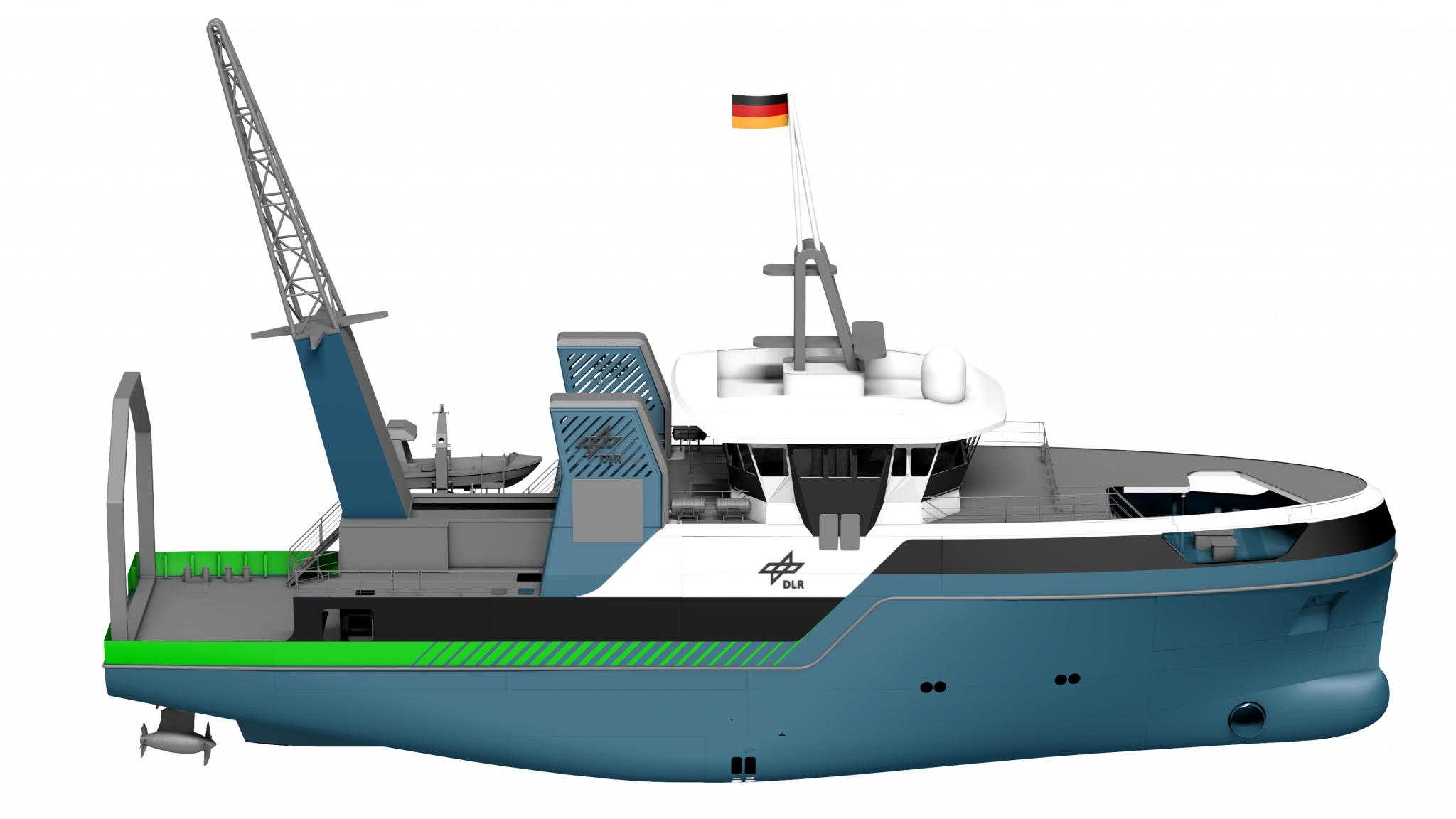
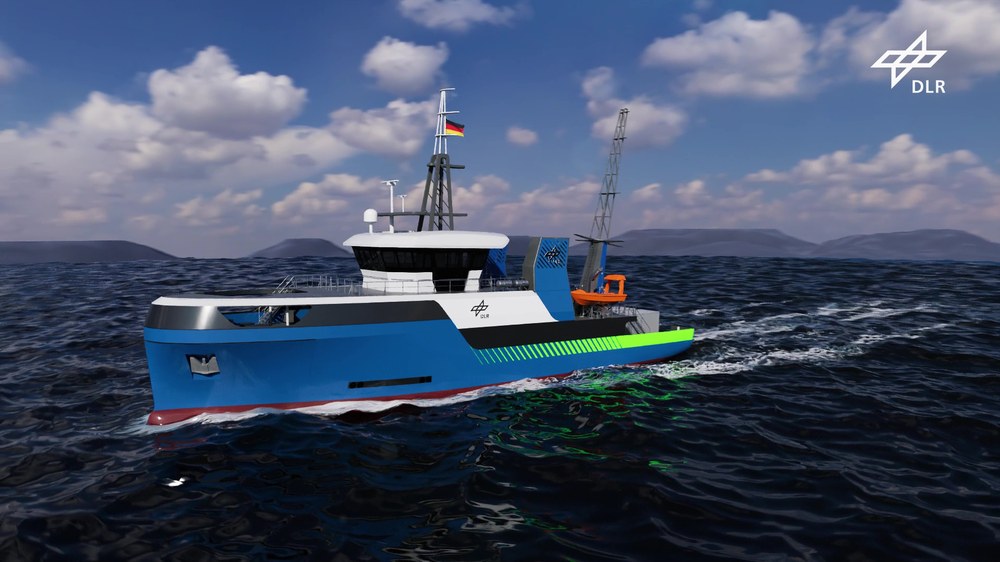
Visualisation of DLR's seagoing technology platform
The platform will be 48 metres long and 11.5 metres wide, designed primarily for one- to multi-day test voyages on the North Sea and Baltic Sea with up to 20 people on board. DLR plans to use the vessel to test climate-compatible propulsion systems, autonomous navigation and technologies for security and defence research.
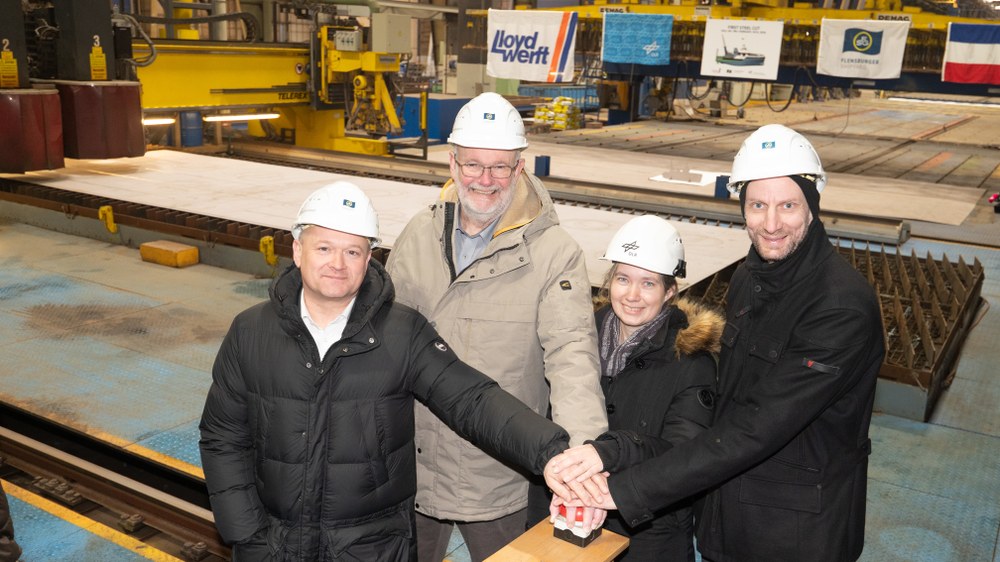
Start of construction for DLR's technology platform in the shipyard hall
From left: Thorsten Rönner, Heinrich Rönner Group; Edzard Brünner, Lloyd Werft Bremerhaven; Gesa Ziemer, Head of Department at the DLR Institute of Maritime Technologies and Propulsion Systems; Sören Ehlers, Director of the DLR Institute of Maritime Technologies and Propulsion Systems.
Image: 2/4, Credit:
DLR/Marianne Lins
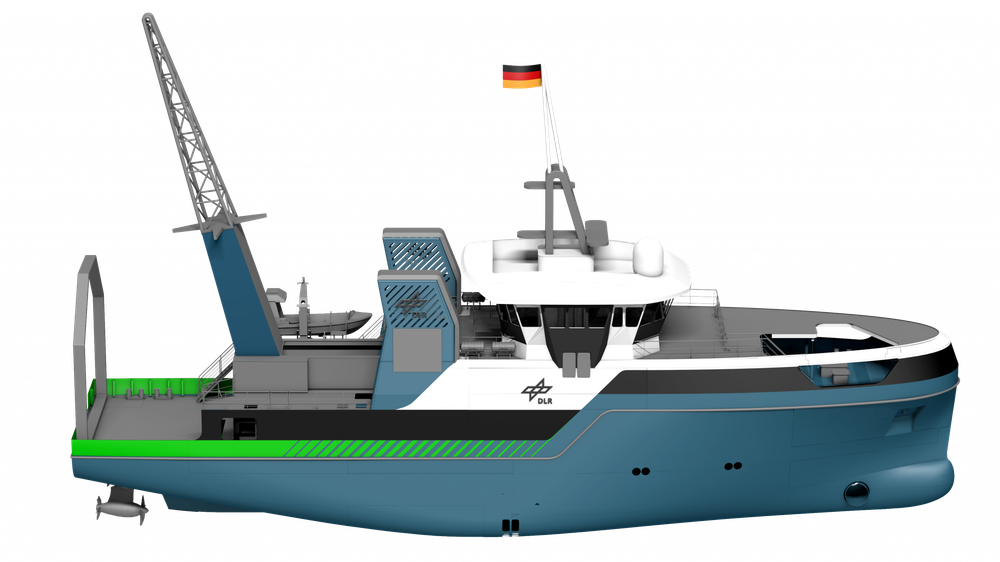
Rendering of the seagoing maritime technology platform
Once the hull has been completed at the FSG Shipyard in Flensburg, it is scheduled for transfer to Lloyd Werft in Bremerhaven in autumn 2026. There, the vessel will be fitted out and completed in 2027.
DLR will use the seagoing platform to research technologies for resilient and climate-compatible shipping, autonomous navigation and security and defence.
On 16 February 2026, the steel-cutting ceremony took place in Flensburg, marking the official start of construction.
The vessel will measure 48 metres long and 11.5 metres wide.
Focus: Transport, energy, security, mobility of the future, maritime research, hydrogen
The German Aerospace Center (Deutsches Zentrum für Luft- und Raumfahrt; DLR) is currently building a unique seagoing technology platform. As a floating laboratory, it will serve to investigate a wide range of research questions, including climate-compatible propulsion systems, autonomous navigation and security and defence research projects. On 16 February 2026, the 'Brennstart' – the steel-cutting ceremony, during which the first steel plate is cut – took place at the FSG Shipyard in Flensburg, officially marking the start of construction.
With construction now underway, we're establishing a central research platform for maritime transformation in Germany. It will enable us to develop not only new energy and propulsion systems but also security-relevant technologies under real operational conditions until they are ready for market, and to transfer them more quickly into industrial application in collaboration with companies. In doing so, we're strengthening Europe's technological sovereignty and the resilience of maritime value chains.
The new seagoing technology platform is currently under construction. As a floating laboratory, it will be used to test and further develop climate-compatible propulsion systems, such as those based on hydrogen and batteries. The vessel will be 48 metres long and 11.5 metres wide and will operate primarily on the North and Baltic Seas on one- to multi-day test voyages with up to 20 people on board. After completion, the vessel's home port will be Kiel.
Animation: Seagoing technology platform
Your consent to the storage of data ('cookies') is required for the playback of this video on Quickchannel.com. You can view and change your current data storage settings at any time under privacy.
Animation: Seagoing technology platform
The new seagoing technology platform is currently under construction. As a floating laboratory, it will be used to test and further develop climate-compatible propulsion systems, such as those based on hydrogen and batteries. The vessel will be 48 metres long and 11.5 metres wide and will operate primarily on the North and Baltic Seas on one- to multi-day test voyages with up to 20 people on board. After completion, the vessel's home port will be Kiel.
Floating laboratory for innovative maritime technologies
The vessel will be 48 metres long and 11.5 metres wide, accommodating up to 20 people. It will primarily be used for test voyages lasting from one to several days on the North Sea and Baltic Sea.
At its site in Kiel, DLR is currently building the onshore test infrastructure to support the development and testing of maritime energy systems. Sensors on land and on board the vessel will allow researchers to collect comprehensive data, which can be used in simulations to predict potential operating conditions.
The platform is designed so that different maritime systems can be modularly integrated and replaced. This level of structural flexibility is unparalleled internationally. It enables new technologies to be systematically tested under real operating conditions and further developed at an early stage towards certification and scalability.
Hull transfer to Bremerhaven in autumn
After the first steel plate was cut, the hull is being manufactured piece by piece in Flensburg. All major components of the propulsion, electrical engineering and manoeuvring systems will be installed there.
The hull transfer to Lloyd Werft in Bremerhaven is scheduled for this autumn, where the vessel will be fully equipped, including interior fittings and completion of the electrical systems.
Lloyd Werft Bremerhaven has been commissioned by DLR to lead the construction and has subcontracted the hull construction to FSG Shipyard in Flensburg. After completion in 2027, the vessel's home port will be in Kiel.