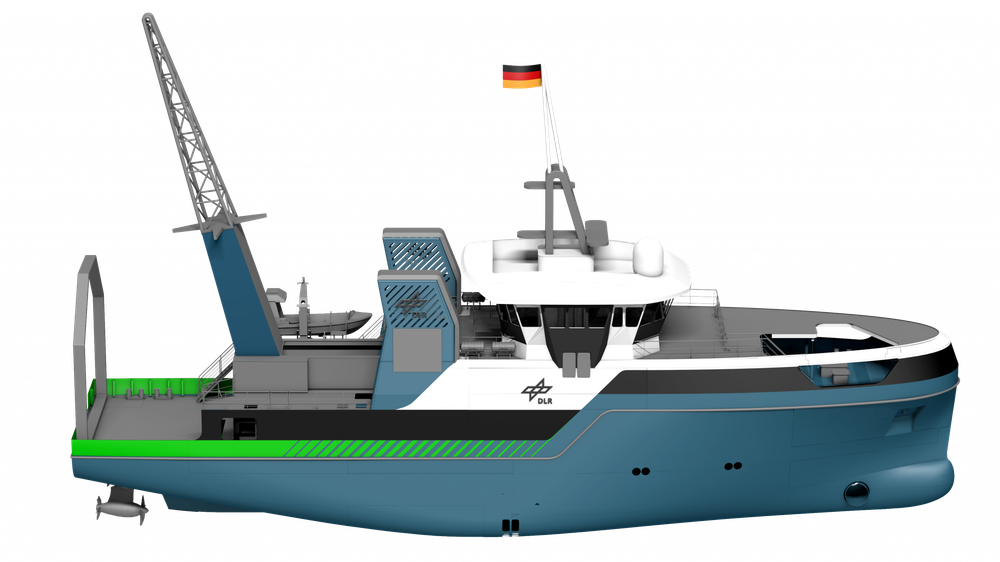
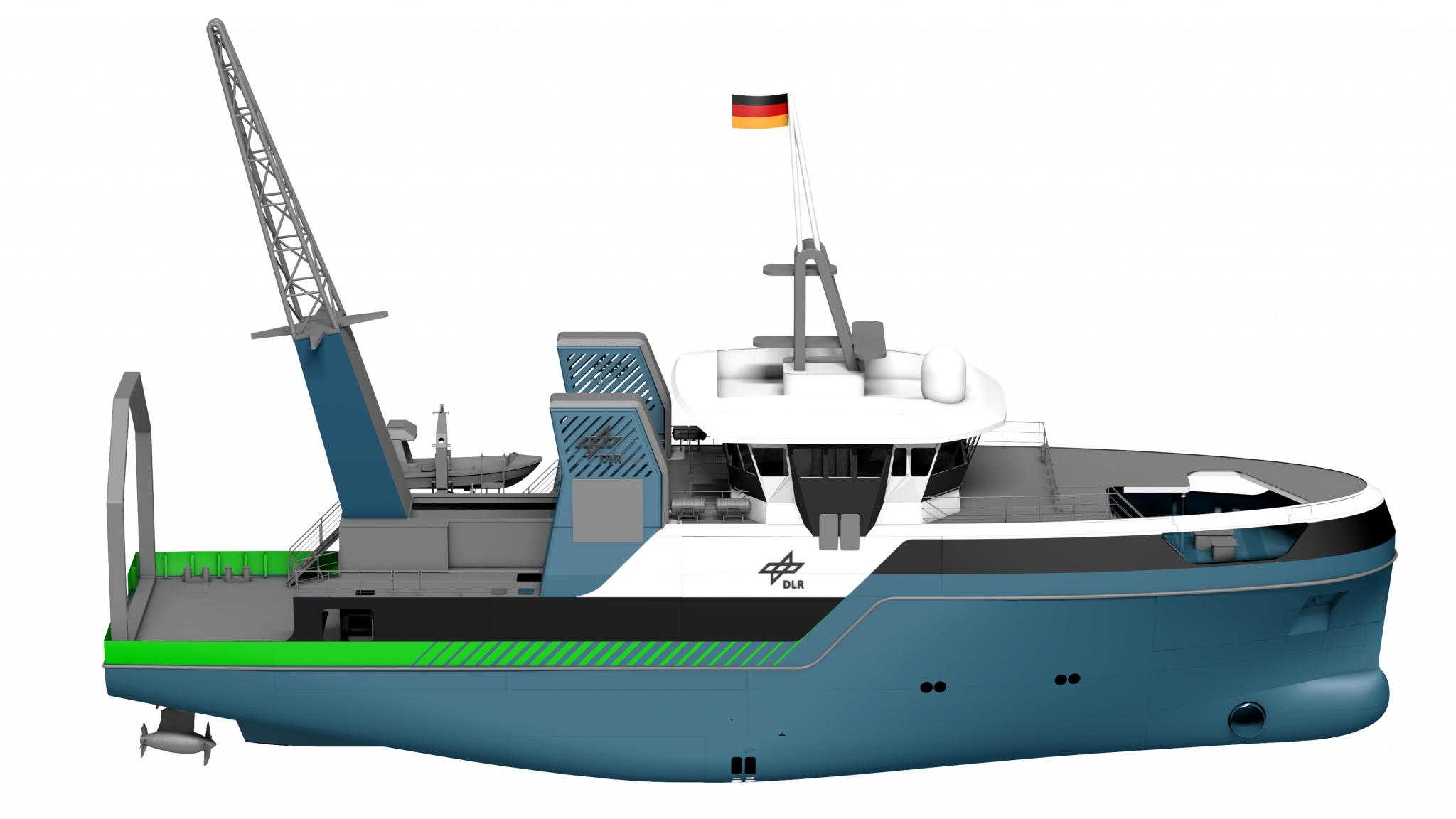
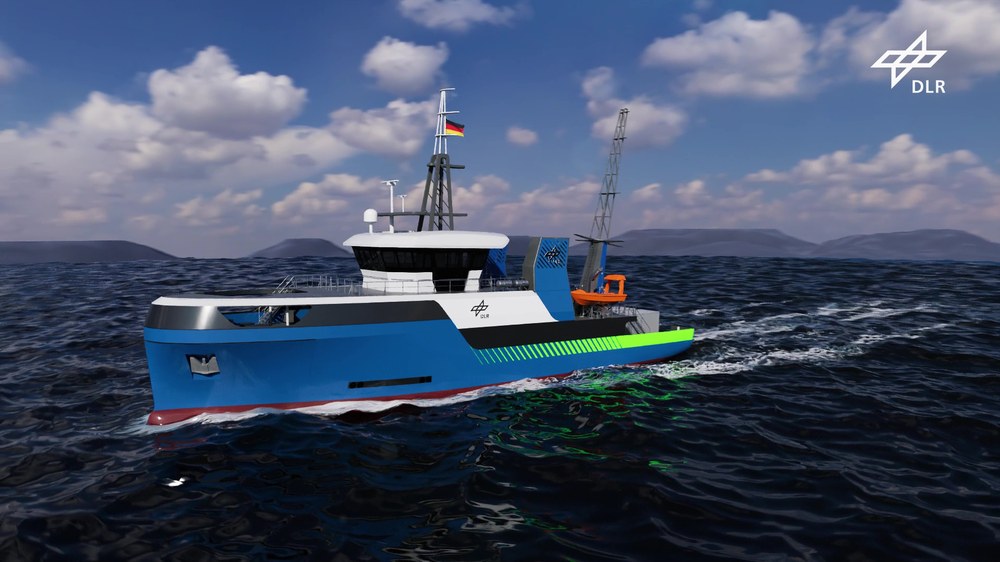
Rendering of the seagoing maritime technology platform
Once the hull has been completed at FSG Shipyard in Flensburg, the vessel is expected to be transferred to Lloyd Werft in Bremerhaven in autumn 2026. There, it will be fitted out and completed in 2027.
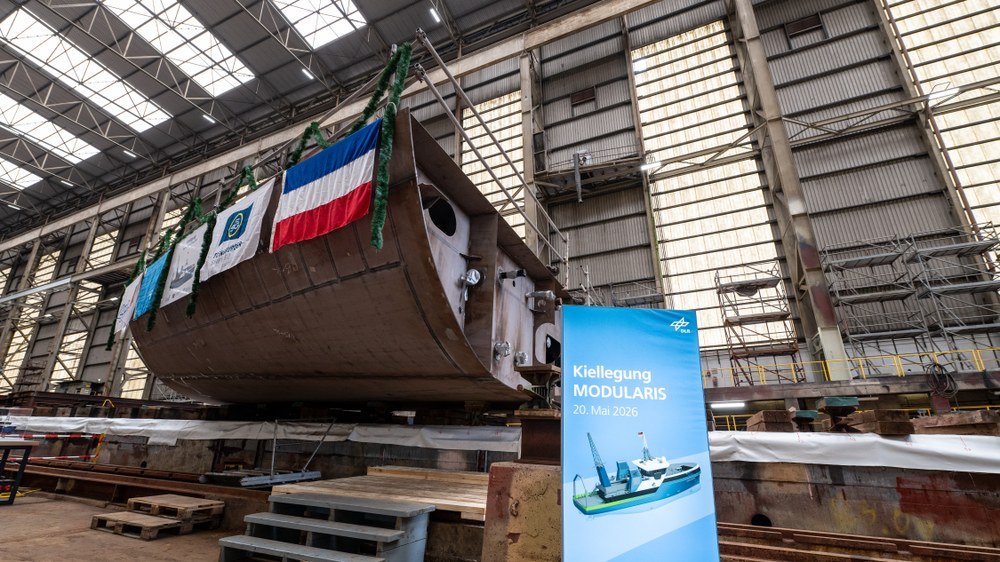
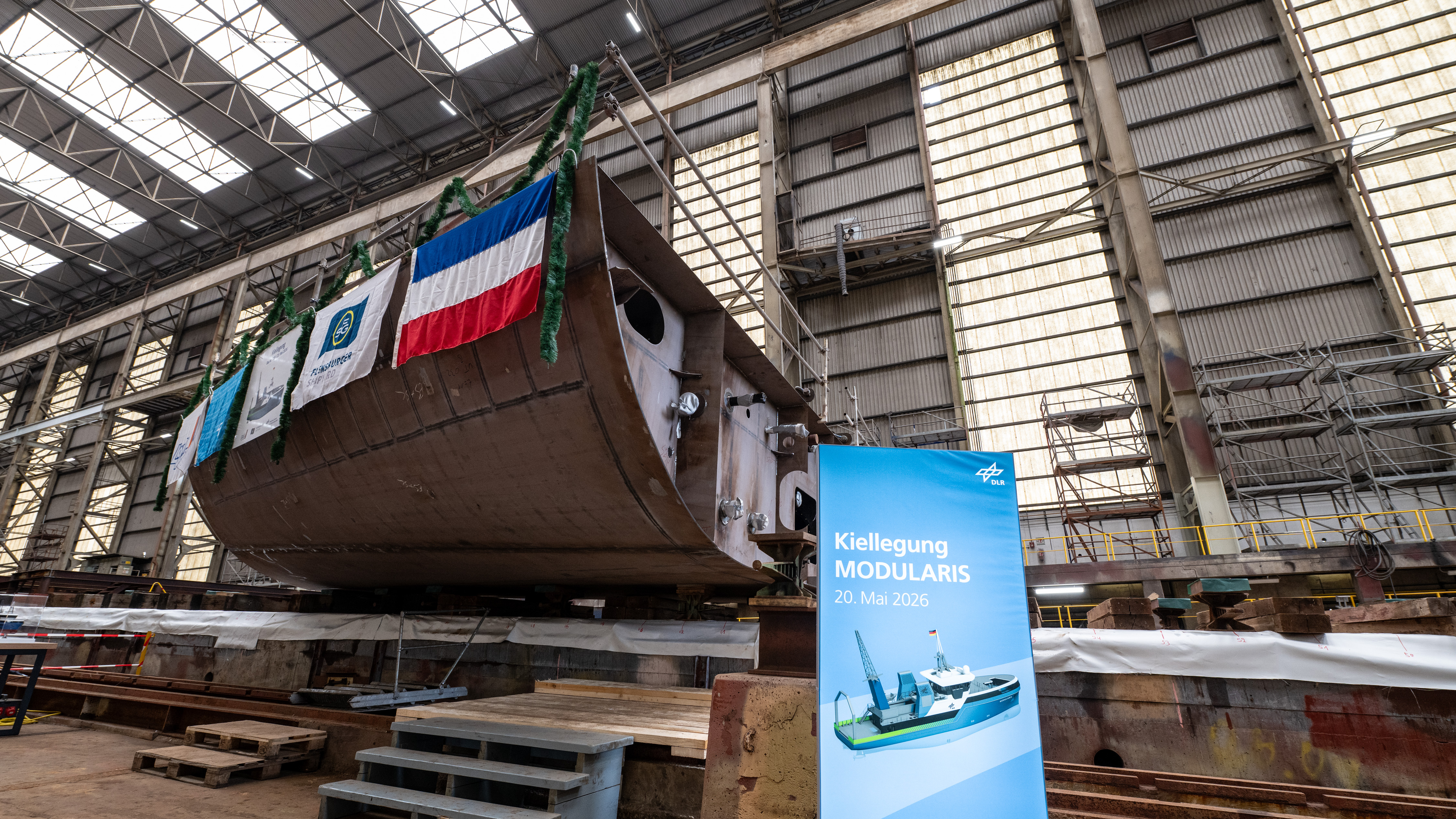
On 20 May 2026, the keel-laying of DLR's seagoing technology platform took place in Flensburg, north Germany.
The platform will serve as a floating laboratory for innovative maritime technologies under the name 'MODULARIS'.
The vessel will be 48 metres long and 11.5 metres wide.
With Kiel as its planned home port and new DLR research facilities with direct access to the sea, DLR is making its contribution to future maritime technologies.
Focus: Transport, energy, security, maritime research, mobility of the future, novel propulsion systems, – in particular hydrogen technologies
On 20 May 2026, the German Aerospace Center (Deutsches Zentrum für Luft- und Raumfahrt; DLR) celebrated the keel-laying of its seagoing technology platform at the FSG Shipyard in Flensburg. This milestone marks the official start of the vessel's assembly. The vessel, named MODULARIS, will serve as a floating laboratory for innovative maritime technologies. The name combines the adjective 'modular' with the Latin noun 'maris' ('of the sea'), reflecting how DLR intends to use the platform: to test innovative technologies flexibly and under real operating conditions at sea. The focus will be on climate-compatible propulsion systems, autonomous technologies and applications for security and defence. The German government is funding the project with a total of 36 million euros.
With the MODULARIS seagoing technology platform, we are creating a globally unique foundation for maritime transformation. New energy, navigation and communication systems can in future be integrated, tested and brought to certification readiness more quickly under real operating conditions. In doing so, we are strengthening innovation, security, resilience and technological sovereignty in Germany and Europe. Today, we already invite our partners from government agencies, industry and business – in particular SMEs and start-ups – to come aboard and test new maritime technologies together with DLR.
Testing maritime technologies at sea
The vessel will be 48 metres long and 11.5 metres wide, with capacity for up to 20 people. Test voyages are planned primarily in the North Sea, Baltic Sea and Mediterranean, with missions lasting up to seven days.
MODULARIS will be equipped with redundant safety and control systems, enabling novel, as-yet uncertified energy, navigation and communication systems to be tested for the first time. This will help accelerate development and certification processes. A digital twin – a virtual model of the ship – will also allow comprehensive simulations and analyses to prepare for and complement practical development work.
On board, DLR researchers will test fuel cell, battery, sensor and automation systems, among other technologies. They will also trial the use of alternative fuels such as methanol, ammonia and hydrogen, for which the vessel will be fitted with an experimental engine room. In addition, the platform will support the deployment of uncrewed systems such as drones.
Kiel as a hub for future maritime technologies
With MODULARIS as a seagoing technology platform and the infrastructure in Kiel, a globally unique location is being created for the development and testing of future maritime technologies, further strengthening Schleswig-Holstein's position as an innovation hub in this field. DLR is also expanding its facility in Kiel, with new office, research and laboratory spaces with direct access to the water are being built on the MaK Campus.
Keel-laying marks a milestone
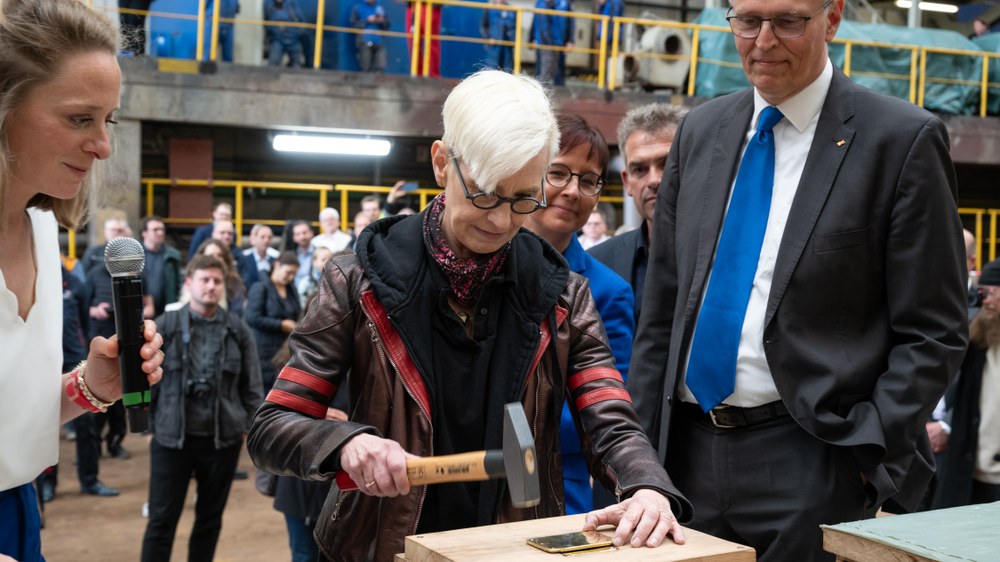
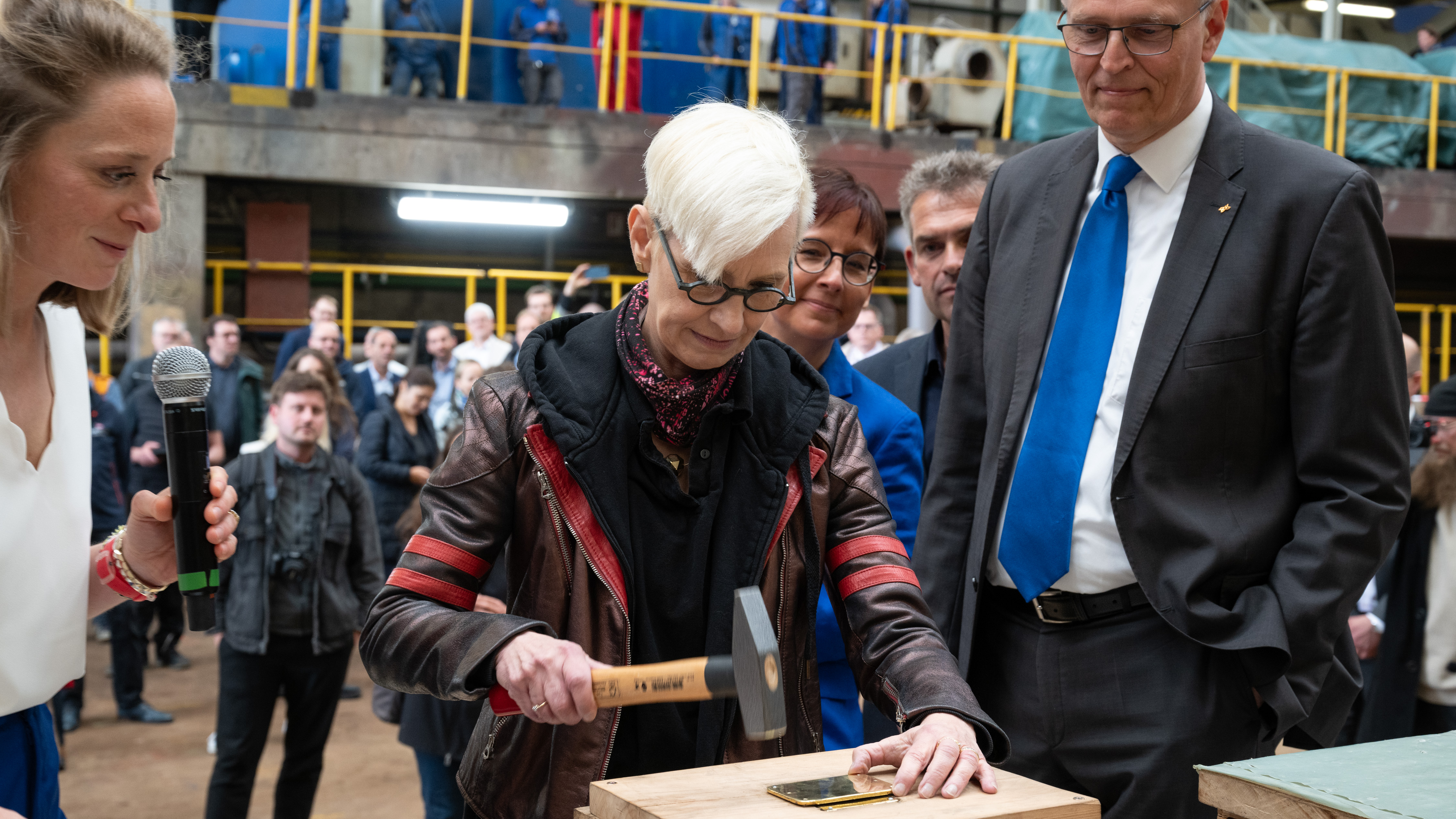
The milestone event also featured the traditional coin ceremony in the shipyard hall. In the presence of guests from politics, science and industry, representatives of the DLR Executive Board and the shipyard placed a 'lucky coin' beneath the ship's first prefabricated steel module. The module was then positioned on the prepared build site with millimetre precision.
Lloyd Werft Bremerhaven is leading the construction of the maritime technology platform and has subcontracted the hull construction to FSG Shipyard in Flensburg. Both shipyards are part of the Heinrich Rönner Group. The vessel will be transferred to Bremerhaven in autumn. Following its completion in 2027, it will have its home port in Kiel.
Animation: The MODULARIS seagoing technology platform
Your consent to the storage of data ('cookies') is required for the playback of this video on Quickchannel.com. You can view and change your current data storage settings at any time under privacy.
Animation: The MODULARIS seagoing technology platform