
Who will drive tomorrow's trains?
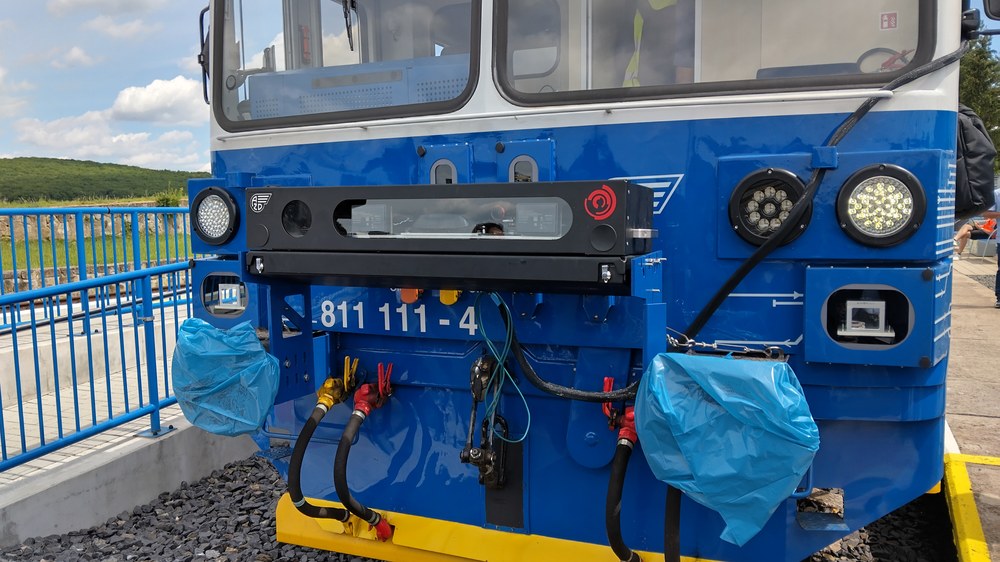


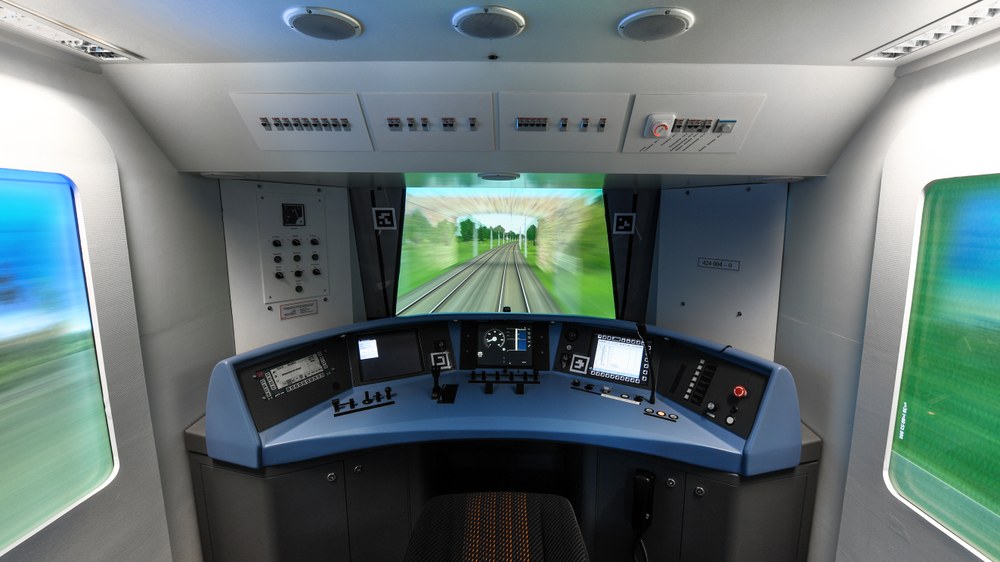

Driverless trains have long been a reality – though mostly on dedicated lines or in largely self-contained networks. Examples include the underground in Nuremberg and Copenhagen, and automated freight trains in Western Australia transporting iron ore over long distances. Within the regular, openly accessible and complex rail network, highly or fully automated train operations are considerably more demanding.
What is needed for automated driving to become a widespread reality in regular rail operations? What role do artificial intelligence, remote control and new testing procedures play? And what contribution is DLR making? Rail expert Gert Bikker, Director of Rail Systems Engineering at the DLR Institute of Transportation Systems, discusses these questions in an interview.
What makes automated driving on the 'normal' rail network so challenging – and what opportunities does it offer?
The major challenge lies in the fact that the train doesn't operate in a largely self-contained environment. On the regular rail network, different types of train interact, level crossings cross the tracks and many sections of track are openly accessible. A highly or fully automated train must therefore be able to perceive its surroundings independently and reliably, and respond safely – for example, to a person on the tracks, a fallen tree or a vehicle stranded on a level crossing.
At the same time, automation opens new possibilities for rail operations. It can help address the growing shortage of skilled train crew and enable trains to be deployed more flexibly and in line with demand. Particularly on branch lines, smaller automated vehicles could make economical operation possible even in places where conventional services are currently reaching their limits in terms of staffing or economic viability.
DLR is investigating and developing concepts for these kinds of novel rail vehicles. Our aim is to create automated mobility offerings that can adapt flexibly to different requirements and demand situations.
What are the biggest technological challenges facing automated rail transport?
Systems are already capable of automatically accelerating, regulating speed, braking and coming to a halt at a defined point. The real challenge lies in situations where a train driver's perception and experience are still required. A highly automated train must constantly monitor its surroundings and interpret them correctly. Cameras and other sensors, for example, are used for this purpose. They must function reliably under a wide range of conditions – in the dark or against the light, as well as in rain, snow or fog. At the same time, the system must be able to determine whether an object actually poses a danger and how best to respond to it.
Artificial intelligence (AI) is playing an increasingly important role, particularly in these 'perception systems' – that is, the technical detection of the surrounding environment. This makes proving safety a challenge. With a conventional technical component, its behaviour can be described and verified with relative precision. With complex sensor- and AI-based systems, this is more difficult. We cannot test every situation that might arise on a railway line individually under real-world operating conditions. That is why at DLR we are also conducting research into new testing methods. One approach is scenario-based testing, which involves systematically describing and varying typical, and particularly critical, traffic situations and initially examining them in simulations. This allows for a much more comprehensive assessment of whether a system functions reliably even under difficult conditions. This is an important prerequisite for subsequent approval.
Two acronyms crop up time and again in automated rail driving: ATO and RTO. What do they mean?
ATO stands for 'Automatic Train Operation'. Here, tasks currently carried out by train drivers are gradually transferred to technical systems. A distinction is made between different levels of automation, known as 'Grades of Automation', or GoA for short.
Put simply, the scale ranges from manual to fully automated operation. Systems currently in use in rail operations go up to GoA 2. At this level, the ATO system takes over key driving functions such as accelerating, braking and maintaining speed. However, a train driver remains on board and retains responsibility. At the highest level, GoA 4, no crew are on board at all. RTO stands for 'Remote Train Operation'. Here, the human remains part of the system but is not on the train itself – instead, they are in a control centre for example. From there, they can monitor, support or, depending on the system, remotely control a train.
ATO and RTO therefore complement each other well: if a train normally operates automatically and gets stuck in an unusual situation, suitably trained personnel can step in using RTO from a control centre. Remote control of trains is also of interest in its own right – for example for shunting movements in depots or for positioning empty trains. ATO and RTO require powerful computers, specially designed sensor technology and a highly reliable broadband communication link between the vehicle and the control centre.
What contributions is DLR making to automated rail transport?
At DLR, we look not only at the train itself, but at the railway system as a whole – that is, the interaction between vehicles, infrastructure, operations and people. A key focus is perception, mentioned earlier – how automated systems perceive their surroundings. We develop and investigate sensor and positioning systems, testing them first in simulations and then under conditions that are as realistic as possible.
A second focus is testing and validating safety-critical systems. In the RailSiTe® (Rail Simulation and Testing) laboratory in Braunschweig, we can simulate large parts of the railway system in detail and test, for example, components for the European Train Control System (ETCS) as well as for digital signal boxes, known as interlockings. Such laboratory tests are important because trials on the real rail network are complex and costly, and many situations are difficult to replicate there. During test runs as part of the ARTE project (Automatisiert fahrende Regionalzüge in Niedersachsen; or 'automated regional trains in Lower Saxony'), DLR and the train manufacturer Alstom have already demonstrated in practice that optical signals can be recognised automatically, reliably and safely.
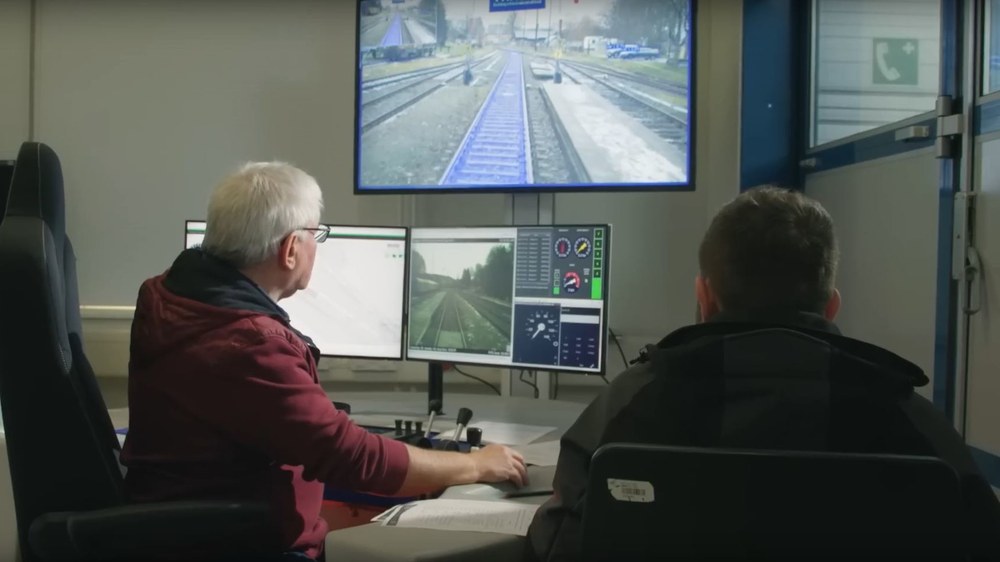
The interaction between humans and technology is also an important area of research for us – as automation increases, tasks and job profiles change. When it comes to the remote control of trains, for example, several aspects are important: What information does the person in the control centre need? How many trains can they monitor at the same time? And how must their workplace be designed so they can react quickly and safely in critical situations, while also not becoming bored during day-to-day operations? We are currently setting up the Remote Operation Center at the DLR site in Braunschweig for this purpose.
We are also conducting research into new operational concepts. Automation can also help to make better use of railway lines. It can make operations more resilient and enable new services to be reintroduced on branch lines that were previously uneconomical. In projects with railway operators, rolling stock manufacturers and other research institutions, we are therefore testing many of these technologies using prototypes under realistic conditions and further developing them for practical use.
What's still needed for automated driving to reach the rail network, and thus practical deployment, on a large scale?
What matters now is bringing together technology, operations and regulation. For higher levels of automation, we need clear requirements – for example, what an environment-perception system must be capable of, and how its safety can be demonstrated. For this, we need test scenarios, standardised testing procedures and clear approval processes. This is now up to national and European policymakers and the relevant authorities responsible for the rail sector.
In particular, using AI to make automation work successfully as a learning system brings further, highly complex requirements. Depending on how the AI learns, new procedures are needed for its approval each time, especially where it is to take on safety-relevant functions. All sides still need some time to define these procedures and bring them into force.
In general, none of this is purely a technological question. Ideally, policymakers, authorities, research, infrastructure operators and industry will pool their expertise to jointly determine how highly and fully automated train operation can be integrated into the rail system.
What position do Germany and Europe hold in automated rail driving?
Europe is very active in research and development. The European research partnership Europe's Rail brings together and drives forward many activities together with rail operators, industry and research. This includes work on developing automated train operation up to GoA 4 for the European rail system. Technologically, we have made great progress. Many individual components already exist and are being trialled in demonstrators. The challenge now is to turn these into an overall system that functions reliably under real-world conditions and can be approved.
From DLR's perspective, an important next step would be a test field for highly automated and remotely controlled rail operation. Such a test field would enable trials over an extended period, under realistic operating conditions and across a larger geographical scale. As with highly automated driving on the road, rail will not switch overnight to exclusively and fully automated operation. The first steps will be taken in clearly defined use cases, such as shunting in depots or pilot operations on branch lines.
Related links
- DLR news – ARTE project pioneers the automation of regional trains
- DLR news – RemODtrAIn project launch: consortium develops safe remote control with AI-based obstacle detection for operation in railway depots
- DLR RailSiTe® – railway simulation and testing laboratory
- DLR Remote operation
- DLR news – DLR at InnoTransl 2026
- Featured topic – The future of rail transport
- DLR Institute of Transportation Systems
- Europe's Rail