Driving ideas on asphalt
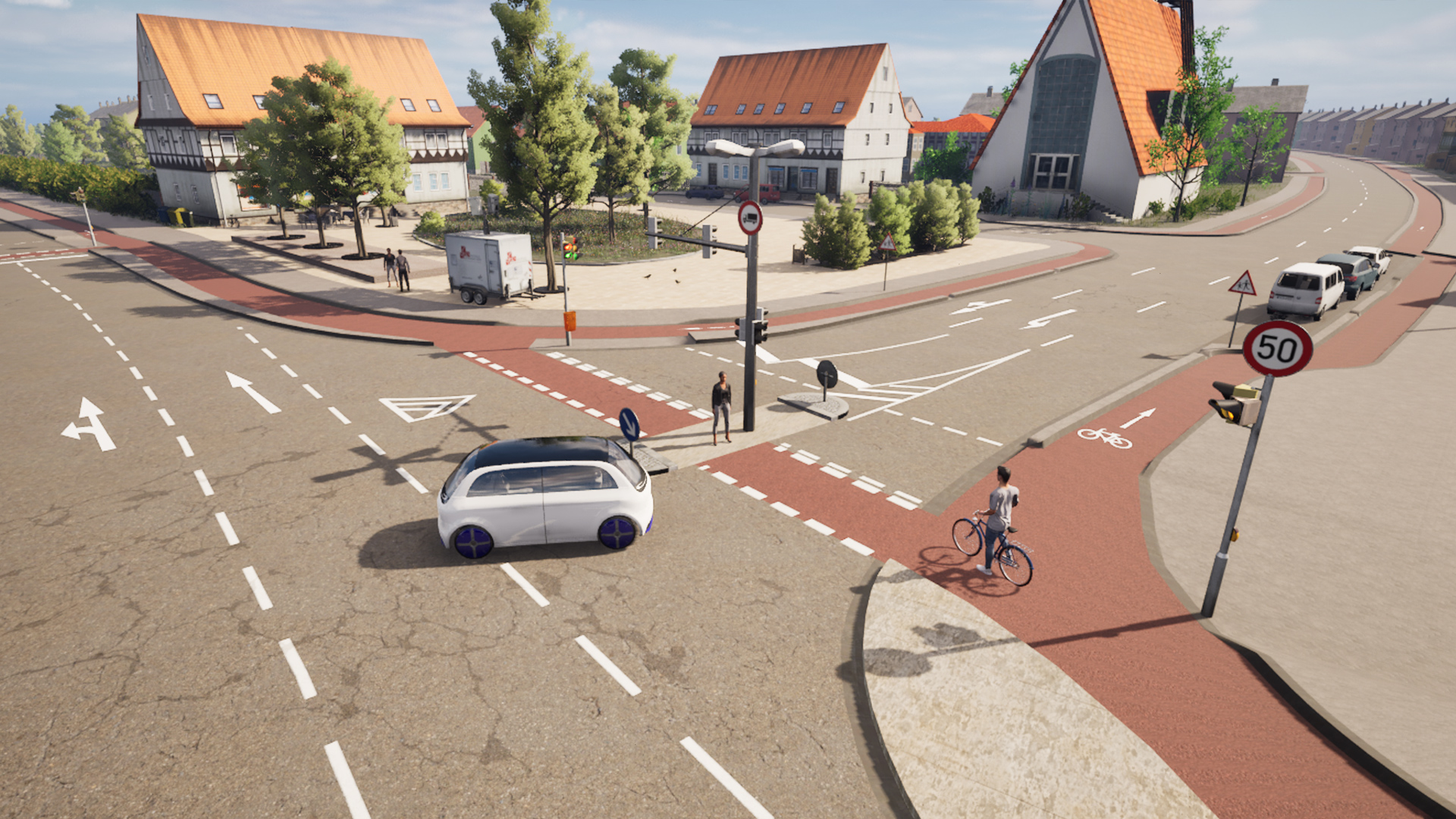

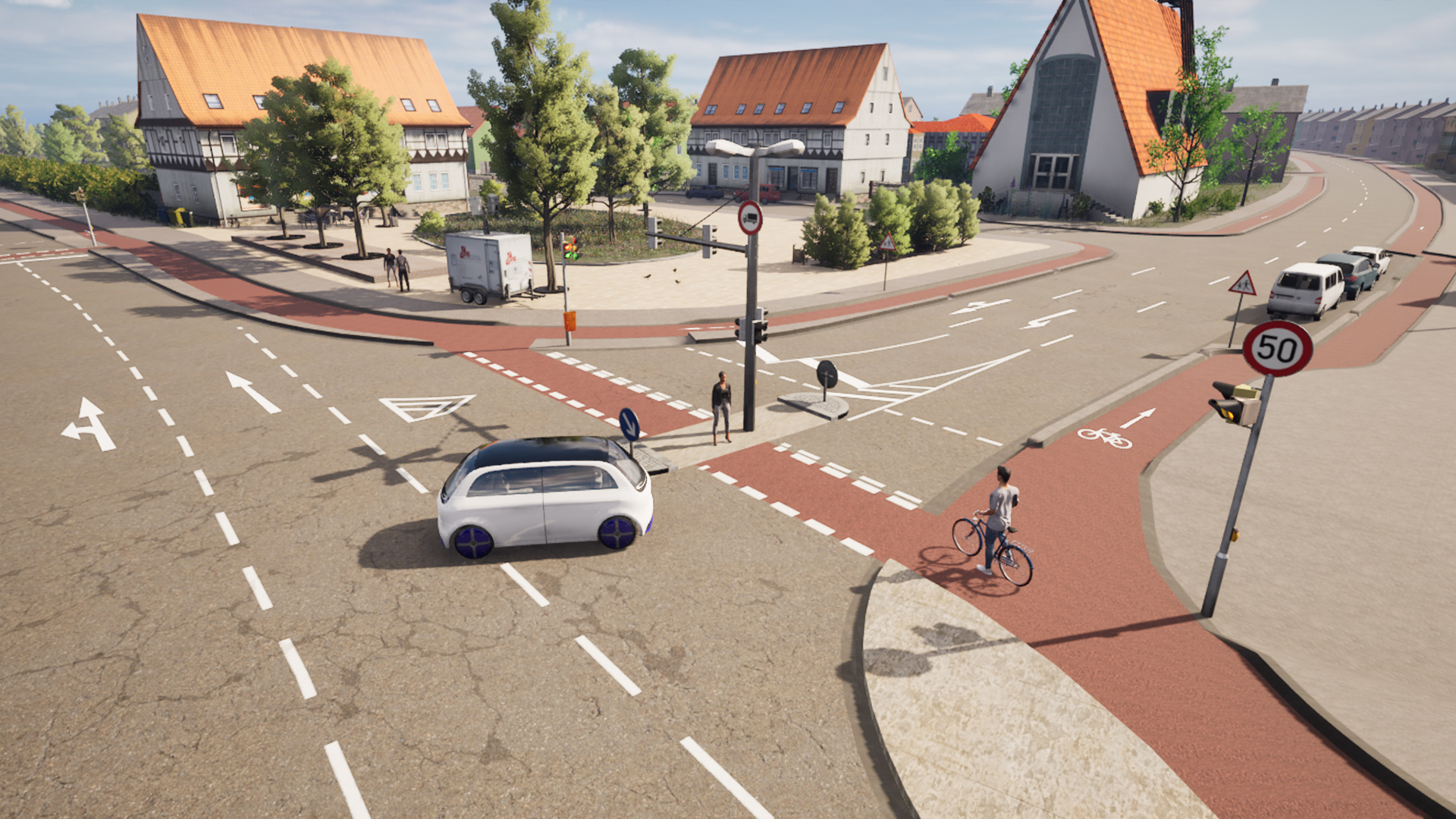
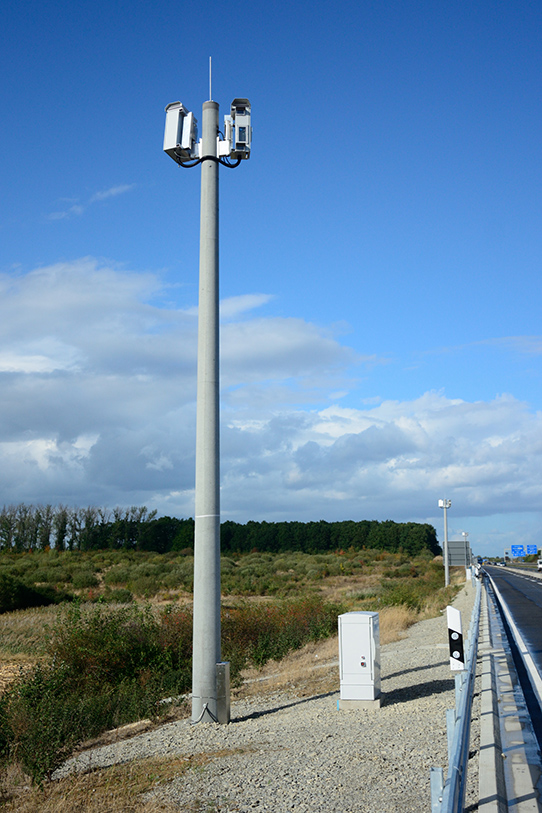
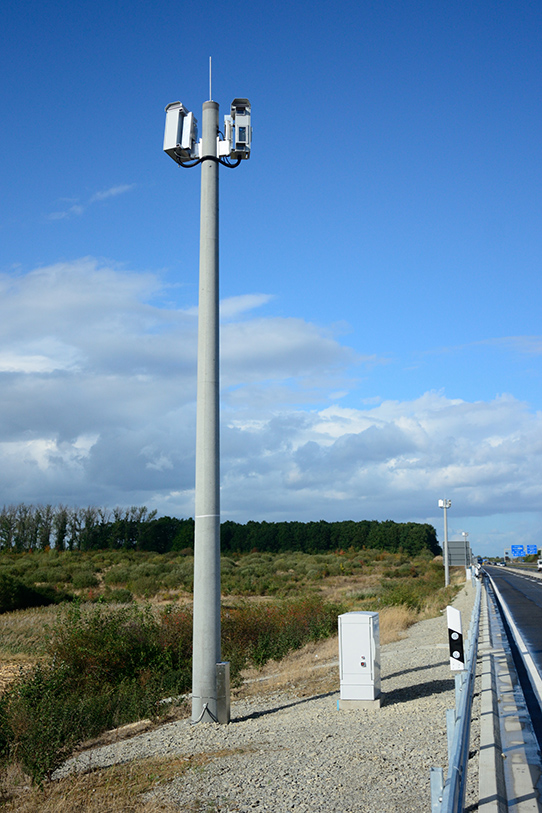
Very few people driving along the A39 motorway near Braunschweig will realise they are passing through a research site. Nothing seems out of the ordinary, except perhaps the 71 eight-metre-high masts lining the roadside. Equipped with sensors, they anonymously record all vehicles that pass by. This is part of the Lower Saxony Test Bed, a model region unique in Germany, operated by the DLR Institute of Transportation Systems. Since 2020, automated driving has been tested here in real traffic conditions over a distance of 280 kilometres. Virtual reality plays a key role: parts of the test field also exist as a 3D simulation, allowing vehicles and technologies to be trialled digitally before they hit the road. Data collected around the clock from the test field serves as a basis, for example, for developing new driver-assistance systems and communication technologies. It also helps researchers improve their simulations. The test field can be used by both academic institutions and interested parties from industry.
The DVR is committed to road safety in Germany. Findings from practical projects such as the Lower Saxony Test Bed provide us with a solid basis for well-founded advice to policymakers, committees and across our entire professional network.
For reliable testing of information and communication technologies in the field of smart mobility, a combination of simulation and test drives on real roads is ideal. With the Lower Saxony Test Bed, we have such a platform right on our doorstep.
What's been:
At the end of 2025, as part of the MAD Urban (Managed Automated Driving) project, DLR demonstrated autonomous driving with strong infrastructure support for the first time. Two sensor columns at an intersection in Braunschweig captured – in line with data protection regulations – the outlines of passing objects, creating an overview of the traffic situation. As the DLR research vehicle approached the junction, the columns' computers took over control like air-traffic controllers, calculating the safest route and monitoring the execution of driving manoeuvres. Once the vehicle had passed, control was handed back to the onboard automation system.
What's to come:
From 2026, DLR will begin construction of a modular remote operation centre in Braunschweig for road, rail and traffic management. This facility will be used to research and test 'teleoperation' – the remote monitoring and control of vehicles. Workstations will be available for different levels of automation and operating modes, ranging from event-based teleassistance to direct remote steering and control. New control centre concepts will also be developed and tested here, with operators actively involved. The existing infrastructure of the Lower Saxony Test Bed is ideally suited to testing teleoperation under real-world conditions.