
Getting ready to roll

For years, autonomous driving has been one of the megatrends shaping the automotive industry. Despite significant technological advances, its introduction remains challenging. In this interview, Tobias Hesse, programme spokesperson for DLR road traffic research, outlines what's needed to get autonomous vehicles on the road and into the market. He also discusses the role teleoperation can play – and why it's worth thinking of mobility as an integrated system.
Tobias Hesse currently serves as one of two Acting Directors of the DLR Institute of Transportation Systems in Braunschweig, northern Germany. He has been researching autonomous road transport for around twenty years. Although he has a driving licence for cars and motorcycles, he has never owned a motorised vehicle.
What is the current state of autonomous driving – in Germany and Europe, but also in the US and Asia?
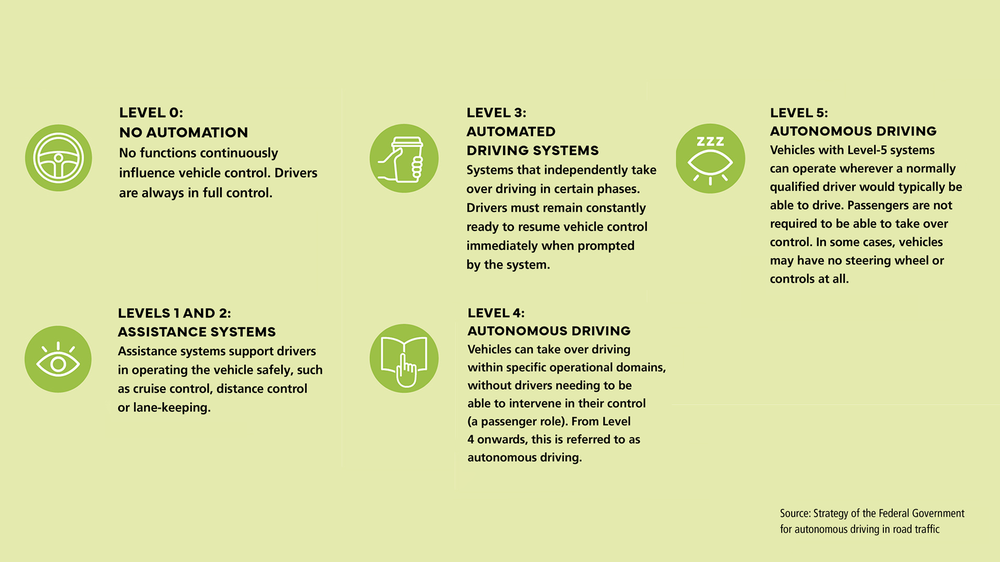
In the US and China, companies like Waymo and Apollo Go offer 'robotaxi' services on public roads. Both are working at Level 4 of the five possible degrees of automation (see page 37, 'Levels of automation'). This means the vehicles can drive autonomously in defined areas under certain conditions – for example in good weather – without human intervention. To date, German companies have focused on Level 2 and Level 3 functions, gaining experience in the process. In these cases, the automated system controls the vehicle in certain situations. At Level 2, drivers may briefly take their hands off the steering wheel, but must continuously monitor the system and be able to intervene at any time. At Level 3, the vehicle drives in certain situations without being monitored. The human driver must then be ready to take back control when prompted.
Country-by-country scenarios can only be compared to a limited extent, as the approaches – and associated risks – differ. In the US, access is driven by the market, while in China it is mandated by the state. Germany and Europe are pursuing an approval- based approach: first, comprehensive evidence is required to show that automated vehicles and services are safe and secure before they can operate on public roads on a large scale. The question of resilience is also becoming increasingly important, including the resistance of autonomous systems to cyberattacks or sabotage.

We now need to muster up the courage to test existing technologies and solutions in practice; to bring them into service while continuing to study them.
Could you once again address the situation in Germany in more concrete terms?
Both in terms of technology and regulations, we are in a better position than it may seem. Germany is setting the standards, particularly regarding 'automotive connectivity'. Connectivity in this context refers to a vehicle's ability to connect wirelessly to the internet, to other vehicles and to infrastructure. This allows data to be exchanged, for example to improve safety and traffic management. At the regulatory end, the German Federal Government and the EU have laid the legal foundations to make autonomous driving possible.
We now need to muster up the courage to test existing technologies and solutions in practice; to bring them into service in the real world while continuing to study them. This calls for simpler experimental approvals, living labs, test fleets and model regions. What's important is that these projects are scalable in terms of the number of vehicles and users and the size of the deployment areas. Only then can we arrive at economically attractive products, applications and services. At the same time, we need patience and perseverance – including with regard to investment and funding. After all, new technologies go through an innovation cycle with typical phases, including what is known as the 'valley of death', which to some degree we are currently experiencing in Germany. Autonomous driving has not yet proven to be a lucrative venture – partly because its added value at system level is still underestimated.
What is DLR's approach to autonomous driving?
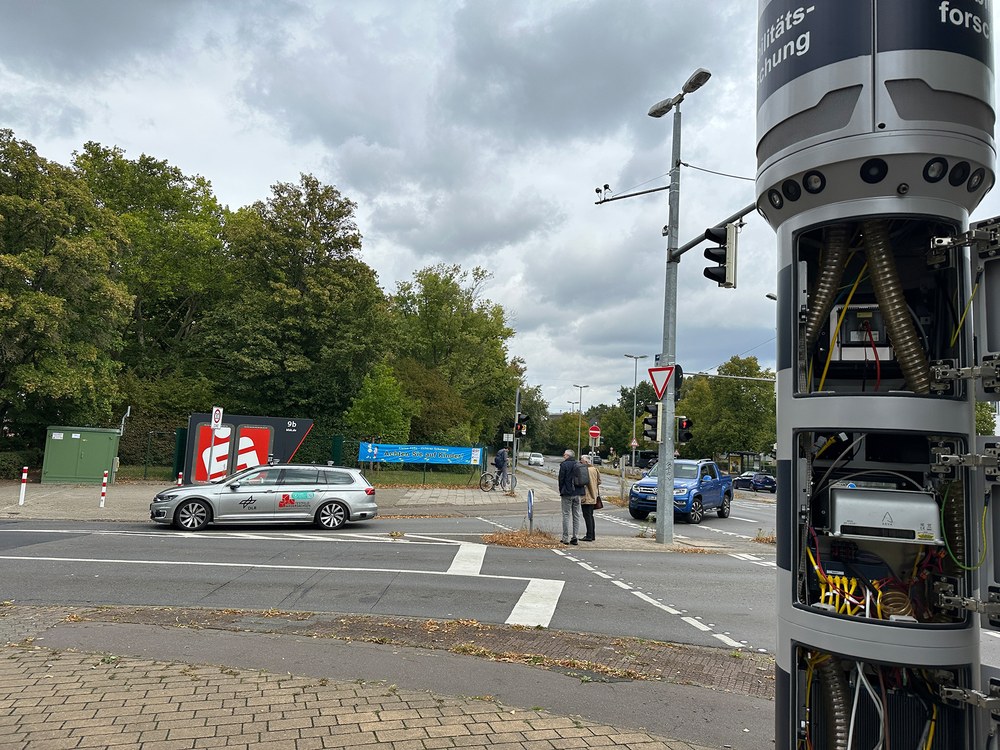
What sets DLR's transport research apart is precisely this systemic approach, including in the field of autonomous driving. We develop technological ideas, concepts and solutions that go beyond the individual vehicle. We are also looking into the interaction between manually operated and self-driving vehicles, different modes of operation and use cases. What's more, we investigate what responsibilities transport infrastructure can take on in terms of autonomous driving – for instance, intelligent traffic lights and cameras or computers in control centres and at key traffic points such as complex intersections. In an ideal scenario, all future road users will be interconnected so that they can benefit from autonomous driving. One compelling, pioneering example is DLR's IMoGer project, which stands for Innovative Modular Mobility Made in Germany.
In this project, DLR develops and tests, together with companies, a mobility service that is unique in its versatility and practicality, providing autonomous, flexible and demand-based transportation of people and goods for the 'last mile'. This can mean taking people home from the train station or handling the final leg of the parcel delivery transport chain from the distribution centre to the customer. From 2027, a small fleet of U-Shift vehicles – also developed at DLR – will be out and about in a district of the city of Braunschweig to do exactly that. These vehicles comprise an electrically powered, U-shaped drive module that, depending on the task, carries a capsule for the transportation of passengers or goods. Here too, we are looking at the entire system to support the most effective market ramp-up of autonomous driving. This naturally includes automation, as well as the vehicle concept, different operating modes, integration into the existing public transport system, new and additional mobility services and societal acceptance of the project. The Federal Ministry of Transport is funding IMoGer with approximately 35 million euros.
In current discussions on autonomous driving, the terms teleoperation, teledriving and teleassistance often come up. What do they mean?
These are very important topics, as they can help to speed up the introduction of autonomous driving. Germany's Federal Highway and Transport Research Institute uses the umbrella term 'teleoperation' to describe two operating modes – teledriving, or remote control of vehicles, and teleassistance, where autonomous vehicles are remotely supported by a technical supervisor.
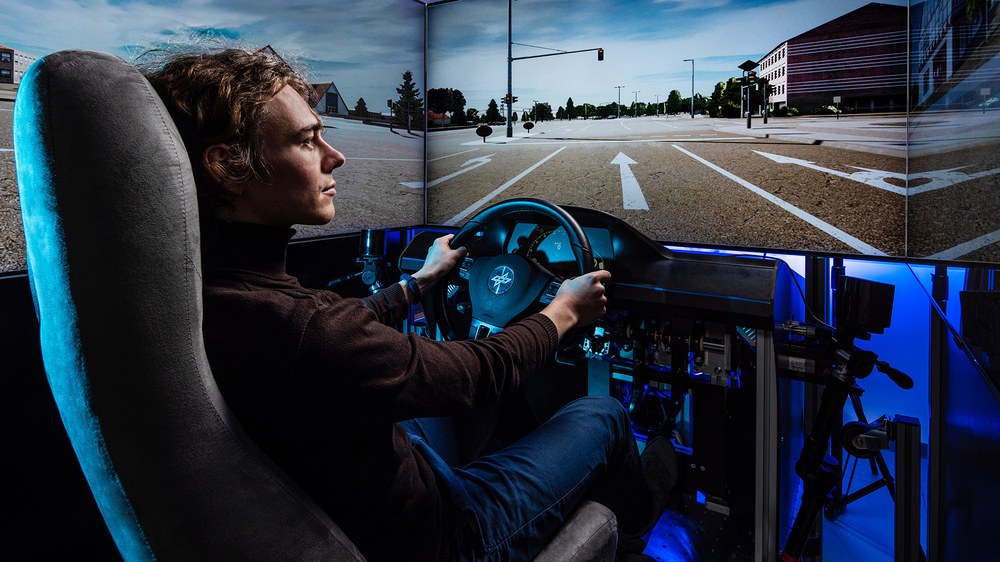
Teledriving can take place permanently or on a temporary basis. It requires a workspace in a control centre with pedals and a steering wheel, and of course a connection to the vehicle. For teledriving, the vehicle itself does not require any automation whatsoever. One practical use case here would be the provision of car-sharing or rental cars. It could also be an add-on to support the introduction of new autonomous driving services.
Teleassistance has a permanently prescribed role in Germany's Autonomous Vehicles Approval and Operation Ordinance (Autonome- Fahrzeuge-Genehmigungs- und Betriebsverordnung; AFGBV) which governs the operation of driverless cars in Germany. Teleassistance involves people in a control centre supporting a vehicle's automation if it runs into trouble on the road. Operators look at the situation the vehicle is in, suggesting manoeuvres or approving a manoeuvre proposed by the vehicle, which it then carries out itself. However, teleassistance requests must not be of an urgent nature. The vehicle must already be in a safe state – for example, stopped or parked in compliance with traffic rules.
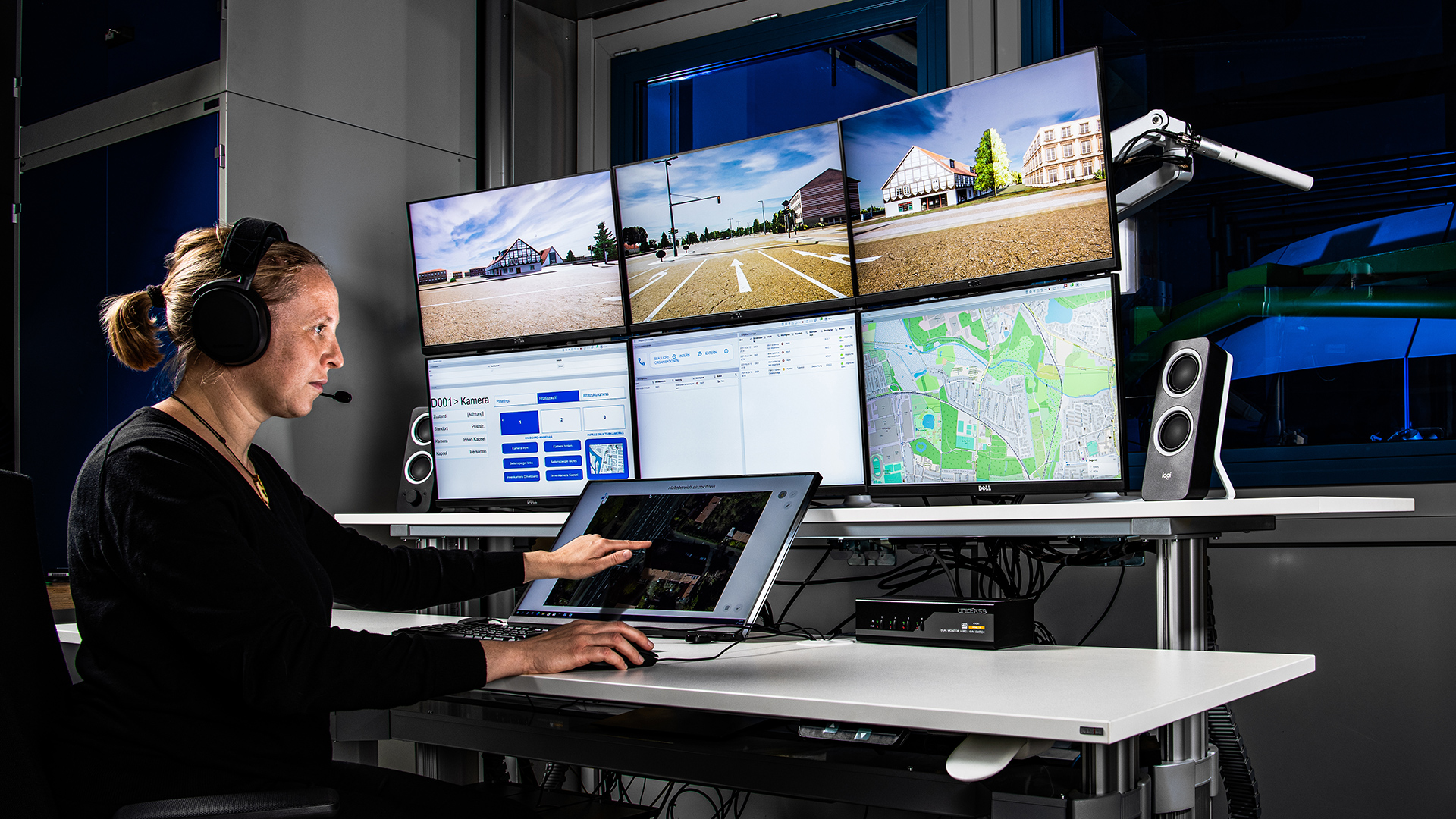
At present, teledriving and teleassistance are still considered separately. In the future, it may also make sense to combine the two. After all, we will continue to have mixed traffic involving non-automated, partially automated and autonomous vehicles for a long time to come. The transition between these operating modes must be carefully planned – both in technical terms and from the users' perspective. Further research in this area is necessary and in fact prescribed by law. DLR has been active in this field for many years, carrying out both in-house research and acting in an advisory capacity. Among other things, we have developed a workstation for technical surveillance to carry out teleassistance tasks. The focus is on the interface between the autonomous vehicle and the human operator, who intervenes remotely when necessary. With the Remote Operation Workplace, DLR is among the pioneers in this field. So far, few proposals have addressed what such workplaces should look like to comply with the law.
The Remote Operation Workplace puts DLR among the pioneers in this field. So far, few proposals have addressed what such workplaces should look like to comply with legislation.
Who's going to pick up the tab for this? Or, put differently, will autonomous driving ever pay off?
I would argue the opposite: in the long run, we cannot afford not to automate our mobility. Both a strong economy and full social participation depend on efficient and attractive passenger and freight transport. The shortage of drivers is already clearly evident. Both sectors stand to benefit significantly from automation. In the longer term, automated transport will not only become more efficient, flexible and safer, but also more affordable. This is ultimately a matter of scale. Autonomous shuttles and buses, in particular those operating on a demand-responsive basis, could significantly improve the quality of public transport, leading to shorter waiting times, less traffic on the roads and, as a result, reduced climate and environmental impacts.
Where will Germany and Europe stand in ten years when it comes to autonomous driving?
Development is very dynamic right now. In just a matter of months or a few years, we could reach new major milestones – similar to the evolution of the smartphone, where Apple's first iPhone marked a breakthrough. If we translate what we are developing together with collaborators from research and industry into practical application, we will not only have autonomous vehicles on our roads, but we will also avoid having them on the road as uncooperative 'lone wolves'.
Instead, a wide range of autonomous yet interconnected systems will emerge – from lorries and buses to cars, as well as smaller vehicles and delivery robots. These systems will continue to learn over time and will cooperate with one another and with us as humans. That is why connectivity and interoperability are so crucial, and why they must be built into our research from the very outset. Looking at the development of autonomous driving from a broader perspective, we as a democratic society must confront a key question: who will develop and market the technologies and systems required – and will they be designed in a way that reflects what we, as a society, want and need?
An article by Denise Nüssle from the DLRmagazine 179. She is a press officer at DLR, primarily reporting on the energy and transport research areas. As a self-confessed "Stuttgart region native", she experiences the transformation of the automotive and mobility sector first-hand.