'Blue Dot – Shaping the future' with Alexander Gerst
ISS mision
'Blue Dot – Shaping the future' with Alexander Gerst
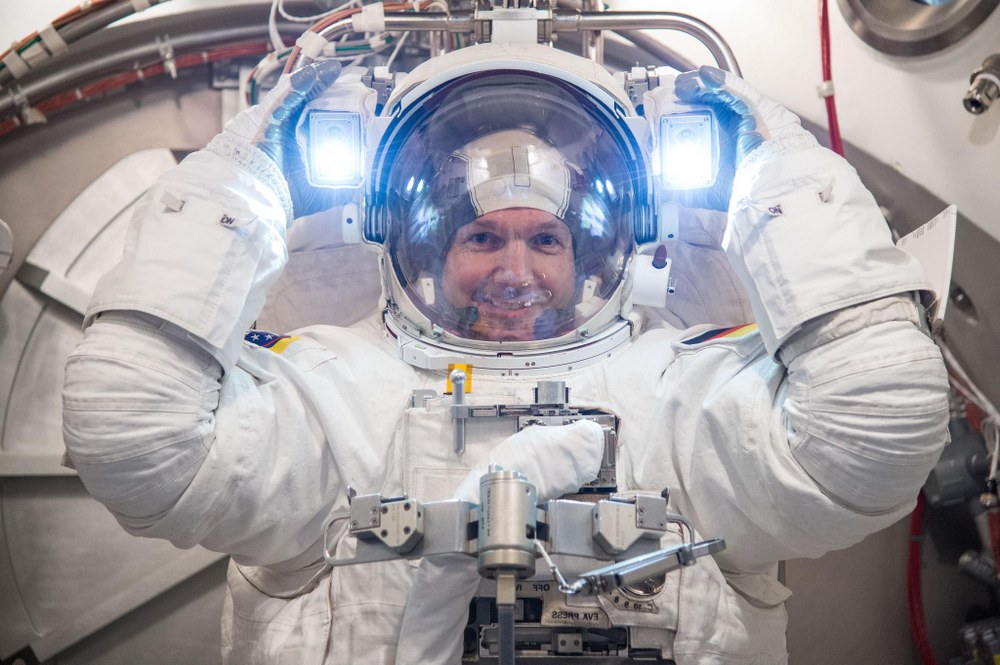
German ESA astronaut Alexander Gerst
As part of his 'Blue Dot – Shaping the future' mission, German ESA astronaut Alexander Gerst will be on the International Space Station ISS for 166 days.
Image: 1/9, Credit:
NASA.
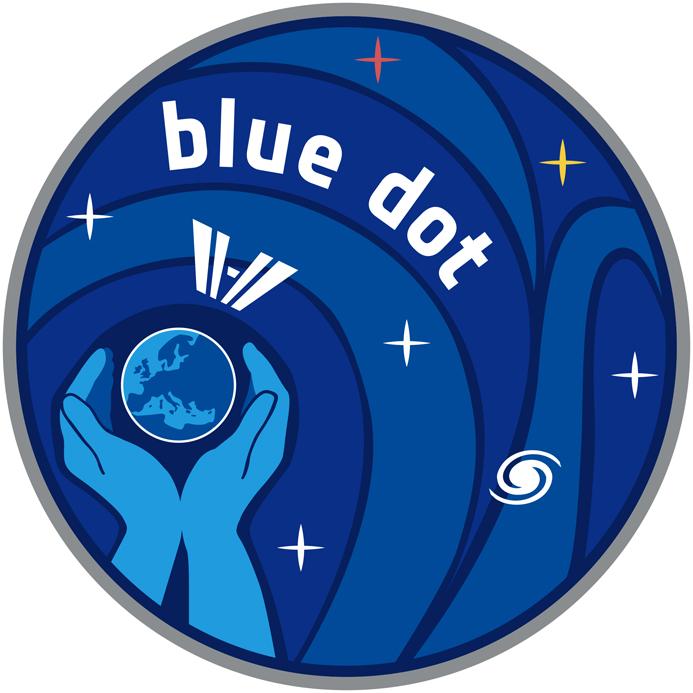
'Blue Dot' – the logo for the ISS mission of the next German ESA astronaut, Alexander Gerst
'Blue Dot – Shaping the Future' is the motto of the ISS mission of the next ESA astronaut, Alexander Gerst. During German Aerospace Day on 22 September 2013, DLR and ESA revealed the mission name and its logo.
Image: 2/9, Credit:
ESA.
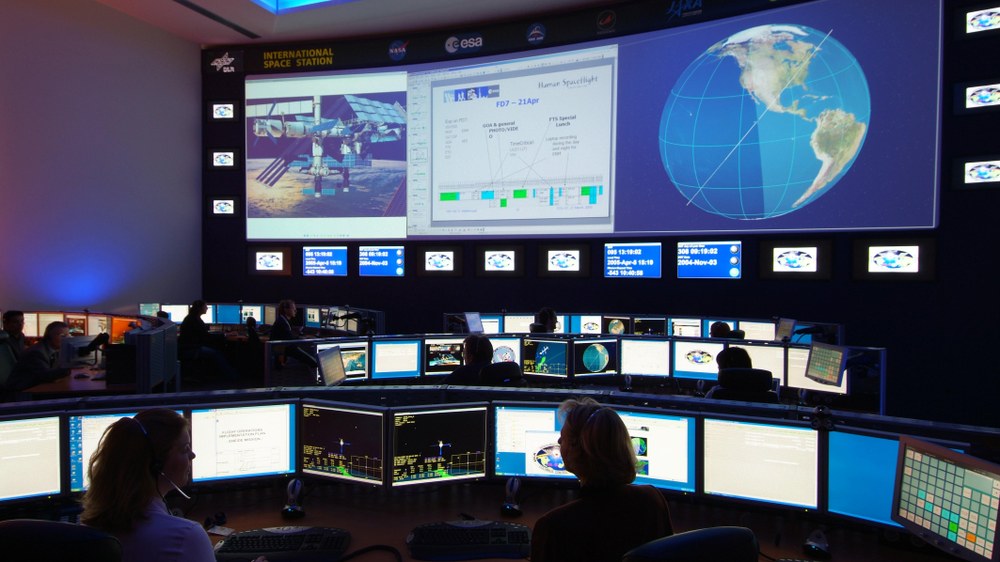
Columbus Control Centre
View of the Columbus Control Centre (Col-CC), which is located at the DLR-operated German Space Operations Center in Oberpfaffenhofen. Col-CC controls the operation of the space laboratory on behalf of ESA and coordinates the scientific programme.
At 21:57 CEST on 28 May 2014, German ESA astronaut Alexander Gerst lifted off from the Baikonur Cosmodrome in Kazakhstan on board a Soyuz launch vehicle, bound for the International Space Station (ISS). After a flight of just six hours, he reached the Space Station, which orbits Earth at an altitude of 400 kilometres and travels at a speed of 28,800 kilometres per hour. This makes him the third German to live and work on board the ISS – Thomas Reiter and Hans Schlegel preceded him.
The name of the mission
The name of the Blue Dot mission goes back to world-renowned US astronomer Carl Sagan (1934-1996), who referred to Earth as a 'pale blue dot', referring to an image taken by the Voyager 1 spacecraft from a distance of around 6.4 billion kilometres – the greatest distance from which an image of our home planet had ever been acquired. In the image, Earth is visible as just a tiny pale blue dot, standing out as an oasis of life against the deep blackness of space, and looking fragile and in need of protection.
The experiments that Alexander Gerst conducted on board the ISS had the theme “Shaping the future”. Their aim was to improve life on Earth, test new technologies and prepare for further exploration of the Solar System and space.
100 experiments in 166 days
During his mission, which was planned to last 166 days, Alexander Gerst was involved in 100 different experiments from the various ISS partners. Of the approximately 40 ESA experiments under the ELIPS (European Life and Physical Sciences) programme, 25 took place under the guidance of German project scientists or with the participation of German industry. They involved subject areas such as materials physics, human physiology, radiation biology, solar research, biology and biotechnology, fluid physics, astrophysics and technology demonstrations.
Numerous experiments and projects aimed at education and the development of young scientists were also carried out. These included, for example, the “Columbus Eye” school project, an Earth observation experiment using remote-controlled cameras on board the ISS, which was run by the DLR Space Administration and the University of Bonn in collaboration with NASA. In the “Aktion 42” competition, announced jointly by ESA and DLR to encourage young researchers, experiments were developed that used ISS on-board resources.
Highlights of the mission
One highlight of the mission was the installation and commissioning of the Electromagnetic Levitator (EML), which was performed by Alexander Gerst. The EML was a furnace in which metallic alloy samples could be melted and solidified while suspended clear of the container walls using electromagnetic fields. The unit was delivered to the ISS in July 2014 on board the European space cargo transporter ATV-5 (Automated Transfer Vehicle) 'Georges Lemaitre'.
During his mission, Alexander Gerst also carried out a space walk, referred to as an Extravehicular Activity (EVA). In August, he spent six hours outside the ISS performing maintenance on the Station’s exterior equipment and installing scientific experiments. His spacesuit was cooled by water; drinking water was delivered via a tube connected to a water tank; and helmet lights provided illumination when the ISS was in Earth’s shadow. An EVA was so exhausting that astronauts generally took a week to fully recover.
Gerst also operated the Station’s robotic arm to dock and undock a number of supply craft – undocking SpaceX-4 (Dragon), docking and undocking SpaceX-5, and docking and undocking the Orbital Sciences Corporation (OSC) Cygnus-3.
Immediately after landing, Alexander Gerst was flown to Cologne and became the first European astronaut to be medically cared for at the ESA Astronaut Centre and the DLR site there. This marked a first, as in the past the health checks for all western astronauts had been carried out in Houston.
Five years of work to become an astronaut
At the outset of his training, Alexander Gerst first had to complete an 18-month basic course consisting of hundreds of hours of training before he could call himself an astronaut. He acquired knowledge of space technology, space research and medicine at training centres in the United States, Russia, Germany, Japan and Canada. He also studied the functioning of the ISS and its supply vehicles. He had to learn Russian within three months, even spending several weeks living with a Russian family in Star City near Moscow. He also took a diving course, as underwater training offered the best option on Earth for preparing for space walks on the ISS.
After he was selected for the Blue Dot mission in September 2011, he increased his training workload even further. From then on, he trained for his first trip to space for 60 hours a week without a break.
Ground control – round-the-clock support
The mission control centres run by NASA in Houston and Roskosmos in Moscow had overall responsibility for the Station. Where experiments were concerned, the Payload Operations Center in Huntsville, USA, had overall responsibility for all western test facilities on the ISS. The other control centres involved in payload operations stayed in close contact with them. The Columbus Control Centre (Col-CC) in the German Space Operation Center (GSOC) at the DLR site in Oberpfaffenhofen is responsible for the European Columbus Laboratory. The GSOC remains in constant contact with the other control centres and with the astronauts. The planning and integration of new experiments begins here long before the mission.
The GSOC is the interface between the Columbus experiment facility and the scientists at the European user control centres, such as DLR's MUSC (Microgravity User Support Center) in Cologne. The ISS can be contacted directly by GSOC in the event of problems in the laboratory, and for press conferences and educational activities in space.