Climate strategy put to the test – reducing contrails
November 26, 2025 | A4CLIMATE for climate-compatible and competitive aviation
Climate strategy put to the test – reducing contrails
Measuring contrails
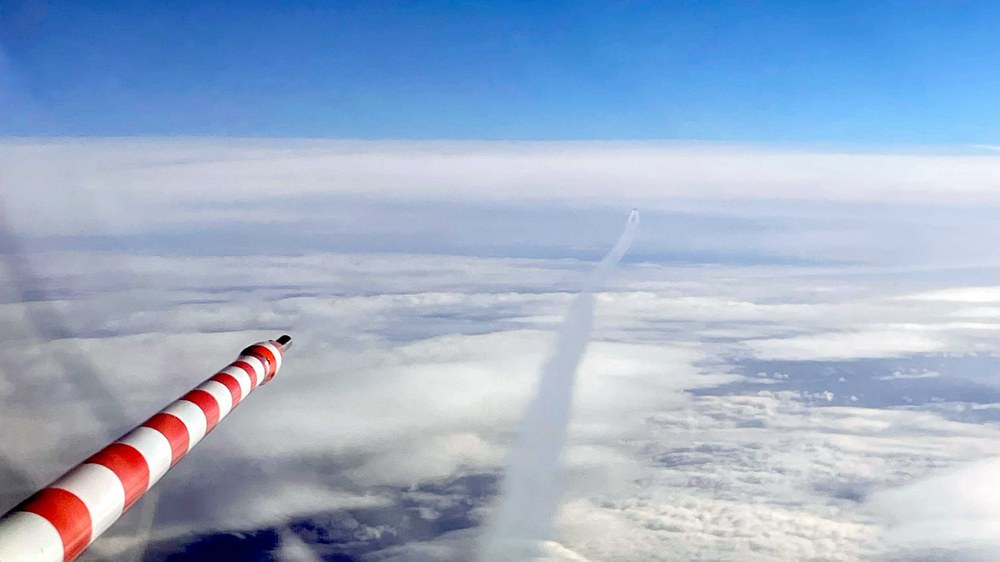
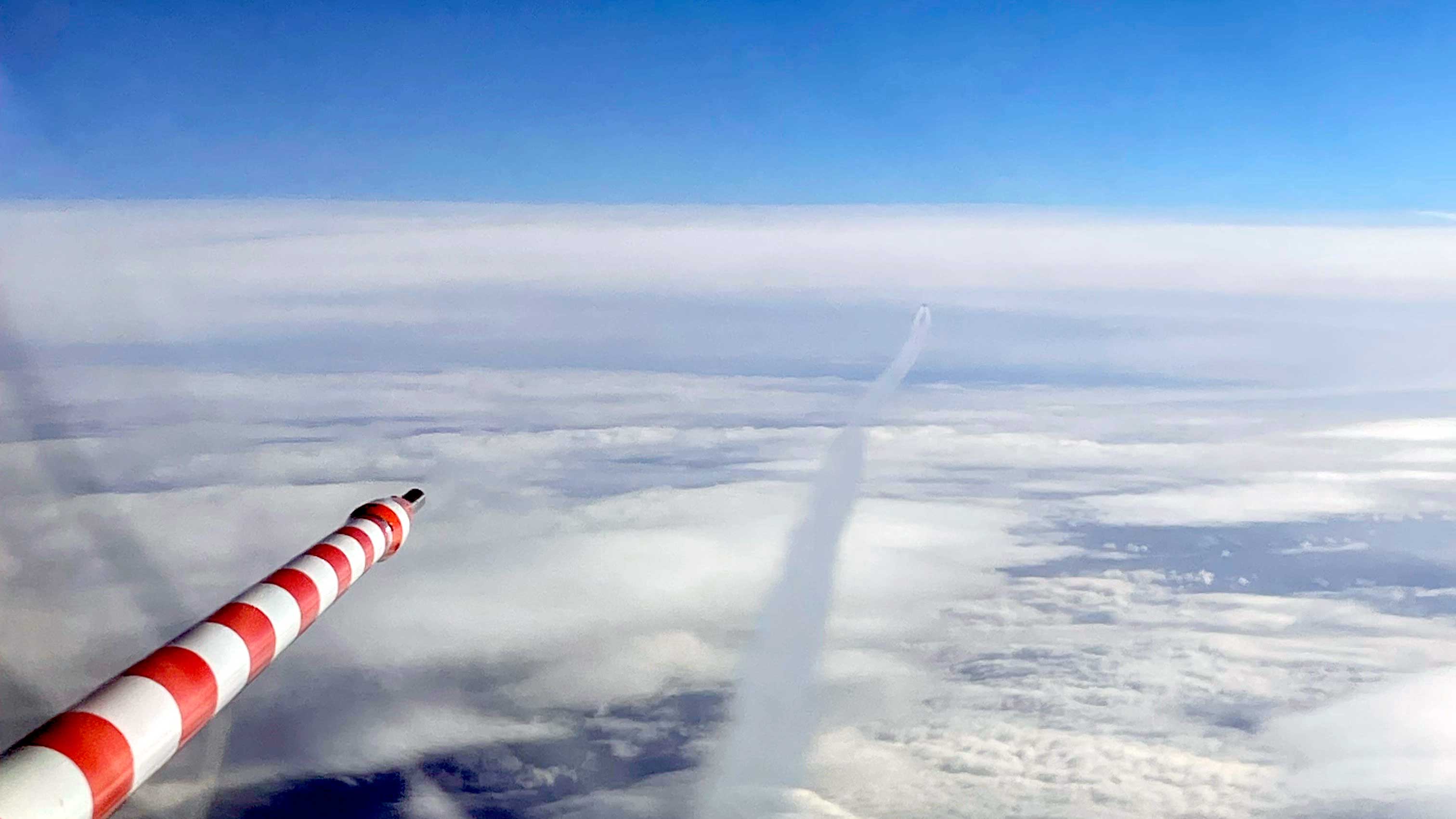
As part of the A4CLIMATE project, DLR and 17 international collaborators from research and industry are investigating how contrails can be avoided – and how this can reduce the climate impact of aviation. Using DLR’s Falcon 20E research aircraft, contrails are captured and measured directly where they form. The cockpit image of the Falcon 20E shown here depicts a measurement flight behind a TUIfly passenger aircraft.
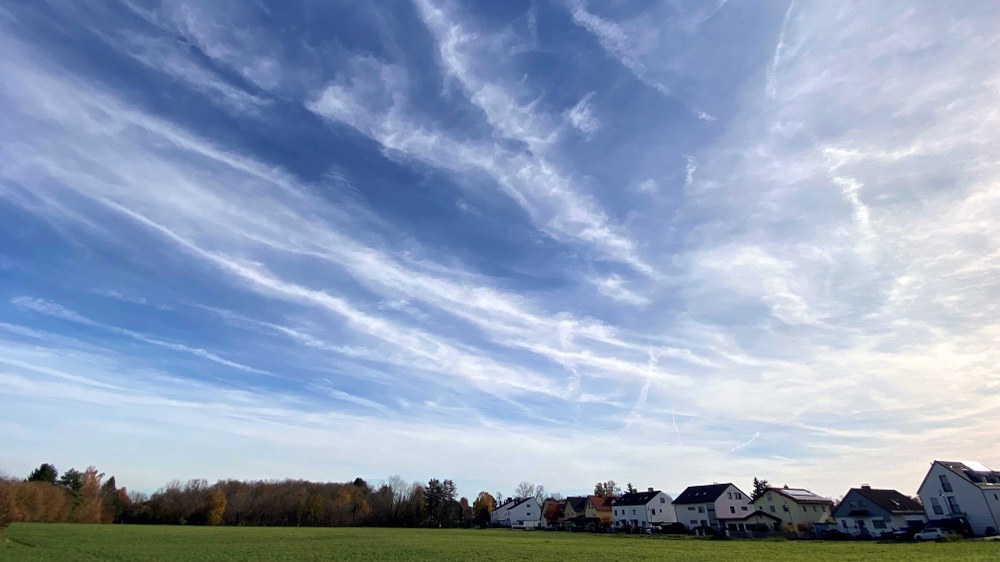
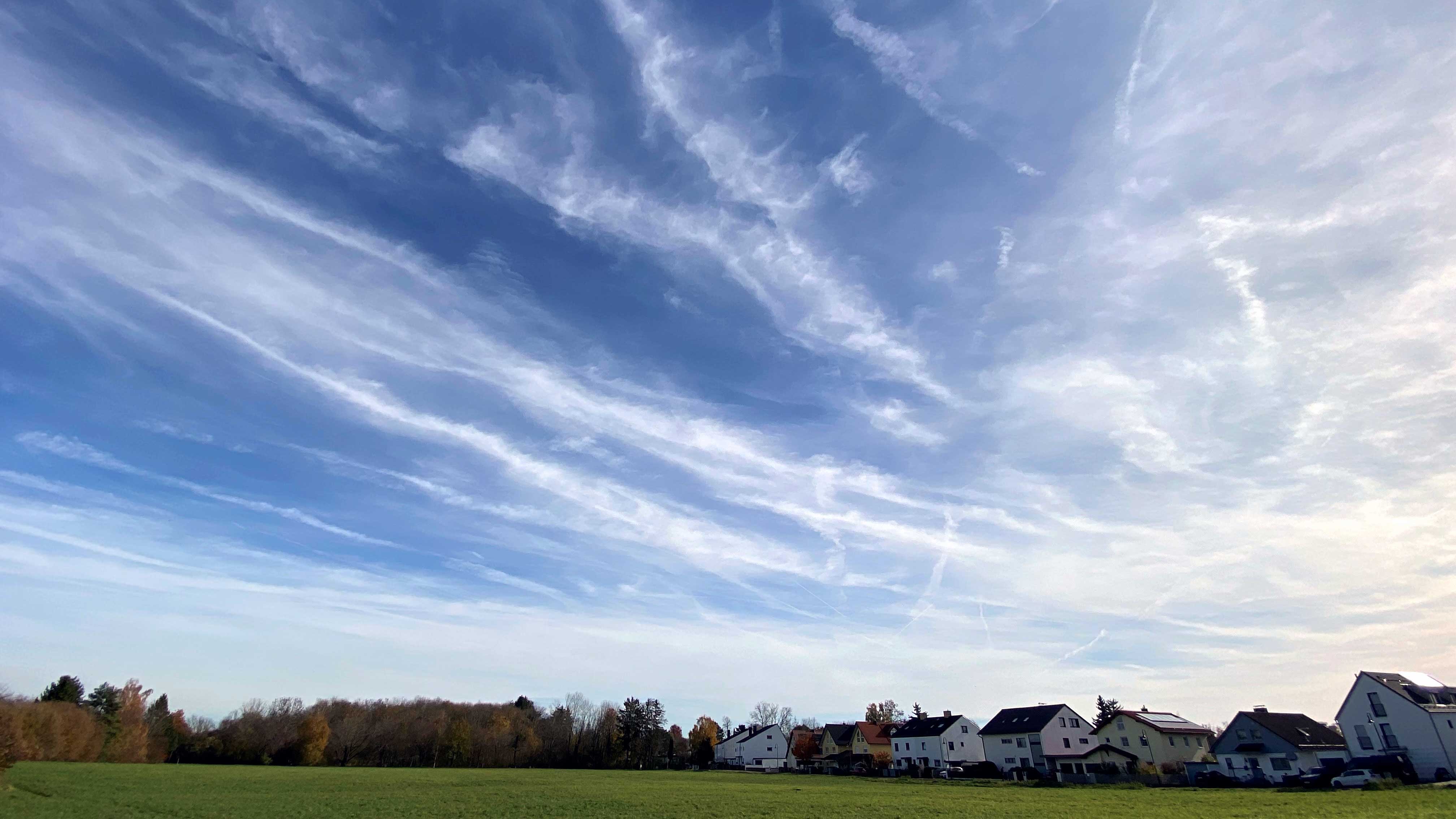
Contrails form at high altitudes when hot aircraft exhaust meets very cold, humid air. The white lines in the sky then turn into ice clouds that trap heat in the atmosphere and contribute to global warming.
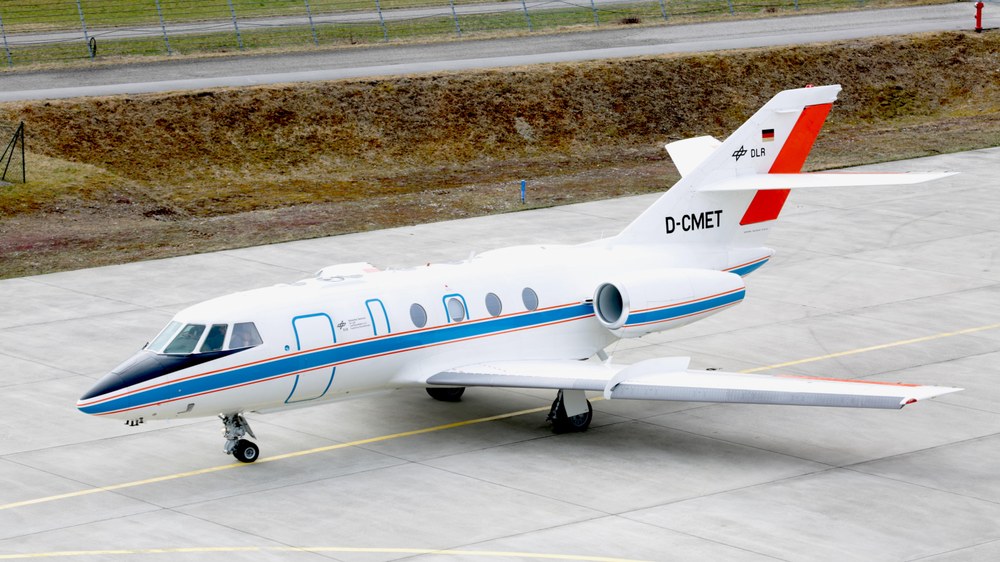
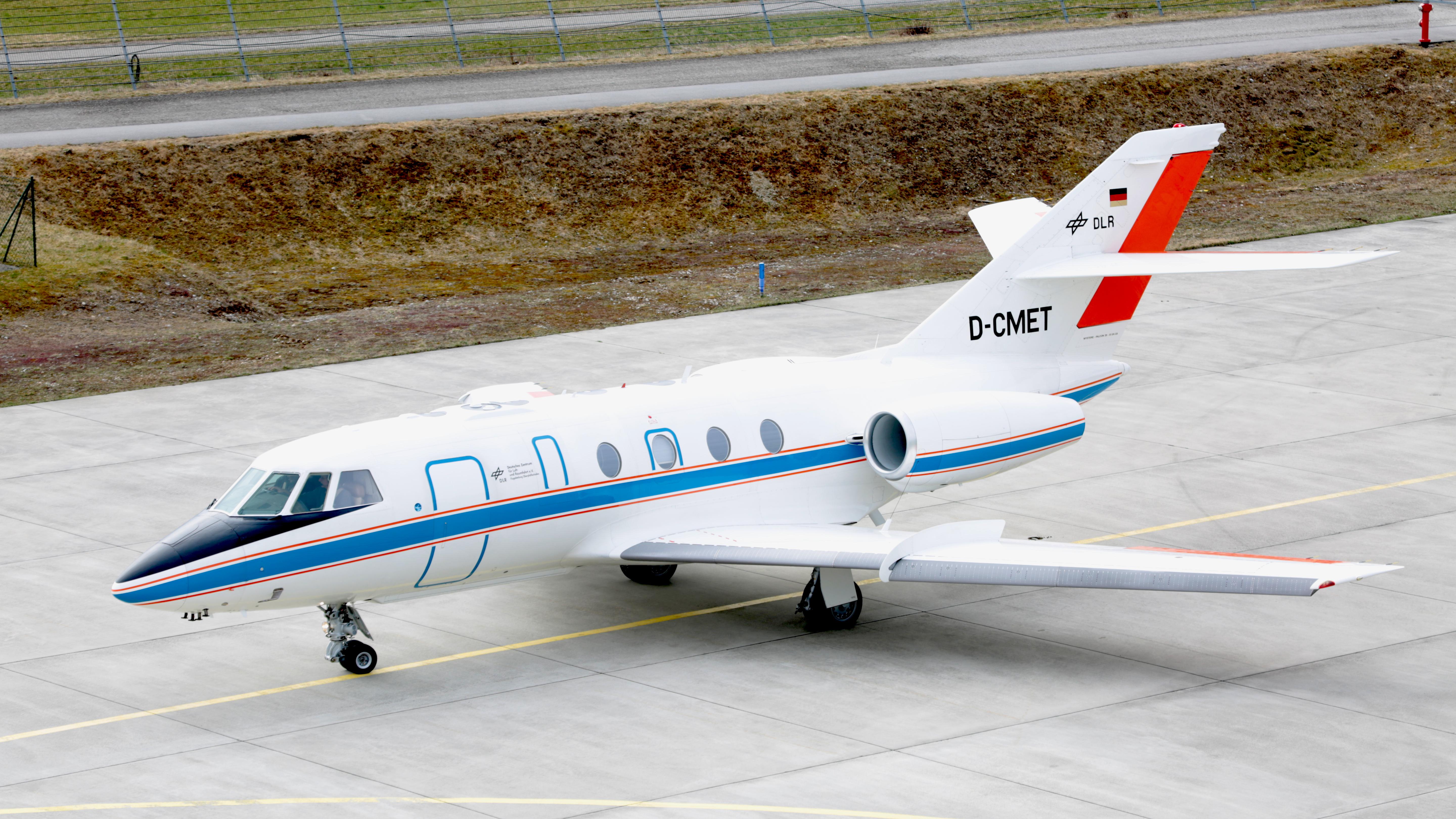
Since 1976, the Falcon 20E research aircraft with D-CMET registration has served as a platform for German and European airborne research into the Earth and atmosphere. Many unique modifications and modern equipment make the Falcon a real versatile platform for research applications. It is operated by the DLR Flight Experiments facility in Oberpfaffenhofen. It is operated by the DLR Flight Experiments facility in Oberpfaffenhofen.
In the EU project A4CLIMATE, DLR is working together with 17 partners from research and industry to investigate how contrails can be avoided, reduced and made more climate-compatible.
The aim is to develop practical solutions for climate-compatible aviation.
The first measurement flights of the DLR Falcon 20 research aircraft, trailing TUIfly passenger aircraft to study contrail formation and avoidance, have begun.
Focus: Aviation, climate-compatible flight
With the A4CLIMATE project, Europe is taking an important step towards climate-compatible aviation. The focus is on contrails – researchers and industry partners want to find out how these condensation trails can be effectively avoided, and how much their climate impact can actually be reduced. Led by the German Aerospace Center (Deutsches Zentrum für Luft- und Raumfahrt; DLR), 17 project partners from nine countries are working on A4Climate to reduce the formation and climate impact of contrails – through smarter flight routes, innovative engine technologies and alternative fuels.
To this end, the researchers are combining satellite data, aircraft and ground-based measurements, advanced climate models and a new contrail prediction system. The project will analyse 400 scheduled flights, selected from those expected to produce as few contrails as possible. DLR is also currently conducting measurement flights with its Falcon 20E research aircraft, which deliberately follows TUIfly commercial aircraft during contrail-observation flights over Germany and Austria.
Unexpected challenges
To test the effectiveness of these countermeasures under real-world conditions, DLR is conducting specific measurement flights in collaboration with the German airline TUIfly and the Austrian flight planning services provider FLIGHTKEYS. The principle is simple: whenever possible, flights are routed outside the regions where contrails form.
In practice, however, it becomes clear how complex this can be. Delays and weather changes make it difficult to stick precisely to ideal, planned routes. And sometimes an alternative route also means a few more flight kilometres – and thus more carbon dioxide (CO2) emitted. The task here is to develop and test robust processes and solutions under these constraints.
The project team is working on a fully automated data pipeline that provides route recommendations in real time and gives immediate feedback on whether a flight can be planned in a more climate-compatible manner. Satellites will later verify whether the strategy actually produces fewer contrails in reality. The net climate impact will also be calculated using models.
Our goal is to make scientifically sound progress towards climate-compatible aviation while maintaining competitiveness. Accurate forecasts and automated processes for avoiding contrails are important tools, which need to be extensively tested and further developed. This is where we at DLR contribute our extensive expertise and system competence in aviation research.
Modern engines and sustainable fuels
In addition to flight planning, A4CLIMATE is investigating how new engines and alternative fuels affect the formation of contrails. One particularly exciting possibility is the fact that some 'lean-burn' engines emit extremely low levels of soot – and soot particles are key nuclei for ice crystal formation. However, it is still unclear whether less soot automatically means fewer contrails.
To test this, DLR's Falcon 20E research aircraft is currently trailing TUIfly passenger aircraft equipped with innovative, low-soot lean-burn engines. The flights deliberately pass through regions that are prone to contrails. Measurements are taken directly in the atmosphere and under real conditions to determine the properties of the contrails produced by these new engines: "We want to understand how much global warming can be reduced when aircraft are more modern and smarter," explains project manager Christiane Voigt from the DLR Institute of Atmospheric Physics.
For the roughly two-week flight campaign, typical flight routes from Germany to Egypt are being flown. The Falcon 20E, operated by the DLR flight facility in Oberpfaffenhofen, will fly approximately ten kilometres behind selected TUIfly flights. The team measures the resulting contrails using highly precise instrumentation. Researchers at the DLR Institute of Atmospheric Physics are investigating in particular how soot and volatile particles in the exhaust plume change over a period of up to 30 minutes and how they influence contrails. The measurement data are used to further improve engine and contrail model simulations and to refine weather forecasts.
Climate-compatible flying – but realistic
Contrails form at high altitudes when hot exhaust gases meet very cold, humid air. These inconspicuous lines in the sky turn into ice clouds that trap heat in the atmosphere and contribute to global warming. Their climate impact is comparable to the total CO2 emitted by aviation. The EU therefore aims to systematically monitor these non-CO2 effects.
A4CLIMATE is providing the first comprehensive dataset on how contrails can be avoided, reduced or made less damaging to the climate. The project is intended to establish a scientific basis for new EU regulations and to equip airlines with practical tools.
One thing is clear: the climate effects of aviation will not disappear overnight. However, with smarter routing, modern technology and reliable data, the climate impact of flying could be significantly reduced. Europe could take a leading role in this effort.
Testing climate-optimised flight trajectories is an important step towards demonstrating the economic feasibility of this approach. To do this, airspaces with particularly strong warming effects from contrails are deliberately avoided. Such adjustments lead to deviations from optimal flight altitudes and may therefore result in longer flight times, higher fuel consumption and slightly increased CO2 emissions. The DLR Institute of Atmospheric Physics compares the overall climate impact of these additional emissions with the reduced non-CO2 effects in order to estimate the overall climate impact. The results are also verified using satellite data, and existing uncertainties are taken into account. With targeted research, DLR supports the practical implementation of climate-optimised flight routes. The DLR Institute of Air Transport is also involved: its researchers analyse the economic impacts of alternative flight routes for airlines, using these findings to develop recommendations such as possible financial incentives.
The four-year A4CLIMATE project was launched in February 2025. It is funded by the European Union's ‘Horizon Europe’ programme (Grant Agreement number 101192301) to develop practical solutions for sustainable aviation. The project brings together 17 partners from nine countries, forming a consortium of research institutions, leading industrial companies and service providers under the leadership of the German Aerospace Center (DLR). Together, they are researching strategies to minimise the impact of contrails on the climate and promote competitive aviation practices:
German Aerospace Center (DLR, Germany), coordinator
German Weather Service (DWD, Germany)
National Institute for Aerospace Research ‘Elie Carafoli' – INCAS Bucharest (Romania)
Max Planck Institute for Chemistry (MPIC, Germany)
Imperial College London (United Kingdom)
Johannes Gutenberg University Mainz (Germany)
Goethe University Frankfurt (Germany)
University of Leeds (United Kingdom)
University of Reading (United Kingdom)
FLIGHTKEYS GmbH (Austria)
To70 (Netherlands)
PNO Innovation Germany (Germany)
Sopra Steria Group (France)
TUIfly GmbH (Germany)
Breakthrough Energy (United States)
Eurocontrol – European Organisation for the Safety of Air Navigation (Belgium)
ETH Zurich – Swiss Federal Institute of Technology (Switzerland)
Contact
Bernadette Jung
Communications and Media Relations: Oberpfaffenhofen, Augsburg, Weilheim