All eyes on the Moon and Mars – new control centre for human spaceflight planned
February 4, 2026 | DLR secures funding for new Human Exploration Control Center (HECC) in Oberpfaffenhofen
All eyes on the Moon and Mars – new control centre for human spaceflight planned
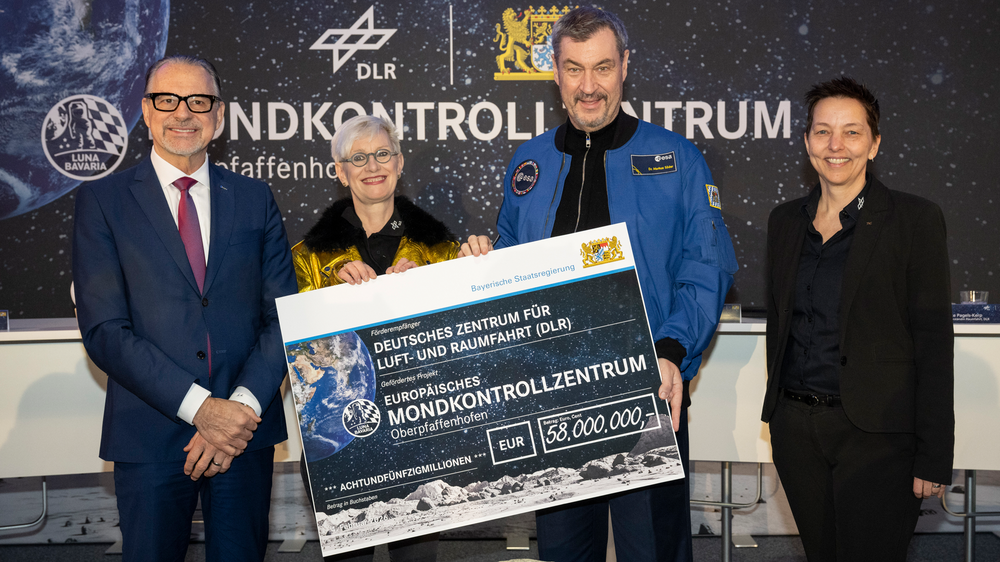
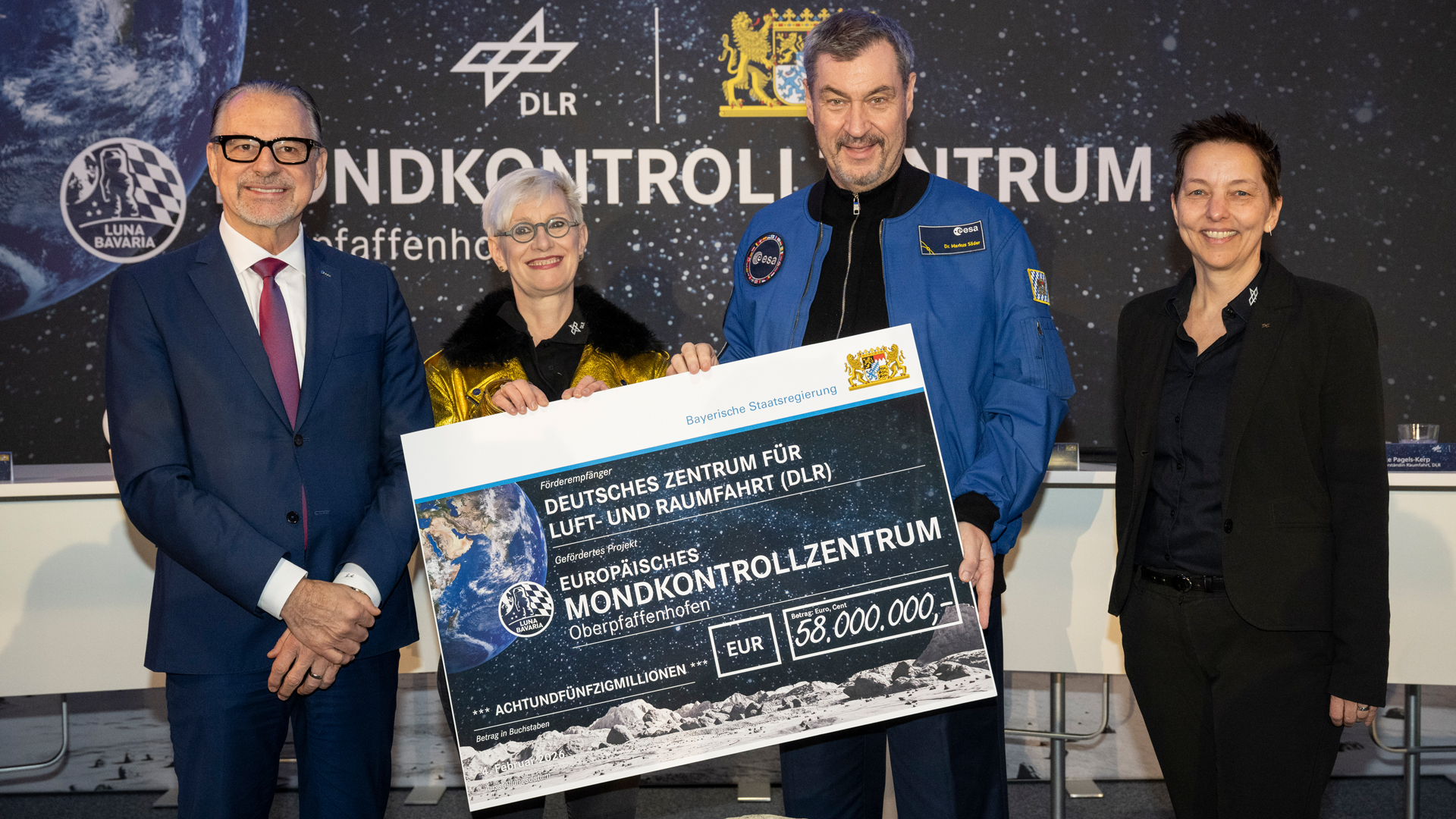
Presentation of the funding notice at DLR's site in Oberpfaffenhofen
From left: Josef Aschbacher, ESA Director General; Anke Kaysser-Pyzalla, Chair of the DLR Executive Board; Markus Söder, Bavarian Minister-President; and Anke Pagels-Kerp, DLR Divisional Board Member for Space.
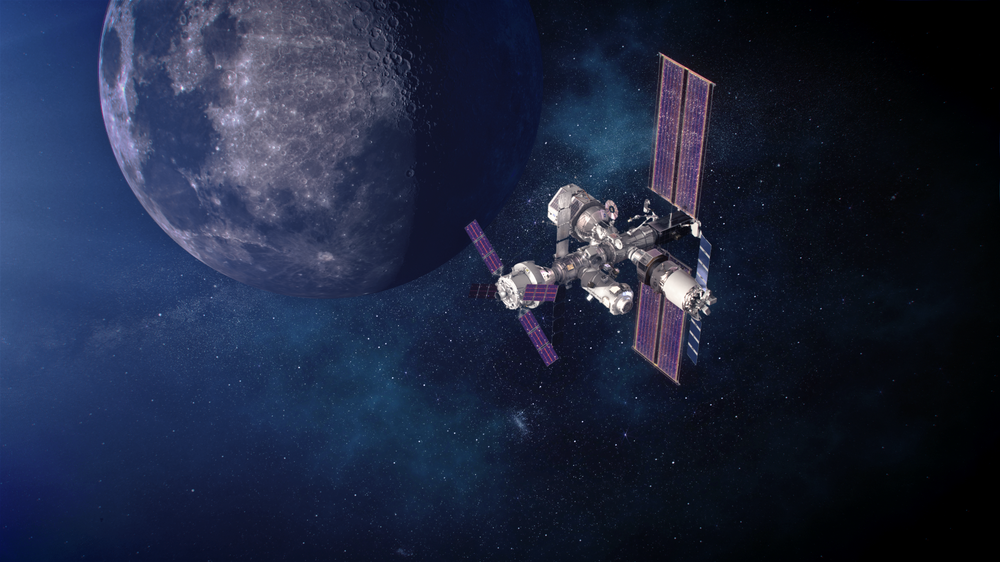
Artist's impression of the Gateway lunar orbital station
The space station in lunar orbit is intended to serve as a habitat, refuelling and research centre for astronauts exploring the Moon as part of the Artemis programme. The Human Exploration Control Center (HECC) will be responsible for operating three Gateway modules: the HLCS communication system to the lunar surface, the I-HAB habitation and work module and the ESPRIT propulsion module.
Image: 2/3, Credit:
ESA
On the way to the Moon
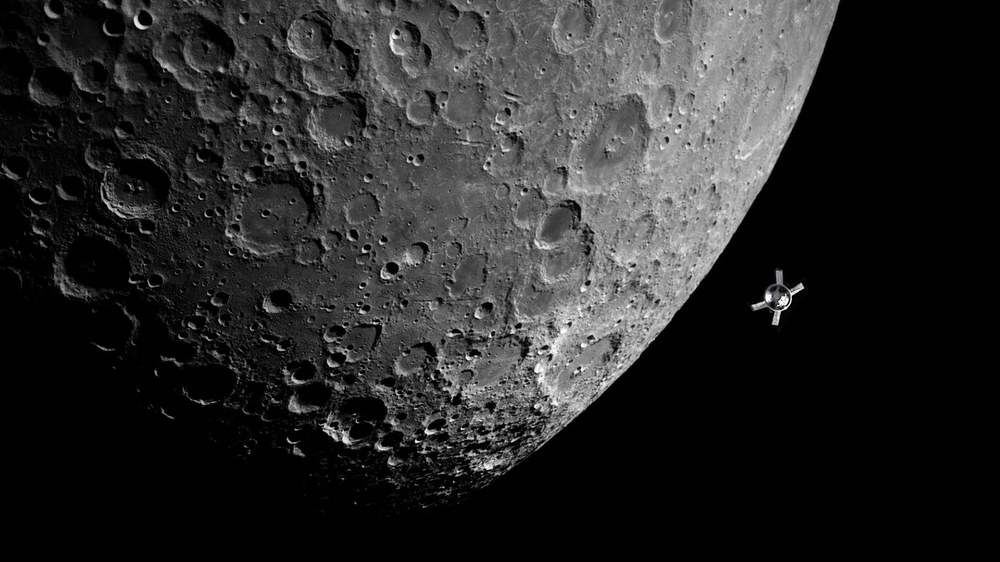
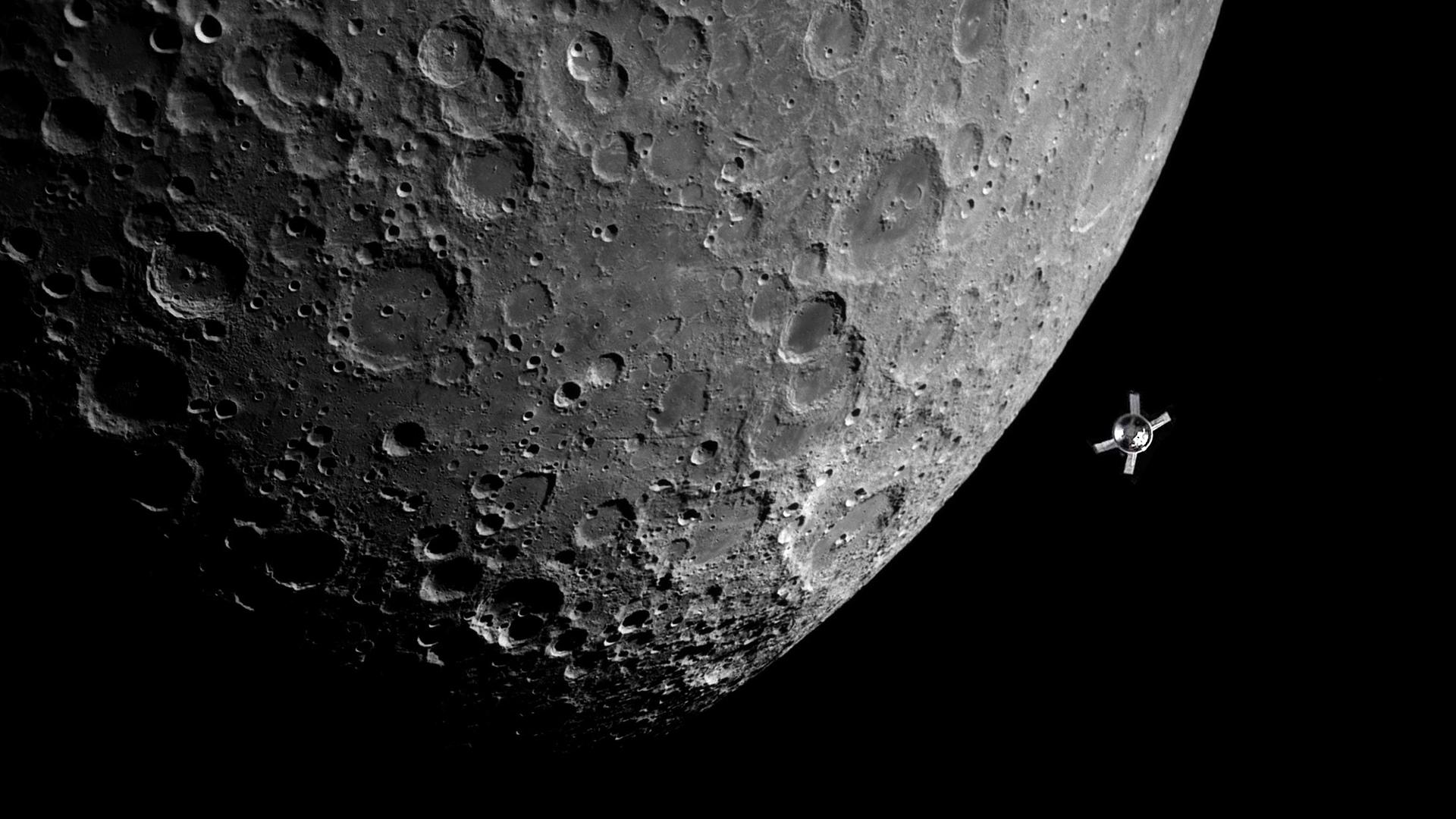
Illustration of an Orion spacecraft from NASA's Artemis programme. A central component of the Orion spacecraft is the European Service Module (ESM), built in Germany by the European Space Agency (ESA) on behalf of NASA. It provides Orion's propulsion system and generates power via four solar arrays. It also regulates the spacecraft’s climate and temperature on board and stores propellant, oxygen and water supplies for the crew.
The Human Exploration Control Center (HECC) will enable the operation of future human and robotic missions to the Moon and Mars.
For the construction of the HECC lunar control centre, Bavarian Minister-President Markus Söder has presented DLR with a funding grant of 58 million euros.
Focus: Space, Moon, Mars, exploration
For the human spaceflight missions of tomorrow, a new control centre will be built at the German Aerospace Center's (Deutsches Zentrum für Luft- und Raumfahrt; DLR) site in Oberpfaffenhofen: the Human Exploration Control Center (HECC). The HECC will be used to operate human and robotic missions to the Moon and Mars. The new infrastructure will further strengthen Bavaria's position as a prime location for spaceflight. In collaboration with European partners, the control centre will also play a key role in ensuring the independence of Germany and Europe in space. The Free State of Bavaria has pledged 58 million euros to support the construction, with DLR investing an additional 20 million euros from its institutional core funding provided by the federal and state governments. DLR will also be responsible for implementing the development work for lunar and Mars missions at the HECC.
On 4 February 2026, the Bavarian Minister-President Markus Söder presented the funding notice to DLR for the construction of the new control centre in Oberpfaffenhofen, west of Munich. The grant was received by Anke Kaysser-Pyzalla, Chair of the DLR Executive Board; Anke Pagels-Kerp, DLR Divisional Board Member for Space; and Felix Huber, Director of the DLR Space Operations and Astronaut Training institute.
"DLR stands for knowledge exchange with public stakeholders and the transfer of technology to industry. By consistently engaging in these practices over decades, DLR's site in Oberpfaffenhofen, Bavaria, has developed extensive and internationally recognised expertise in space operations and astronaut training," said Anke Kaysser-Pyzalla, Chair of the DLR Executive Board. "The 58 million euros in funding presented today by Minister-President Markus Söder marks the beginning of a new era for space operations at DLR. In particular, robotic exploration within the framework of international cooperation, and in support of crewed missions, will play an increasingly pivotal role at the new Human Exploration Control Center (HECC)."
Dorothee Bär, German Federal Minister for Research, Technology and Space, expanded on the planned establishment of the HECC: "With the Human Exploration Control Center, Oberpfaffenhofen is becoming Europe's future hub for robotic and human exploration. The federal and state governments are working together on this. Expanding our national expertise in spaceflight operations is a significant German contribution to Europe’s sovereignty in space."
Speaking from Bavaria's perspective, Minister-President Markus Söder emphasised: "Bavaria's gateway to the stars is on its way. The Free State, DLR and ESA form a strong alliance. With innovation and pioneering spirit, we promote research, freedom and the future. Bavaria is investing 58 million euros in a new building, as well as five million euros in the development of an orbital gateway and an AI project to support astronauts. The Moon is our springboard into space – and perhaps one day a stopover on the way to Mars. From the Moon, real-time monitoring of robots, autonomous energy systems and permanent living and working in space can be explored. This is the most exciting adventure of our time, and it also has tangible effects for life on Earth. As a 'Space Valley', Bavaria will create numerous new technologies and jobs."
"Space has long been a major economic and technological factor," adds Bavarian Minister for Economic Affairs Hubert Aiwanger. "With the new Human Exploration Control Center, we are bringing future technologies to Bavaria, securing highly skilled jobs and creating the foundation for future missions – both governmental and commercial. Thanks in no small part to the forward-looking support of the Bavarian Ministry of Economic Affairs, DLR's Oberpfaffenhofen site has stood for outstanding expertise in space for many years. We are now building evermore on this strength. Once again, Bavaria shows that advanced technology, industry and research go hand in hand here."
Fit for the future
The Human Exploration Control Center is being established at DLR's site in Oberpfaffenhofen as part of the German Space Operations Center (GSOC). Building on the successful operation of the International Space Station's (ISS) Columbus module, the HECC will expand existing GSOC infrastructure and includes a new building designed to accommodate up to 200 staff members. A lunar control centre with dedicated clean rooms and multi-mission rooms will also be located at the centre, enabling the parallel operation of different types of missions. High-security areas with dedicated server and control rooms will ensure that the HECC is prepared to meet the increasingly demanding operational tasks of the future. Beyond infrastructure, the GSOC team is developing new operational and deployment concepts for Moon and Mars missions.
The HECC will particularly support European operations of the Gateway lunar orbital station. To this end, the GSOC is already developing operational procedures for the International Habitat (I-HAB) – a core module of the Gateway. The HECC will assume operational responsibility for a total of three modules: in addition to I-HAB, these include the HALO Lunar Communication System (HLCS) and the ESPRIT Refuelling Module (ERM). Over the course of this decade, the Gateway will be built and will orbit the Moon as humanity's next outpost in space. With the return to the Moon, the Artemis programme also seeks to prepare for future crewed missions to Mars.
A stepping stone to Mars
In the long term, the HECC will also support crewed missions beyond the Earth-Moon system. For missions to Mars, for example, it can take up to 40 minutes for signals to reach Earth, making conventional real-time operations impossible. To address this, DLR's GSOC is already developing AI-based solutions such as the METIS assistance system (Mars Exploration Telemetry-driven Information System), which is designed to support future autonomous or semi-autonomous spacecraft operations.
With long-term support from the European Space Agency (ESA), the HECC is set to become the European control centre for human and robotic missions. Funding from the Free State of Bavaria, combined with DLR investment, now ensure that the technological and infrastructural foundations are being laid at DLR's site in Oberpfaffenhofen. Construction of the Human Exploration Control Center is scheduled to begin in 2028, with operations expected to start in 2030.
Spaceflight expertise at DLR's Oberpfaffenhofen site
At the DLR site in Oberpfaffenhofen, the German Space Operations Center (GSOC) already has decades of tradition and experience in operating crewed space missions. The first prominent missions included the German Spacelab missions D1 and D2 with the US Space Shuttle, as well as flights by German cosmonauts to the MIR space station. In 2004, the Columbus Control Center was inaugurated for operating the European Columbus module on the International Space Station, followed by the inauguration of the Galileo Competence Center in 2007 for the operation of the European Galileo satellite navigation system. DLR and ESA are now bringing this knowledge and expertise in space operations to their collaboration with NASA as part of the Artemis lunar programme.