AstroRad vest can significantly reduce radiation exposure for humans in space
August 13, 2026 | Protecting health in space – DLR-led Artemis MARE experiment
AstroRad vest can significantly reduce radiation exposure for humans in space
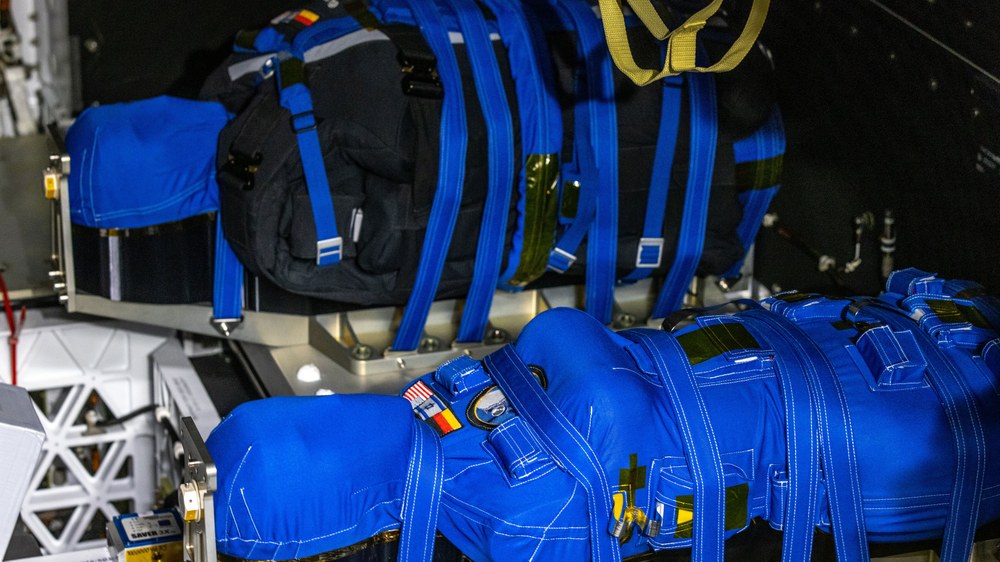
Ready for liftoff – Helga and Zohar in the Orion capsule
Helga and Zohar are seen here in crew seats three and four aboard the Orion spacecraft, ready for their flight to the Moon. The Matroshka AstroRad Radiation Experiment (MARE) used two identical DLR radiation measuring phantoms to investigate radiation exposure throughout the flight. The 'Luna Twins' are modelled on female bodies. One of them, Helga, flew around the Moon unprotected at the end of 2022, while the other, Zohar, wore the newly developed AstroRad radiation protection vest. By comparing the two datasets after the flight, the MARE team investigated how well the vest could protect a female astronaut from harmful radiation exposure. DLR led the experiment, with the Israel Space Agency, Israeli company StemRad – developer of AstroRad – Lockheed Martin and NASA as the main project collaborators.
Image: 1/4, Credit:
NASA/Frank Michaux
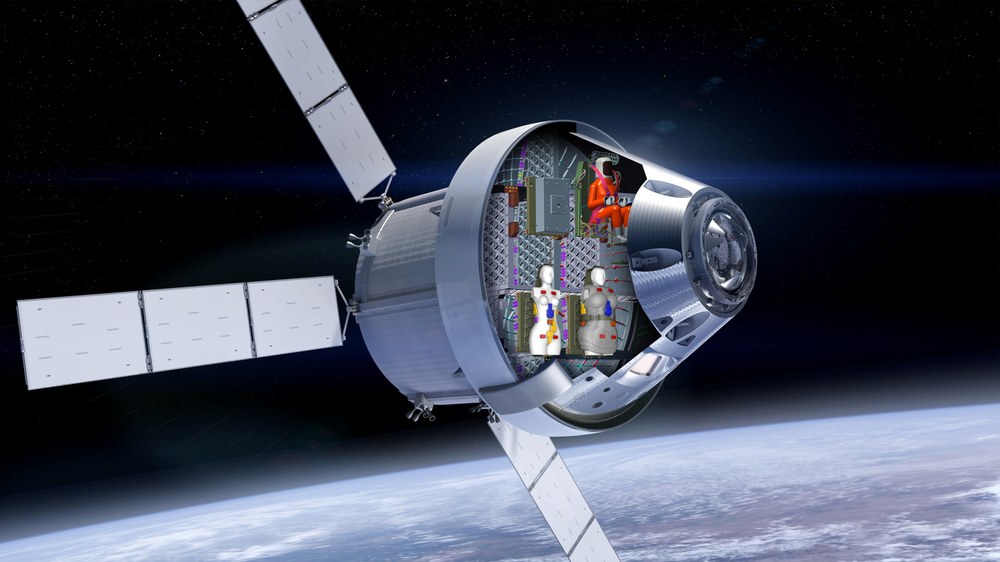
Artist's impression of the crew seats on the Artemis I mission to the Moon
Helga and Zohar, the two phantoms from the MARE experiment, which flew to the Moon on NASA's Artemis I mission, occupied crew seats three and four in the Orion capsule. Schematic radiation distributions are shown on their bodies.
Credit: NASA/Lockheed Martin/DLR
Image: 2/4, Credit:
NASA/Lockheed Martin/DLR
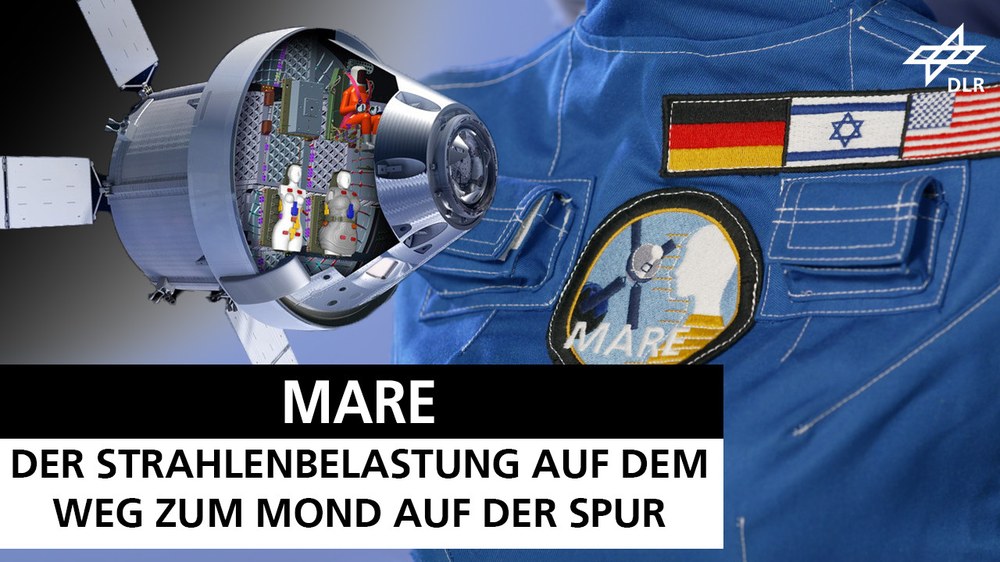
MARE logo
Logo of the MARE experiment, in which two measurement phantoms were sent to the Moon in late 2022 on the first mission of NASA's Artemis programme.
The AstroRad vest, which flew on Artemis I, could reduce the effective radiation dose during strong solar storms by nearly 60 percent.
During the Orion spacecraft's 25.5-day lunar mission flyby in late 2022, the Helga and Zohar phantoms – provided by DLR and the Israel Space Agency – were carried on board. Zohar wore the AstroRad vest. Comparative measurements made it possible to assess the effectiveness of the protective vest.
The DLR-led MARE experiment was the first to measure radiation exposure outside low Earth orbit. It focused specifically on female body models.
The results are an important building block for safe, long-duration crewed missions to the Moon and, in future, to Mars.
Focus: Spaceflight, space medicine, human exploration, space radiation, Moon
Humanity is gradually returning to the Moon with NASA's Artemis programme. The first test flight, Artemis I, took place in late 2022. On this mission, the Orion spacecraft launched without a crew, but it was packed with scientific experiments. One of these was the Matroshka AstroRad Radiation Experiment (MARE), led by the German Aerospace Center (Deutsches Zentrum für Luft- und Raumfahrt; DLR). The Helga and Zohar mannequins – or phantoms – flew to the Moon and back, equipped with radiation detectors and riding in two of the passenger seats. Zohar wore the newly developed AstroRad radiation protection vest, while Helga flew without protection. The results were published in the journal Science Advances on 12 August 2026. A key finding, drawn from the analysis and comparison of data from these 'Luna Twins', shows that wearable radiation protection such as the AstroRad vest can make an effective contribution to reducing the health risks faced by humans in space – and therefore increase the maximum possible mission duration during periods of high solar activity. MARE is a project run by DLR in collaboration with NASA, Lockheed Martin and StemRad, who developed AstroRad.
One of the fundamental challenges of spaceflight is invisible: space radiation. Beyond the protective shield of Earth's magnetic field, a mission is exposed to significantly higher radiation doses than those found on Earth or even in low Earth orbit aboard the International Space Station ISS. Strong solar storms are particularly critical, as they release large quantities of high-energy particles within a short period of time. For astronauts, these events can pose a significant health risk without adequate shielding, potentially leading to acute radiation sickness and increase the risk of cancer. Long-term exposure to galactic cosmic radiation can also increase the risk of radiation-induced cancer.
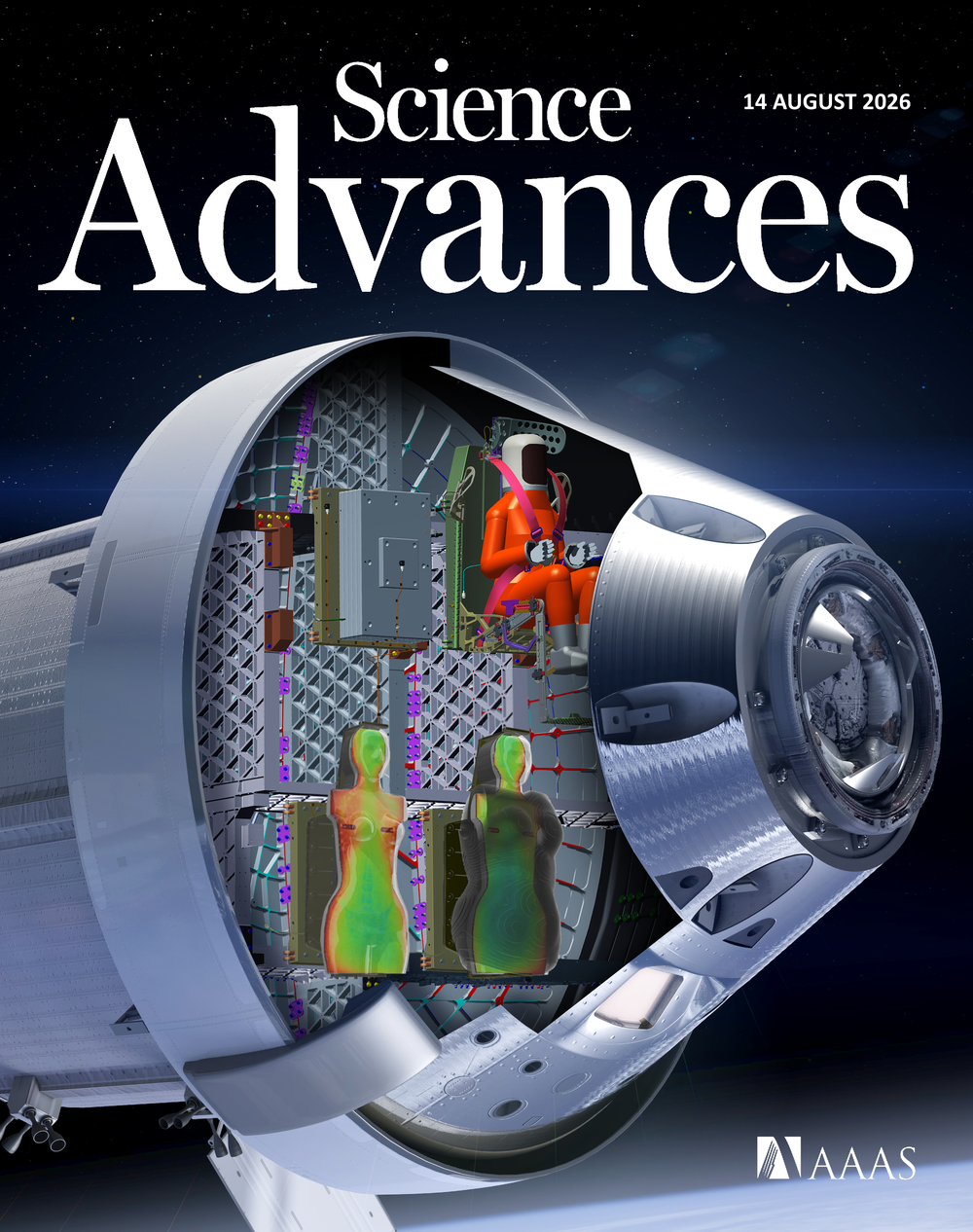
MARE is the cover story of the current issue of the journal Science Advances
Credit:
Science Advances
"We have been researching astronauts' radiation exposure for many years, including on the ISS. The earlier MATROSHKA experiment, for example, measured the radiation dose exposure in a human-like phantom in low Earth orbit," says Anke Pagels-Kerp, DLR Divisional Board Member for Space. "With MARE, our Institute of Aerospace Medicine successfully continued this work on the first Artemis mission between Earth and the Moon. After Artemis I in 2022, we were delighted that our radiation research aboard Orion was able to head back towards the Moon on the second Artemis mission in April 2026. The M-42 EXT, an advanced generation from the family of space-proven DLR radiation detectors, was used for this mission."
German hardware contributes to continuous measurements of space radiation on Artemis mission between Earth and the Moon
MARE looked at radiation exposure in fabricated models and realistic analogues of the female body, making it the first study in space radiation research beyond low Earth orbit. This is particularly significant for human spaceflight, since women statistically have a higher risk of radiation-induced cancer, and cancer – alongside radiation sickness – is among the greatest health risks associated with radiation exposure in space.
The twin phantoms, Helga and Zohar, are made of tissue-equivalent plastic materials. Each twin is built up from 38 individual discs that replicate the varying densities of bones, soft tissue and organs in the torso of an adult woman. The team integrated several thousand passive dosimeters, as well as 16 M-42 active radiation measuring devices developed by DLR, onto and inside them. NASA provided 18 additional active radiation detectors, the Crew Active Dosimeters (CAD), as well as several thousand Thermoluminescent Dosimeters. While Helga flew unprotected, Zohar wore the AstroRad radiation protection vest developed by the Israeli company StemRad. As the phantoms set off on their lunar journey, the DLR detectors in the 'Luna Twins' recorded the radiation doses received by their bodies. The results allowed scientists to extrapolate the doses recorded throughout the phantoms to estimate the doses that human bodies' most radiation-sensitive parts would have received, had humans flown on the same mission.
During Orion's 25.5-day lunar mission, the radiation detectors on the phantoms and throughout the spacecraft continuously collected measurement data which, for the first time in a heavily shielded crew-rated spacecraft, produced a continuous dataset of the radiation environment between Earth and the Moon. From this, the research team created a detailed three-dimensional image of the radiation exposure in various organs and tissues. A direct comparison of the radiation exposure experienced by Helga and Zohar then made it possible to assess the potential effectiveness of the vest on sensitive organs.
However, this assessment was not based solely on measurement data from the Artemis I flight itself. Although there was no significant increase in solar activity during the flight, Orion did fly through Earth's Van Allen radiation belts. As part of the evaluation and analysis, the MARE team then extrapolated these radiation belt measurements to the scale of known historical solar storms – for which data also exists – to assess the vest's protective effect even during periods of strong solar activity.
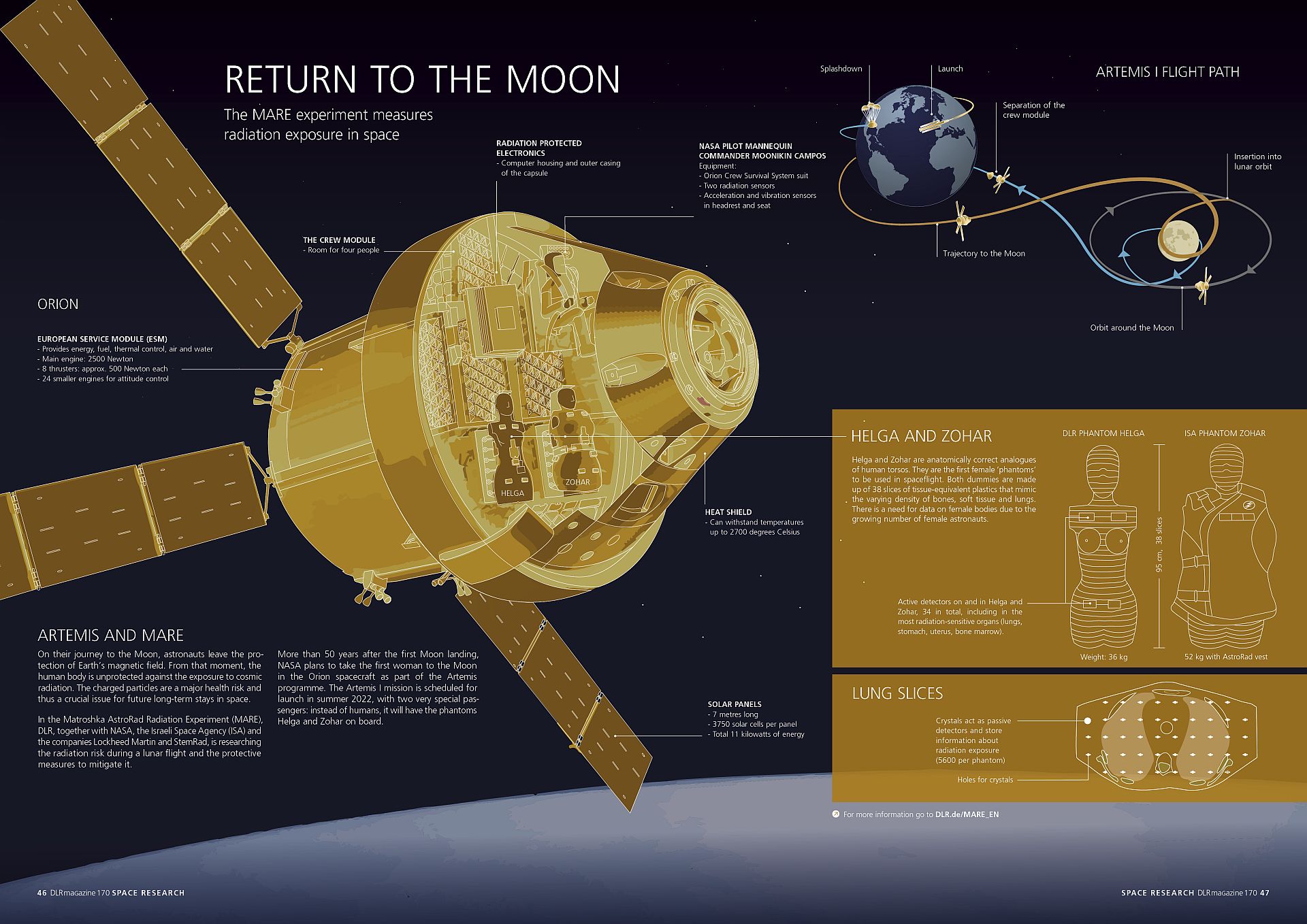
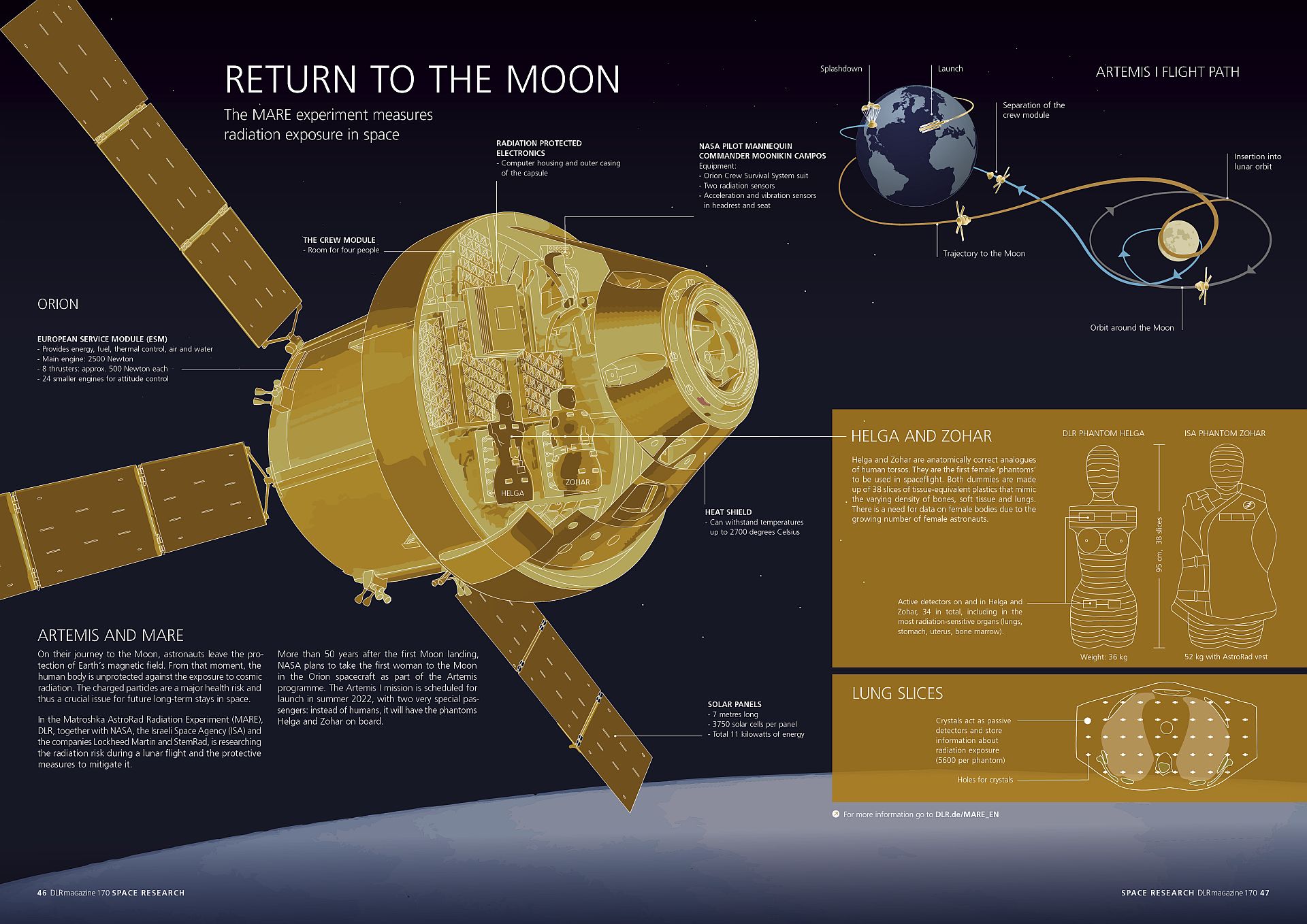
Infographic from DLRmagazine 170 – the MARE experiment on the Artemis I mission to the Moon
For the MARE experiment, the radiation measuring phantom Helga flew with her 'twin sister' Zohar to the Moon and back aboard the Orion spacecraft to measure radiation and evaluate the AstroRad radiation protection vest as part of NASA's Artemis I mission.
Extrapolations to historical solar storm radiation levels – vest provides protection up to nearly 60 percent
Scaling up measured data to values seen in solar storms allowed scientists to assess the vest's protective effect during extreme solar events such as those of 1972 and 1989. This produced one of the core findings of the entire MARE study.
During a strong solar storm modelled on the historical event of August 1972, the AstroRad vest could reduce a person's effective radiation dose in space by approximately 60 percent. For an event similar to the solar storm of October 1989 – whose particle spectrum was more energetic and therefore harder to shield against – the extrapolation indicates a reduction of just under 40 percent. This means that, in a real emergency, the protective vest could spare astronauts a significant proportion of their permitted lifetime radiation dose and considerably improve health protection in space.
The calculated protective effect of the AstroRad vest could prolong astronaut careers by reducing doses from large solar particle events, delaying the point at which an astronaut reaches their career effective dose limit. This could provide greater planning flexibility for future crewed missions, which are set to become increasingly complex and travel further into space. Although the MARE study focused on the female body, the potential protective effect also applies to male astronauts.
"Being able to fly on the first Orion lunar flight as part of Artemis I was a great opportunity for us. The results now show that, with MARE, we have been able to take a decisive step from measurement towards the evaluation of concrete protective measures and countermeasures," says Thomas Berger, radiation physicist and project lead of the study at the DLR Institute of Aerospace Medicine. "For future missions to the Moon, and later to Mars, we must not only know how high the radiation exposure is. We also need to understand which protective concepts work under realistic mission conditions and are practical at the same time. MARE is providing unique data to help us achieve this."
Infobox – The AstroRad protective vest
AstroRad was developed by the Israeli company StemRad. Its core consists of a polymer with a high hydrogen content, which is effective against harmful proton radiation. Individual solid shielding elements are arranged hexagonally to give astronauts comfortable freedom of movement while wearing the vest. The vest used for MARE weighed approximately 26 kilograms on Earth. Since Artemis I, StemRad has been further developing the vest, with the aim of reducing its payload mass.
The AstroRad vest concentrates shielding material on radiation-sensitive organs and tissues, including bone marrow, lungs, stomach, breasts and ovaries. It is intended to offer the best possible balance between a high level of health protection and a compact design. This matters for two reasons. First, the mass and volume of a payload are generally a limiting factor in spaceflight, as they must be weighed against their benefits and their inclusion on a mission must always be carefully considered. Second, astronauts must be able to move as freely as possible in a confined space.
Targeted protection more effective than full-body protection
In additional model calculations, Helga and Zohar – which represent only the human torso – were replaced with virtual full-body measurement phantoms, to compare the calculated effectiveness of the AstroRad vest with that of full-body protection of equivalent mass. For these phantoms, the dose reduction provided by the AstroRad vest was 58.2 percent for the 1972 event and 36.9 percent for the 1989 event, while the full-body shielding offered approximately 30 percent less protection. This shows that the AstroRad's vest design – with its heaviest shielding arranged to protect sensitive parts of the body – can provide substantially more effective health protection than a full-body protective suit of uniform shielding strength. In addition, crew mobility is better preserved with a compact vest than with other, more restrictive protective concepts.
In the event of a significant solar storm, the Orion spacecraft has a protected area – the storm shelter – which the crew can quickly set up within the capsule as needed. Due to its compact design, a wearable protection garment such as the AstroRad can complement such concepts – for example when crew members need to move around during a radiation event and carry out important tasks not only inside but also outside the protected area, while remaining shielded. Wearable devices of this kind could also play an important role for larger, less well-shielded spacecraft, lunar habitats and future Mars missions.
DLR video from 2022 – Everything about MARE in under eight minutes
Your consent to the storage of data ('cookies') is required for the playback of this video on Youtube.com. You can view and change your current data storage settings at any time under privacy.
DLR video from 2022 – Everything about MARE in under eight minutes
Given the ambitious plans for human spaceflight, one thing is clear: space radiation will remain a crucial field of research to enable crewed missions through appropriate health-protection countermeasures. The MARE results currently show that these risks can be assessed with increased accuracy and specifically mitigated. With the measurements taken on Artemis I, and their continuation on Artemis II, DLR – as a key member of the international space radiation research community – is helping to lay the foundations for NASA's lunar programme, bringing humans more safely to the Moon, into lunar orbit and, one day, on to Mars.
About MARE (Matroshka AstroRad Radiation Experiment)
The MARE experiment was led by the DLR Institute of Aerospace Medicine in Cologne. The main organisations collaborating on the project were the Israel Space Agency, the Israeli company StemRad, which developed the protective vest, Lockheed Martin and NASA. In terms of its composition, the project represents one of the most complex experiments on radiation protection in space to date. The Helga and Zohar phantoms flew to the Moon and back aboard the Orion spacecraft on Artemis I, from 16 November to 11 December 2022.
The new study, 'First evaluation of wearable radiation protection for human deep space exploration, as flown on Artemis I', is the second scientific publication on the subject of space radiation on Artemis I. In September 2024, the study 'Space radiation measurements during the Artemis I lunar mission' was published in Nature, presenting the initial findings of the MARE team, ESA and NASA. This first study examined the radiation measurements from further detectors mounted at various points inside the Orion capsule. It showed that, while passing through the inner Van Allen belt, the measured doses varied considerably depending on location within the spacecraft – up to four times higher in the least shielded areas than in the best-shielded ones.
This latest publication does not mark the end of the analysis of the rich MARE dataset from the Artemis I flight. The research team is planning a further study covering all of the data provided by the Helga and Zohar twin phantoms.
DLR, Germany and Europe – health protection in space and an internationally significant role in the Artemis programme
The findings of the extensive MARE study are part of DLR's wider involvement in the Artemis programme. DLR's radiation research was continued from Artemis I in 2022 through to Artemis II in 2026, this time using four flight units of the latest version of the DLR M-42 radiation detector – the M-42 EXT (extended), which offers an even more precise measurement range. In doing so, DLR has strengthened its role as an internationally recognised authority in space medicine and is helping to make future crewed missions safer.
In addition to space medicine, Germany and Europe also play a decisive role in the Artemis missions through the propulsion and supply unit of the Orion crew capsule. The European Service Module was developed under the industrial leadership of Airbus Defence and Space in Bremen, where it is also assembled. Components from 11 European countries and the United States are delivered to Bremen and integrated into this unique spacecraft. Among the ESA Member States, Germany is an important project participant, with approximately 50 percent share of the ESM programme, managed by the German Space Agency at DLR.