ALICIA – digital platform for holistic aviation assessment
Well-informed decisions for the future of aviation
ALICIA – digital platform for holistic aviation assessment
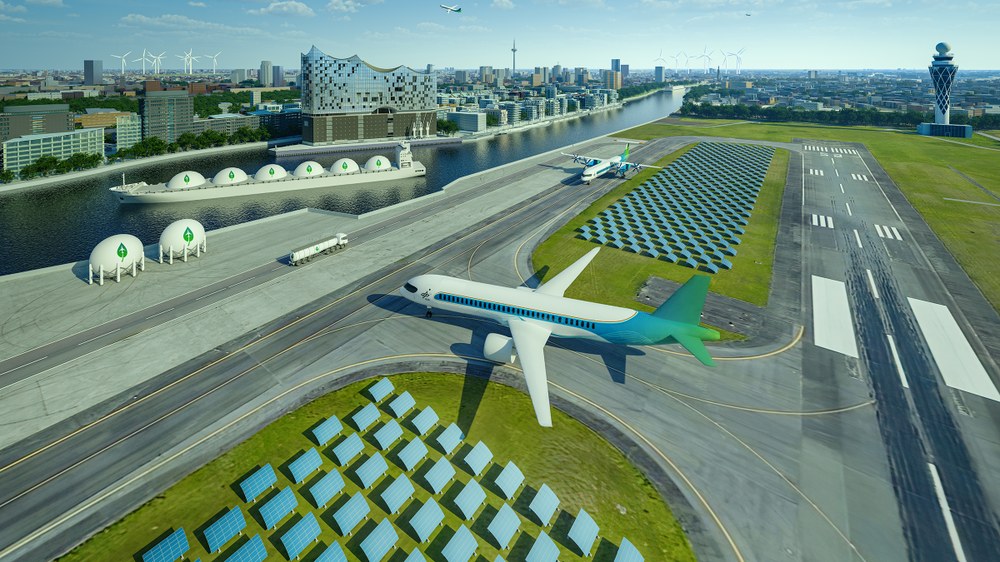
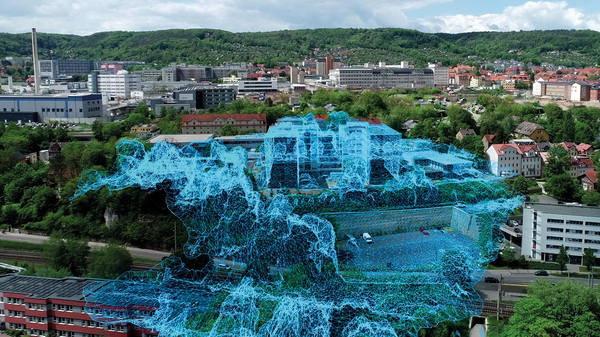
ALICIA – systemically assessing the impact of innovations and regulatory measures on the future of aviation (artist's impression)
Using the assessment platform developed as part of the ALICIA project, the impacts of innovations and regulatory measures on the climate, the environment, the economy and society can be assessed holistically – from individual aircraft, fleet development and industrial value chains, to airports and the global aviation system.
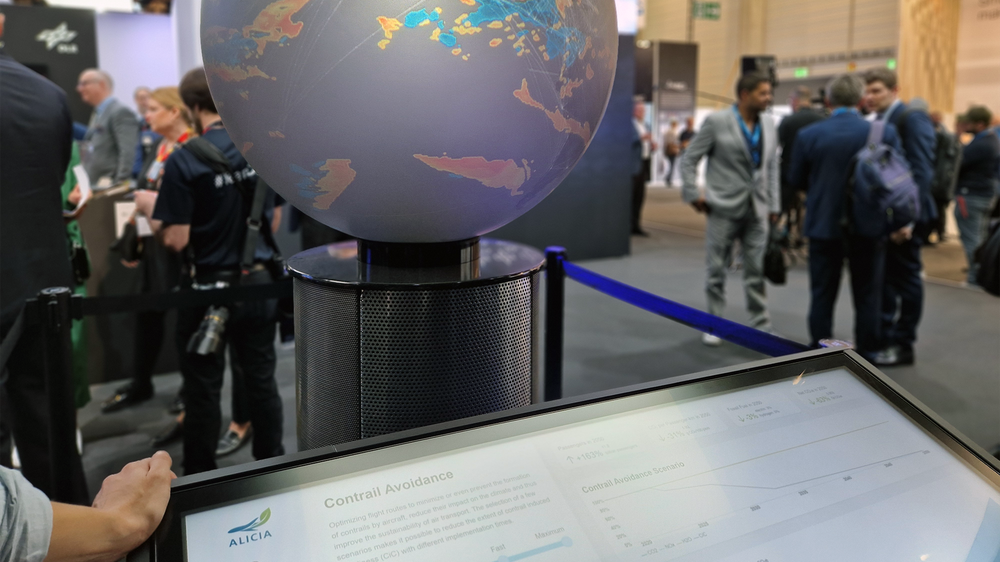
Impact assessment dashboard – assessing the climate impact of aviation, taking future scenarios into account
At ILA 2024, DLR presented the interactive dashboard for the first time, in which different scenarios for air transport up to 2050 can be explored and visualised with just a few clicks. It illustrates the effects of developments on the climate impact of aviation, as well as the various interactions – for example between passenger demand, fleet renewal, new aircraft technologies and the fuel market.
How can aviation be made climate-compatible, economically viable and accessible to everyone in the future? What new aircraft technologies, flight operational procedures and framework conditions are needed to achieve this? At the same time, how can long-term competitiveness be secured and strengthened at the national and European level?
A systemic view of the entire air transport system provides the basis for identifying trade-offs, assessing opportunities and making informed decisions for sustainable and competitive aviation.
Sustainable and competitive aviation with ALICIA
In the ALICIA (Aviation Life Cycle and Impact Assessment) research project, the German Aerospace Center (Deutsches Zentrum für Luft- und Raumfahrt; DLR) is developing a digital assessment platform to analyse the aviation system as a whole. The aim is to provide well-founded answers to the pressing questions surrounding climate-compatible and sustainable aviation. At the same time, the project seeks to strengthen the innovative capacity and international competitiveness of the German and European aviation industry.
The platform makes it possible to assess the short-, medium- and long-term impacts of aircraft, technologies, fuels, operational procedures, policy measures and future scenarios in terms of climate impact, energy demand, costs and value creation across the entire life cycle. An interactive dashboard visualises complex interrelationships, supporting industry and policymakers in making relevant, data-driven decisions for the future.
A scientific whole-system assessment of aviation
ALICIA incorporates the latest scientific findings and research data from simulation models, flight experiments and major studies such as DLR's EXACT (EXploration of electric Aircraft Concepts and Technologies) project. Its comprehensive methodology enables a precise assessment of the performance, competitiveness and sustainability of the air transport system, taking into account both climate and environmental impacts as well as macroeconomic and business implications. In doing so, DLR pools its expertise with national and international stakeholders from research, industry and policy. This enables the developments and impacts of aviation to be comprehensively investigated and thoroughly assessed.
With impact assessments such as those carried out in the ALICIA project, DLR is making a decisive contribution to making aviation climate-compatible, sustainable and competitive.
ALICIA at a glance
Mission
Create integrated assessment capabilities for aviation technologies, flight operation procedures and regulatory frameworks.
Benefits
Provide scientifically sound and data-driven decision-making foundations for policymakers and industry to assess sustainability and competitiveness.
Key areas
Analysis of environmental impacts, economic effects and competitiveness, taking into account systemic interrelationships.
Solution
A digital assessment platform consisting of a modelling environment and dashboard for the transparent scenario and what-if analyses.
Continuous development for strategic decision-making
The main focus areas of the ALICIA project are being continuously developed in line with future challenges facing the aviation sector. Initially, the scientific and technical foundations for the integrated assessment of environmental impacts were established, various modelling approaches were integrated into a digital platform and an interactive dashboard was developed. The current focus is on the holistic assessment of sustainability and competitiveness for specific use cases, as well as on the continuous expansion of the dashboard.
The findings provide decision-makers in policy and industry with a robust basis for assessment. This enables effective strategies to be developed, innovations to be targeted appropriately and investments in sustainable technologies to be assessed on a sound basis.
ALICIA (Aviation Life Cycle and Impact Assessment)
Focus area: Foundations, with a focus on environmental compatibility