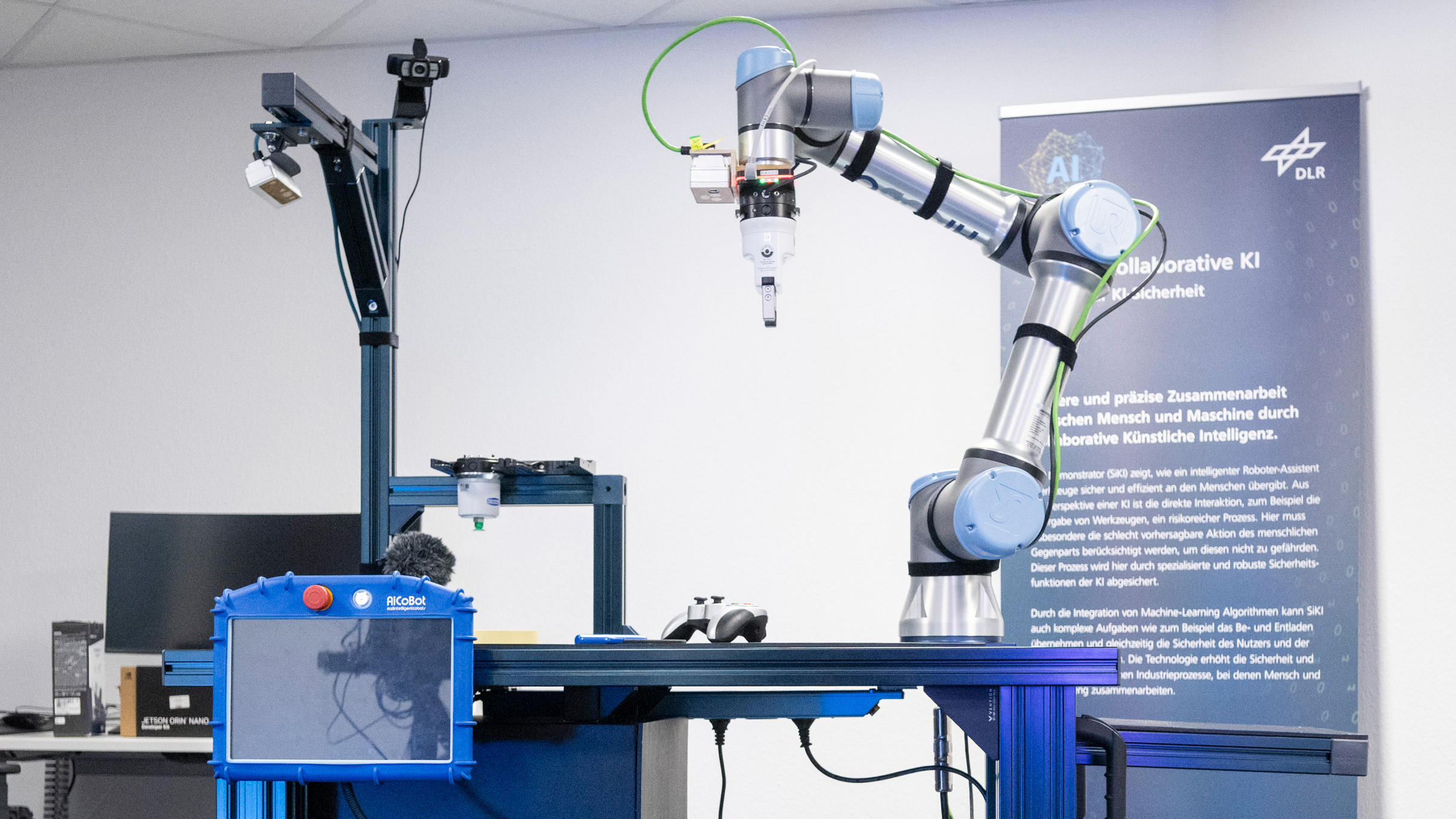
AI supports human-technology collaboration in transport and logistics
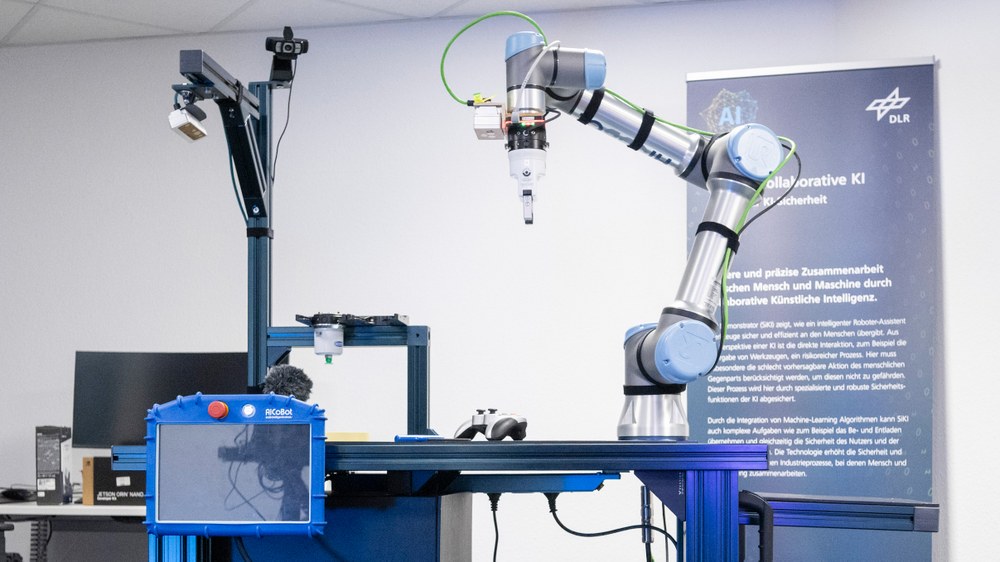
At IAA Transportation 2026, a DLR exhibit will demonstrate how an intelligent robotic gripper arm loads and unloads a model of the U-Shift vehicle. AI assists with the control and coordination between the human operator and the gripper arm.
Virtual reality aids the development and testing of AI applications
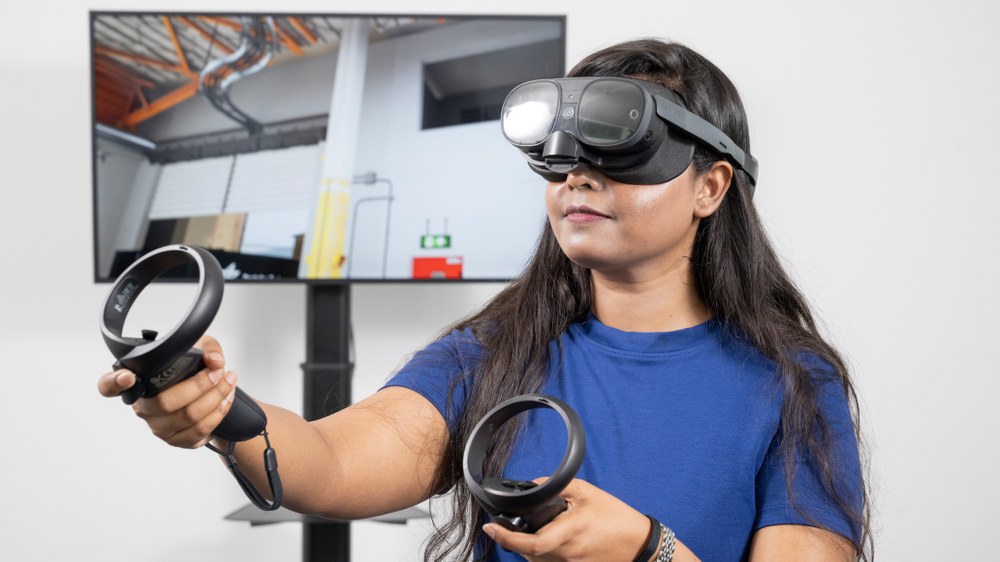
AI-based applications can help to further automate supply chains and make them more efficient. VR technology is also used in the development and testing of such applications.
At IAA Transportation 2026, DLR will demonstrate how AI, automation, robotics and digital technologies can drive the further development of transport and logistics.
In the IMoGer project, DLR is combining autonomous vehicles with a modular concept for the flexible transport of people and goods.
Safe AI, robotic systems and virtual development environments are helping to make logistics processes more efficient, robust and practical.
Focus: Transport, mobility of the future, autonomous and connected driving, artificial intelligence (AI), digitalisation, robotics
At IAA Transportation – the international trade fair for logistics, commercial vehicles and the transport sector, held in Hanover from 15 to 20 September 2026 – the German Aerospace Center (Deutsches Zentrum für Luft- und Raumfahrt; DLR) will provide insights into its current research projects. The focus of the DLR stand (Hall 13, C56) will be on robot-assisted, holistic and modular solutions for transport and logistics. DLR is developing and testing these together with collaborators from industry and the public sector.
Business and society need transport and logistics systems that are reliable, high-performing and economically viable. To achieve this, at DLR we are developing the necessary technology building blocks, tools and operational processes, and supporting their practical implementation – from initial concept right through to real-world operation. In doing so, we are addressing key needs of industry. DLR's solutions are already demonstrating the future of mobility today. At the same time, they are accelerating the introduction of innovations and supporting, for example, the market roll-out of autonomous transport and logistics services.
IMoGer – autonomous, modular and smart
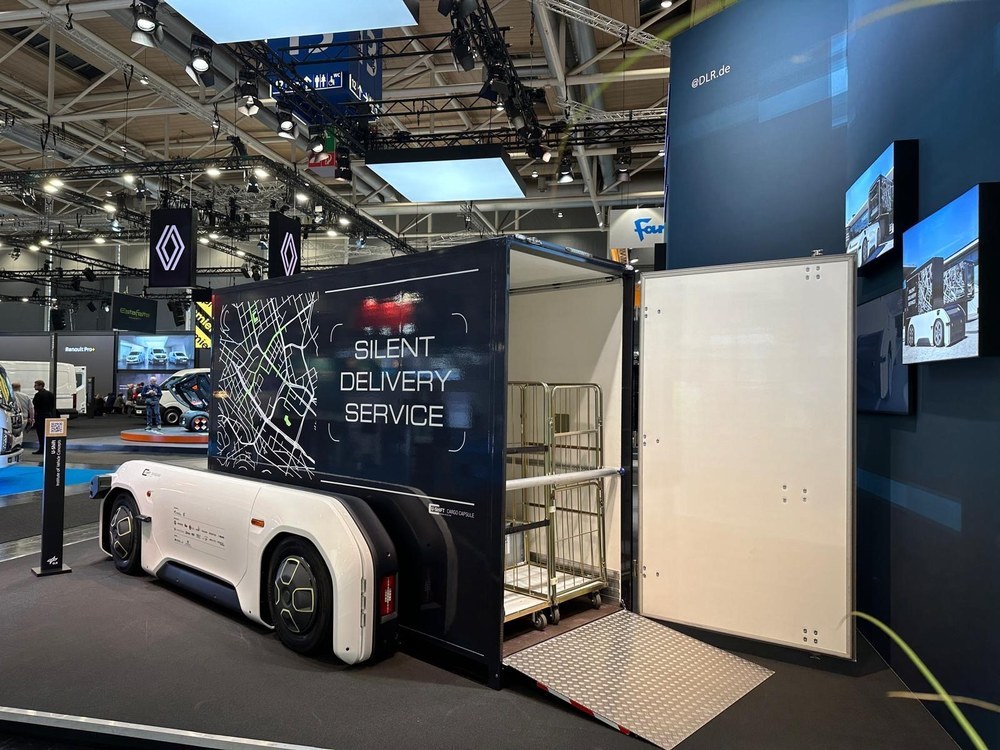
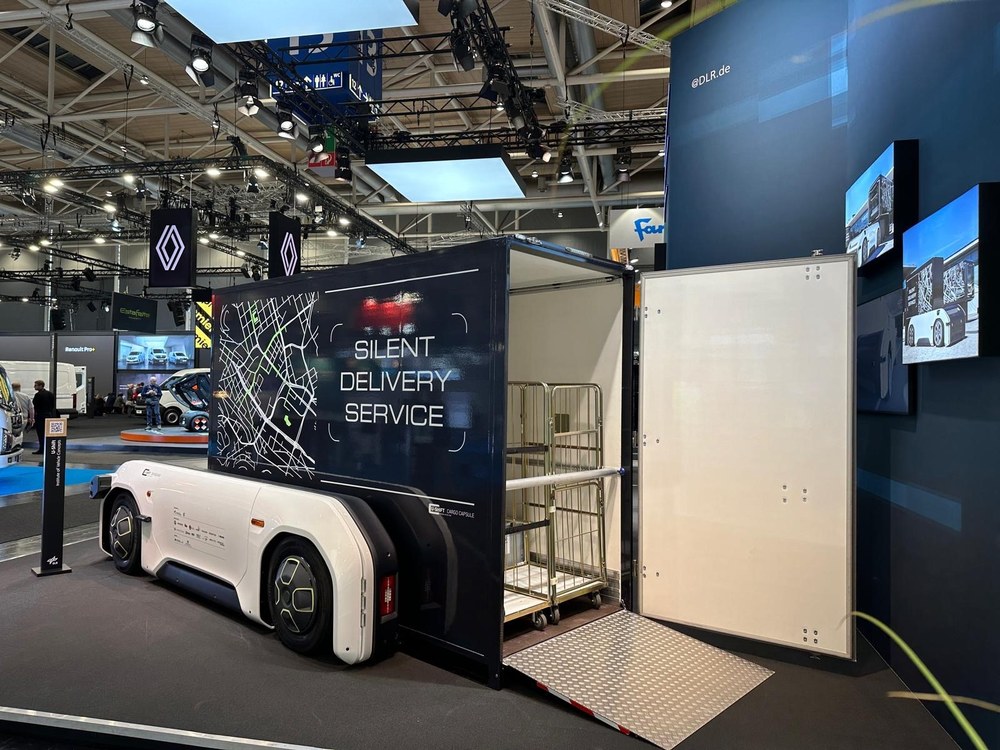
In the IMoGer (Innovative Modular Mobility Made in Germany) project, DLR is developing and testing a mobility service that is unique in its versatility and practical relevance: it combines the autonomous, flexible and needs-based transport of people and goods over short and medium distances. This includes, for example, to the journey from a train station or bus stop to home, or the final leg of the transport chain from the logistics centre to the inner-city distribution centre. IMoGer supports the market roll-out of autonomous driving in Germany and the associated technologies, innovations and services. A trial operation is planned in a district of Braunschweig in the second half of 2027. For this, a small fleet of U-Shift vehicles, also developed at DLR, will be in operation. These vehicles consist of an electrically powered, autonomous U-shaped driveboard. Depending on the task, it transports a capsule for carrying people or goods. With IMoGer, a medium-duty commercial vehicle will operate autonomously on public roads in an urban area for the first time, while also harnessing potential synergies between passenger and freight transport to maximise cost-effectiveness. At IAA Transportation, DLR will be exhibiting the U-Shift driveboard and a cargo capsule. A screen exhibit explains the overall project and the preparations for the IMoGer trial operation, covering topics such as approval and integration into the operational processes and systems of collaborators in the logistics sector and local public transport. The Federal Ministry of Transport is funding IMoGer with approximately 35 million euros.
Safe AI supports human–technology cooperation in logistics
Using a demonstrator at its exhibition stand, DLR will show how humans and machines can work together safely and precisely at all times with the help of artificial intelligence (AI). This technology can be used in logistics or industrial manufacturing, where it can significantly increase efficiency. In the demonstration, an intelligent robotic gripper arm receives instructions from a human to load and unload a model of the U-Shift vehicle. DLR's research focuses on the operational safety of the AI being used. A separate monitor illustrates how it 'thinks': from the AI's perspective, cooperation between humans and machines – such as handing over parcels, components or tools – is a potentially high-risk process. This is because human behaviour, in particular, is difficult for it to predict. The AI addresses this with safety functions that are as robust as possible and with a generally high level of operational safety across the entire process. This ensures that users and loaded goods are protected at all times.
Development and testing of AI for robotic applications in industry and logistics
DLR is working on a platform for developing and testing AI-based applications on an industrial scale. These AI applications are, in turn, intended to accelerate the development of robotic systems, for example to automate supply chains. To this end, a working environment is being created, based on digital twins, that realistically replicates industrial tasks. Depending on requirements, real and digital layers merge to create an interactive and immersive environment. Visitors to the DLR stand can explore the platform and an example use case using VR headsets. The aim of this application is to enhance the performance and resilience of process steps in logistics through the use of learning systems, to ensure safe interaction between humans and AI robots, and to enhance cybersecurity.
Digital technologies for the mobility of the future
The interactive 'Smart Sphere' exhibit showcases selected DLR research areas and demonstrates how digital technologies can transform the mobility of tomorrow. The scenarios shown include, for example, software-defined road traffic, the virtual testing of autonomous vehicle functions for faster approval, and the use of smart infrastructure to support autonomous driving.