Isolation study and bed rest studies begin – 100 days in isolation or 60 days in bed
April 27, 2026 | Research for future space missions
Isolation study and bed rest studies begin – 100 days in isolation or 60 days in bed
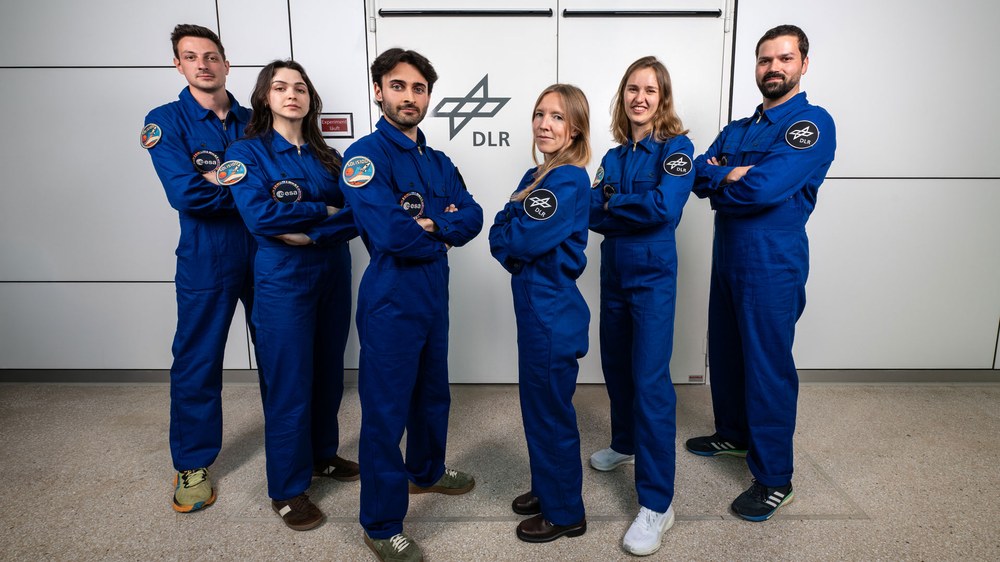
Participants in the SOLIS100 isolation study
The SOLIS100 isolation study has begun: six participants from six different European countries are now living and working in isolation for 100 days. They follow a structured daily routine similar to that of a space mission. SOLIS100 is being conducted at DLR's :envihab facility in Cologne.
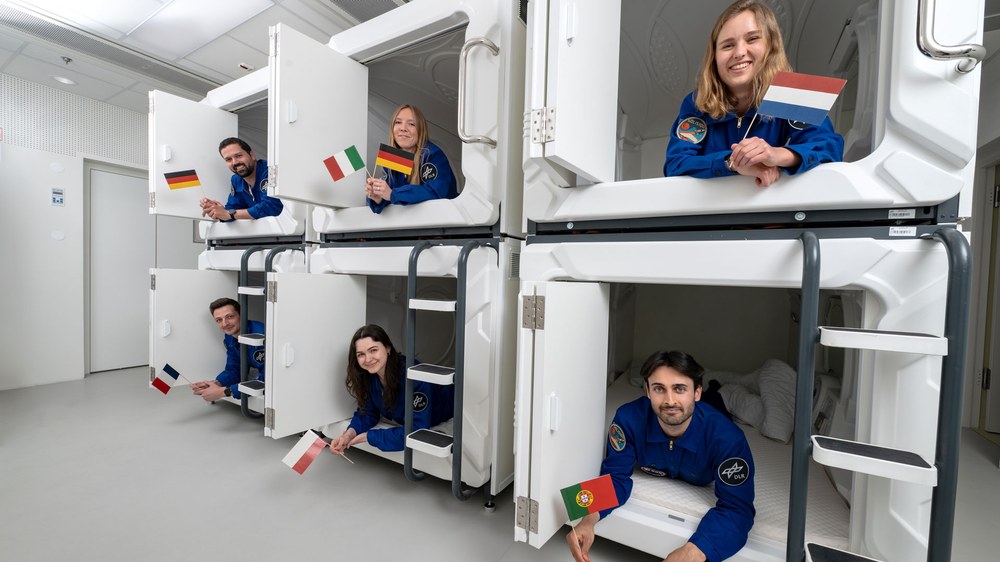
Participants in the SOLIS100 isolation study in their sleeping pods
The SOLIS100 isolation study has begun: six participants between 26 and 32 years old, from six different European countries, are living and working in isolation for 100 days. They follow a structured daily routine similar to that of a space mission. SOLIS100 is being conducted at DLR's :envihab facility in Cologne. Each participant has their own sleeping pods within the 'space station'.
The SOLIS100 and SMC3 studies are taking place at DLR's :envihab facility in Cologne.
Applicants have gone through a multi-stage selection process.
The studies investigate the effects of isolation (SOLIS100) and the effects of microgravity in space (SMC3).
Focus: Space, exploration, space medicine
What happens to us humans if we spend 100 days isolated in a confined environment, without friends or family, under strict rules, in a small team and cut off from the outside world? This is the central question of the SOLIS100 isolation study, which the German Aerospace Center (Deutsches Zentrum für Luft- und Raumfahrt; DLR) is currently conducting in Cologne. The study was initiated by the European Space Agency (ESA) and investigates the effects of isolation on health, performance and wellbeing. The six participants had to meet various criteria and went through a rigorous preselection process. Running in parallel to SOLIS100, the next bed rest study, SMC3, has also started at DLR. For SMC3, conducted in collaboration with NASA, DLR sought twelve 'terrestrial astronauts'.
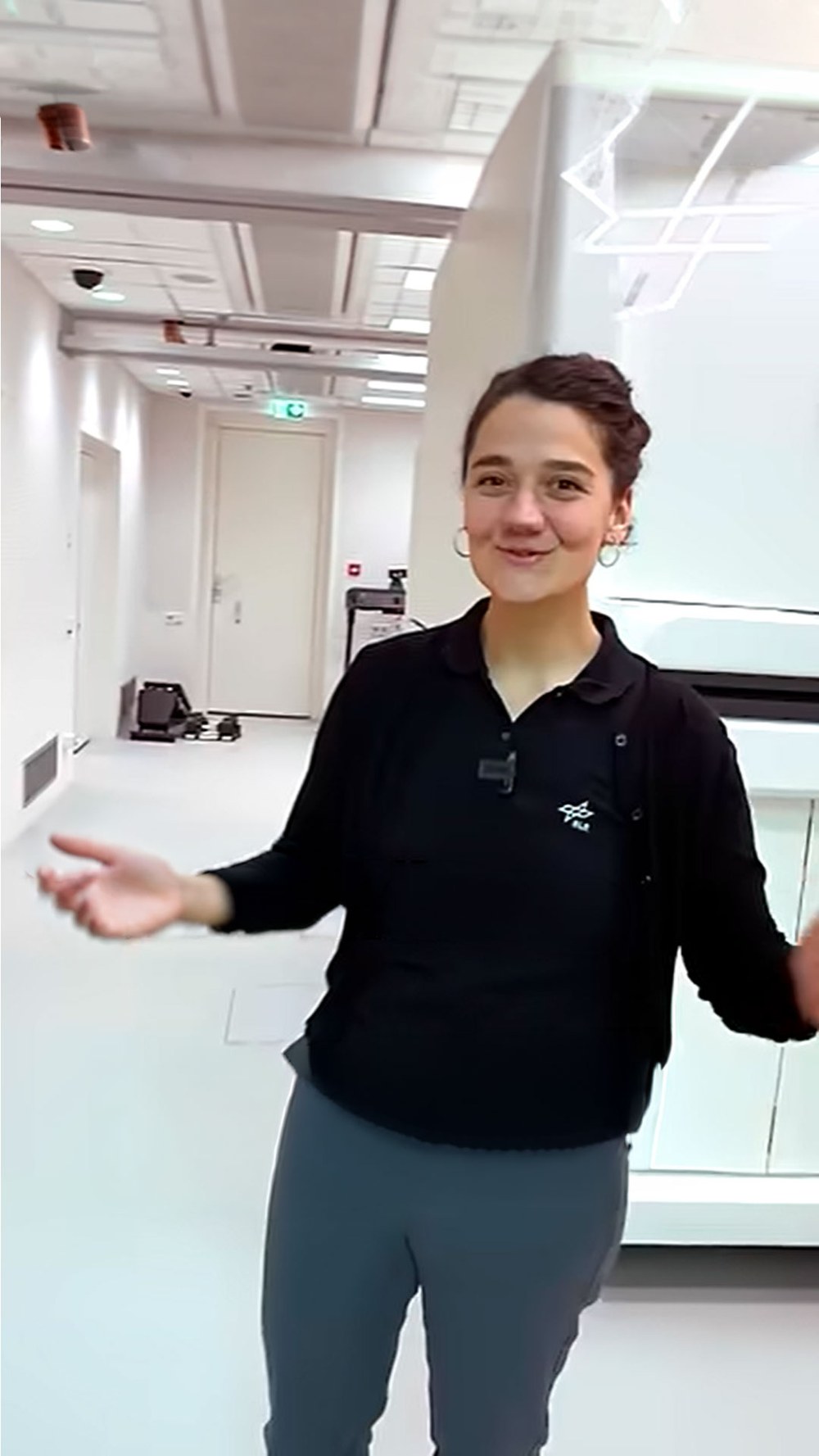
Room tour of the SOLIS100 insulation study at DLR's :envihab
Your consent to the storage of data ('cookies') is required for the playback of this video on Youtube.com. You can view and change your current data storage settings at any time under privacy.
Room tour of the SOLIS100 insulation study at DLR's :envihab
"Future space missions will go beyond low Earth orbit and target distant destinations such as the Moon or Mars. As these missions will involve extended periods in weightlessness, it is more important than ever to prepare astronauts for the psychological and physiological challenges," says Amelie Therre, head of SOLIS100 at the DLR Institute of Aerospace Medicine. "Missions to the Moon and Mars require mental and physical resilience, independence and the ability to thrive in isolated and confined environments. To carry out such missions successfully and ensure the safety of astronauts, we must investigate the effects of these extreme conditions on human health, behaviour and performance."
Life in a confined habitat
A trip to the Moon takes approximately three days. Going to Mars, astronauts travel for roughly six months – and that is only when Mars and Earth are in a favourable alignment. Although Mars is Earth's nearest planetary neighbour, it is still at least 55 million kilometres away. By comparison, the Moon is 'just' approximately 400,000 kilometres away. Anyone who spends months travelling in a spacecraft or living in a habitat hundreds of thousands of kilometres away from home must cope with extraordinary conditions: they not only have to get along with their crewmates but also have to adjust to the habitat and the distance from home, manage resources and work effectively to support the mission. SOLIS100 addresses these challenges, assessing the psychological and physical risks associated with isolation and confined environments during long-duration missions.
For this, six people are living in a simulated space station with limited resources for 100 days. The space station is located in a laboratory at :envihab, DLR's aerospace medicine research facility in Cologne. The crew follows the same daily routine as astronauts during a mission: they work together as a team, perform scientific tasks, exercise regularly and take care of their 'space station'.
SOLIS100 – astronaut-like individuals
The six international crew members have a profile similar to those of astronauts. The study team assessed the medical and psychological suitability of the applicants through questionnaires, tests and examinations. As the study language is English, very good English skills are required. Including preparation and the subsequent recovery phase, SOLIS100 will run for 126 days. The isolation phase began on 23 April 2026. SOLIS100 was preceded in July 2025 by the eight-day SOLIS8 study.
Or 60 days in bed – for the space effect
Also taking place at :envihab – and at the same time as SOLIS100 – is the third campaign of the Sensorimotor Countermeasure (SMC) study. The study investigates how the sensorimotor impairments caused by weightlessness can be counteracted. This study began on 27 April 2026.
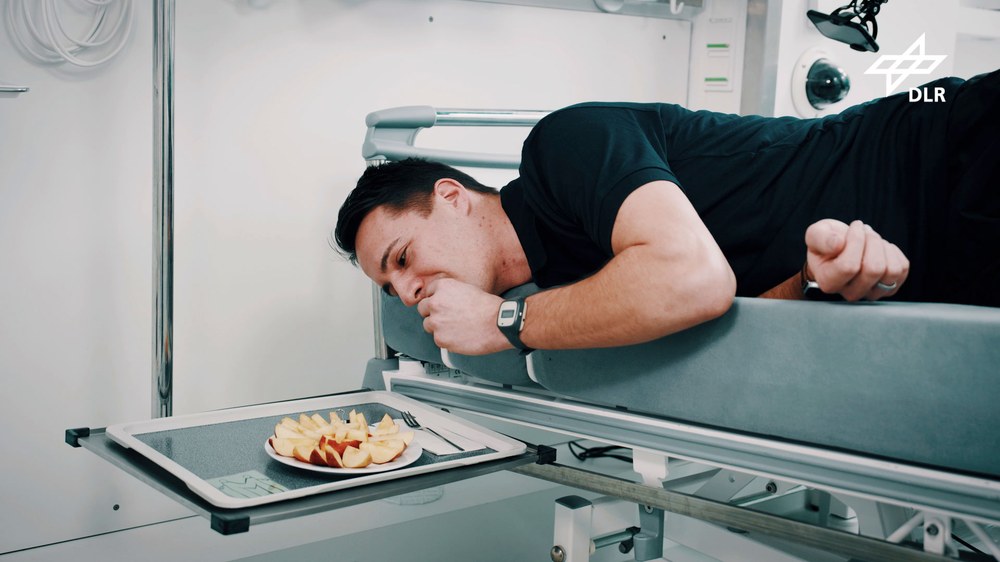
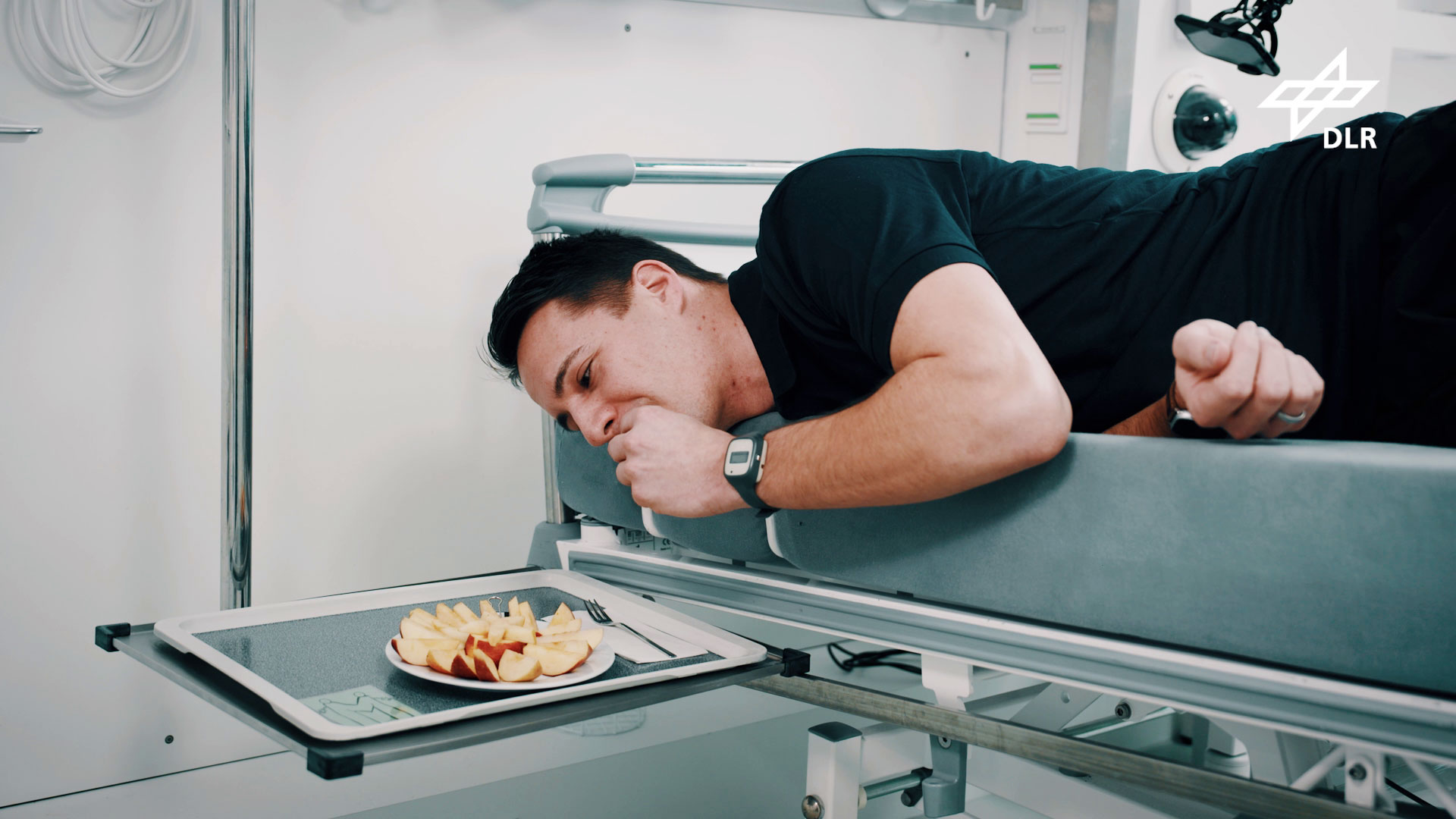
Future astronauts will be exposed to prolonged periods of microgravity: working on the surface of the Moon – where gravity is only one-sixth of Earth's – and returning to the space station in lunar orbit. They must be able to move properly and safely, and will need to be strong. However, there will not be much room aboard a space station for large training equipment. "The study investigates how relatively small and lightweight training methods can help preserve musculoskeletal function," explains Stefan Möstl from the DLR Institute of Aerospace Medicine, who is leading the bed rest study. "To do this, we first simulate the effects of weightlessness. The participants do not just lie in bed for 60 days. The bed is also tilted down by six degrees towards the head, which means the head is lower than the feet. The body then shifts fluids towards the head, as happens in microgravity. As in space, muscle mass then decreases and the sense of balance deteriorates," Möstl adds.
The participants are also referred to as 'terrestrial astronauts'. While one group serves as a control and 'only' lies in bed, the other receives additional training for the musculoskeletal system during their bed rest. One group trains their balance using a 'GravityBed': participants 'float' on a compressed air-supported sled whilst their feet are pressed against a balance board via a strap system. They are required keep the board stable by making compensatory movements with their legs and upper body. The third group exclusively trains their leg muscles using electrical impulses (electromyostimulation). Since both training methods would also be suitable for use aboard a future space station, they are being tested at DLR in Cologne ahead of time.
Healthy individuals with an average level of fitness
For the NASA SMC3 bed rest study, DLR sought twelve healthy men and women aged between 24 and 55 years old, between 1.53 and 1.90 metres tall and with a body mass index (BMI) between 18 and 28 kg/m2. In addition to other requirements, participants should have an average level of fitness. Good German language skills are also required. Including preparation and follow-up, the participants will remain at :envihab for exactly 88 days. All applicants had to first fill out a questionnaire for pre-selection, followed by further selection steps.
The :envihab aerospace medicine research facility in Cologne
What would happen to the human body during a flight to Mars? How do patients' bodies react when confined to bed for extended periods? How does lighting affect our mood? Are there measures to counteract the resulting adverse effects? Answers to these questions are also important here on Earth to better understand the effects of ageing, prolonged bed rest, immobilisation and isolation.
The DLR Institute of Aerospace Medicine is a world-leading research institute in this field. At :envihab (short for 'environment' and 'habitat') – a unique, highly technological medical research facility – the institute carries out pioneering research into preserving human health and performance. Within the 3500-square-metre facility, the effects of extreme environmental conditions on humans – and possible countermeasures – are investigated.