Political initiatives and international guidelines

9th European Conference on Space Debris in Bonn
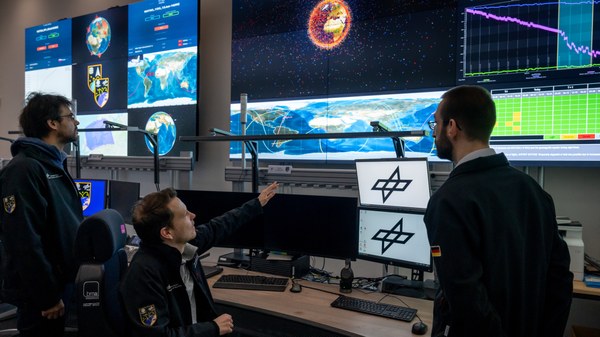
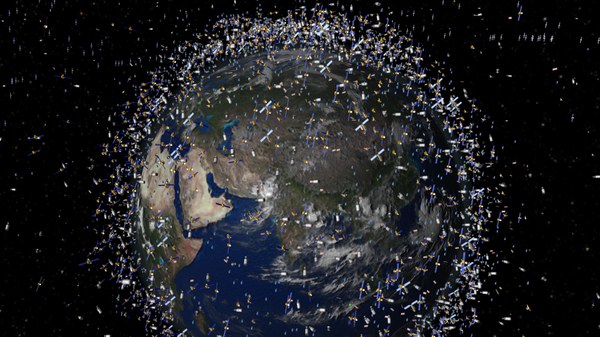
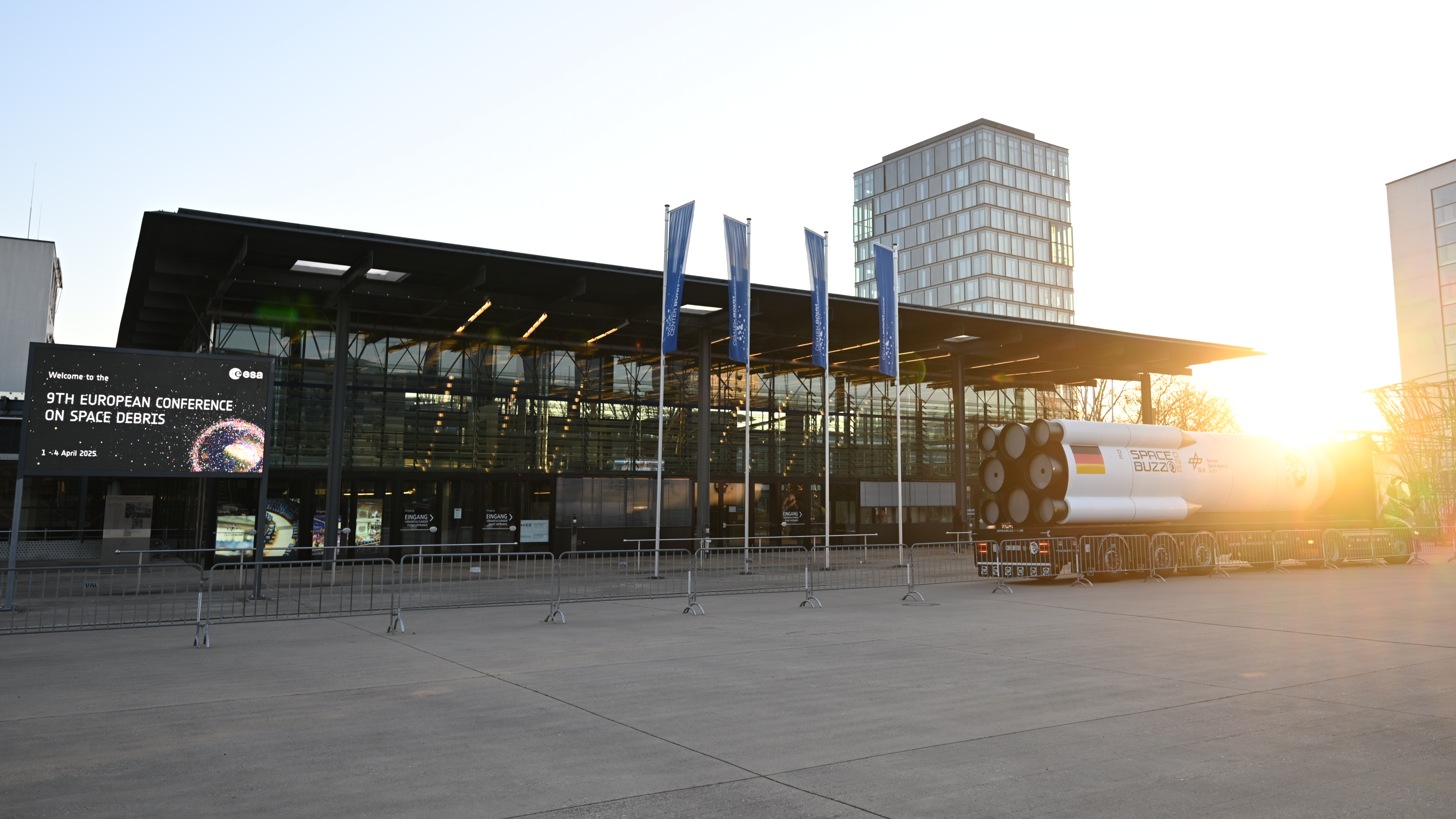
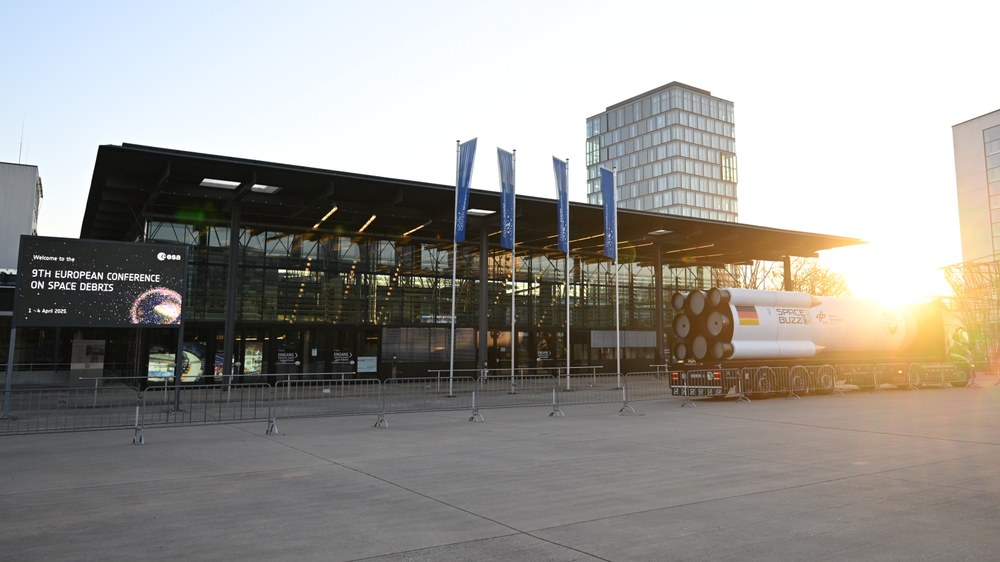
Space debris poses a growing threat to our space infrastructure. To tackle this problem effectively, more than 400 experts from over 30 countries gathered at the 9th European Conference on Space Debris from 1 to 4 April 2025. It was organised by ESA with the support of the German Space Agency at DLR and took place at the World Conference Center Bonn.
Committees, working groups and bodies
UN COPUOS | As early as 1967, the UN Outer Space Treaty was drawn up within COPUOS. It laid the foundation for the responsible exploration and use of outer space, the Moon and other celestial bodies. It obliges States Parties to carry out their space activities with due regard for the interests of other states and to avoid harmful contamination of outer space and celestial bodies. In view of the growing amount of space debris, international recommendations and guidelines supplement these provisions. Based on the recommendations of the IADC, COPUOS adopted the Space Debris Mitigation Guidelines in 2007. In addition, a working group set up specifically to address the long-term sustainability of outer space activities drew up 21 voluntary guidelines, which were adopted by COPUOS in 2019. These also call for the mitigation of space debris and recommend, for example, collecting data on space debris and sharing proven and innovative mitigation strategies at international level. Furthermore, an Expert Group on Space Situational Awareness was established in 2025. Its task is to develop recommendations on how the international exchange of contact information between satellite operators and space situational awareness bodies can be improved to enable safe space traffic and avoid collisions in space. The agenda of the COPUOS Legal Subcommittee also includes legal questions related to space debris, such as liability and possible models for future space traffic management. |
IADC | At the IADC, research findings on space debris are shared and joint projects between space agencies are coordinated. In four working groups – 'Measurements', 'Environment and Database', 'Protection' and 'Mitigation' – DLR researchers work alongside scientists from universities and Fraunhofer institutes, as well as industry representatives. The IADC established the first guidelines on space debris mitigation in 2002. Since then, these have been repeatedly referenced internationally and form the basis for standards and requirements in satellite design. The IADC has also produced a comprehensive Protection Manual. For several years, the IADC has also published an annual report on the space debris environment, which is also made available through UN COPUOS. |
Standardisation bodies | In international standardisation bodies, DLR formulates verifiable requirements for space debris mitigation. Together with industry, DLR develops the relevant standards in the International Organization for Standardization (ISO) working group TC20/SC14/WG7. Within the European Cooperation for Space Standardization (ECSS), DLR largely follows ISO standards and supplements them with our own requirements. |
Zero Debris Charter | The European Space Agency (ESA), together with approximately 40 institutions and companies from the European space sector, has developed the Zero Debris Charter. To date, over 100 stakeholders worldwide have signed it. The Charter sets out guiding principles for substantially limiting the creation of new space debris by 2030. |