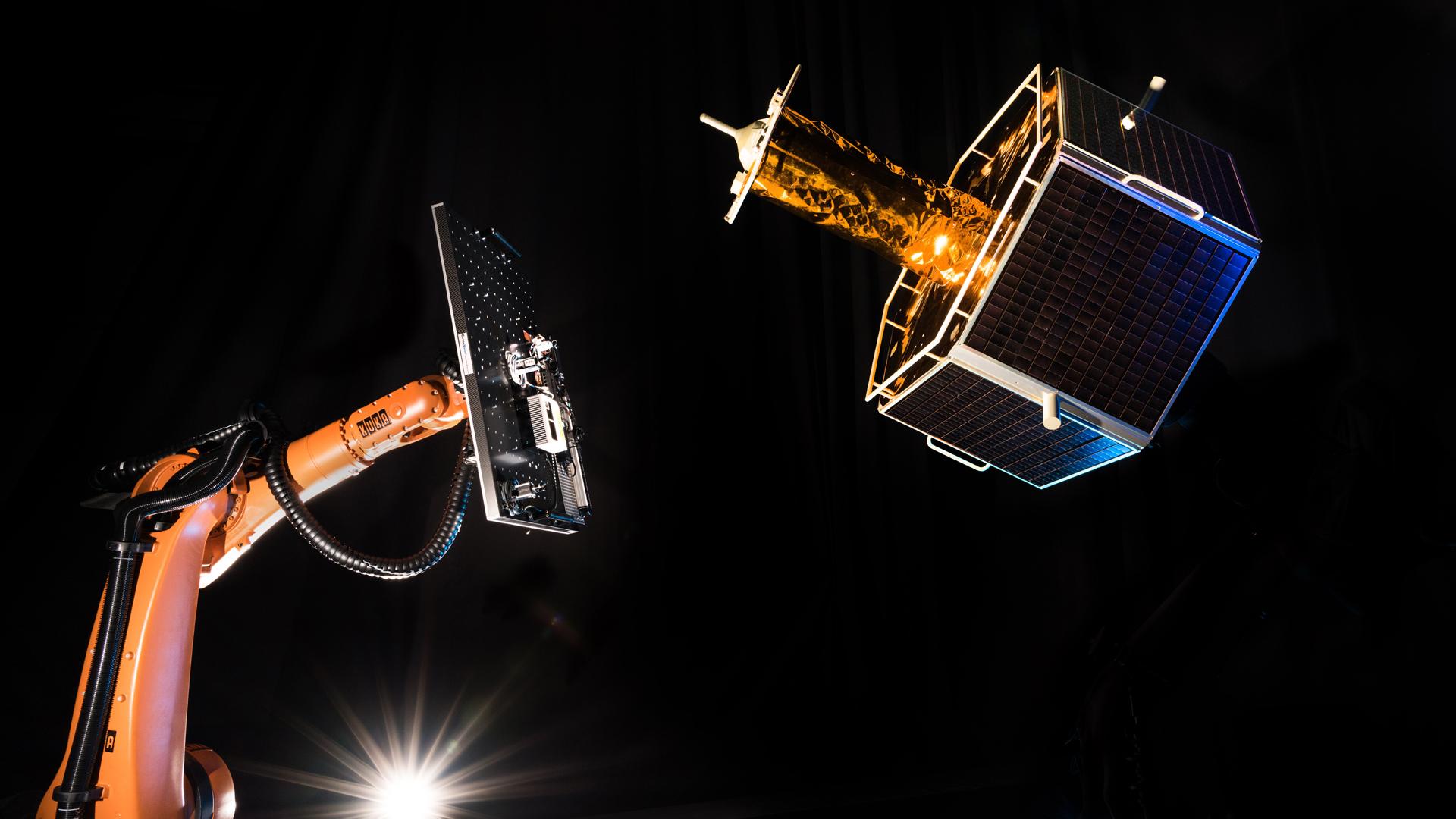
Removing space debris
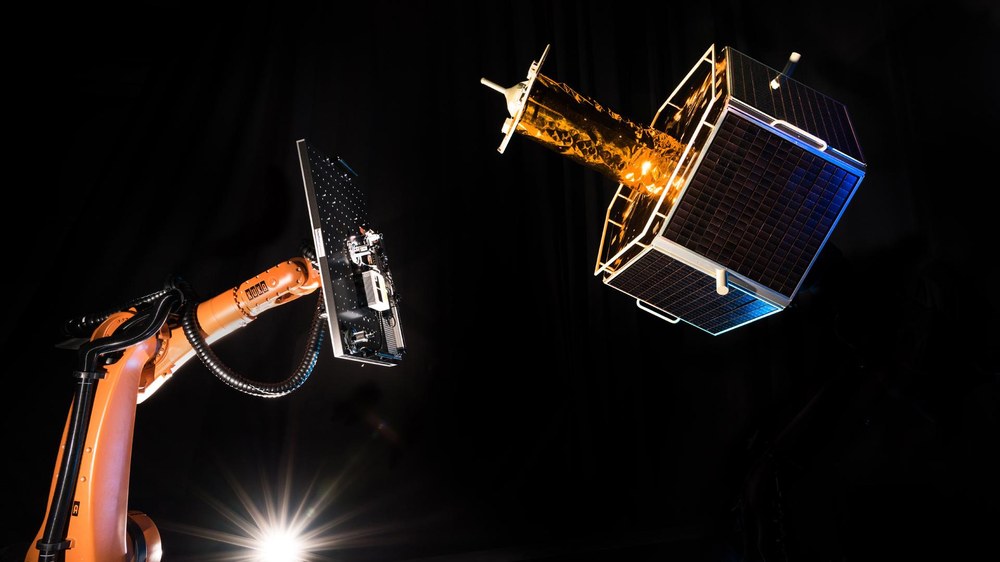

EPOS 2.0 test facility
The EPOS 2.0 facility at the German Space Operations Center (GSOC) is a highly specialised research infrastructure designed to develop and test, on the ground, complex rendezvous and docking manoeuvres for use in space. With sub-millimetre positioning accuracy and a command rate of 250 hertz, the facility enables high-precision testing.
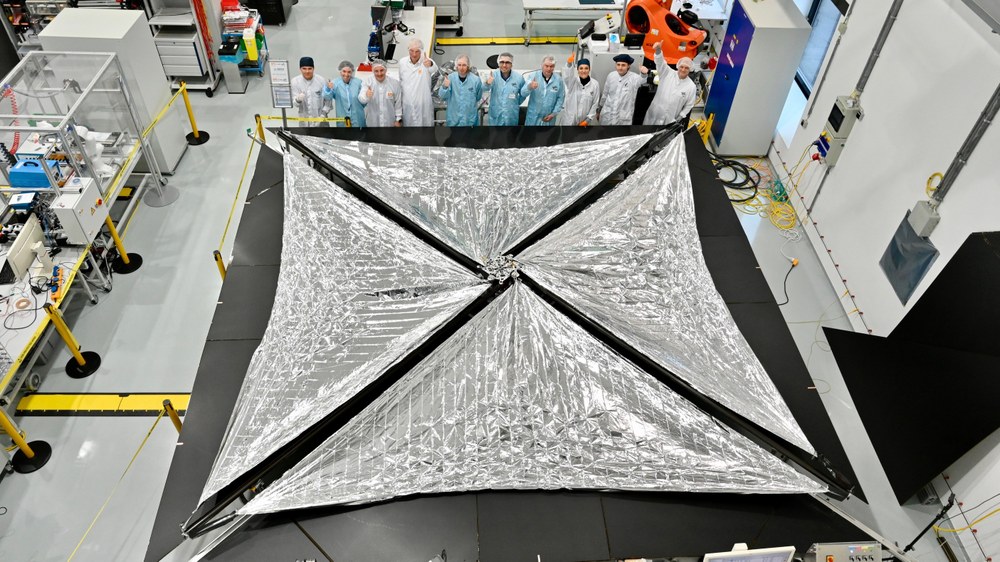
ADEO-L braking sail successfully deployed in the laboratory
DLR's many years of research into components for satellite braking sails are now being put into practice in collaboration with the company HPS. Braking sails are designed to remove decommissioned satellites from low Earth orbit more quickly.
Image: 2/4, Credit:
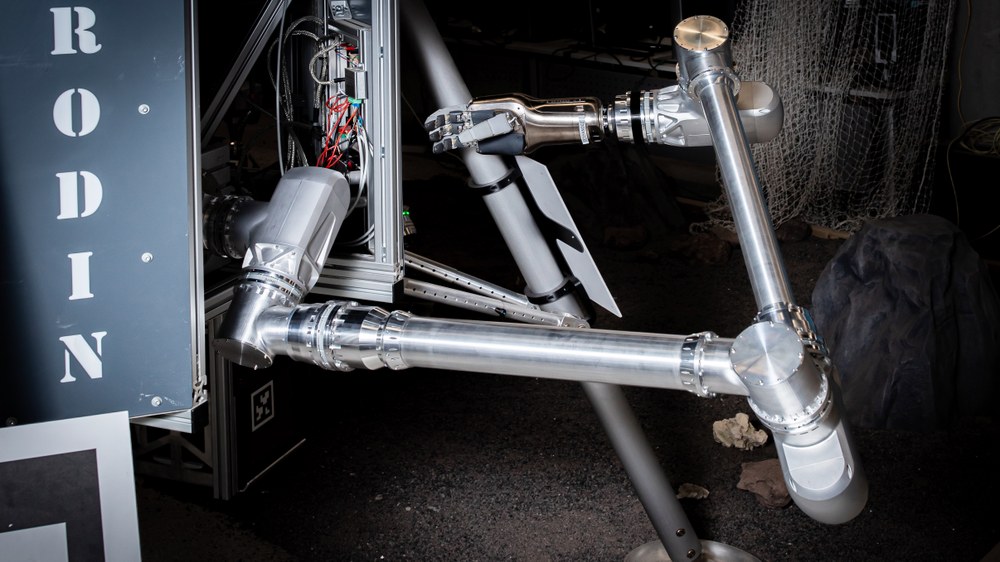
TINA (This-Is-Not-an-Arm)
As part of the TINA project, DLR is developing a small, modular robotic arm designed for use in space. TINA is intended primarily for use in ISAM (In-Space Assembly and Manufacturing) applications on small satellites and to assist astronauts with tasks on space stations, such as assembly and repairs.
Overview of DLR's assistance and servicing systems and test facilities
ADEO – drag sails for satellites | In ESA's ADEO (Drag Augmentation Deorbiting System) project, DLR was involved in the development and testing of an ultra-lightweight, deployable sail produced by the company HPS. The sail increases the aerodynamic surface area of satellites and rocket stages, accelerating their re-entry into Earth's atmosphere. It thus serves to reduce space debris and lower the risk of collisions in orbit. The aim of the project is to provide a passive deorbiting solution that requires no additional energy or control. |
ION – circular economy in orbit | The aim of DLR's ION (Impulsprojekt Orbitale Nachhaltigkeit, or 'Orbital Sustainability Impulse Project' in English) project is to develop concepts and technologies to increase sustainability in Earth orbit throughout the entire lifetime of satellites and orbital infrastructure. With ION, DLR is pooling its expertise in space, security and aeronautics, particularly in the fields of satellite operations, robotics and automation, and the observation and measurement of space debris and space weather – as well as its experience in maintenance and repair in aviation. The central focus is on developing technologies that improve the interaction between ground stations and orbital systems – for example, through the precise measurement of the rotation rate of debris to facilitate its capture. |
CAESAR robotic arm | CAESAR (Compliant Assistance and Exploration SpAce Robot) is a robotic arm developed for exploration and assistance in space. It was designed for a wide range of tasks, such as assembling structures, maintaining and repairing satellites, or removing space debris. CAESAR combines innovative electronics and mechanics with new control methods. Much like a human arm, the robot has seven degrees of freedom, which gives it greater flexibility than standard robots. A 'Spacehand' fitted to the robot enables it to grasp and stabilise tumbling or non-cooperative satellites. |
TINA robotic arm | With TINA (This-Is-Not-an-Arm), DLR is developing a small, modular robotic arm designed for use in space. TINA is primarily intended for ISAM (In-Space Servicing, Assembly and Manufacturing) applications such as manufacturing and assembly in space on small satellites. In addition, the arm could be suitable for exploration missions to the Moon and Mars, where it could collect, clean and transport samples.
TINA could also be used as a 'station butler', carrying out repetitive tasks on space stations or in future lunar and Martian greenhouses, such as DLR's EDEN LUNA greenhouse, where the robot monitors and tends to plants. |
EROSS IOD – service for geostationary orbit | The EU-funded EROSS IOD (European Robotic Orbital Support Services In-Orbit Demonstration) project is being carried out together with other European organisations to develop a safe and reliable service that supports satellites in low Earth and geostationary orbit. The aim is to extend the operational lifetime of satellites and make the use of space more sustainable and efficient.
As part of this project, DLR is planning and preparing a space mission to test key technologies for servicing satellites in orbit. Two spacecraft will rendezvous in space, where DLR's CAESAR robotic arm will carry out tasks such as gripping, refuelling and replacing components. |
EPOS 2.0 test facility | With the EPOS 2.0 (European Proximity Operations Simulator 2.0) test facility, DLR operates a highly specialised research infrastructure designed to develop and test, on the ground, complex rendezvous and docking manoeuvres for space missions. These manoeuvres are essential for missions such as orbital servicing and towing, in which servicer satellites must carry out autonomous approaches to non-cooperative, passive satellites. As such satellites often lack any special equipment for rendezvous or docking, new navigation systems, sensors and propulsion technologies have to be developed. A further challenge is dealing with tumbling target satellites, whose uncontrolled movements must be simulated precisely and in real time.
The EPOS 2.0 facility is located at DLR's German Space Operations Center (GSOC) and serves as the central test environment for the design, development, validation and verification of rendezvous sensors and systems. |
OOS-SIM test facility | OOS-SIM (On-Orbit Servicing Simulator) is a facility for simulating tasks such as assembly, servicing and repair work on satellites orbiting Earth. Researchers are also investigating the system's suitability for removing decommissioned, tumbling target satellites from orbit.
The OOS-SIM facility serves two purposes. First, it simulates the complex dynamics of multiple free-flying robots in orbit, without the influence of gravity.
Second, it provides a test platform for developing and verifying control and image-processing methods for orbital robotics. In doing so, the robot control system must reliably manage the interaction between the robot and the satellite it is mounted on, even in the absence of gravity. |