Driving innovation in research, technology and practical applications
Small satellites – compact all-rounders in space
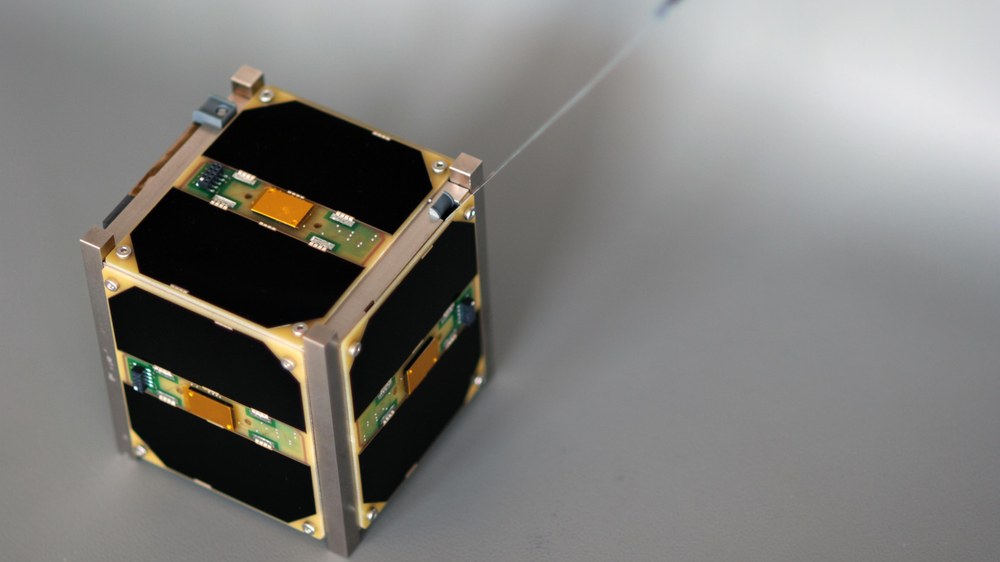
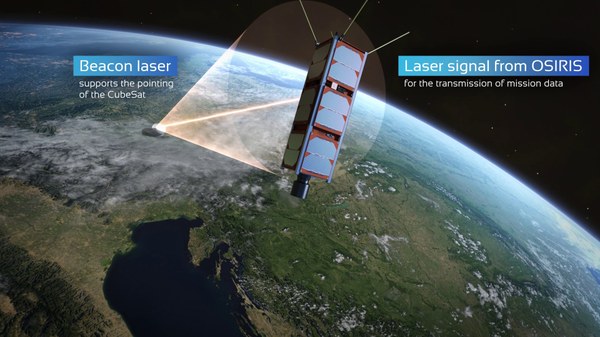
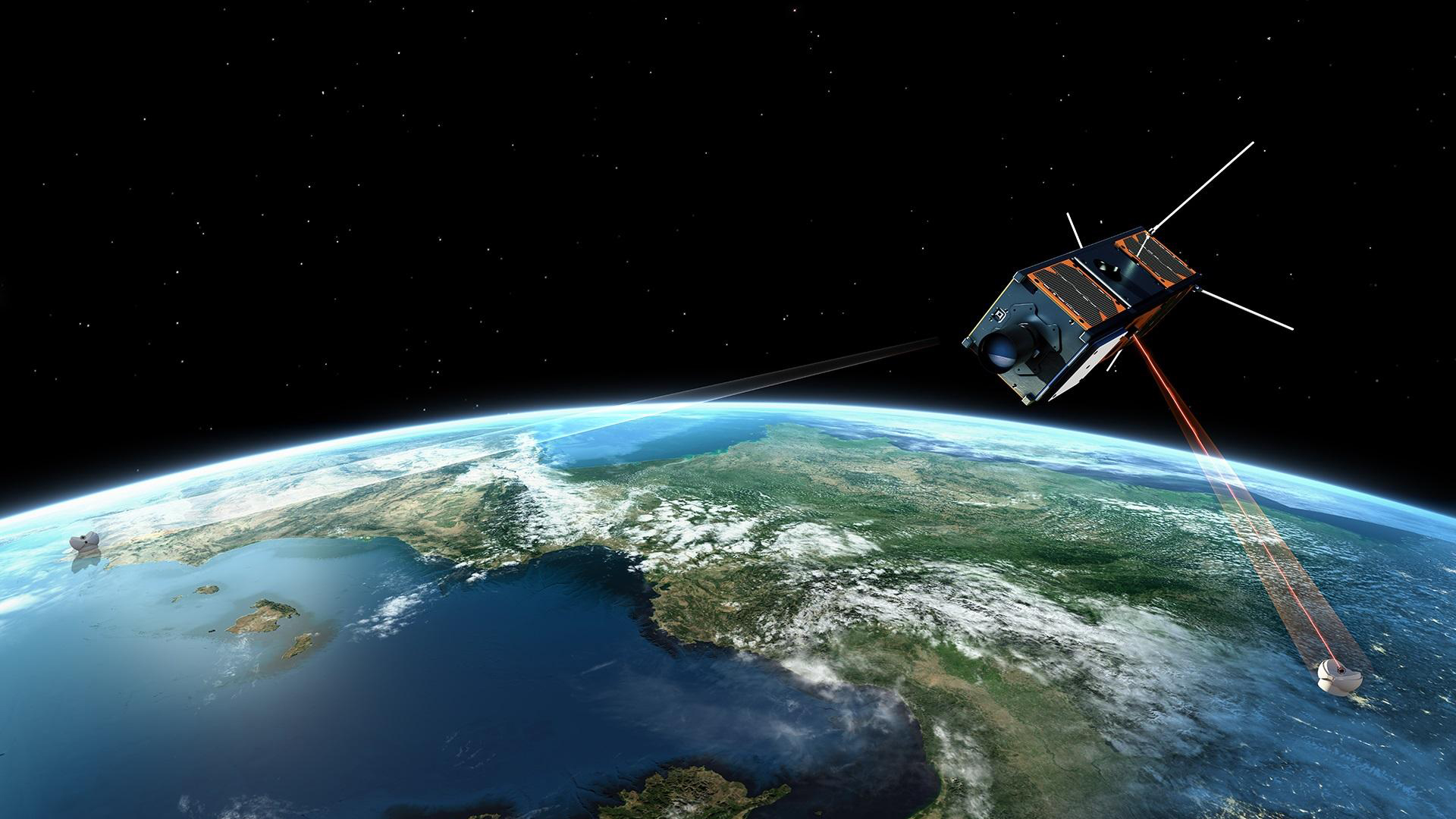
CubeSat with laser terminal
The tiny satellite PIXL-1 can capture images of Earth with a high-resolution camera and transmit them to the ground via the CubeLCT using a laser link.
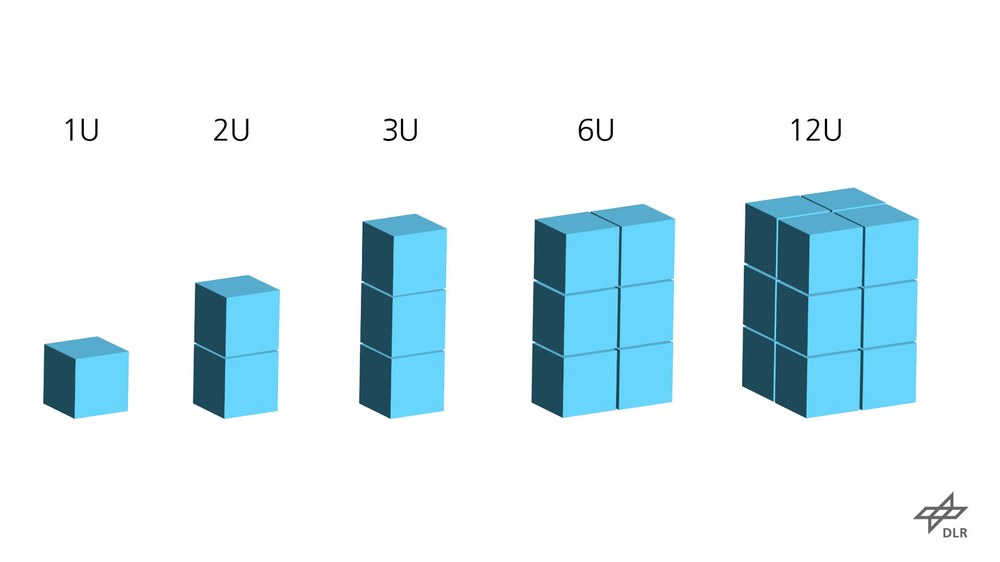
Schematic representation of small-satellite formats
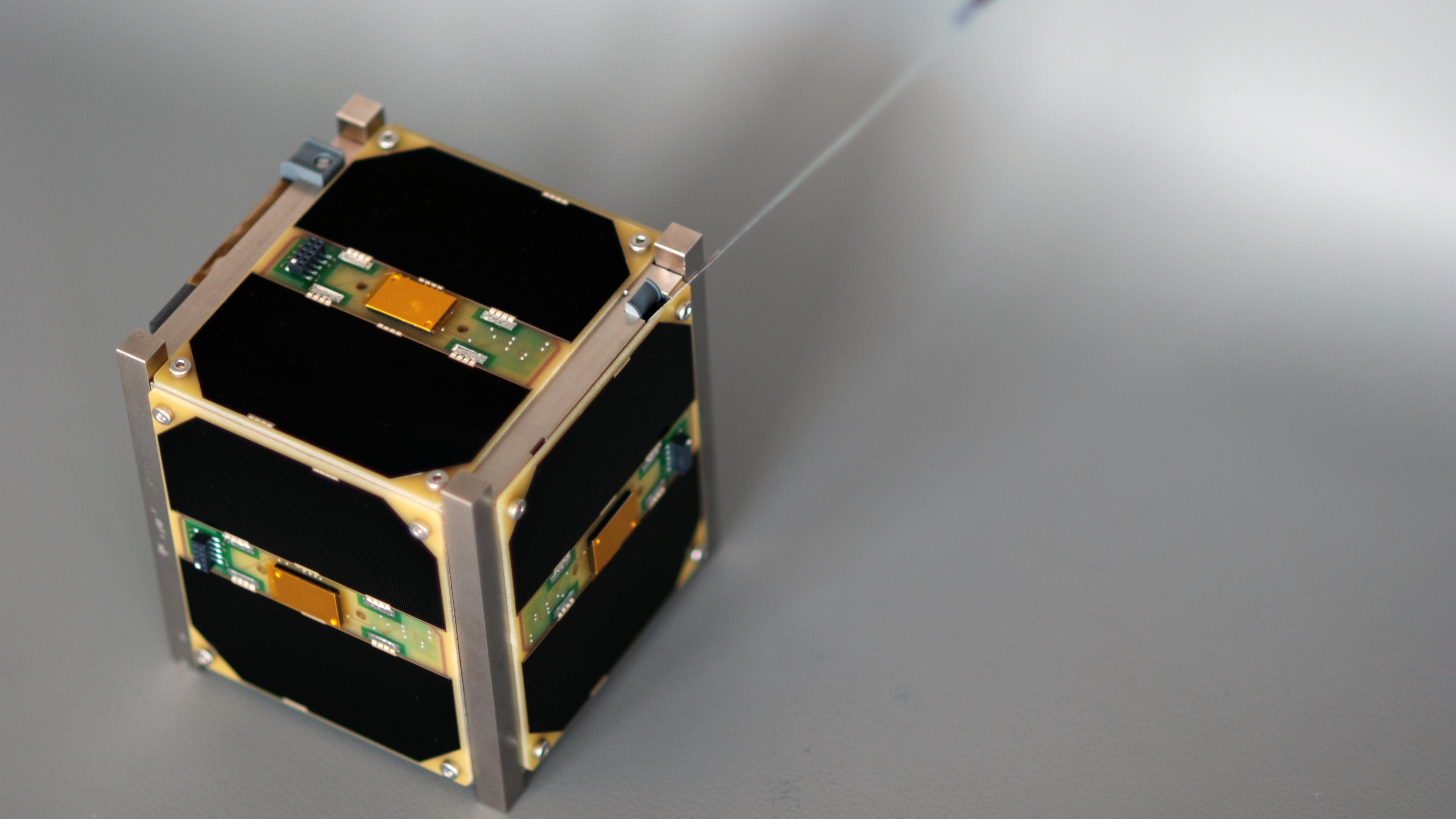
Based on the 1U unit (“one unit”), a wide range of small-satellite shapes and sizes are created depending on their use case and orbit. One unit corresponds to dimensions of 10 × 10 × 10 centimetres. Fractions of the base unit, such as 0.25U or 0.5U, as well as larger variants such as 12U, are also used.
The BeeSat-3 (Berlin Experimental and Educational Satellites) picosatellite, developed by students at the Technische Universität Berlin, is also part of the payload on BION-M1. The microsatellite, which weights one kilogram and is 10 by 10 by 10 centimetres in size is designed to spend a year in a circular orbit at an altitude of 575 kilometres, verifying the newly developed HiSPiCO S-Band Transmitter (Highly Integrated S-Band transmitter for PICO- and NANO-satellites) designed for microsatellites.
They are lightweight, flexible, quickly deployable – and they are fundamentally changing spaceflight: small satellites are far more than miniature versions of their large orbital counterparts. Thanks to technological advances in areas such as propulsion and attitude control, power supply, platform architecture, microelectronics and communications, they open up new and cost-effective pathways for science, industry and applications. At the German Aerospace Center (Deutsches Zentrum für Luft- und Raumfahrt; DLR) – with our research institutes, facilities and the German Space Agency at DLR – we are actively shaping the evolution of these small all-rounders for German and European spaceflight.
Small satellites, big impact
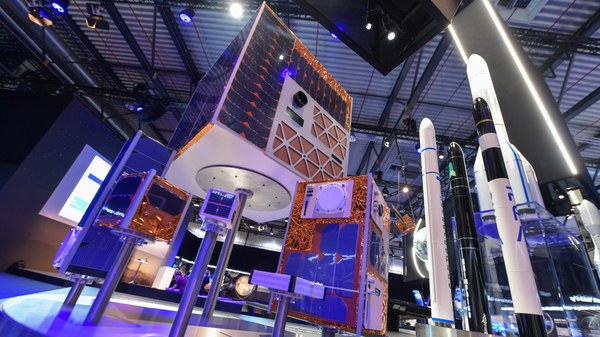
Small satellites – in various sizes and masses ranging from a few grams to 500 kilograms – have long been more than just niche technological products. They provide Earth with telecommunications from space; they observe changes on our planet by delivering real-time data for climate and environmental research or for our security. They also look outward into deep space for scientific exploration, and they serve as smart platforms for testing new materials, hardware and software concepts under space conditions. The reasons are clear: small satellites are more cost-effective and significantly faster to develop and launch than large satellite missions. This creates room for agile science and accelerates innovation.
In today's interconnected, data-driven world, small satellites have become important instruments – for research, but also for governmental actors and the private sector, from start-ups to established companies. This is about more than just new technology: it is also about new ways of thinking. Thanks to entire families of small and very small satellites, European spaceflight can become more autonomous and versatile.
Interdisciplinary research and support at DLR
Research, development, mission planning and execution, as well as subsequent scientific analysis and technological advancement – at DLR, we work on a wide variety of aspects in the field of small satellites. They form a highly interdisciplinary research and development field, in which we draw on a unique combination of scientific expertise and application-oriented system competence.
DLR also plays a central role on the funding side, in particular through the German Space Agency at DLR and the Executive Board department for 'Innovation, Transfer and Research Infrastructures'. The aim is to bring research and subsequent application – in other words, the economic and societal value created through our activities – closer together. On behalf of the German Federal Government, we at the German Space Agency at DLR are responsible for the strategic management and funding of German space activities. The focus is not only on scientific and technological excellence, but also on supporting universities, research institutions, start-ups, small and medium-sized enterprises (SMEs) and other innovation ecosystems in developing and implementing satellite missions.
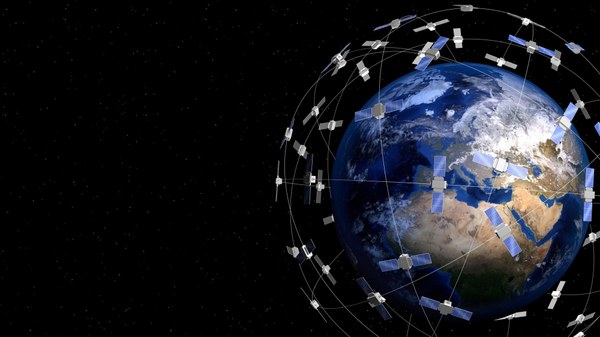
The development of small satellites has grown into an industry of its own, in which industry and research work together to explore opportunities and continuously advance technologies. These cost-effective platforms make space research and engineering evolution more efficient than in the past – all the way through to the eventual application of new technologies and concepts, from individual satellites to swarms and entire constellations.
At DLR we research, develop, test, plan, operate, support and advise – across many different fields in the wide world of small satellites. In this featured topic, we present these and other diverse activities.